
BuddhistCatholicContemplativeEvangelicalGeneral ChristianHinduJewishLatter-day SaintMuslimNew VisionsProgressive Christian
Beliefs
- Buddhist
- Catholic
- Contemplative
- Evangelical
- General Christian
- Hindu
- Jewish
- Latter-day Saint
- More Voices
- Muslim
- New Visions
- Pagan
- Progressive Christian
Topics
- Religion News
- Food and Religion
- Sports and Religion
- Religious Art
- Religious Music and Entertainment
- Religious Events
- History and Religion
- Style and Religion
- Politics and Religion
- Women in Religion
- Recreation Outdoors and Religion
- Business Finance and Religion
- Careers Workplace and Religion
- Education and Religion
- Family Parenting and Religion
- Health Fitness and Religion
- Home and Religion
- Relationships and Religion
- Technology and Religion
- Travel and Religion
Columnists
- Buddhist Columnists
- Business Finance and Religion Columnists
- Careers Workplace and Religion Columnists
- Catholic Columnists
- Contemplative Columnists
- Education and Religion Columnists
- Evangelists Columnists
- Family Parenting and Religion Columnists
- General Christian Columnists
- Health Fitness and Religion Columnists
- Hindu Columnists
- History and Religion Columnists
- Home and Religion Columnists
- Jewish Columnists
- More Voices Columnists
- Latter Day Columnists
- Muslim Columnists
- New Visions Columnists
- Nonreligious Columnists
- Pagan Columnists
- Politics and Religion Columnists
- Progressive Columnists
- Recreation Outdoors and Religion Columnists
- Relationships and Religion Columnists
- Religion News Columnists
- Religious Art Columnists
- Religious Events Columnists
- Religious Music and Entertainment Columnists
- Sports and Religion Columnists
- Style and Religion Columnists
- Technology and Religion Columnists
- Travel and Religion Columnists
- Women in Religion Columnists
Resource Library
- 2026 Calendar
- Library of World Religions
- The 100 Most Holy Places on Earth
- Patheos Answers
- Podcasts
- Videos
- Faith Leaders Database
- Anglican Episcopalian
- Bahai
- Baptist
- Buddhism
- Christianity
- Confucianism
- Eastern Orthodoxy
- Hinduism
- Holiness and Pentecostal
- ISKCON
- Islam
- Judaism
- Lutheran
- Methodist
- The Church of Jesus Christ of Latter-day Saints
- New Age
- Paganism
- Presbytarian and Reformed
- Protestantism
- Religion Behind the Scenes
- Roman Catholic
- Scientology
- Shia Islam
- Sikhism
- Sufism
- Sunni Islam
- Taoism
- Zen
- See all religions
Research Tools
 Ad-Free & Subscriber Log-In Subscription Support
Ad-Free & Subscriber Log-In Subscription Support
Follow Patheos 

- Trending:
- Forgiveness
- |
- Marriage
- |
- Consciousness
- |
- Death Penalty
- |
- Election
- |
- Halloween
 Letters from the Edge of Elfland
- Home
- About
- Distributist Resources
- Publications and Presentations
- Support
- Works in Progress
- The Epistolarian Around the Web
- Home
- Catholic
- Faeriean Metaphysics: A Diet of Poetry
Faeriean Metaphysics: A Diet of Poetry
Last updated on: September 6, 2013 at 2:30 pm by David Russell Mosley
Faeriean Metaphysics: A Diet of Poetry 2013-09-06T14:30:20-04:00 David Russell Mosley
Patheos Explore the world's faith through different perspectives on religion and spirituality! Patheos has the views of the prevalent religions and spiritualities of the world.
David Russell Mosley
6 September 2013
On the Edge of Elfland
Beeston, Nottinghamshire
Dear Friends and Family,
Yesterday I wrote to you about the importance of being poets and theologians. In order to be excellent poets and theologians, however, we need a steady diet of poetry ourselves. With that in mind, I submit to you some excellent poets, poems, or books of poetry for your consumption. Read and be transformed.
This post will focus primarily on Western poetry since that is the poetry I know best. This isn’t to say Western poetry is the only good poetry, the only theological poetry, or the only poetry concerning Faerie. It is simply what I know and love personally.
The Psalms

1631 Book of Psalms (Photo credit: Wikipedia)
The first poetry with which all theologians need to familiarise themselves is the poetry of our Hebrew ancestors. The Psalms teach us the importance of confessing our faith, our pains, our confusion, our rejoicing, our worship, in song and verse. The Psalms have been a traditional part of the Church’s worship since the Church’s inception. We must remember that the Psalms are poetry and read them as such.
The Iliad and The Odyssey

Homer was also called Melesigenes (son of Meles) by the name of the brook which flowed by Smyrna, and today, through İzmir. (Photo credit: Wikipedia)
Perhaps the first epic poems, I highly recommend these two works by Home (probably) as some of the earliest evidence that poetry tells stories as well as describes Nature. Homer teaches us that poetry can truly be epic.
The Aeneid

The great Latin poet, Virgil, holding a volume on which is written the Aenid. On either side stand the two muses: “Clio” (history) and “Melpomene” (tragedy). The mosaic, which dates from the 3rd Century A.D., was discovered in the Hadrumetum in Sousse, Tunisia and is now on display in the Bardo Museum in Tunis, Tunisia. (Photo credit: Wikipedia)
Along with Homer, Virgil must also be read. Perhaps lesser in talent, Virgil’s work was part of the common fare of the Latin Church. His images and words, his story of the founding of Rome became part of the common imagination.
Gregory the Theologian

Andrei Rublev, Gregory the Theologian (1408), Dormition Cathedral, Vladimir. (Photo credit: Wikipedia)
Gregory as I noted in the previous post, was a poet. We need to be reading his poetry to see what one of our best theologians put into verse to help give us ideas and concepts for our own. You can find a copy of these in translation here.
The Divine Comedy

Profile of Dante Alighieri, one of the most renowned Italian poets, painted by his contemporary Giotto di Bondone (Photo credit: Wikipedia)
Dante is perhaps one of the most well known Christian poets, along with John Milton and John Donne. Dante’s Inferno has received various, and primarily awful, treatment in the past. You must read the whole comedia to truly see the brilliance of Dante both as a poet and a theologian.
Beowulf

The Old English epic poem Beowulf is written in alliterative verse and paragraphs, not in lines or stanzas. (Photo credit: Wikipedia)
One of the earliest poems written in a language we can technically call English, Beowulf is a shorter epic poem about the triumph of good over evil. Beowulf teaches us about the power of goodness against the evils of Satan.
The Pearl Poet

Sir Gawain and the Green Knight (Photo credit: Wikipedia)
The anonymous poet who, more than likely, penned the three works Sir Orfeo, Pearl, and Sir Gawain and the Green Knight is an excellent introduction into the Medieval Faerie tradition. His or her poems are wonderfully written and tell us stories of Faerie. These are necessary for anyone who is interested in the development of our understanding of Faerie.
George Herbert

Portrait of George Herbert (poet) by Robert White in 1674. From National Portrait Gallery (UK) (Photo credit: Wikipedia)
Herbert is relatively new poet to me. An Anglican Priest, Herbert’s impact on Anglicanism cannot be undervalued as some of his own poems have made their way into the Common Worship.
John Milton

English: Portrait of John Milton in National Portrait Gallery, London (detail) (Photo credit: Wikipedia)
Milton’s Paradise Lost reminds us that even the brightest star can fall dim. We learn from Milton that Satan is wrong. It is much better to serve in Heaven than to reign in Hell.
George MacDonald

English: photograph of george macdonald, taken in the 1800’s. (Photo credit: Wikipedia)
MacDonald is perhaps one of my absolute favourite authors in general. He truly teaches the importance of Faerie. His poetry is often undervalued, but it is nevertheless worth reading.
The Romantic Poets

Henry Wadsworth Longfellow (Photo credit: cliff1066™)
Despite often sliding into paganism, pantheism, deism, and other issues, the Romantics are excellent examples of both style and content. After the Enlightenment, they began the project of seeing nature as more than a passive object.
Chesterton, Tolkien, and Lewis

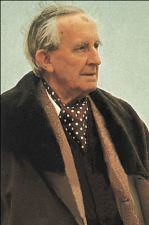
Tolkien (Photo credit: proyectolkien)

Tolkien and Lewis are most well-known for their prose, but both authors were, at heart, poets. An education in poetry and faerie would be incomplete without them. Chesterton is perhaps more well-known for his non-fiction and essays (as well as for Father Brown) than for his poetry, but Chesterton too was a poet before all else.
There are perhaps many more poets who could be named, Seamus Heaney, Dorothy Sayers, Charles Williams, John Donne, etc. This list is woefully incomplete, and as I said at the start, focuses almost entirely on the Western Poetic Tradition. Nevertheless, these poets/poems are some great places to begin. Reading these poets will teach us to see the world differently, will teach us to see Faerie, and will help us to do better theology, theology that is beautiful.
Sincerely yours,
David Russell Mosley
Related articles
- Faeriean Metaphysics: Why Faerie and Fantasy Matter in Christian Theology (elflandletters.wordpress.com)
Next Post

September 10, 2013 What's in a Name? Or, Why I Changed the Name of My Blog
Browse Our Archives
Select a Category A Secular Age Advent Apologetics Atheism Beauty Being a Catholic Evangelical Being Catholic Being Deified: Poetry and Fantasy on the Path to God Blogging Book Reviews C. S. Lewis Catholic Imagination Catholic Social Teaching Catholicism Christmas Church Calendar Church Fathers Church Life Community Conferences Cosmology Creation Curdled Words Deification Distributism Easter Economics Education Epiphany Essay Extracts Eucharist Faerie Faeriean Metaphysics Fatherhood Films Folk Liturgy Food and Drink G. K. Chesterton Harry Potter J. R. R. Tolkien Jove King Arthur Language Lent Life Literature and Poetry Liturgy Medieval Theology Music My Publications Mythology On the Edges of Elfland Ordinary Time Ordination Parenthood Parish Patristic Theology Pentecost Politics Prayer Racism Radical Orthodoxy Restoration Movement Sacramental Ontology Saints Science Sex and Sexuality Sophiology Stories The Inklings The Radical Catholic Reimagination of Everything Theologians in the Church Theopoetics Thesis Research Uncategorized University of Nottingham What I'm Reading Writing
Select a Month December 2019 November 2019 October 2019 September 2019 August 2019 July 2019 June 2019 May 2019 April 2019 March 2019 February 2019 January 2019 December 2018 November 2018 October 2018 September 2018 August 2018 July 2018 June 2018 May 2018 April 2018 March 2018 February 2018 January 2018 December 2017 November 2017 October 2017 August 2017 July 2017 June 2017 May 2017 April 2017 March 2017 February 2017 January 2017 December 2016 November 2016 October 2016 September 2016 August 2016 July 2016 June 2016 May 2016 April 2016 March 2016 February 2016 January 2016 December 2015 November 2015 October 2015 September 2015 August 2015 July 2015 June 2015 May 2015 April 2015 March 2015 February 2015 January 2015 December 2014 November 2014 October 2014 September 2014 August 2014 July 2014 June 2014 May 2014 April 2014 March 2014 February 2014 January 2014 December 2013 November 2013 October 2013 September 2013 August 2013 July 2013 June 2013 May 2013 April 2013 March 2013 February 2013 January 2013 December 2012 November 2012 October 2012 September 2012 July 2012
Follow Us!
TAKE THE
Religious Wisdom Quiz
What was the main language spoken by Jews during Jesus’ time?
Select your answer to see how you score.
Aramaic Hebrew Greek Latin
Related posts from Letters from the Edge of Elfland

Poetry, Podcasts, and More: Some Updates on Other...
Letters from the Edge of Elfland

Working on a Book of Poetry: An Apology...
Letters from the Edge of Elfland

Poetry Shapes the World around Us: Reflecting on...
Letters from the Edge of Elfland
The Journey Is Almost Over: Reflecting on Six...
Letters from the Edge of Elfland
TRENDING AT PATHEOS Catholic

Rejecting Doom: Christian Hope And Human Action
Christianity is a religion of hope. We are to have hope and...

It’s What Comes From Within Which Matters
One of the most difficult things for us to understand is why...

Why I Choose the Eucharist Over the Sermon
Choose the Eucharist, Not the Sermon What are we supposed to get...

5 Design Elements Found in Spiritually Rooted Homes
Putting Spirituality Into Home Decor Our homes are more than our living...

Credo: A Story of God Told with the...
About 10 years ago, I began to imagine a personal "Credo" that...

The Anatomy of Divine Revelation in Catholic Thought
The claim that God has made Himself known to human beings is...
view all Catholic blogs
Ad-Free & Subscriber Log-In Subscription Support
- About Us
- 2026 Calendar
- Videos
- Podcasts
- Library of World Religions
- Faith In Media Tracker
- Advertise With Us
- Write for Us
- Privacy Policy
- Terms of Service
- Do Not Sell My Data
- Contact Us
- Radiant Digital
- Manage Newsletter Subscriptions
- Unsubscribe From Notifications
- Sitemap
Copyright 2008-2026, Patheos. All rights reserved.
Subscription Support Ad-Free & Subscriber Log-In
Follow Patheos