
BuddhistCatholicContemplativeEvangelicalGeneral ChristianHinduJewishLatter-day SaintMuslimNew VisionsProgressive Christian
Beliefs
- Buddhist
- Catholic
- Contemplative
- Evangelical
- General Christian
- Hindu
- Jewish
- Latter-day Saint
- More Voices
- Muslim
- New Visions
- Pagan
- Progressive Christian
Topics
- Religion News
- Food and Religion
- Sports and Religion
- Religious Art
- Religious Music and Entertainment
- Religious Events
- History and Religion
- Style and Religion
- Politics and Religion
- Women in Religion
- Recreation Outdoors and Religion
- Business Finance and Religion
- Careers Workplace and Religion
- Education and Religion
- Family Parenting and Religion
- Health Fitness and Religion
- Home and Religion
- Relationships and Religion
- Technology and Religion
- Travel and Religion
Columnists
- Buddhist Columnists
- Business Finance and Religion Columnists
- Careers Workplace and Religion Columnists
- Catholic Columnists
- Contemplative Columnists
- Education and Religion Columnists
- Evangelists Columnists
- Family Parenting and Religion Columnists
- General Christian Columnists
- Health Fitness and Religion Columnists
- Hindu Columnists
- History and Religion Columnists
- Home and Religion Columnists
- Jewish Columnists
- More Voices Columnists
- Latter Day Columnists
- Muslim Columnists
- New Visions Columnists
- Nonreligious Columnists
- Pagan Columnists
- Politics and Religion Columnists
- Progressive Columnists
- Recreation Outdoors and Religion Columnists
- Relationships and Religion Columnists
- Religion News Columnists
- Religious Art Columnists
- Religious Events Columnists
- Religious Music and Entertainment Columnists
- Sports and Religion Columnists
- Style and Religion Columnists
- Technology and Religion Columnists
- Travel and Religion Columnists
- Women in Religion Columnists
Resource Library
- 2026 Calendar
- Library of World Religions
- The 100 Most Holy Places on Earth
- Patheos Answers
- Podcasts
- Videos
- Faith Leaders Database
- Anglican Episcopalian
- Bahai
- Baptist
- Buddhism
- Christianity
- Confucianism
- Eastern Orthodoxy
- Hinduism
- Holiness and Pentecostal
- ISKCON
- Islam
- Judaism
- Lutheran
- Methodist
- The Church of Jesus Christ of Latter-day Saints
- New Age
- Paganism
- Presbytarian and Reformed
- Protestantism
- Religion Behind the Scenes
- Roman Catholic
- Scientology
- Shia Islam
- Sikhism
- Sufism
- Sunni Islam
- Taoism
- Zen
- See all religions
Research Tools
 Ad-Free & Subscriber Log-In Subscription Support
Ad-Free & Subscriber Log-In Subscription Support
Follow Patheos 

- Trending:
- Forgiveness
- |
- Marriage
- |
- Consciousness
- |
- Death Penalty
- |
- Election
- |
- Halloween
 Letters from the Edge of Elfland
- Home
- About
- Distributist Resources
- Publications and Presentations
- Support
- Works in Progress
- The Epistolarian Around the Web
- Home
- Catholic
- Thesis Extracts: Why We Need a Deifier
Thesis Extracts: Why We Need a Deifier
Last updated on: August 1, 2013 at 4:08 pm by David Russell Mosley
Thesis Extracts: Why We Need a Deifier 2013-08-01T16:08:35-04:00 David Russell Mosley
Patheos Explore the world's faith through different perspectives on religion and spirituality! Patheos has the views of the prevalent religions and spiritualities of the world.
David Russell Mosley
1 August 2013
Beeston, Nottinghamshire
Dear Friends and Family,
Here’s another extract from my second chapter on Deification Creation. I hope you enjoy. Feel free to leave comments below:

English: The Nativity of Christ (Photo credit: Wikipedia)
The Need for a Deifier
What is left, in the end, is a created order that is good, that has an end which is God, and which it cannot achieve on its own. The universe needs humanity to fulfil its end in God, for without humanity, there is no one to receive creation as a gift and to mediate between creation and God as recipients. In humanity, then, there is the given vocation of serving as icons and priests to the rest of creation, showing forth the attributes of God. However, even though humanity has an innate desire for the divine, for divinity, for God, but this mad desire, as de Lubac calls it, cannot be met or fulfilled by humanity. The desire may be natural, but its fulfilment must be super- natural. Creation needs a deifier, one alongside of whom it can work. As Vladimir Lossky writes, ‘Certainly man was created by the will of God alone; but he cannot be deified by it alone. A single will for creation, but two for deification. A single will to raise up the image but two to make the image into a likeness.’1 God can create in his image, but cannot make man a god, according to Lossky. Instead, man must also will this. Lossky will go on to argue that humanity, prior to the Fall, may have been able to deify itself.2 In fact, in commenting on the Fall, Lossky seems to suggest that hu- manity would have enacted its own deification which would have made bridgeable to the gap between Creator and creature: ‘The infinite distance between the created and uncreated, the natural separation of man from God which ought to have been overcome by deification became an impassable abyss for man after he willed himself into a new state, that of sin and death, which was near a state of non-being.’3 This, how- ever, seems unlikely given both Scripture and the Fathers. Instead, it seems more likely that God requires our cooperation in order to deify us. That is, even though humanity wills to be like God and God wills it for them, the two wills must work together. So far I agree with Lossky. However, it seems that more than this is necessary in order to deify.
It cannot be emphasised enough that deification is the intended end for crea- tion from the very beginning. As Andrew Louth writes, ‘[D]eification is the fulfil- ment of creation, not just the rectification of the Fall.’4 Elizabeth Theokritoff simi- larly writes, ‘The Incarnation is not primarily a remedy for something gone wrong; it inaugurates the union between God and his creation for which all things were created.’5 It would be wrong to picture deification as merely a response to human- ity’s sin. It is not simply the resolving of this issue, though it is that, it goes beyond, it is the intended goal for creation from the very beginning. This is not, however, a goal creation can complete on it is own.
Creation Incomplete on Its Own
Maximus has reminded us that created beings cannot reach their own ends. They cannot fulfil themselves.6 Even any deathlessness humanity may have possessed in the story of the garden was not by nature. Aquinas tells us that it was by grace ‘that man was deathless before sin happened’ (ST 1a. 76, 5, ad 1). Adam, while without sin and incorruption, was still subject to becoming.7 Just as creation was in- complete without humanity, incapable of attaining its own end, so too is humanity incomplete without a deifier, without someone to raise him up to the status of divinity by participation, by grace, by adoption. Anthony Baker again reminds us, ‘Perfection is God’s gift to creation––the gift, in fact, of creating––and in sharing this creative work the divine nature opens itself entirely to creatures, extending to us the gift of our true and ultimate telos.’8 This gift, however, must be received and even then, it must be given. And while it is partially given in the act of creation itself, even this is not enough. Creation is still incomplete for it is not perfected. As I argued above, creation is incomplete without humanity, but humanity as well cannot bring about its own end, it cannot complete itself. Something much more surprising must happen. If God were truly the divine watchmaker or deism, then it would stand to reason that the telling of time (the end for which a watch is made) would occur naturally and re- quire only maintenance, but not divine aid in reaching its end, it would have been created at its end, that is the moment it started telling time it would have accomplished its end. This, however, is not the understanding of creation or its end the Father’s had. Instead, it seems that something more is needed for creation to reach its telos.
Creator Must Cross the Creature-Creature Divide
‘Christ assumed an individual and concrete nature that was in no wise “the” human nature as such. Yet what is more, by means of this partial contact, he touched nature in its entirety, a nature that is indivisible and continuous. And by this vital unity, he transmits grace, resurrection, and divinization to the entire body, thus uniting all mean, and through them, all creation to himself.’
-Hans Urs von Balthasar 9
What Balthasar notes in the quote above perhaps takes us beyond the purview of this chapter, but necessarily so. As I argued above, creation is incomplete without humanity, but humanity too is incomplete on its own. The only way creation’s telos can be completed is if the creator crosses the divide that separates him from creation. Only in this manner can deification reach to all of creation. Just as humanity takes within itself all of creation, so Christ by becoming man takes on all of creation and unites to it his divinity. More on this, however, in chapter 4. De Lubac writes concerning Augustine:
[Augustine] also realized the great gulf in any circumstances between the creation and Creator, and the madness of the creature’s dream, inspired by the Creator, to raise himself up to him for everlasting union. And in the revelation of Jesus Christ what he could see was principally the declaration that this mad dream could become a reality because it corresponded to the entirely gratuitous plan governing creation.10
We have noted this before, but it bares repeating, while humanity desires its proper end, it cannot accomplish it for its proper end is well beyond what it could even dare to hope for, union with God. The entire second chapter of Balthasar’s A Theological Anthropology is dedicated to the notion that humanity cannot perfect itself.11 Again, as Thunberg writes concerning Maximus, there is a gulf between humanity and God which only the ‘will of God can overbridge.’12 This is explicitly not something humanity can accomplish on its own.
1 Vladimir Lossky, Orthodox Theology: An Introduction, translated by Ian and Ihita Kesarcodi-Watson (Crestwood: St Vladimir’s Seminary Press, 1978), 73.
2 Vladimir Lossky, The Mystical Theology of the Eastern Church, trans. members of the Fellowship of St. Alban and St. Sergius (London: James Clarke and Co., LTD., 1957), 136.
3 Vladimir Lossky, The Mystical Theology of the Eastern Church, trans. members of the Fellowship of St. Alban and St. Sergius (London: James Clarke and Co., LTD., 1957), 135.
4 Andrew Louth, ‘The Place of Theosis in Orthodox Theology,’ in Partakers of the Divine Nature: The History and Development of Deification in the Christian Tradition, edited by Michael J. Christensen and Jeffery A. Wittung (Grand Rapids: Baker Academic, 2007), 34-35.
5 Elizabeth Theokritoff, ‘Creator and creature,’ in The Cambridge Companion to Orthodox Christian Theology, edited by Mary B. Cunningham and Elizabeth Theokritoff (Cambridge: Cambridge Univer- sity Press, 2008), 69.
6 Hans Urs von Balthasar, Cosmic Liturgy: The Universe According to Maximus the Confessor (San Francisco: Ignatius Press, 2003), 132.
7 Lars Thunberg, Microcosm and Mediator: The Theological Anthropology of Maximus the Confessor, 2nd Edition (Chicago: Open Court Press, 1995), 144.
8 Anthony D. Baker, Diagonal Advance: Perfection in Christian Theology (SCM Press, 2011), 141.
9 Balthasar, Hans Urs von. Presence and Thought: An Essay on the Religious Philosophy of Gregory of Nyssa, translated by Mark Sebanc (San Francisco: Ignatius Press, 1995), 134-35.
10 Henri de Lubac, Augustinianism and Modern Theology, translated by Lancelot Sheppard. (New York: Crossroads Publishing, 2000), 17.
11 Hans Urs von Balthasar, A Theological Anthropology, trans. by Benziger Verlag (New York: Sheed and Ward, 1967), 43-72.
12 Lars Thunberg, Microcosm and Mediator: The Theological Anthropology of Maximus the Confes- sor, 2nd Edition (Chicago: Open Court Press, 1995), 51.
Sincerely yours,
David
Related articles
- Thesis Extract: ‘The Four Aspects of Deification’ (elflandletters.wordpress.com)
- Thesis Extract: ‘The Role of Humanity in Creation’ (elflandletters.wordpress.com)
- Thesis Extract: ‘Thomas Aquinas’s Five Ways as Evidence of Deification’ (elflandletters.wordpress.com)
Previous Post

July 29, 2013
'We Are Being Transformed': Mini Book Review
Next Post
August 5, 2013 'Being Reconciled' by John Milbank: Mini Book Review
Browse Our Archives
Select a Category A Secular Age Advent Apologetics Atheism Beauty Being a Catholic Evangelical Being Catholic Being Deified: Poetry and Fantasy on the Path to God Blogging Book Reviews C. S. Lewis Catholic Imagination Catholic Social Teaching Catholicism Christmas Church Calendar Church Fathers Church Life Community Conferences Cosmology Creation Curdled Words Deification Distributism Easter Economics Education Epiphany Essay Extracts Eucharist Faerie Faeriean Metaphysics Fatherhood Films Folk Liturgy Food and Drink G. K. Chesterton Harry Potter J. R. R. Tolkien Jove King Arthur Language Lent Life Literature and Poetry Liturgy Medieval Theology Music My Publications Mythology On the Edges of Elfland Ordinary Time Ordination Parenthood Parish Patristic Theology Pentecost Politics Prayer Racism Radical Orthodoxy Restoration Movement Sacramental Ontology Saints Science Sex and Sexuality Sophiology Stories The Inklings The Radical Catholic Reimagination of Everything Theologians in the Church Theopoetics Thesis Research Uncategorized University of Nottingham What I'm Reading Writing
Select a Month December 2019 November 2019 October 2019 September 2019 August 2019 July 2019 June 2019 May 2019 April 2019 March 2019 February 2019 January 2019 December 2018 November 2018 October 2018 September 2018 August 2018 July 2018 June 2018 May 2018 April 2018 March 2018 February 2018 January 2018 December 2017 November 2017 October 2017 August 2017 July 2017 June 2017 May 2017 April 2017 March 2017 February 2017 January 2017 December 2016 November 2016 October 2016 September 2016 August 2016 July 2016 June 2016 May 2016 April 2016 March 2016 February 2016 January 2016 December 2015 November 2015 October 2015 September 2015 August 2015 July 2015 June 2015 May 2015 April 2015 March 2015 February 2015 January 2015 December 2014 November 2014 October 2014 September 2014 August 2014 July 2014 June 2014 May 2014 April 2014 March 2014 February 2014 January 2014 December 2013 November 2013 October 2013 September 2013 August 2013 July 2013 June 2013 May 2013 April 2013 March 2013 February 2013 January 2013 December 2012 November 2012 October 2012 September 2012 July 2012
Follow Us!
TAKE THE
Religious Wisdom Quiz
Who said, "Lord, do not hold this sin against them"?
Select your answer to see how you score.
John Peter Stephen Paul
Related posts from Letters from the Edge of Elfland

Working on a Book of Poetry: An Apology...
Letters from the Edge of Elfland
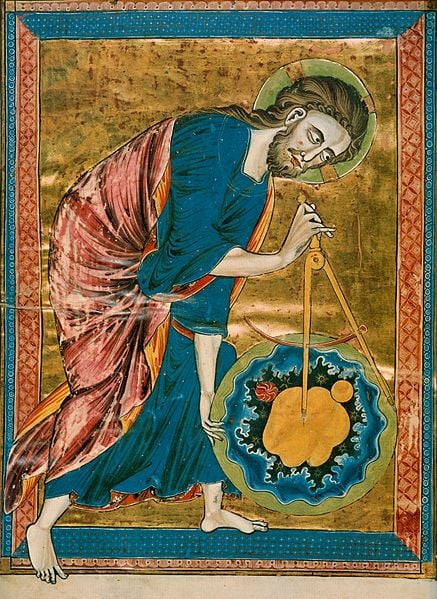
Being Deified: Poetry and Fantasy on the Path...
Letters from the Edge of Elfland
Never Pursue Literature as a Trade: Reflecting on...
Letters from the Edge of Elfland
Ideas and Words: A Letter on Writing
Letters from the Edge of Elfland
TRENDING AT PATHEOS Catholic

Rejecting Doom: Christian Hope And Human Action
Christianity is a religion of hope. We are to have hope and...

It’s What Comes From Within Which Matters
One of the most difficult things for us to understand is why...

Why I Choose the Eucharist Over the Sermon
Choose the Eucharist, Not the Sermon What are we supposed to get...

5 Design Elements Found in Spiritually Rooted Homes
Putting Spirituality Into Home Decor Our homes are more than our living...

Credo: A Story of God Told with the...
About 10 years ago, I began to imagine a personal "Credo" that...

The Anatomy of Divine Revelation in Catholic Thought
The claim that God has made Himself known to human beings is...
view all Catholic blogs
Ad-Free & Subscriber Log-In Subscription Support
- About Us
- 2026 Calendar
- Videos
- Podcasts
- Library of World Religions
- Faith In Media Tracker
- Advertise With Us
- Write for Us
- Privacy Policy
- Terms of Service
- Do Not Sell My Data
- Contact Us
- Radiant Digital
- Manage Newsletter Subscriptions
- Unsubscribe From Notifications
- Sitemap
Copyright 2008-2026, Patheos. All rights reserved.
Subscription Support Ad-Free & Subscriber Log-In
Follow Patheos