
BuddhistCatholicContemplativeEvangelicalGeneral ChristianHinduJewishLatter-day SaintMuslimNew VisionsProgressive Christian
Beliefs
- Buddhist
- Catholic
- Contemplative
- Evangelical
- General Christian
- Hindu
- Jewish
- Latter-day Saint
- More Voices
- Muslim
- New Visions
- Pagan
- Progressive Christian
Topics
- Religion News
- Food and Religion
- Sports and Religion
- Religious Art
- Religious Music and Entertainment
- Religious Events
- History and Religion
- Style and Religion
- Politics and Religion
- Women in Religion
- Recreation Outdoors and Religion
- Business Finance and Religion
- Careers Workplace and Religion
- Education and Religion
- Family Parenting and Religion
- Health Fitness and Religion
- Home and Religion
- Relationships and Religion
- Technology and Religion
- Travel and Religion
Columnists
- Buddhist Columnists
- Business Finance and Religion Columnists
- Careers Workplace and Religion Columnists
- Catholic Columnists
- Contemplative Columnists
- Education and Religion Columnists
- Evangelists Columnists
- Family Parenting and Religion Columnists
- General Christian Columnists
- Health Fitness and Religion Columnists
- Hindu Columnists
- History and Religion Columnists
- Home and Religion Columnists
- Jewish Columnists
- More Voices Columnists
- Latter Day Columnists
- Muslim Columnists
- New Visions Columnists
- Nonreligious Columnists
- Pagan Columnists
- Politics and Religion Columnists
- Progressive Columnists
- Recreation Outdoors and Religion Columnists
- Relationships and Religion Columnists
- Religion News Columnists
- Religious Art Columnists
- Religious Events Columnists
- Religious Music and Entertainment Columnists
- Sports and Religion Columnists
- Style and Religion Columnists
- Technology and Religion Columnists
- Travel and Religion Columnists
- Women in Religion Columnists
Resource Library
- 2026 Calendar
- Library of World Religions
- The 100 Most Holy Places on Earth
- Patheos Answers
- Podcasts
- Videos
- Faith Leaders Database
- Anglican Episcopalian
- Bahai
- Baptist
- Buddhism
- Christianity
- Confucianism
- Eastern Orthodoxy
- Hinduism
- Holiness and Pentecostal
- ISKCON
- Islam
- Judaism
- Lutheran
- Methodist
- The Church of Jesus Christ of Latter-day Saints
- New Age
- Paganism
- Presbytarian and Reformed
- Protestantism
- Religion Behind the Scenes
- Roman Catholic
- Scientology
- Shia Islam
- Sikhism
- Sufism
- Sunni Islam
- Taoism
- Zen
- See all religions
Research Tools
 Ad-Free & Subscriber Log-In Subscription Support
Ad-Free & Subscriber Log-In Subscription Support
Follow Patheos 

- Trending:
- Forgiveness
- |
- Marriage
- |
- Consciousness
- |
- Death Penalty
- |
- Election
- |
- Halloween

- Home
- General Christian
- Religious Events
- The Nativity Fast: Remembering the Promised Messiah’s Birth
The Nativity Fast: Remembering the Promised Messiah’s Birth
Last updated on: November 29, 2024 at 6:47 pm by Electi A Deo
The Nativity Fast: Remembering the Promised Messiah’s Birth 2024-11-29T18:47:58-05:00 Electi A Deo
Patheos Explore the world's faith through different perspectives on religion and spirituality! Patheos has the views of the prevalent religions and spiritualities of the world.
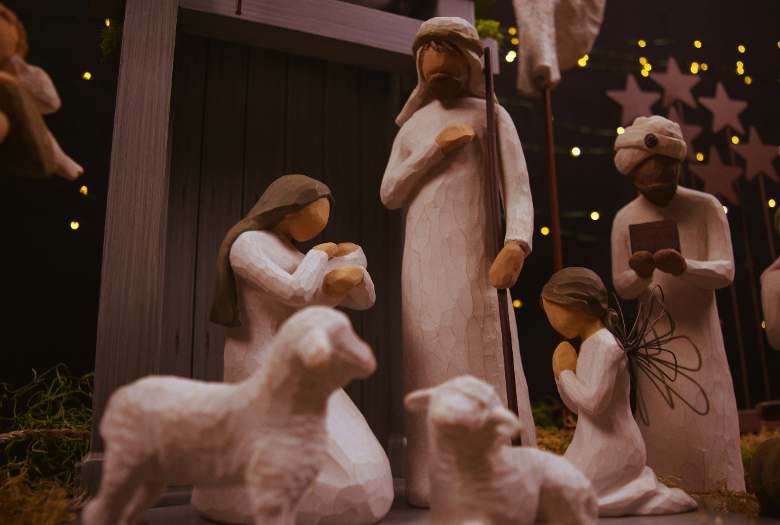
Many people participate in the Nativity Fast to commemorate the Messiah’s arrival. This image captures the Nativity Scene when Jesus was born. Dan Kiefer published this image on December 2, 2017. The photo above was downloaded from Unsplash.com on November 6, 2024.
As we embark on the Holiday season, I’d like to shed light on the Nativity Fast. While this specific form of fasting is common for Eastern Christians, I’m not familiar with this practice.
If your understanding of Christianity comes from Western teachings you may feel the same way. Knowing this, let’s take an educational journey that may inspire you to approach the Christmas season differently.
The Need for a Coming Messiah
A Promise Amid Punishment
Before explaining the importance of the Nativity Fast, let’s discuss the need for a coming Messiah.
Genesis 3:8 shows God’s desire to commune with humanity. All he asks of the first humans is not to eat from the Tree of the Knowledge of Good and Evil (Genesis 2:17).
Unfortunately, Adam and Eve break this rule after falling victim to the cunning scheme of the snake Satan (Genesis 3:6-7). Consequently, the snake faces consequences by being cursed more than any other animal and having to crawl on its belly (Genesis 3:14).
God also punishes humanity with hard work, labor pains, and an eviction from his presence in the Garden of Eden (Genesis 3:16-19).
While humanity’s consequences are devastating, God shows his goodness by leaving them with some hope for the future.
“And I will cause hostility between you and the woman, and between your offspring and her offspring. He will strike your head, and you will strike his heel” (Genesis 3:15; New Living Translation).
Biblical scholars teach Genesis 3:15 reveals the hostility between the Son of God (Jesus) and Satan. Satan will harm Jesus, but the Son of God will have ultimate victory over him for eternity.
Constant Reminders in Chaos
So, how will the promise of ultimate victory manifest? Through constant reminders amid uncertainty, darkness, and chaos.
Throughout the Old Testament, the Israelites experience oppression or are inconsistent in their devotion to God. One example proves this occurs during the period of judges when everyone does right in their eyes (Judges 17:6).
The end of this period comes as Israel yearns for an earthly king like their pagan neighbors (1 Samuel 8:4-5). While this is a sinful desire, God permits the request to bring about the coming Messiah.
Scripture reveals this as the Messiah will derive from the family line of Jesse and David (Isaiah 11:1; 2 Samuel 7:10-13). David becomes Israel’s second king, a man after God’s heart (1 Samuel 16:13; Acts 13:22).
This is fitting since the coming Messiah will
- Judge the nations (Isaiah 63:1-6).
- Bring destruction to Israel’s enemies (Numbers 24:15-19).
- Build the Lord’s Temple and reign on his throne as Israel’s king (Zechariah 6:12-15).
- Unify God’s chosen nation (Ezekiel 36:16-38; 37:15-28).
- Bring salvation to Israel (Isaiah 49:5-6).
Before the Messiah can bring salvation to Israel, he must suffer persecution and death. Harsh treatment occurs through the Messiah experiencing
- Rejection by humanity (Isaiah 53:3).
- Crucifixion by the Jews (Isaiah 53:4-5).
- Crushing by the Father (Isaiah 53:6-10).
- Dying so many can be counted as righteous (Isaiah 53:11-12).
- the foretold Resurrection from the dead (Psalm 16:10).
Of course, the Messiah cannot resurrect from the dead unless he is first brought to life.
The Significance of the Nativity Fast
A Welcomed Arrival?
The Messiah is brought to life after the angel Gabriel tells the Virgin Mary she will give birth to a son (Matthew 1:18; Luke 1:26-38). This was devastating news to her fiancee Joseph, who wanted to break the engagement quietly (Matthew 1:19).
Joseph could not understand how Mary could be pregnant without committing adultery. Thankfully, an angel tells Joseph to marry Mary since her child is from the Holy Spirit (Matthew 1:20).
The angel also says the child will be named Jesus because he will “save his people from their sins” (Matthew 1:21; NIV).
This message comes to fruition as Joseph and Mary travel to Bethlehem to register for Caesar Augustus’ census (Luke 2:1-5). Interestingly, Luke 2:7 says Jesus was born in a manager because no guest room was available.
A common misconception about Jesus is he was born in a stable because the innkeepers rejected Mary. Scholars believe stables are more suitable for delivering a baby than a place for sleeping.
Likewise, a manger is the perfect place for wise men to celebrate the birth of the long-awaited Messiah. The wise men celebrate by worshiping and presenting him with gifts (Matthew 2:9-11).
What is the Nativity Fast?
Similarly, Eastern Christian churches commemorate the birth of the Messiah through an act of worship. Instead of presenting tangible gifts, participants offer their lives as a living sacrifice through the Nativity Fast.
The Nativity Fast is a forty-day period that begins on Friday, November 15, and ends on Saturday, December 24. This is a joyful occasion as participants
Sincere reflection on this marvelous mystery occurs through prayer and fasting.
Matthew 6:5-18 shows prayer and fasting help us draw closer to God privately by denying fleshly desires. These disciplines also allow us to experience the empowering of the Holy Spirit as we do our part to fulfill the Great Commission (Matthew 28:19-20; Mark 16:5-18).
Similarly, the goal of the Nativity Fast is to free believers from worldly desires so God’s salvation can bear fruit.
Rules of Engagement
Who Can Participate?
So who can experience bearing the fruit of God’s salvation through this fast?
While the Nativity Fast is common among Eastern Christians, everyone is welcome to participate. (Exemptions are made for young children, pregnant women, and individuals with medical conditions).
Romans 14:5-9 allows believers to participate in various religious observances as long as they honor the Lord.
Spiritual leaders express this same caution since they do not want participants to fast in vain. Jesus teaches this same principle when exposing hypocrites who practice spiritual disciplines to appear holy (Matthew 6:16).
How to Participate in the Nativity Fast?
Individuals who are sincere about practicing the Nativity Fast can follow guidelines for specific days of the week.
On Mondays, Wednesdays, and Fridays, avoid alcohol, dairy, fish with a backbone, fowl, and olive oil. Participants can consume olive oil and wine every Tuesday and Thursday. On weekends, olive oil, wine, and fish with a backbone are permissible. (These are guidelines for a specific church. Each church sets unique guidelines for its congregation).
In addition to the previously mentioned items, eating whatever one desires on Thanksgiving Day is also permissible. According to Holy Cross Orthodox Church, Thanksgiving is one of the few Holidays left that reverence God.
Along with reverencing God through fasting, participants are also asked to give alms to the less fortunate. This mandate aligns with Isaiah 58:7 which shows the correlation between fasting and helping the needy in God’s eyes.
May God make his face shine upon and be gracious to all who draw near to him through the Nativity Fast.
Have you participated in this or a similar type of fast? I’d love to hear about your experience. Your comments and feedback are greatly appreciated!
Evangelical
Religious Events
Food and Religion
Previous Post

November 5, 2024
Commanders QB Jayden Daniels is Unashamed to Glorify God
Next Post

December 3, 2024 A Christmas Card:The Gift Within
Recent Comments
"https://uploads.disquscdn.c..."
Chris Johnson: Leaning on Faith to ..."
"https://uploads.disquscdn.c..."
Chris Johnson: Leaning on Faith to ..."
"Thank you for your very eye-opening comment! If overuse of muscles is the cause, should ..."
Chris Johnson: Leaning on Faith to ..."
"I've known 6 people who have or have died from ALS.Every single one was a ..."
Chris Johnson: Leaning on Faith to ..."
Browse Our Archives
Select a Category Education Education and Religion Faith & Family Faith & Sports Family Family and Religion Finance and Religion Food and Religion Friendship and Religion Health and Religion History and Religion Home & Religion Malcolm X Outdoors and Religion Parenting Parenting & Religion Parenting and Religion Personal Devotions Prayer Reading the Bible Reality Religion Religion & Music Religion and Reality Religion and Social Justice Religious Events Religious Holiday Religious Movies & Entertainment Religious Music and Entertainment Sports and Religion Study the Word of God Uncategorized Women in Sports
Select a Month September 2026 August 2026 July 2026 June 2026 May 2026 April 2026 March 2026 February 2026 January 2026 December 2025 November 2025 October 2025 September 2025 August 2025 July 2025 June 2025 May 2025 April 2025 March 2025 February 2025 January 2025 December 2024 November 2024 October 2024 September 2024 August 2024 July 2024 June 2024 May 2024 April 2024 March 2024 February 2024 January 2024
TAKE THE
Religious Wisdom Quiz
What did Isaiah say about Egypt's future in his oracles?
Select your answer to see how you score.
It would rule Persia It would conquer Israel It would be conquered It would prosper
Related posts from The Electi a Deo Experience


The Word of God: Is A Physical or...

What Should Believers Do When Leaders Fall?
Learn From Malcolm X: 3 Principles Christians Should...
TRENDING AT PATHEOS General Christian

'Super Scam Me' Exposes AI Jon Bon Jovi...
Leslie Pickett believed she was in a relationship with Jon Bon Jovi....

The Brazilian Remake of Kendricks' 'Flywheel' Opens in...
“Flywheel,” the story that launched the Kendrick Brothers’ filmmaking career is getting...

The Dangers of Gradual Accommodation (Winking at Sin)
Recently, the “law of gradualness” resurfaced during the opening of a weeklong,...

The Iron Gates and the Lion of the...
Yesterday, I didn't finish my report about, well, yesterday. So I'll...

The Image: On the Horror of Capitalism and...
The Image Then went the Pharisees, and took counsel how they might...

We are approaching the date of our new American national holiday: October...
view all General Christian blogs
What Are Your Thoughts?leave a comment
Ad-Free & Subscriber Log-In Subscription Support
- About Us
- 2026 Calendar
- Videos
- Podcasts
- Library of World Religions
- Faith In Media Tracker
- Advertise With Us
- Write for Us
- Privacy Policy
- Terms of Service
- Do Not Sell My Data
- Contact Us
- Radiant Digital
- Manage Newsletter Subscriptions
- Unsubscribe From Notifications
- Sitemap
Copyright 2008-2026, Patheos. All rights reserved.
Subscription Support Ad-Free & Subscriber Log-In
Follow Patheos