
BuddhistCatholicContemplativeEvangelicalGeneral ChristianHinduJewishLatter-day SaintMuslimNew VisionsProgressive Christian
Beliefs
- Buddhist
- Catholic
- Contemplative
- Evangelical
- General Christian
- Hindu
- Jewish
- Latter-day Saint
- More Voices
- Muslim
- New Visions
- Pagan
- Progressive Christian
Topics
- Religion News
- Food and Religion
- Sports and Religion
- Religious Art
- Religious Music and Entertainment
- Religious Events
- History and Religion
- Style and Religion
- Politics and Religion
- Women in Religion
- Recreation Outdoors and Religion
- Business Finance and Religion
- Careers Workplace and Religion
- Education and Religion
- Family Parenting and Religion
- Health Fitness and Religion
- Home and Religion
- Relationships and Religion
- Technology and Religion
- Travel and Religion
Columnists
- Buddhist Columnists
- Business Finance and Religion Columnists
- Careers Workplace and Religion Columnists
- Catholic Columnists
- Contemplative Columnists
- Education and Religion Columnists
- Evangelists Columnists
- Family Parenting and Religion Columnists
- General Christian Columnists
- Health Fitness and Religion Columnists
- Hindu Columnists
- History and Religion Columnists
- Home and Religion Columnists
- Jewish Columnists
- More Voices Columnists
- Latter Day Columnists
- Muslim Columnists
- New Visions Columnists
- Nonreligious Columnists
- Pagan Columnists
- Politics and Religion Columnists
- Progressive Columnists
- Recreation Outdoors and Religion Columnists
- Relationships and Religion Columnists
- Religion News Columnists
- Religious Art Columnists
- Religious Events Columnists
- Religious Music and Entertainment Columnists
- Sports and Religion Columnists
- Style and Religion Columnists
- Technology and Religion Columnists
- Travel and Religion Columnists
- Women in Religion Columnists
Resource Library
- 2026 Calendar
- Library of World Religions
- The 100 Most Holy Places on Earth
- Patheos Answers
- Podcasts
- Videos
- Faith Leaders Database
- Anglican Episcopalian
- Bahai
- Baptist
- Buddhism
- Christianity
- Confucianism
- Eastern Orthodoxy
- Hinduism
- Holiness and Pentecostal
- ISKCON
- Islam
- Judaism
- Lutheran
- Methodist
- The Church of Jesus Christ of Latter-day Saints
- New Age
- Paganism
- Presbytarian and Reformed
- Protestantism
- Religion Behind the Scenes
- Roman Catholic
- Scientology
- Shia Islam
- Sikhism
- Sufism
- Sunni Islam
- Taoism
- Zen
- See all religions
Research Tools
 Ad-Free & Subscriber Log-In Subscription Support
Ad-Free & Subscriber Log-In Subscription Support
Follow Patheos 

- Trending:
- Forgiveness
- |
- Marriage
- |
- Consciousness
- |
- Death Penalty
- |
- Election
- |
- Halloween

- Home
- Evangelical
- Loving Rich Men, Needing Patrons (Timon of Athens)
Loving Rich Men, Needing Patrons (Timon of Athens)
Last updated on: June 2, 2016 at 11:19 pm by John Mark N. Reynolds
Loving Rich Men, Needing Patrons (Timon of Athens) 2016-06-02T23:19:30-04:00 John Mark N. Reynolds
Patheos Explore the world's faith through different perspectives on religion and spirituality! Patheos has the views of the prevalent religions and spiritualities of the world.
 Great Solomon, son of David, was a patron to artists because he was wise and rich. Serving his wisdom ennobled the man blessed enough to serve him. Wicked Jezebel was a king’s daughter, but her wealth corrupted those who honored her for her power.
Christian culture is one that honors the patron: the noble man, blessed by wealth, who gives out of his virtue. To that patron, the rest of us can render service and honor. We do not honor the gold ring, but the golden heart that is most praiseworthy and essential, because so rare. Rich men are not rare: patrons are very scarce. We cannot have as a patron the boastful, litigious man who builds wealth on suffering.
The patron, the Christian gentleman or lady (to use the terminology of another time!) is worthy, because they are truly a gentleman or lady. Read any Trollope novel.
The Christian community that thinks that money is a sign of success has confused the worldly with the eternal, a spirit antithetical to the message of the Savior. He said the poor are blessed and that wealth is a great burden when it comes to salvation.
If there is one thing that Scripture, tradition, and history teach us, it is that mere money making is no virtue. Imagine a church foolish enough to honor a rich man because he is rich! Pity any community that would decide that boasting of wealth is a virtue or an accomplishment worthy of honor and the highest position. Surely no Bible believing church would do this since:
My brothers, show no partiality as you hold the faith in our Lord Jesus Christ, the Lord of glory. For if a man wearing a gold ring and fine clothing comes into your assembly, and a poor man in shabby clothing also comes in, and if you pay attention to the one who wears the fine clothing and say, “You sit here in a good place,” while you say to the poor man, “You stand over there,” or, “Sit down at my feet,” have you not then made distinctions among yourselves and become judges with evil thoughts? Listen, my beloved brothers, has not God chosen those who are poor in the world to be rich in faith and heirs of the kingdom, which he has promised to those who love him? But you have dishonored the poor man. Are not the rich the ones who oppress you, and the ones who drag you into court? Are they not the ones who blaspheme the honorable name by which you were called?
I have known many who have been blessed with wealth who are humble and scorn “partiality.” They do not view wealth as a merit or boast of it as an accomplishment. Instead, they have great souls, modest spirits, and are a delight to the poor. They do not rush to courts or quickly sue.
Saint James has rightly called those who dazzle with gold rings and who quickly call on the lawyers our enemies.
This is obvious, but Scripture and great literature are never merely obvious. Scripture teaches us to pity the man who has nothing but riches to commend him, because salvation and happiness are so hard to achieve. Shakespeare drives this point home in his collaborative effort: Timon of Athens.
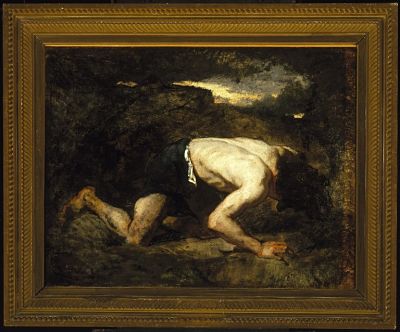
Timon is a rich man, honored in the city for his feasts and great generosity. He lives by debt, gives great gifts, and ends up surrounded by flatters. When his wealth departs, his power and friends vanish, save for one faithful servant. In a twist, he finds gold and is rich again, but his disillusionment with his city and with humankind is too great and he dies.
Pity the rich man and pity the city who honors him for his prosperity. Does anyone wish to live surrounded by flatterers and false friends? Timon is lucky enough to grow poor, so he can see that those he loved were not worthy of his affections. Sadly, it is too late for Timon because his city has not built on his good qualities, but instead fed his folly. How? Timon has the makings of a good man, a generous man, but Athens teaches him that friendship, power, and favor come only with ostentatious spending of gold.
He has a friend, but he does not know it, because his true friend refuses to flatter him.
Timon thinks he can buy love, but discovers he cannot. This kills him . . . unable to see that he had (all along!) one true friend. Jesus tells a similar tale when He discusses the rich man and Lazarus: it is the rich man we should pity. He was destined by God to be a patron, but we reduced him to a cash cow by making him swollen, vain, and self-satisfied by our flattery.
The city pays more dearly than even Timon because it takes what might have been a great man and reduces him to an embittered rich man. They use him and when they need him, he is gone. They end up in the power of the tyrant Alcibiades.
The city that has no worthy patrons, that honors the rich for riches, will be reduced to jobs. Timon has characters with no names. They are known only by their roles or work. The Christian patron raises up those he blesses. The vulgar rich demand that their slaves abase themselves.
Timon learns his folly in this life, Lazarus in the place of the dead. Both are pitiable, but worse is the city or community that flattered, stroked, and cajoled them into the belief that their gold made them good and that God could be bought by sudden, impetuous gifts.
Timon of Athens has a counterpart in the brilliant work of the American genius Frank Capra. There the humble man, George Bailey, uses what wealth he has to help the poor and the working class. He lives simply and refuses to bow the knee to Potter, the powerful rich man in the town. He will not give up Bedford Falls to Potter. When he faces ruin (brought on by Potter), he discovers he has true friends. His virtue, not his money, have made him the “richest man in town.”
George Bailey is a patron and so saves Bedford Falls from falling into the hands of Potter.
Again, the lesson is not that of the socialist or the covetous man. Money is not evil in itself. Good men may use money (as George Bailey did) to do great good. Every good thing I have done has had benefactors standing (often anonymously) in the wings making good possible. I honor them, but not so much for the gift, but the humble charity.
They have never demanded the highest seat and their wisdom is not because of wealth, but their wealth came through their wisdom. God be thanked.
And so the lesson of Saint James and of Timon of Athens is simple: show no preference based merely on money. Do not honor “money making” as if it automatically is a good thing, flatter, or give false friendship to the rich.
Charles Williams, at the end of a poem has this haunting line: “send not, send not the rich empty away.” Salvation is difficult for the rich and they need our prayers and not our flattery. Our calling (if we are not wealthy) is to be a true friend to our patrons, but refuse any patron who only has wealth.
Athens killed Timon by flattery, but killed herself by destroying a possible patron and leader. She ended chastised, having lost her liberty. Timon wrote his own epitaph:
Here lie I, Timon; who, alive, all living men did hate:
Pass by and curse thy fill, but pass and stay
not here thy gait…
God send us patrons and may we not misuse those you send. May we honor them for their golden souls and not their gold, rendering them faithful service. May we reject the bully and the braggart. Lord have mercy: send not, send not, any of us empty away.
———————————————————-
William Shakespeare went to God four hundred years ago. To recollect his death, I am writing a personal reflection on a few of his plays. The Winter’s Tale started things off, followed by As You Like It. Romeo and Juliet still matter, Lady Macbeth rebukes the lust for power, and Henry V is a hero. Richard II shows us not to presume on the grace of God or rebel against authority too easily. Coriolanus reminds us that our leaders need integrity and humility. Our life can be joyful if we realize that it is, at best, A Comedy of Errors. Hamlet needs to know himself better and talks to himself less. He is stuck with himself so he had better make his peace with God quickly and should stay far away from Ophelia. Shakespeare gets something wrong in Merchant of Venice . . . though not as badly as some in the English Labour Party or in my Twitter feed. Love if blind, but intellectualism is blind and impotent in Love’s Labours Lost. Brutus kills Caesar, but is overshadowed by him in Julius Caesar. We should learn not to make Much Ado about Nothing. We might all be Antony, but if we would avoid his fate then we must avoid flattery and the superficial love of Troilus and Cressida. We are fools, but our goal should be to accept it and not to degenerate into Biblical fools during our Midsummer Night’s Dream. Richard III is a symptom of a bad leadership community, but be careful that use Measure for Measure to guide your reaction to the mess. The modern university is Iago in Othello playing on our sins to destroy the nation. You can’t accumulate your way to a great leader and personal piety in Henry VI (Part I) is not enough to make a great king. God will save the King, not our stupid partisan squabbles seen in Henry VI (Part 2) and not kingmakers as existed in Henry VI (Part 3). Fortunately, in God’s world All’s Well That Ends Well. Two Gentlemen remind me that being in love is grand. King John keeps winning and so loses. Slander always gives way to truth in Cymbeline. We need patrons, but God help us if we flatter them and lose them as Athens did with Timon of Athens.
Previous Post

June 1, 2016
Slander Gives Way to Truth (Cymbeline)
Next Post
June 3, 2016 Hoping Our Leader Drops Down from the Clouds (Henry IV Part 1)
Browse Our Archives
Select a Category Apologetics Art Culture Education On Books On Education Philosophy Politics Pop Culture Spiritual Reflections Uncategorized
Select a Month October 2026 September 2026 August 2026 July 2026 July 2025 June 2025 September 2024 July 2024 June 2024 December 2023 June 2023 September 2022 May 2022 April 2022 March 2022 February 2022 July 2021 June 2021 May 2021 April 2021 March 2021 February 2021 January 2021 December 2020 November 2020 October 2020 September 2020 August 2020 July 2020 June 2020 May 2020 April 2020 March 2020 February 2020 January 2020 December 2019 November 2019 October 2019 September 2019 August 2019 July 2019 June 2019 May 2019 April 2019 March 2019 February 2019 January 2019 December 2018 November 2018 October 2018 September 2018 August 2018 July 2018 June 2018 May 2018 April 2018 March 2018 February 2018 January 2018 December 2017 November 2017 October 2017 September 2017 August 2017 July 2017 June 2017 May 2017 April 2017 March 2017 February 2017 January 2017 December 2016 November 2016 October 2016 September 2016 August 2016 July 2016 June 2016 May 2016 April 2016 March 2016 February 2016 January 2016 December 2015 November 2015 October 2015 September 2015 August 2015 July 2015 June 2015 May 2015 April 2015 March 2015 February 2015 January 2015 November 2014 October 2014 September 2014 August 2014 July 2014 June 2014 May 2014 April 2014 March 2014 February 2014 January 2014 December 2013 November 2013 October 2013 September 2013 August 2013 July 2013 June 2013 May 2013 April 2013 March 2013 February 2013 January 2013 December 2012 November 2012 October 2012 September 2012 August 2012 July 2012 June 2012 May 2012
Follow Us!
TAKE THE
Religious Wisdom Quiz
What did Isaiah say about Egypt's future in his oracles?
Select your answer to see how you score.
It would conquer Israel It would rule Persia It would prosper It would be conquered
Books by This Author John Mark Reynolds
Related posts from Eidos

Classical Education Must Teach Us to Make the...

Classical Education and the Art of Dying Well

Golden, Golden, Golden: My Mother's Last Lesson

TRENDING AT PATHEOS Evangelical

The REST of Your Life: A Creative Wrestles...
This week I had a conversation with a good friend from church....

How the author of the world's best hymn...
I've been working with John Newton for a while now. This makes...

Long before this Lectio Divina, Psalm 130 - the song - started...

What About the Trees? Another Living Parable
After I finished writing the last article about falling leaves as a...

Why Classical Education Is a Conversation, Not a...
Come and Read: Joy in Classical Education When I was a little...

Cornell University has received a great deal of negative publicity and intense...
view all Evangelical blogs
Ad-Free & Subscriber Log-In Subscription Support
- About Us
- 2026 Calendar
- Videos
- Podcasts
- Library of World Religions
- Faith In Media Tracker
- Advertise With Us
- Write for Us
- Privacy Policy
- Terms of Service
- Do Not Sell My Data
- Contact Us
- Radiant Digital
- Manage Newsletter Subscriptions
- Unsubscribe From Notifications
- Sitemap
Copyright 2008-2026, Patheos. All rights reserved.
Subscription Support Ad-Free & Subscriber Log-In
Follow Patheos