
BuddhistCatholicContemplativeEvangelicalGeneral ChristianHinduJewishLatter-day SaintMuslimNew VisionsProgressive Christian
Beliefs
- Buddhist
- Catholic
- Contemplative
- Evangelical
- General Christian
- Hindu
- Jewish
- Latter-day Saint
- More Voices
- Muslim
- New Visions
- Pagan
- Progressive Christian
Topics
- Religion News
- Food and Religion
- Sports and Religion
- Religious Art
- Religious Music and Entertainment
- Religious Events
- History and Religion
- Style and Religion
- Politics and Religion
- Women in Religion
- Recreation Outdoors and Religion
- Business Finance and Religion
- Careers Workplace and Religion
- Education and Religion
- Family Parenting and Religion
- Health Fitness and Religion
- Home and Religion
- Relationships and Religion
- Technology and Religion
- Travel and Religion
Columnists
- Buddhist Columnists
- Business Finance and Religion Columnists
- Careers Workplace and Religion Columnists
- Catholic Columnists
- Contemplative Columnists
- Education and Religion Columnists
- Evangelists Columnists
- Family Parenting and Religion Columnists
- General Christian Columnists
- Health Fitness and Religion Columnists
- Hindu Columnists
- History and Religion Columnists
- Home and Religion Columnists
- Jewish Columnists
- More Voices Columnists
- Latter Day Columnists
- Muslim Columnists
- New Visions Columnists
- Nonreligious Columnists
- Pagan Columnists
- Politics and Religion Columnists
- Progressive Columnists
- Recreation Outdoors and Religion Columnists
- Relationships and Religion Columnists
- Religion News Columnists
- Religious Art Columnists
- Religious Events Columnists
- Religious Music and Entertainment Columnists
- Sports and Religion Columnists
- Style and Religion Columnists
- Technology and Religion Columnists
- Travel and Religion Columnists
- Women in Religion Columnists
Resource Library
- 2026 Calendar
- Library of World Religions
- The 100 Most Holy Places on Earth
- Patheos Answers
- Podcasts
- Videos
- Faith Leaders Database
- Anglican Episcopalian
- Bahai
- Baptist
- Buddhism
- Christianity
- Confucianism
- Eastern Orthodoxy
- Hinduism
- Holiness and Pentecostal
- ISKCON
- Islam
- Judaism
- Lutheran
- Methodist
- The Church of Jesus Christ of Latter-day Saints
- New Age
- Paganism
- Presbytarian and Reformed
- Protestantism
- Religion Behind the Scenes
- Roman Catholic
- Scientology
- Shia Islam
- Sikhism
- Sufism
- Sunni Islam
- Taoism
- Zen
- See all religions
Research Tools
 Ad-Free & Subscriber Log-In Subscription Support
Ad-Free & Subscriber Log-In Subscription Support
Follow Patheos 

- Trending:
- Forgiveness
- |
- Marriage
- |
- Consciousness
- |
- Death Penalty
- |
- Election
- |
- Halloween

- Home
- Evangelical
- I am in Love and that is Simply Grand (Two Gentlemen)
I am in Love and that is Simply Grand (Two Gentlemen)
Last updated on: June 1, 2016 at 12:31 am by John Mark N. Reynolds
I am in Love and that is Simply Grand (Two Gentlemen) 2016-06-01T00:31:57-04:00 John Mark N. Reynolds
Patheos Explore the world's faith through different perspectives on religion and spirituality! Patheos has the views of the prevalent religions and spiritualities of the world.
Being in love is on defense. If you are in love, you are aware that everyone that wishes to be in love and is not will be sad and those who are “out of love” will think you a liar or soon to be disillusioned.
In fact, if you do not note the cynicism and admit the good chance of coming disappointment, nobody will listen at all except those who have given up on reason in the hope that this will make love last.
It doesn’t, shouldn’t, and can’t.
Love is reasonable or it will not last reality.
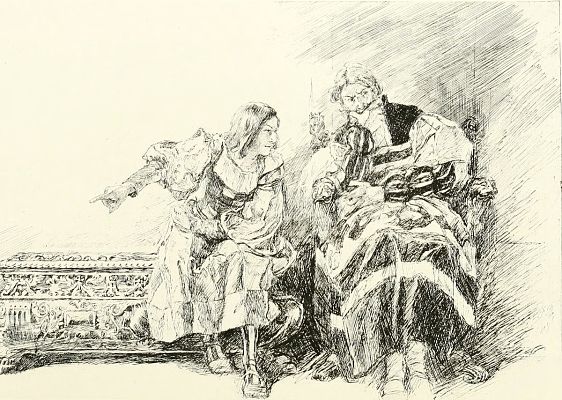
Shakespeare knows this and in one his earliest plays Two Gentlemen of Verona tries to cheer on the lover while getting rid of the fool who bases his relationships on attraction. The play says:
… Love is blind.
And a certain kind of love surely is. One of the gentlemen is not much of a gentleman (Proteus), really a bit of a cad, and the other is both gentle and a real man (Valentine). Both the women are certainly ladies. What is the difference between the ladies and gentleman and this cad? Proteus is controlled by his desires and so cannot see. His natural desires, unnatural to divinity, blind him:
But when I look on her perfections,
There is no reason but I shall be blind.
If I can cheque my erring love, I will;
If not, to compass her I’ll use my skill.
He will not endure unhappiness and say no to his erring love, but instead will follow his heart and so betrays his friend. One knows false love from true love by this: true love is morality, reality, and affection. False love can happen at first sight and is based on erotic blindness. False love is about “being true to myself and my feelings.” True love is about “being true to God and honor.”
Shakespeare understands the problem of false love, but does not take himself or the topic too seriously. False love is always very serious . . . ask Romeo. Erotic love will die if it cannot be actualized and so must win. Shakespeare laughs at this feverishness. There is a solution to erotic blindness if the false lover will but grasp it.
Julia, who has been rejected, understands the nature of true love. As she looks at a picture of her “rival,” she says:
If this fond Love were not a blinded god?
Come, shadow, come and take this shadow up,
For ’tis thy rival. O thou senseless form,
Thou shalt be worshipp’d, kiss’d, loved and adored!
And, were there sense in his idolatry,
My substance should be statue in thy stead.
I’ll use thee kindly for thy mistress’ sake,
That used me so; or else, by Jove I vow,
I should have scratch’d out your unseeing eyes
To make my master out of love with thee!
Julia looks at the picture of her rival and will take it to her beloved. Why? She knows that it is a shadow (an image) of an image. How? The woman it pictures is real enough, but the man does not see the real woman. He is in love with his desire. She will “use him kindly,” because the real woman behind the picture cannot stand Proteus. Julia knows that her love is real, because it is honorable, real, and not mere “attraction.” Any real woman knows Proteus is false and no real lover, because he can so quickly change his affections. Julia refuses to “compete” though she knows she is attractive enough to “win.” She sees her beloved as the mess he really is . . . and also sees that he can be better if he will repent. When he does repent, she is there to forgive him, but as herself and not as a desperate competitor for his wandering eye.
She appeals to his decency and honor.
Yet it is not Julia who wakes Proteus up. His friend Valentine kills false love through simple friendship. Valentine finds himself with power over Proteus, but instead of revenge, confronts Proteus with his error. His appeal is so effective that Proteus repents. Valentine then offers to step aside if that is best for both the woman he loves and his friend Proteus. This sacrifice is the measure of true friendship and exposes the merely erotic love of Proteus as the cheap and sordid thing it is.
The time has come for Americans to hold up the love that endures, is honorable, and is based on eternal values and not on personal preference. The cult of personal attraction is a false love even if it is based on abiding preference. Honor, community, and eternal values must come first.
But all that is very serious and love, even good love, is a bit comic. We must make love to survive as a species, but survival is not enough. We are not just beasts: we are people, Whatever kinds of love there may be in the cosmos, only a man and a woman making love produces new life. This is joyful, sublime, and funny. Real love has keen vision . . . but looks blind to people who care only about personal attraction. Real love sees so far down the road that it sees Heaven and the God who is love. It makes love in the light of eternity and never for personal fulfillment.
As a result, true lovers can be fulfilled, but only as ‘we.” The very process makes a man more than a man: a gentleman and every woman in love, a lady.
—————————————————————–
William Shakespeare went to God four hundred years ago. To recollect his death, I am writing a personal reflection on a few of his plays. The Winter’s Tale started things off, followed by As You Like It. Romeo and Juliet still matter, Lady Macbeth rebukes the lust for power, and Henry V is a hero. Richard II shows us not to presume on the grace of God or rebel against authority too easily. Coriolanus reminds us that our leaders need integrity and humility. Our life can be joyful if we realize that it is, at best, A Comedy of Errors. Hamlet needs to know himself better and talks to himself less. He is stuck with himself so he had better make his peace with God quickly and should stay far away from Ophelia. Shakespeare gets something wrong in Merchant of Venice . . . though not as badly as some in the English Labour Party or in my Twitter feed. Love if blind, but intellectualism is blind and impotent in Love’s Labours Lost. Brutus kills Caesar, but is overshadowed by him in Julius Caesar. We should learn not to make Much Ado about Nothing. We might all be Antony, but if we would avoid his fate then we must avoid flattery and the superficial love of Troilus and Cressida. We are fools, but our goal should be to accept it and not to degenerate into Biblical fools during our Midsummer Night’s Dream. Richard III is a symptom of a bad leadership community, but be careful that use Measure for Measure to guide your reaction to the mess. The modern university is Iago in Othello playing on our sins to destroy the nation. You can’t accumulate your way to a great leader and personal piety in Henry VI (Part I) is not enough to make a great king. God will save the King, not our stupid partisan squabbles seen in Henry VI (Part 2) and not kingmakers as existed in Henry VI (Part 3). Fortunately, in God’s world All’s Well That Ends Well. Two Gentlemen remind me that being in love is grand.
Previous Post

May 30, 2016
Faster, Stronger, Better. . . Meh (The Six Million Dollar Man)
Next Post
June 1, 2016 Slander Gives Way to Truth (Cymbeline)
Browse Our Archives
Select a Category Apologetics Art Culture Education On Books On Education Philosophy Politics Pop Culture Spiritual Reflections Uncategorized
Select a Month October 2026 September 2026 August 2026 July 2026 July 2025 June 2025 September 2024 July 2024 June 2024 December 2023 June 2023 September 2022 May 2022 April 2022 March 2022 February 2022 July 2021 June 2021 May 2021 April 2021 March 2021 February 2021 January 2021 December 2020 November 2020 October 2020 September 2020 August 2020 July 2020 June 2020 May 2020 April 2020 March 2020 February 2020 January 2020 December 2019 November 2019 October 2019 September 2019 August 2019 July 2019 June 2019 May 2019 April 2019 March 2019 February 2019 January 2019 December 2018 November 2018 October 2018 September 2018 August 2018 July 2018 June 2018 May 2018 April 2018 March 2018 February 2018 January 2018 December 2017 November 2017 October 2017 September 2017 August 2017 July 2017 June 2017 May 2017 April 2017 March 2017 February 2017 January 2017 December 2016 November 2016 October 2016 September 2016 August 2016 July 2016 June 2016 May 2016 April 2016 March 2016 February 2016 January 2016 December 2015 November 2015 October 2015 September 2015 August 2015 July 2015 June 2015 May 2015 April 2015 March 2015 February 2015 January 2015 November 2014 October 2014 September 2014 August 2014 July 2014 June 2014 May 2014 April 2014 March 2014 February 2014 January 2014 December 2013 November 2013 October 2013 September 2013 August 2013 July 2013 June 2013 May 2013 April 2013 March 2013 February 2013 January 2013 December 2012 November 2012 October 2012 September 2012 August 2012 July 2012 June 2012 May 2012
Follow Us!
TAKE THE
Religious Wisdom Quiz
Which is the only book in the Old Testament named after a woman besides Ruth?
Select your answer to see how you score.
Miriam Naomi Deborah Esther
Books by This Author John Mark Reynolds
Related posts from Eidos

Classical Education Must Teach Us to Make the...

Classical Education and the Art of Dying Well

Golden, Golden, Golden: My Mother's Last Lesson

TRENDING AT PATHEOS Evangelical

The REST of Your Life: A Creative Wrestles...
This week I had a conversation with a good friend from church....

How the author of the world's best hymn...
I've been working with John Newton for a while now. This makes...

Long before this Lectio Divina, Psalm 130 - the song - started...

What About the Trees? Another Living Parable
After I finished writing the last article about falling leaves as a...

Why Classical Education Is a Conversation, Not a...
Come and Read: Joy in Classical Education When I was a little...

Cornell University has received a great deal of negative publicity and intense...
view all Evangelical blogs
Ad-Free & Subscriber Log-In Subscription Support
- About Us
- 2026 Calendar
- Videos
- Podcasts
- Library of World Religions
- Faith In Media Tracker
- Advertise With Us
- Write for Us
- Privacy Policy
- Terms of Service
- Do Not Sell My Data
- Contact Us
- Radiant Digital
- Manage Newsletter Subscriptions
- Unsubscribe From Notifications
- Sitemap
Copyright 2008-2026, Patheos. All rights reserved.
Subscription Support Ad-Free & Subscriber Log-In
Follow Patheos