
BuddhistCatholicContemplativeEvangelicalGeneral ChristianHinduJewishLatter-day SaintMuslimNew VisionsProgressive Christian
Beliefs
- Buddhist
- Catholic
- Contemplative
- Evangelical
- General Christian
- Hindu
- Jewish
- Latter-day Saint
- More Voices
- Muslim
- New Visions
- Pagan
- Progressive Christian
Topics
- Religion News
- Food and Religion
- Sports and Religion
- Religious Art
- Religious Music and Entertainment
- Religious Events
- History and Religion
- Style and Religion
- Politics and Religion
- Women in Religion
- Recreation Outdoors and Religion
- Business Finance and Religion
- Careers Workplace and Religion
- Education and Religion
- Family Parenting and Religion
- Health Fitness and Religion
- Home and Religion
- Relationships and Religion
- Technology and Religion
- Travel and Religion
Columnists
- Buddhist Columnists
- Business Finance and Religion Columnists
- Careers Workplace and Religion Columnists
- Catholic Columnists
- Contemplative Columnists
- Education and Religion Columnists
- Evangelists Columnists
- Family Parenting and Religion Columnists
- General Christian Columnists
- Health Fitness and Religion Columnists
- Hindu Columnists
- History and Religion Columnists
- Home and Religion Columnists
- Jewish Columnists
- More Voices Columnists
- Latter Day Columnists
- Muslim Columnists
- New Visions Columnists
- Nonreligious Columnists
- Pagan Columnists
- Politics and Religion Columnists
- Progressive Columnists
- Recreation Outdoors and Religion Columnists
- Relationships and Religion Columnists
- Religion News Columnists
- Religious Art Columnists
- Religious Events Columnists
- Religious Music and Entertainment Columnists
- Sports and Religion Columnists
- Style and Religion Columnists
- Technology and Religion Columnists
- Travel and Religion Columnists
- Women in Religion Columnists
Resource Library
- 2026 Calendar
- Library of World Religions
- The 100 Most Holy Places on Earth
- Patheos Answers
- Podcasts
- Videos
- Faith Leaders Database
- Anglican Episcopalian
- Bahai
- Baptist
- Buddhism
- Christianity
- Confucianism
- Eastern Orthodoxy
- Hinduism
- Holiness and Pentecostal
- ISKCON
- Islam
- Judaism
- Lutheran
- Methodist
- The Church of Jesus Christ of Latter-day Saints
- New Age
- Paganism
- Presbytarian and Reformed
- Protestantism
- Religion Behind the Scenes
- Roman Catholic
- Scientology
- Shia Islam
- Sikhism
- Sufism
- Sunni Islam
- Taoism
- Zen
- See all religions
Research Tools
 Ad-Free & Subscriber Log-In Subscription Support
Ad-Free & Subscriber Log-In Subscription Support
Follow Patheos 

- Trending:
- Forgiveness
- |
- Marriage
- |
- Consciousness
- |
- Death Penalty
- |
- Election
- |
- Halloween

- Home
- Evangelical
- Measure for Measure: Aspire to be Good, but We Are Not (Jesus, Shakespeare)
Measure for Measure: Aspire to be Good, but We Are Not (Jesus, Shakespeare)
Last updated on: May 18, 2016 at 6:39 pm by John Mark N. Reynolds
Measure for Measure: Aspire to be Good, but We Are Not (Jesus, Shakespeare) 2016-05-18T18:39:59-04:00 John Mark N. Reynolds
Patheos Explore the world's faith through different perspectives on religion and spirituality! Patheos has the views of the prevalent religions and spiritualities of the world.
No person is all bad, few persons are all good.
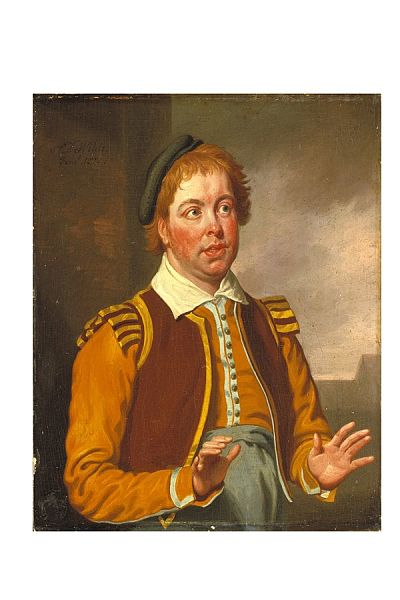
Jesus was a very smart and wise man and when we have a chance to see Him influencing the greatest writer in the English language and an astute political philosopher, we had better pay attention. Americans wobble between harsh moral judgments or an inability to make any moral distinctions.
Try stating “Bruce Jenner is a man.” on Twitter and you will see a great deal of ugly moral absolutism. On the other hand, those Americans turned off by the harshness from both sides often are incapable of saying anybody not at present a Nazi is bad. A man can say loathsome things yesterday and if we recall them today, a fair number of Americans will say we are “judgmental” or “living in the past.”
Needless to say Jesus, William Shakespeare, and Bernard Mandeville warned us against both mistakes.
Jesus said:
1“Judge not, that you be not judged. 2For with the judgment you pronounce you will be judged, and with the measure you use it will be measured to you. 3Why do you see the speck that is in your brother’s eye, but do not notice the log that is in your own eye?4Or how can you say to your brother, ‘Let me take the speck out of your eye,’ when there is the log in your own eye? 5You hypocrite, first take the log out of your own eye, and then you will see clearly to take the speck out of your brother’s eye.
6“Do not give dogs what is holy, and do not throw your pearls before pigs, lest they trample them underfoot and turn to attack you.
Jesus was not saying that His friends could not say an action was wrong. Frequently, He encouraged His friends to condemn all kinds of vice and He had harsh things to say about those who ignored the moral law. What Jesus was saying was that when we see people breaking the moral law to make sure that we are not equally guilty or even more guilty. Most of us not named Jesus are often as guilty as those we condemn and should be careful. Jesus also is making the point that if we set up a society where “sin” is punished harshly, we will have to live in that society.
Given that almost every human person sins, we want to be careful to provide room for mercy.
Notice that Jesus is not saying it is good to sin. After death, a pure Judge will examine the deeds of all men and He will judge with an absolute judgement. Yet here too, the judgment comes from a Judge who knows our weakness and has had mercy on us if we will accept His mercy.
When it comes to organizing a community, virtue, weakness, and mercy must all be kept in mind. The best treatment of the Christian ideal is in Shakespeare’s play Measure for Measure (the title borrowed from Jesus). Here a ruler of a state allows a “rule maker” to govern his city and the results are dreadful. As always, the ruler obsessed with sin is a greater sinner and the harshness of his rule is unbearable. It makes a mock of morality by forgetting mercy in order to attempt the impossible: utterly stamp out a certain kind of vice.
Shakespeare is not condoning the “Red Light District,” but he does demonstrate that a government powerful enough to get rid of it will be worse than the original vice. Human law cannot see the totality of a person and Shakespeare shows that “good people” have problems and “bad people” have good traits. We don’t have to wish to become just like Mistress Overdone or the rascally Pompey to see that they have good traits.
Christianity teaches two truths in tension before Jesus returns:
All humans are created in the image of God. No person is all bad.
All humans are broken and cannot help themselves.
The first truth means that some good qualities can be found in the worst of people. Forget this and we will be confused when we meet the “great sinner.” The Klan leader may love his wife well. The slum lord may give huge amounts of money to charity. A person being good except for his vice does not make the vice on whit better. The “bad characters” in Measure for Measure show humanity, jollity, and mercy without justifying vices like prostitution. The “good characters” (even the ruler) show faults and foibles that underscore the need for mercy in the application of the law this side of Paradise.
Authority is dangerous in broken men:
But man, proud man,
Drest in a little brief authority,
Most ignorant of what he ’s most assured,
His glassy essence, like an angry ape,
Plays such fantastic tricks before high heaven
As make the angels weep
Any religious conservative should sit and read the political application of this in Bernard Mandeville in Fable of the Bees. He is a complicated writer, but assume for the moment that he does not mean to undermine private morality. His point may simply be that the state must not try to make everyone moral or real morality will be choked off. Governments tend to try to check only some kinds of immorality (one hundred years ago sex vices, now “hate speech”) and do so by performing greater acts of immortality. We must and should (as public people) tolerate vice, because vice will be with us always. Nobody should applaud greed, but trying to stamp it out will drive us mad. Who ever makes a business deal and is sure he is not somewhat motivated by greed? Just as few business leaders are just Scrooges, few are saints.
We have to accept not that “greed is good,” but that the good (this side of Paradise) have some greed in them. If we do not celebrate vice, but also do not try to judge it out of existence, then we can make progress. We encourage the arts, but we do not denigrate money making. We leave crafting a perfect society or even the urge to Utopia to God who is able. After all, if God who can does not immediately stamp out all sin, then it must be better so.
God would have taught humankind without our sins and failings, but we are as we are. He brings good even from our faults. We do not sin that this grace may abound, but we thank God for His grace.
As Shakespeare says:
They say, best men are moulded out of faults,
And, for the most, become much more the better
For being a little bad.
——————————————————————
William Shakespeare went to God four hundred years ago. To recollect his death, I am writing a personal reflection on a few of his plays. The Winter’s Tale started things off, followed by As You Like It. Romeo and Juliet still matter, Lady Macbeth rebukes the lust for power, and Henry V is a hero. Richard II shows us not to presume on the grace of God or rebel against authority too easily. Coriolanus reminds us that our leaders need integrity and humility. Our life can be joyful if we realize that it is, at best, A Comedy of Errors. Hamlet needs to know himself better and talks to himself less. He is stuck with himself so he had better make his peace with God quickly and should stay far away from Ophelia. Shakespeare gets something wrong in Merchant of Venice . . . though not as badly as some in the English Labour Party or in my Twitter feed. Love if blind, but intellectualism is blind and impotent in Love’s Labours Lost. Brutus kills Caesar, but is overshadowed by him in Julius Caesar. We should learn not to make Much Ado about Nothing. We might all be Antony, but if we would avoid his fate then we must avoid flattery and the superficial love of Troilus and Cressida. We are fools, but our goal should be to accept it and not to degenerate into Biblical fools during our Midsummer Night’s Dream. Richard III is a symptom of a bad leadership community, but be careful that use Measure for Measure to guide your reaction to the mess.
Previous Post

May 17, 2016
Once You Have a Mess, It Just Gets Messier (Richard III)
Next Post
May 19, 2016 Christianity and the Cultural Crisis
Browse Our Archives
Select a Category Apologetics Art Culture Education On Books On Education Philosophy Politics Pop Culture Spiritual Reflections Uncategorized
Select a Month October 2026 September 2026 August 2026 July 2026 July 2025 June 2025 September 2024 July 2024 June 2024 December 2023 June 2023 September 2022 May 2022 April 2022 March 2022 February 2022 July 2021 June 2021 May 2021 April 2021 March 2021 February 2021 January 2021 December 2020 November 2020 October 2020 September 2020 August 2020 July 2020 June 2020 May 2020 April 2020 March 2020 February 2020 January 2020 December 2019 November 2019 October 2019 September 2019 August 2019 July 2019 June 2019 May 2019 April 2019 March 2019 February 2019 January 2019 December 2018 November 2018 October 2018 September 2018 August 2018 July 2018 June 2018 May 2018 April 2018 March 2018 February 2018 January 2018 December 2017 November 2017 October 2017 September 2017 August 2017 July 2017 June 2017 May 2017 April 2017 March 2017 February 2017 January 2017 December 2016 November 2016 October 2016 September 2016 August 2016 July 2016 June 2016 May 2016 April 2016 March 2016 February 2016 January 2016 December 2015 November 2015 October 2015 September 2015 August 2015 July 2015 June 2015 May 2015 April 2015 March 2015 February 2015 January 2015 November 2014 October 2014 September 2014 August 2014 July 2014 June 2014 May 2014 April 2014 March 2014 February 2014 January 2014 December 2013 November 2013 October 2013 September 2013 August 2013 July 2013 June 2013 May 2013 April 2013 March 2013 February 2013 January 2013 December 2012 November 2012 October 2012 September 2012 August 2012 July 2012 June 2012 May 2012
Follow Us!
TAKE THE
Religious Wisdom Quiz
Which book contains a prophecy about locust swarms devastating the land?
Select your answer to see how you score.
Micah Obadiah Joel Hosea
Books by This Author John Mark Reynolds
Related posts from Eidos

Classical Education Must Teach Us to Make the...

Classical Education and the Art of Dying Well

Golden, Golden, Golden: My Mother's Last Lesson

TRENDING AT PATHEOS Evangelical

The REST of Your Life: A Creative Wrestles...
This week I had a conversation with a good friend from church....

How the author of the world's best hymn...
I've been working with John Newton for a while now. This makes...

Long before this Lectio Divina, Psalm 130 - the song - started...

What About the Trees? Another Living Parable
After I finished writing the last article about falling leaves as a...

Why Classical Education Is a Conversation, Not a...
Come and Read: Joy in Classical Education When I was a little...

Cornell University has received a great deal of negative publicity and intense...
view all Evangelical blogs
Ad-Free & Subscriber Log-In Subscription Support
- About Us
- 2026 Calendar
- Videos
- Podcasts
- Library of World Religions
- Faith In Media Tracker
- Advertise With Us
- Write for Us
- Privacy Policy
- Terms of Service
- Do Not Sell My Data
- Contact Us
- Radiant Digital
- Manage Newsletter Subscriptions
- Unsubscribe From Notifications
- Sitemap
Copyright 2008-2026, Patheos. All rights reserved.
Subscription Support Ad-Free & Subscriber Log-In
Follow Patheos