
BuddhistCatholicContemplativeEvangelicalGeneral ChristianHinduJewishLatter-day SaintMuslimNew VisionsProgressive Christian
Beliefs
- Buddhist
- Catholic
- Contemplative
- Evangelical
- General Christian
- Hindu
- Jewish
- Latter-day Saint
- More Voices
- Muslim
- New Visions
- Pagan
- Progressive Christian
Topics
- Religion News
- Food and Religion
- Sports and Religion
- Religious Art
- Religious Music and Entertainment
- Religious Events
- History and Religion
- Style and Religion
- Politics and Religion
- Women in Religion
- Recreation Outdoors and Religion
- Business Finance and Religion
- Careers Workplace and Religion
- Education and Religion
- Family Parenting and Religion
- Health Fitness and Religion
- Home and Religion
- Relationships and Religion
- Technology and Religion
- Travel and Religion
Columnists
- Buddhist Columnists
- Business Finance and Religion Columnists
- Careers Workplace and Religion Columnists
- Catholic Columnists
- Contemplative Columnists
- Education and Religion Columnists
- Evangelists Columnists
- Family Parenting and Religion Columnists
- General Christian Columnists
- Health Fitness and Religion Columnists
- Hindu Columnists
- History and Religion Columnists
- Home and Religion Columnists
- Jewish Columnists
- More Voices Columnists
- Latter Day Columnists
- Muslim Columnists
- New Visions Columnists
- Nonreligious Columnists
- Pagan Columnists
- Politics and Religion Columnists
- Progressive Columnists
- Recreation Outdoors and Religion Columnists
- Relationships and Religion Columnists
- Religion News Columnists
- Religious Art Columnists
- Religious Events Columnists
- Religious Music and Entertainment Columnists
- Sports and Religion Columnists
- Style and Religion Columnists
- Technology and Religion Columnists
- Travel and Religion Columnists
- Women in Religion Columnists
Resource Library
- 2026 Calendar
- Library of World Religions
- The 100 Most Holy Places on Earth
- Patheos Answers
- Podcasts
- Videos
- Faith Leaders Database
- Anglican Episcopalian
- Bahai
- Baptist
- Buddhism
- Christianity
- Confucianism
- Eastern Orthodoxy
- Hinduism
- Holiness and Pentecostal
- ISKCON
- Islam
- Judaism
- Lutheran
- Methodist
- The Church of Jesus Christ of Latter-day Saints
- New Age
- Paganism
- Presbytarian and Reformed
- Protestantism
- Religion Behind the Scenes
- Roman Catholic
- Scientology
- Shia Islam
- Sikhism
- Sufism
- Sunni Islam
- Taoism
- Zen
- See all religions
Research Tools
 Ad-Free & Subscriber Log-In Subscription Support
Ad-Free & Subscriber Log-In Subscription Support
Follow Patheos 

- Trending:
- Forgiveness
- |
- Marriage
- |
- Consciousness
- |
- Death Penalty
- |
- Election
- |
- Halloween

- Home
- Evangelical
- Once You Have a Mess, It Just Gets Messier (Richard III)
Once You Have a Mess, It Just Gets Messier (Richard III)
Last updated on: May 17, 2016 at 8:40 pm by John Mark N. Reynolds
Once You Have a Mess, It Just Gets Messier (Richard III) 2016-05-17T20:40:59-04:00 John Mark N. Reynolds
Patheos Explore the world's faith through different perspectives on religion and spirituality! Patheos has the views of the prevalent religions and spiritualities of the world.
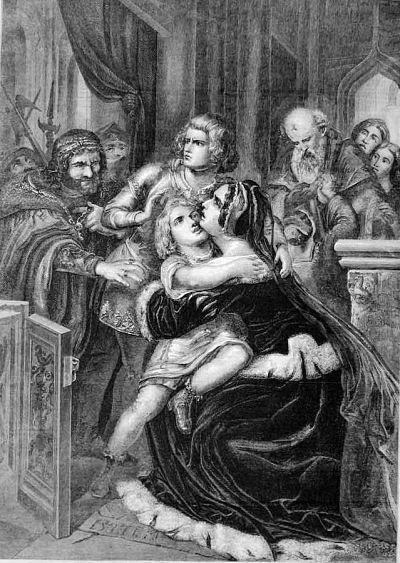 When the leaders are bad, things get to be a mess, and when things are a mess, worse most often follows. The trouble is that in the middle of a mess, the very leaders who got you into the mess will blame someone, usually one of their number, and make the mess worse. It will all be his fault, you know, the last guy . . . and the underlying problems are not addressed.
This happens in nations, churches, and organizations.
Shakespeare pictures the failure to clean up the heart of a mess in his tragedy Richard III. Richard is such a loathsome fellow in the play that it is easy to miss the truth: he is one of a community of regicides and usurpers. The English nobility decided nobody could be worse than Richard II as King of England (#neverRichard), but after fratricidal civil war, suffering, murder, and rapine, ended up with Richard III. Richard II was a weak king, but Richard III was an evil ruler.
The opening scenes of the play show Richard’s brother Edward, dying, as trying to create peace out of the band of rebels that had helped him seize the throne. Having created a fractious state, he tries to induce them to hug and make it up. He is naive: a throne won in battle and murder will be sustained only by further murder. To his credit, Edward is not willing to go that far, but it means he never should have started down the road to civil war. He is man too good to be a tyrant and too bad to be loyal.
Richard III was not afraid to kill: brother, nephews, common folk. He wanted power and would do what it took to get it. A sure sign that a system is broken is when (Act 3.7) good men cease to be able to tell the truth. Evil is defended as good and good as evil, even though everyone knows the truth.
The people around Richard, Edward’s Queen and her favorites, were too precious to openly murder. They were thieves who wanted a good name and were no match for Richard III. They are rebuked by the last Queen they deposed as hypocrites and have no response: shallow, changeable, governed not by love of country but by love of power. So it is with so many of nations or organizations. Bad leaders will seize an organization, but then try to be “good.” They end up stooges for a worse evil and then feel righteous as they perish. Good cannot be done by cutting corners, by casting friends aside, or by devious means. Ruin is the happiest result, tyranny the worst.
The Bible shows this truth in the divided kingdom of Israel when Jehu overthrows the wicked reign of Jezebel and the children of Ahab. Jehu is better than Ahab, but not righteous. Once Jeroboam the son of Nebat set Israel on an idolatrous course, nothing very good ever came. Some idolaters were better than others, but none walked in the ways of God.
What does a nation, organization, or family do if they find themselves off to a “bad start?” The Biblical answer is repentance, restitution, and a radical change of direction. The old order needs a deep revival and cleansing, a new start, and even then (as Josiah of Judah found), such revival may merely put off national judgment. Something new must come. In the play Richard III, the new chance comes in the person of Henry VII who unites the warring factions finally. With Israel, it would never come. For Judah, it would only come after Babylonian exile in a remnant that returned to the land.
To go forward, England must remove Richard, but also not merely blame Richard, he is just cashing in on the foul failures of the previous regime. If you are in a church or organization in peril, don’t replace Richard with more of the same: find Henry. When it comes to the United States of America, we must hope that the election of 2016 is Bosworth, ending a bad era and bringing peace, and not a Tewkesbury, the battle that made inevitable the reign of the tyrant: Richard III. May it come to all of us that we can say in truth:
Now civil wars are stopped: peace lives again.
That she may live long here, God say: ‘Amen.”
————————————————–
*Shakespeare is using historical figures to make a point. I am not claiming his Richard II or Richard III are just like the historical people, just that he is using them to make an applicable point. I am discussing Shakespeare’s Richard III, not the man Richard of York now buried in Yorkminster.
William Shakespeare went to God four hundred years ago. To recollect his death, I am writing a personal reflection on a few of his plays. The Winter’s Tale started things off, followed by As You Like It. Romeo and Juliet still matter, Lady Macbeth rebukes the lust for power, and Henry V is a hero. Richard II shows us not to presume on the grace of God or rebel against authority too easily. Coriolanus reminds us that our leaders need integrity and humility. Our life can be joyful if we realize that it is, at best, A Comedy of Errors. Hamlet needs to know himself better and talks to himself less. He is stuck with himself so he had better make his peace with God quickly and should stay far away from Ophelia. Shakespeare gets something wrong in Merchant of Venice . . . though not as badly as some in the English Labour Party or in my Twitter feed. Love if blind, but intellectualism is blind and impotent in Love’s Labours Lost. Brutus kills Caesar, but is overshadowed by him in Julius Caesar. We should learn not to make Much Ado about Nothing. We might all be Antony, but if we would avoid his fate then we must avoid flattery and the superficial love of Troilus and Cressida. We are fools, but our goal should be to accept it and not to degenerate into Biblical fools during our Midsummer Night’s Dream. Richard III is a symptom of a bad leadership community.
Next Post

May 18, 2016 Measure for Measure: Aspire to be Good, but We Are Not (Jesus, Shakespeare)
Browse Our Archives
Select a Category Apologetics Art Culture Education On Books On Education Philosophy Politics Pop Culture Spiritual Reflections Uncategorized
Select a Month October 2026 September 2026 August 2026 July 2026 July 2025 June 2025 September 2024 July 2024 June 2024 December 2023 June 2023 September 2022 May 2022 April 2022 March 2022 February 2022 July 2021 June 2021 May 2021 April 2021 March 2021 February 2021 January 2021 December 2020 November 2020 October 2020 September 2020 August 2020 July 2020 June 2020 May 2020 April 2020 March 2020 February 2020 January 2020 December 2019 November 2019 October 2019 September 2019 August 2019 July 2019 June 2019 May 2019 April 2019 March 2019 February 2019 January 2019 December 2018 November 2018 October 2018 September 2018 August 2018 July 2018 June 2018 May 2018 April 2018 March 2018 February 2018 January 2018 December 2017 November 2017 October 2017 September 2017 August 2017 July 2017 June 2017 May 2017 April 2017 March 2017 February 2017 January 2017 December 2016 November 2016 October 2016 September 2016 August 2016 July 2016 June 2016 May 2016 April 2016 March 2016 February 2016 January 2016 December 2015 November 2015 October 2015 September 2015 August 2015 July 2015 June 2015 May 2015 April 2015 March 2015 February 2015 January 2015 November 2014 October 2014 September 2014 August 2014 July 2014 June 2014 May 2014 April 2014 March 2014 February 2014 January 2014 December 2013 November 2013 October 2013 September 2013 August 2013 July 2013 June 2013 May 2013 April 2013 March 2013 February 2013 January 2013 December 2012 November 2012 October 2012 September 2012 August 2012 July 2012 June 2012 May 2012
Follow Us!
TAKE THE
Religious Wisdom Quiz
Go to this tiny creature, you sluggard! Observe its ways and be wise, for it has no commander yet stores provisions. What industrious insect is this?
Select your answer to see how you score.
The spider The grasshopper The bee The ant
Books by This Author John Mark Reynolds
Related posts from Eidos

Classical Education Must Teach Us to Make the...

Classical Education and the Art of Dying Well

Golden, Golden, Golden: My Mother's Last Lesson

TRENDING AT PATHEOS Evangelical

The REST of Your Life: A Creative Wrestles...
This week I had a conversation with a good friend from church....

How the author of the world's best hymn...
I've been working with John Newton for a while now. This makes...

Long before this Lectio Divina, Psalm 130 - the song - started...

What About the Trees? Another Living Parable
After I finished writing the last article about falling leaves as a...

Why Classical Education Is a Conversation, Not a...
Come and Read: Joy in Classical Education When I was a little...

Cornell University has received a great deal of negative publicity and intense...
view all Evangelical blogs
Ad-Free & Subscriber Log-In Subscription Support
- About Us
- 2026 Calendar
- Videos
- Podcasts
- Library of World Religions
- Faith In Media Tracker
- Advertise With Us
- Write for Us
- Privacy Policy
- Terms of Service
- Do Not Sell My Data
- Contact Us
- Radiant Digital
- Manage Newsletter Subscriptions
- Unsubscribe From Notifications
- Sitemap
Copyright 2008-2026, Patheos. All rights reserved.
Subscription Support Ad-Free & Subscriber Log-In
Follow Patheos