
BuddhistCatholicContemplativeEvangelicalGeneral ChristianHinduJewishLatter-day SaintMuslimNew VisionsProgressive Christian
Beliefs
- Buddhist
- Catholic
- Contemplative
- Evangelical
- General Christian
- Hindu
- Jewish
- Latter-day Saint
- More Voices
- Muslim
- New Visions
- Pagan
- Progressive Christian
Topics
- Religion News
- Food and Religion
- Sports and Religion
- Religious Art
- Religious Music and Entertainment
- Religious Events
- History and Religion
- Style and Religion
- Politics and Religion
- Women in Religion
- Recreation Outdoors and Religion
- Business Finance and Religion
- Careers Workplace and Religion
- Education and Religion
- Family Parenting and Religion
- Health Fitness and Religion
- Home and Religion
- Relationships and Religion
- Technology and Religion
- Travel and Religion
Columnists
- Buddhist Columnists
- Business Finance and Religion Columnists
- Careers Workplace and Religion Columnists
- Catholic Columnists
- Contemplative Columnists
- Education and Religion Columnists
- Evangelists Columnists
- Family Parenting and Religion Columnists
- General Christian Columnists
- Health Fitness and Religion Columnists
- Hindu Columnists
- History and Religion Columnists
- Home and Religion Columnists
- Jewish Columnists
- More Voices Columnists
- Latter Day Columnists
- Muslim Columnists
- New Visions Columnists
- Nonreligious Columnists
- Pagan Columnists
- Politics and Religion Columnists
- Progressive Columnists
- Recreation Outdoors and Religion Columnists
- Relationships and Religion Columnists
- Religion News Columnists
- Religious Art Columnists
- Religious Events Columnists
- Religious Music and Entertainment Columnists
- Sports and Religion Columnists
- Style and Religion Columnists
- Technology and Religion Columnists
- Travel and Religion Columnists
- Women in Religion Columnists
Resource Library
- 2026 Calendar
- Library of World Religions
- The 100 Most Holy Places on Earth
- Patheos Answers
- Podcasts
- Videos
- Faith Leaders Database
- Anglican Episcopalian
- Bahai
- Baptist
- Buddhism
- Christianity
- Confucianism
- Eastern Orthodoxy
- Hinduism
- Holiness and Pentecostal
- ISKCON
- Islam
- Judaism
- Lutheran
- Methodist
- The Church of Jesus Christ of Latter-day Saints
- New Age
- Paganism
- Presbytarian and Reformed
- Protestantism
- Religion Behind the Scenes
- Roman Catholic
- Scientology
- Shia Islam
- Sikhism
- Sufism
- Sunni Islam
- Taoism
- Zen
- See all religions
Research Tools
 Ad-Free & Subscriber Log-In Subscription Support
Ad-Free & Subscriber Log-In Subscription Support
Follow Patheos 

- Trending:
- Forgiveness
- |
- Marriage
- |
- Consciousness
- |
- Death Penalty
- |
- Election
- |
- Halloween

- Home
- Evangelical
- Worse things than Losing, Better things than Winning: Richard II
Worse things than Losing, Better things than Winning: Richard II
Last updated on: April 22, 2016 at 8:04 pm by John Mark N. Reynolds
Worse things than Losing, Better things than Winning: Richard II 2016-04-22T20:04:41-04:00 John Mark N. Reynolds
Patheos Explore the world's faith through different perspectives on religion and spirituality! Patheos has the views of the prevalent religions and spiritualities of the world.
 We have a Presidential candidate who says we are going to win so much as a nation that we will get tired of winning. On the other hand, he looks like a sure loser in the general election. Should winning (if he can fulfill his promises) or losing (if he can’t beat Hillary) determine if we vote for Donald J. Trump?
For Christians the answer is generally “no.” Winning (whatever that means) is not a good enough reason to support a candidate and losing for the right cause (see the Cross) can end up producing victory. The first question that must be asked is whether the candidate is worthy of rule and the second is whether he can gain power legitimately.
I have met a few people who think things are so bad that they start rooting for apocalypse. They were not very secret in their hopes that Y2K would bring an end to civilization as we know it. They see conspiracies everywhere and forget how good we have it. Compared to most of human history, whoever our American overlords are, they are letting us live very well with a huge amount of liberty.
Is liberty at risk? Liberty is always at risk, but it is most at risk during periods of upheaval. The Christian knows that no form of government is perfect. Democracy can end in mob rule. Republics can degenerate into oligarchies. Monarchies can be dictatorships. Yet chaos is generally worse for the rest of us. Where there are no rules, the people perish. Where there are no rules, terrible dictators will arise.
The rules of the political road are the constitution of the state. In the United States most of our rules are in writing (though not all), in nations like the United Kingdom, tradition and law personified in the monarch define the state. Neither system is perfect, but stability has produced societies that are relatively free and prosperous.
Both states are badly governed. I am no fan of President Obama or of Prime Minister David Cameron both of whom seem feckless in a complicated world. They also are overly friendly to the powerful in the world of big business and big government. Such “friendliness” is always dangerous in a Republican or a constitutional monarchy. Why? It can lead to an oligarchy of the rich and already powerful that oppress the rest of us and create the social tension that becomes the basis for revolution.
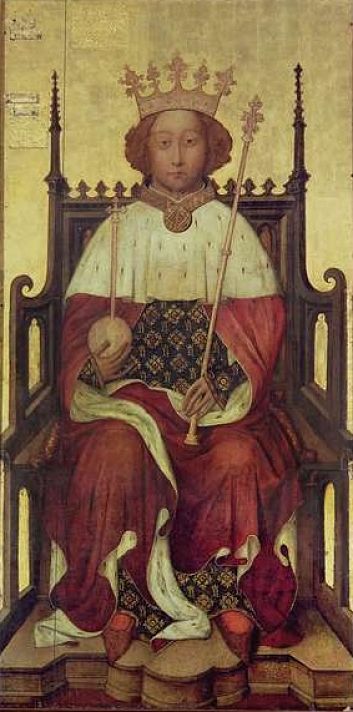
As usual, Shakespeare tells us the truth about change in leadership: don’t wish for power and grab it unconstitutionally or you will set up a series of problems that will require blood to clean it up. He used the history of England (simplified for dramatic purposes) to make this point. Richard II was a weak king and his nobility killed him and placed Henry on the throne. Henry IV was more effective, but his leadership was tainted by illegitimacy. When his son, Shakespeare’s hero Henry V, dies young and leaves the throne to a youngling Henry VI, then England is ripe for chaos. The War of the Roses, a massive debacle that cost England her continental possessions, was the result.
Shakespeare shows the dangers of revolution without pretending that bad rulers don’t tempt people to revolt.
Richard II is a bad king. He has useless “favorites” who are exploiting his friendship and harming the kingdom. A bad king makes patriots question their loyalty. When good men like John of Gaunt (a hero in the play) begin to question your leadership, a decent leader changes. Richard II cannot see his foolishness. He loves England and Shakespeare gives him a famous speech describing the glories of the old England. I have seen these words used in pride by Englishmen, but sometimes they forget that old Gaunt is bemoaning the corruption of the land by a king who has sold out the constitution for his own power:
Methinks I am a prophet new inspired
And thus expiring do foretell of him:
His rash fierce blaze of riot cannot last,
For violent fires soon burn out themselves;
Small showers last long, but sudden storms are short;
He tires betimes that spurs too fast betimes;
With eager feeding food doth choke the feeder:
Light vanity, insatiate cormorant,
Consuming means, soon preys upon itself.
This royal throne of kings, this scepter’d isle,
This earth of majesty, this seat of Mars,
This other Eden, demi-paradise,
This fortress built by Nature for herself
Against infection and the hand of war,
This happy breed of men, this little world,
This precious stone set in the silver sea,
Which serves it in the office of a wall,
Or as a moat defensive to a house,
Against the envy of less happier lands,
This blessed plot, this earth, this realm, this England,
This nurse, this teeming womb of royal kings,
Fear’d by their breed and famous by their birth,
Renowned for their deeds as far from home,
For Christian service and true chivalry,
As is the sepulchre in stubborn Jewry,
Of the world’s ransom, blessed Mary’s Son,
This land of such dear souls, this dear dear land,
Dear for her reputation through the world,
Is now leased out, I die pronouncing it,
Like to a tenement or pelting farm:
England, bound in with the triumphant sea
Whose rocky shore beats back the envious siege
Of watery Neptune, is now bound in with shame,
With inky blots and rotten parchment bonds:
That England, that was wont to conquer others,
Hath made a shameful conquest of itself.
Ah, would the scandal vanish with my life,
How happy then were my ensuing death!
Read the entire speech. The dying patriot does not hold back. Richard II is shaming the England he loves, but John of Gaunt knows there is no easy solution. You cannot destroy the English constitution that made England to save England.
Of course, Richard II misunderstands the basis of his power. He is king “by the grace of God.” Foolish rulers think this gives them unlimited authority. Wise rulers know this is the ultimate check on tyranny. God cannot be bribed. God does not play favorites. God demands justice. What God gives, God can take away: ask King Saul. Richard does not recognize this fact. He says:
The breath of worldly men cannot depose
The deputy elected by the Lord:
For every man that Bolingbroke hath press’d
To lift shrewd steel against our golden crown,
God for his Richard hath in heavenly pay
A glorious angel: then, if angels fight,
Weak men must fall, for heaven still guards the right.
Richard needed to read his Augustine: God defends the right, but over time. Our right is seldom God’s right. Lincoln put this perfectly when asked if God was on the side of the Union and he responded that he hoped the Union was on the side of God. Lincoln knew that no “side” was perfectly in God’s will, even if one of the causes (like abolition of race based slavery) was in God’s will. Richard presumes on God’s hatred of rebellion and regicide while overlooking his own misrule. His bad rule has made God’s opinion on the status quo complex . . . as it always is.
Sadly, John of Gaunt’s son is less wise than his father. Henry is badly treated, but his seizure of power is bad. Henry also presumes to know God’s will, because of Richard’s misrule and his personal popularity and fitness to exercise power. He too easily breaks his oaths and seizes power with the help of unstable men. To keep power, he must murder Richard.
Richard II is an excellent man by the end of the play. The loss of power has been good for him and he gets all the best speeches. He is right that men have sworn oaths to him and right that they are wrong to break them. He is right that God has made him King and finally sees that his own actions have undone his majesty. He says to Henry:
Ay, no; no, ay; for I must nothing be;
Therefore no no, for I resign to thee.
Now mark me, how I will undo myself;
I give this heavy weight from off my head
And this unwieldy sceptre from my hand,
The pride of kingly sway from out my heart;
With mine own tears I wash away my balm,
With mine own hands I give away my crown,
With mine own tongue deny my sacred state,
With mine own breath release all duty’s rites:
All pomp and majesty I do forswear;
My manors, rents, revenues I forego;
My acts, decrees, and statutes I deny:
God pardon all oaths that are broke to me!
God keep all vows unbroke that swear to thee!
Make me, that nothing have, with nothing grieved,
And thou with all pleased, that hast all achieved!
Long mayst thou live in Richard’s seat to sit,
And soon lie Richard in an earthly pit!
God save King Harry, unking’d Richard says,
And send him many years of sunshine days!
What more remains?
His condemnation of Henry in this speech is plain. Henry is an oathbreaker and the rebel will not be able to trust those who made rebellion with him. Richard knows Henry will kill him, but also knows that Henry will always be uneasy in his rule.
Henry is a great man when he is lord and a worse man when he seized the throne. He stops getting the good speeches and becomes a grey and fierce leader. He commits regicide and makes a martyr of Richard to secure the Kingdom. He is fit to rule, but his method of gaining power destroys his fitness.
If a man has to lie, throw his friends aside, cut ethical corners, associate with bad people, and pay bribes to gain power, then the power is not worth having. By the time power is gained, the man is unfit to wield it. Such is the lesson of the Ring of Power in The Lord of the Rings. A good man will be corrupted if he uses a bad thing (the Ring) to do good. He will be better than the Dark Lord at first, but in the end will become a new Dark Lord.
Henry needs his enemies dead, longs to have them dead, but then cannot abide the men who do as he wished. He says:
They love not poison that do poison need,
Nor do I thee: though I did wish him dead,
I hate the murderer, love him murdered.
The guilt of conscience take thou for thy labour,
But neither my good word nor princely favour:
With Cain go wander through shades of night,
And never show thy head by day nor light.
Lords, I protest, my soul is full of woe,
That blood should sprinkle me to make me grow:
Come, mourn with me for that I do lament,
And put on sullen black incontinent:
I’ll make a voyage to the Holy Land,
To wash this blood off from my guilty hand:
March sadly after; grace my mournings here;
In weeping after this untimely bier.
No Christian can read this and think that “winning” is enough. We cannot destroy our morality to save morality. We cannot murder to stop murder as evil men do when they kill an abortionist. We cannot condone immorality and corruption to gain other ends. Henry IV’s son knew that this was true and spent hours in prayer and a great deal of money trying to expiate his father’s sin against England and majesty.
Of course, we all compromise in this broken stupid world. Nobody is just. No ruler is perfect. We ally ourselves to Stalin to defeat Hitler, but there is a line of personal immorality, oath breaking and murder, that a ruler must never cross. He must never corrupt his own soul for the sake of gold and glory.
Rebellion against authority is so dangerous to the soul that it is almost never justified. Christian apologist and the philosopher of the American Revolution John Locke spent pages in his First and Second Treatise showing how a careful group of Christian, conservative, people could replace a ruler. He was successful in showing how revolution might be done properly, but potential revolutionaries should note his cautions and how few historical revolutions have left things better than the revolutionaries found them.
Louis XVI led to Napoleon.
Nicholas II led to Lenin and Stalin.
The Chinese Republic ended in Mao.
Things can get worse whatever political nihilists might think.
Should we vote for Donald J. Trump? We must ask if he is fit to rule and if he can gain and use power constitutionally. If so, we might choose to vote for him. If not, whether he can win or will lose, it does not matter. He cannot get our vote or allegiance.
————————————————
William Shakespeare went to God four hundred years ago. To recollect his death, I am writing a personal reflection on a few of his plays. The Winter’s Tale started things off, followed by As You Like It. Romeo and Juliet still matter, Lady Macbeth rebukes the lust for power, and Henry V is a hero. Richard II shows us not to presume on the grace of God or rebel against authority too easily.
Next Post

April 23, 2016 Our Duty: Find our Place, Do Our Duty (Shakespeare's Coriolanus)
Browse Our Archives
Select a Category Apologetics Art Culture Education On Books On Education Philosophy Politics Pop Culture Spiritual Reflections Uncategorized
Select a Month October 2026 September 2026 August 2026 July 2026 July 2025 June 2025 September 2024 July 2024 June 2024 December 2023 June 2023 September 2022 May 2022 April 2022 March 2022 February 2022 July 2021 June 2021 May 2021 April 2021 March 2021 February 2021 January 2021 December 2020 November 2020 October 2020 September 2020 August 2020 July 2020 June 2020 May 2020 April 2020 March 2020 February 2020 January 2020 December 2019 November 2019 October 2019 September 2019 August 2019 July 2019 June 2019 May 2019 April 2019 March 2019 February 2019 January 2019 December 2018 November 2018 October 2018 September 2018 August 2018 July 2018 June 2018 May 2018 April 2018 March 2018 February 2018 January 2018 December 2017 November 2017 October 2017 September 2017 August 2017 July 2017 June 2017 May 2017 April 2017 March 2017 February 2017 January 2017 December 2016 November 2016 October 2016 September 2016 August 2016 July 2016 June 2016 May 2016 April 2016 March 2016 February 2016 January 2016 December 2015 November 2015 October 2015 September 2015 August 2015 July 2015 June 2015 May 2015 April 2015 March 2015 February 2015 January 2015 November 2014 October 2014 September 2014 August 2014 July 2014 June 2014 May 2014 April 2014 March 2014 February 2014 January 2014 December 2013 November 2013 October 2013 September 2013 August 2013 July 2013 June 2013 May 2013 April 2013 March 2013 February 2013 January 2013 December 2012 November 2012 October 2012 September 2012 August 2012 July 2012 June 2012 May 2012
Follow Us!
TAKE THE
Religious Wisdom Quiz
Which book contains a prophecy about locust swarms devastating the land?
Select your answer to see how you score.
Micah Obadiah Joel Hosea
Books by This Author John Mark Reynolds
Related posts from Eidos

Classical Education Must Teach Us to Make the...

Yet I Love Her: History and the Church


The Iceberg is There: Verbosity Cannot Defeat Reality
TRENDING AT PATHEOS Evangelical

The REST of Your Life: A Creative Wrestles...
This week I had a conversation with a good friend from church....

How the author of the world's best hymn...
I've been working with John Newton for a while now. This makes...

Long before this Lectio Divina, Psalm 130 - the song - started...

What About the Trees? Another Living Parable
After I finished writing the last article about falling leaves as a...

Why Classical Education Is a Conversation, Not a...
Come and Read: Joy in Classical Education When I was a little...

Cornell University has received a great deal of negative publicity and intense...
view all Evangelical blogs
Ad-Free & Subscriber Log-In Subscription Support
- About Us
- 2026 Calendar
- Videos
- Podcasts
- Library of World Religions
- Faith In Media Tracker
- Advertise With Us
- Write for Us
- Privacy Policy
- Terms of Service
- Do Not Sell My Data
- Contact Us
- Radiant Digital
- Manage Newsletter Subscriptions
- Unsubscribe From Notifications
- Sitemap
Copyright 2008-2026, Patheos. All rights reserved.
Subscription Support Ad-Free & Subscriber Log-In
Follow Patheos