
BuddhistCatholicContemplativeEvangelicalGeneral ChristianHinduJewishLatter-day SaintMuslimNew VisionsProgressive Christian
Beliefs
- Buddhist
- Catholic
- Contemplative
- Evangelical
- General Christian
- Hindu
- Jewish
- Latter-day Saint
- More Voices
- Muslim
- New Visions
- Pagan
- Progressive Christian
Topics
- Religion News
- Food and Religion
- Sports and Religion
- Religious Art
- Religious Music and Entertainment
- Religious Events
- History and Religion
- Style and Religion
- Politics and Religion
- Women in Religion
- Recreation Outdoors and Religion
- Business Finance and Religion
- Careers Workplace and Religion
- Education and Religion
- Family Parenting and Religion
- Health Fitness and Religion
- Home and Religion
- Relationships and Religion
- Technology and Religion
- Travel and Religion
Columnists
- Buddhist Columnists
- Business Finance and Religion Columnists
- Careers Workplace and Religion Columnists
- Catholic Columnists
- Contemplative Columnists
- Education and Religion Columnists
- Evangelists Columnists
- Family Parenting and Religion Columnists
- General Christian Columnists
- Health Fitness and Religion Columnists
- Hindu Columnists
- History and Religion Columnists
- Home and Religion Columnists
- Jewish Columnists
- More Voices Columnists
- Latter Day Columnists
- Muslim Columnists
- New Visions Columnists
- Nonreligious Columnists
- Pagan Columnists
- Politics and Religion Columnists
- Progressive Columnists
- Recreation Outdoors and Religion Columnists
- Relationships and Religion Columnists
- Religion News Columnists
- Religious Art Columnists
- Religious Events Columnists
- Religious Music and Entertainment Columnists
- Sports and Religion Columnists
- Style and Religion Columnists
- Technology and Religion Columnists
- Travel and Religion Columnists
- Women in Religion Columnists
Resource Library
- 2026 Calendar
- Library of World Religions
- The 100 Most Holy Places on Earth
- Patheos Answers
- Podcasts
- Videos
- Faith Leaders Database
- Anglican Episcopalian
- Bahai
- Baptist
- Buddhism
- Christianity
- Confucianism
- Eastern Orthodoxy
- Hinduism
- Holiness and Pentecostal
- ISKCON
- Islam
- Judaism
- Lutheran
- Methodist
- The Church of Jesus Christ of Latter-day Saints
- New Age
- Paganism
- Presbytarian and Reformed
- Protestantism
- Religion Behind the Scenes
- Roman Catholic
- Scientology
- Shia Islam
- Sikhism
- Sufism
- Sunni Islam
- Taoism
- Zen
- See all religions
Research Tools
 Ad-Free & Subscriber Log-In Subscription Support
Ad-Free & Subscriber Log-In Subscription Support
Follow Patheos 

- Trending:
- Forgiveness
- |
- Marriage
- |
- Consciousness
- |
- Death Penalty
- |
- Election
- |
- Halloween

- Home
- Evangelical
- Learning from Thomas During a Pandemic (Guest Voice Jill Bergen 3/3)
Learning from Thomas During a Pandemic (Guest Voice Jill Bergen 3/3)
Last updated on: April 7, 2020 at 5:40 am by John Mark N. Reynolds
Learning from Thomas During a Pandemic (Guest Voice Jill Bergen 3/3) 2020-04-04T18:42:48-04:00 John Mark N. Reynolds
Patheos Explore the world's faith through different perspectives on religion and spirituality! Patheos has the views of the prevalent religions and spiritualities of the world.
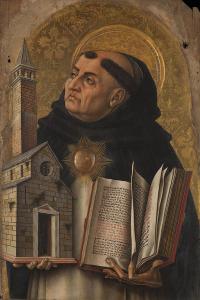 For the duration of the pandemic, I have decided to focus on the positive. Dialectic debate is good and necessary, but for the duration of the fight against the virus this blog is dedicated to helping teachers and students. As a result, some discussions are on hold as we get good cheer and resources out to students. Here is a series done by one of my favorite educators in the United States on Thomas Aquinas. This is Part I. This is Part II. This is Part III.
Jill Elizabeth Bergen is a writer and educator with over twenty years of experience in classical education. She is a member of the Torrey Honors Institute and holds an MA in Education with an emphasis in Philosophy of Education. She and her husband, Bradley, reside in Southern California.
Previously, I argued that John included Thomas’ incidence of doubt in order to make the Christological point that Jesus’ physical body was indeed resurrected. Now we will look at the nature of Thomas’ doubt and what it might tell us about the nature of faith and belief.
Thomas’ problem wasn’t so much a lack of faith in Jesus as it was that he failed to believe the testimony of his friends: he had every reason to trust his friends when they told him they had seen a resurrected Jesus. I’m certainly not going to argue that this was good, aside from last week’s point about how we, who cannot see, benefited from it. However, I am arguing that this wasn’t an extraordinarily terrible crisis of faith. Keep in mind that the other disciples had been able to see Jesus appear to them and show them his wounds, after doubting the testimony of the myrrh-bearing women. Thomas also wanted a different assurance than testimony, one that his friends already received. We know that Thomas was willing to die for Jesus, and that Thomas remained loyal to the disciples during the gap in Jesus’ appearances. He surely must have had at least some level of faith, but he needed a little help that Jesus did not deny, but provided. He immediately calls Jesus “Lord and God” when he touches him; he needs no further arguments or evidence.
This is not unlike most of our experience with faith. The Christian life doesn’t consist in a conversion and then a straight and constant march toward heaven. If you are at all like me, you have days where you do not know if God listens to your prayers, if you’ve gotten the basics of the faith right, or if God even loves you. In the end, though, we must just keep moving forward and attempt anew each day to put our trust in God. We may have some doubts, we may waver in belief, but having faith does not mean not having doubts; it means staying the course in spite of it all, as Thomas did. I am thankful for realistic examples of the faith, who make me believe it is possible to stay the course.
We are often told to “just have faith,” unlike foolish Thomas. But Thomas did indeed have faith, despite a momentary doubt. Who among us has not wavered a bit in faith or had trouble trusting God? Thomas, far from faithless, led a life of extraordinary, persevering faithfulness to Jesus. Perhaps the Slavonic icons of Thomas provide a more fitting picture of the situation. Instead of labeling him with “doubt,” the inscriptions on his icons say “The Belief of St. Thomas.”
Next Post

April 8, 2020 Internal Exile: Church in Pandemic Time
Browse Our Archives
Select a Category Apologetics Art Culture Education On Books On Education Philosophy Politics Pop Culture Spiritual Reflections Uncategorized
Select a Month October 2026 September 2026 August 2026 July 2026 July 2025 June 2025 September 2024 July 2024 June 2024 December 2023 June 2023 September 2022 May 2022 April 2022 March 2022 February 2022 July 2021 June 2021 May 2021 April 2021 March 2021 February 2021 January 2021 December 2020 November 2020 October 2020 September 2020 August 2020 July 2020 June 2020 May 2020 April 2020 March 2020 February 2020 January 2020 December 2019 November 2019 October 2019 September 2019 August 2019 July 2019 June 2019 May 2019 April 2019 March 2019 February 2019 January 2019 December 2018 November 2018 October 2018 September 2018 August 2018 July 2018 June 2018 May 2018 April 2018 March 2018 February 2018 January 2018 December 2017 November 2017 October 2017 September 2017 August 2017 July 2017 June 2017 May 2017 April 2017 March 2017 February 2017 January 2017 December 2016 November 2016 October 2016 September 2016 August 2016 July 2016 June 2016 May 2016 April 2016 March 2016 February 2016 January 2016 December 2015 November 2015 October 2015 September 2015 August 2015 July 2015 June 2015 May 2015 April 2015 March 2015 February 2015 January 2015 November 2014 October 2014 September 2014 August 2014 July 2014 June 2014 May 2014 April 2014 March 2014 February 2014 January 2014 December 2013 November 2013 October 2013 September 2013 August 2013 July 2013 June 2013 May 2013 April 2013 March 2013 February 2013 January 2013 December 2012 November 2012 October 2012 September 2012 August 2012 July 2012 June 2012 May 2012
Follow Us!
TAKE THE
Religious Wisdom Quiz
How long was the wedding celebrations length in Biblical times?
Select your answer to see how you score.
7 days 10 days 5 days 3 days
Books by This Author John Mark Reynolds
Related posts from Eidos

Why Classical Education Is a Conversation, Not a...

Classical Education Must Teach Us to Make the...

Rooted: Why Classical Education Needs Community

Classical Education: Discussion for Everyone
TRENDING AT PATHEOS Evangelical

The REST of Your Life: A Creative Wrestles...
This week I had a conversation with a good friend from church....

How the author of the world's best hymn...
I've been working with John Newton for a while now. This makes...

Long before this Lectio Divina, Psalm 130 - the song - started...

What About the Trees? Another Living Parable
After I finished writing the last article about falling leaves as a...

Why Classical Education Is a Conversation, Not a...
Come and Read: Joy in Classical Education When I was a little...

Cornell University has received a great deal of negative publicity and intense...
view all Evangelical blogs
Ad-Free & Subscriber Log-In Subscription Support
- About Us
- 2026 Calendar
- Videos
- Podcasts
- Library of World Religions
- Faith In Media Tracker
- Advertise With Us
- Write for Us
- Privacy Policy
- Terms of Service
- Do Not Sell My Data
- Contact Us
- Radiant Digital
- Manage Newsletter Subscriptions
- Unsubscribe From Notifications
- Sitemap
Copyright 2008-2026, Patheos. All rights reserved.
Subscription Support Ad-Free & Subscriber Log-In
Follow Patheos