
BuddhistCatholicContemplativeEvangelicalGeneral ChristianHinduJewishLatter-day SaintMuslimNew VisionsProgressive Christian
Beliefs
- Buddhist
- Catholic
- Contemplative
- Evangelical
- General Christian
- Hindu
- Jewish
- Latter-day Saint
- More Voices
- Muslim
- New Visions
- Pagan
- Progressive Christian
Topics
- Religion News
- Food and Religion
- Sports and Religion
- Religious Art
- Religious Music and Entertainment
- Religious Events
- History and Religion
- Style and Religion
- Politics and Religion
- Women in Religion
- Recreation Outdoors and Religion
- Business Finance and Religion
- Careers Workplace and Religion
- Education and Religion
- Family Parenting and Religion
- Health Fitness and Religion
- Home and Religion
- Relationships and Religion
- Technology and Religion
- Travel and Religion
Columnists
- Buddhist Columnists
- Business Finance and Religion Columnists
- Careers Workplace and Religion Columnists
- Catholic Columnists
- Contemplative Columnists
- Education and Religion Columnists
- Evangelists Columnists
- Family Parenting and Religion Columnists
- General Christian Columnists
- Health Fitness and Religion Columnists
- Hindu Columnists
- History and Religion Columnists
- Home and Religion Columnists
- Jewish Columnists
- More Voices Columnists
- Latter Day Columnists
- Muslim Columnists
- New Visions Columnists
- Nonreligious Columnists
- Pagan Columnists
- Politics and Religion Columnists
- Progressive Columnists
- Recreation Outdoors and Religion Columnists
- Relationships and Religion Columnists
- Religion News Columnists
- Religious Art Columnists
- Religious Events Columnists
- Religious Music and Entertainment Columnists
- Sports and Religion Columnists
- Style and Religion Columnists
- Technology and Religion Columnists
- Travel and Religion Columnists
- Women in Religion Columnists
Resource Library
- 2026 Calendar
- Library of World Religions
- The 100 Most Holy Places on Earth
- Patheos Answers
- Podcasts
- Videos
- Faith Leaders Database
- Anglican Episcopalian
- Bahai
- Baptist
- Buddhism
- Christianity
- Confucianism
- Eastern Orthodoxy
- Hinduism
- Holiness and Pentecostal
- ISKCON
- Islam
- Judaism
- Lutheran
- Methodist
- The Church of Jesus Christ of Latter-day Saints
- New Age
- Paganism
- Presbytarian and Reformed
- Protestantism
- Religion Behind the Scenes
- Roman Catholic
- Scientology
- Shia Islam
- Sikhism
- Sufism
- Sunni Islam
- Taoism
- Zen
- See all religions
Research Tools
 Ad-Free & Subscriber Log-In Subscription Support
Ad-Free & Subscriber Log-In Subscription Support
Follow Patheos 

- Trending:
- Forgiveness
- |
- Marriage
- |
- Consciousness
- |
- Death Penalty
- |
- Election
- |
- Halloween

- Home
- Evangelical
- A Dialog with a Critic (In Which Guest Voice Jeff Williams Let’s Me Have It!)
A Dialog with a Critic (In Which Guest Voice Jeff Williams Let’s Me Have It!)
Last updated on: February 8, 2020 at 11:43 pm by John Mark N. Reynolds
A Dialog with a Critic (In Which Guest Voice Jeff Williams Let’s Me Have It!) 2020-02-08T23:43:07-04:00 John Mark N. Reynolds
Patheos Explore the world's faith through different perspectives on religion and spirituality! Patheos has the views of the prevalent religions and spiritualities of the world.
Background on the Discussion: What is going on?
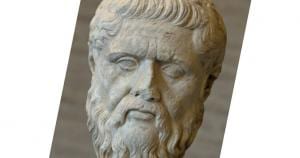 If we wish to follow the Logos where He leads, we need to listen to critics, especially those with interesting things to say. Jeff Williams is a critic of metaphysics. A University of Chicago grad, he agreed to present his argument and I have posted it here unedited (except for some formatting and the title). As result of his rejection of metaphysics, he rejects objective moral law as an illusion.
Mr. Williams previously argued that Athens has no need of Jerusalem, which contributes nothing good to Western civilization. I responded and enjoyed the interaction immensely. Mr. Williams has taken the time to discuss Martin Heidegger, a philosopher not much in favor when I was in graduate school. I have enjoyed reading more Heidegger (alas in translation). As usual, I allowed his post to stand without comment for a time and now here is a response. Mr. Williams suggested to me that I had not gotten him right, so it seemed decent and in order to let him respond. I suggested that Mr. Williams has ended up looking for a pony, because he has found a pile of LEGO blocks shaped like a pony.
Mr. Williams finds my response lacking, so I joyfully invite you to follow the argument where it leads. In this case, it leads to a sadly dogmatic physicalism (or materialism) that sees “gaps” or problems where there are none. We also learn that having a bad history of the philosophy of science can lead to some bad conclusions. Williams has come back to straighten me out.
On Tricky Me, Mr Williams Issues a Blast:
I know my good friend Dr. Reynolds well, or at least well enough to know how when he’s flailing in debate his custom is to resort to the tricks of the apologist trade: red herrings, strawmen and sweeping statements rather than address the argument being made. If even I, a simple semiliterate biker who lives somewhere under a bridge (but only in the best communities!), can spot these sophistries then surely the sophisticated and careful readers of this blog must have been shocked. (Yes, I know he presents me as a product of the University of Chicago, but I point out he has never presented the slightest bit of evidence to back that up.) Just in case some of you might have merely skimmed his last response, however, I will highlight a couple of his lapses here and, rather than waste our time with the rest of them, you can go back and reread his reply. They will be as noticeable as a flashing purple neon sign. I will end with a refocusing on the issue at hand and briefly outline my case. I trust that in the spirit of the dialectic my friend will directly and substantively address it rather than once again take us on a visit to a 19th century mathematician, time travel to a future heart transplant, back in time to Christians of the Middle ages, and then to Canton Ohio for the football hall of fame. Breathtaking to be sure but having nothing to do with the case I made.
We should first revisit why our friend is flailing here. The issue is my contention that there is no objective morality, which I approached from two angles: 1. the overcoming of metaphysics eliminates gods and any supposed related objective truths or laws; 2. the evolutionary history of sensibilities that promote cooperation, such as empathy fairness and love, and their reflection in the refinement of what we consider moral over the past few millennia. He wagered his response on an attempt to reclaim metaphysics, which rested solely on the claim that consciousness was non-physical. Not being able to establish that beyond “it seems so”, he was unable to honestly counter the scientific advances that point to consciousness ultimately revealing a purely physical existence.
But first, I mean to call attention to a rhetorical devise Dr. Reynolds often falls back on in argumentation. Here he repeatedly tries to diminish my argument by insinuating a lesser importance to continental philosophy and a more substantial pedigree for Anglo-American analytic writers and pre-Enlightenment metaphysics. I’m torn between claiming the fallacy of argumentum ad verecundiam or proudly accepting minority status. So, I’ll do both.
Throughout intellectual history the breakthroughs and seminal thoughts emerge from the minority, which in turn become the common majority only to be surpassed by another minority. In any age we are fortunate enough to have one or two truly great thinkers along with thousands of common thinkers of no lasting consequence who constitute the majority. In the past century the two great seminal thinkers, by general consensus of actual philosophers, have not been those that Mr. Reynolds cites, but the very unique figures of Wittgenstein and Heidegger.
Continental philosophy might appear to be of minor significance among those ensconced in a few analytic or apologist philosophy departments in America and some schools in the UK, but not for the rest of the world. It is the tradition from Kant via Nietzsche and Heidegger; the French tradition via Deleuze, Lacan, and Foucault; as well as the single figure of the later Wittgenstein that influences most intellectual activity among philosophers and those involved in artistic endeavors in the West.
I have never been drawn to the ranks of the thousands, but if we must appeal to argumentum ad populum we will consult our friend’s favorite resource, The Stanford Encyclopedia of Philosophy, and note this excerpt from the section on Dualism:
“Because common sense tells us that there are physical bodies, and because there is intellectual pressure towards producing a unified view of the world, one could say that materialist monism is the ‘default option’.”
And from the section of Mental Causation:
“Most philosophers nowadays repudiate souls, but the problem of mental causation has not gone away.”
Without the soul, the Christian interpretation of dualism collapses and our dear old friend, Bishop Berkeley, gets carted off to the looney bin.
We can either appeal to the majority or we can instead focus on the actual issue at hand. I prefer the latter.
Now for appeal to authority. Rather than directly address my case for what might appear similar to non-reductive physicalism, although I see it more as non-metaphysical ontology, and the well-established tradition of Kantian epistemology which yet today is supported by leading neuroscientists, Dr. Reynolds merely cites prior authors and a somewhat imaginary history of philosophy of science.
He names a couple of minor authors and even appeals to Frege – a 19th century mathematician who knew no more about epistemology and ontology than a biochemist knows about metaphor. He then asks what writers support my view of the subjectivity of numbers and reality, although I had already named some of the more prominent, including Kant, Hume, Nietzsche and Heidegger as well as some leading neuroscientists such as Hoffman and Seth.
But directly addressing what I presented requires that he forego his other unfortunate habit of bravely battling arguments I never made while ignoring the ones I do present. In other words, evasion through strawmen. Here are some examples.
“Note how absurd this response really is. We do not think our experiences are not physical, because Descartes or anyone else told us this is so, but because of our experience. Descartes simply used this universal experience to make a point. Ideas in my mind, or your mind, seem nothing like a pile of stuff. If we must (?) reduce everything to a pile of stuff, then clever men might work on how to do this, but since nobody has ever done so to most thinker’s satisfaction, there is no reason to think they ever will.”
This response begins problematically as both a strawman and a false assertion. I never claimed that those who still cling to dualism believe such because of Descartes; but then again there is a reason it is often referred to as Cartesian duality – he put the idea front and center where it stayed for centuries among metaphysicians. But it actually is a red herring. The real question is why we should accept such a notion of dualism at all. Mr. Reynolds merely gives us a suggestion that we must because it seems to be the case, although it doesn’t seem so to me, or to most philosophers if we are to believe the SEP. I would also point out that a flat earth and a geocentric cosmos seemed once to be the case too. This is immediately followed by a false premise due to his reduction of the “physical” to “stuff”. There is an important reason that physicalism is not called materialism. The most fundamental level of existence that we yet know contains no matter at all but is pure vibration. Waves within quantum fields. It is solid matter that is the illusion we create subjectively as representations built from waves impinging on our senses. After I illustrated that in my last reply it seems somewhat disingenuous to claim I would reduce Hamlet, or any authentic poetry, to stuff. Remember the part about sympathetic vibration? I meant that literally and that is the point to address.
He moves to the truly bizarre, although not so novel claim, that I commit the error of “physicalism of the gaps”. Sometimes we hear that claim as materialism of the gaps, but either way it is merely an attempt to paint one’s opposition with one’s own failing. Let’s take this opportunity to contrast physicalism or science with the false clarity of metaphysics. Physicalism or science draw tentative conclusions from experience. These conclusions are always open to alteration from new hypothesis formed from new discovery and never claim perfect knowledge. The universe is messy and contradictory at times, and with every discovery we realize how much more of the mystery is still concealed. While this never gives us complete knowledge, the virtue of it is the knowledge we do gain has some coherence with the actual physical world. Metaphysics, on the other hand, is merely a matter of imagination and definition of empty concepts which can be made to appear comprehensive and coherent, but with the drawback that they have no basis in reality – the false clarity of metaphysics.
From this, Dr. Reynolds reminds us of the “hard question of consciousness”; a term coined in 1995 and a question that is somewhat less hard today than it was 25 years ago. And even at its most difficult, it was far less intractable as the interaction/causality problem inherent in dualism – a problem that remains as stubborn today as it was for Descartes. But the important realization here is that while I claim no certainty about the eventual answer to the hard question of consciousness, I do have a reasonable belief based on concrete relevant progress in physics and neuroscience of the past 25 years. Conversely, I have no compelling reason at all to accept dualism, nor has my good friend attempted to present one.
And here is an amazing red herring ready for pickling:
“Christians in the Middle Ages did not primarily explain physical actions by invoking metaphysical causes (like angels) and then slowly retreat from that view. This is a secular urban legend that metaphysical gaps in the created order were slowly filled by “physics.” This is just not so. In fact, Christians explained physical phenomena by physical causes. We (rightly) saw a role for personal causation and so left a place for the human and the divine.”
Quite right, but with no relevance at all to anything I presented. The issue is the justification for an assumed existence of the metaphysical, not causality in the physical.
Then we have this attempt to explain how the changes in our concepts of morality have dramatically changed since the Bible:
“I do not portray justice (the “objective law”) as changing over time. I portray our ability to understand the objective law as changing over time.”
If I might commit a slight act of plagiarism, once one adopts a metaphysical point of view, there is a dangerous temptation to apply to the physical world the freedom of imaginary metaphysical thinking. Here Dr. Reynolds simply wishes away the factual contradictions between the abhorrent laws of Leviticus and Deuteronomy and what we find moral today. He has no other choice because if the Bible really did present an objective law, an immutable law sourced outside of man, then he would either have to proclaim all our moral progress to instead be degenerate, or he would have to admit that the Bible, at least, does not present objective morality. Instead his last sentence concedes refinement over time but appeals to an objective law he failed to establish.
John, I ask you again in the spirit of the dialectic to refocus on the case I actually presented:
With metaphysics being steadily supplanted by physics since the 1600’s, consciousness is the latest question to emigrate from metaphysics to the physical. Quantum physics and contemporary neuroscience show increasing promise in providing this explanation.
If consciousness exists physically, metaphysics and its gods disappear. Without metaphysics, there is no possibility of an objective moral law or law giver.
There is a discernable moral arc that bends toward tolerance, respect of individuality and cooperation.
We have innate evolutionary sensibilities, such as empathy, love and fairness, that form the basis for what we think of as morality which we have refined over time and presumably will continue to refine.
I have given a degree of argumentation for each of those points. Please address the actual case I have made. If you require further clarification on any of those points, I would be happy to elaborate. Then please make a case for objective morality, or at least refute the actual arguments I have made without insinuation or strawmen.
BE BEST.
Previous Post

February 7, 2020
The Flu
Browse Our Archives
Select a Category Apologetics Art Culture Education On Books On Education Philosophy Politics Pop Culture Spiritual Reflections Uncategorized
Select a Month October 2026 September 2026 August 2026 July 2026 July 2025 June 2025 September 2024 July 2024 June 2024 December 2023 June 2023 September 2022 May 2022 April 2022 March 2022 February 2022 July 2021 June 2021 May 2021 April 2021 March 2021 February 2021 January 2021 December 2020 November 2020 October 2020 September 2020 August 2020 July 2020 June 2020 May 2020 April 2020 March 2020 February 2020 January 2020 December 2019 November 2019 October 2019 September 2019 August 2019 July 2019 June 2019 May 2019 April 2019 March 2019 February 2019 January 2019 December 2018 November 2018 October 2018 September 2018 August 2018 July 2018 June 2018 May 2018 April 2018 March 2018 February 2018 January 2018 December 2017 November 2017 October 2017 September 2017 August 2017 July 2017 June 2017 May 2017 April 2017 March 2017 February 2017 January 2017 December 2016 November 2016 October 2016 September 2016 August 2016 July 2016 June 2016 May 2016 April 2016 March 2016 February 2016 January 2016 December 2015 November 2015 October 2015 September 2015 August 2015 July 2015 June 2015 May 2015 April 2015 March 2015 February 2015 January 2015 November 2014 October 2014 September 2014 August 2014 July 2014 June 2014 May 2014 April 2014 March 2014 February 2014 January 2014 December 2013 November 2013 October 2013 September 2013 August 2013 July 2013 June 2013 May 2013 April 2013 March 2013 February 2013 January 2013 December 2012 November 2012 October 2012 September 2012 August 2012 July 2012 June 2012 May 2012
Follow Us!
TAKE THE
Religious Wisdom Quiz
What is the main symbol of Christianity?
Select your answer to see how you score.
The cross Lion Olive branch Rainbow
Books by This Author John Mark Reynolds
Related posts from Eidos

Classical Education Must Teach Us to Make the...

Yet I Love Her: History and the Church


The Iceberg is There: Verbosity Cannot Defeat Reality
TRENDING AT PATHEOS Evangelical

The REST of Your Life: A Creative Wrestles...
This week I had a conversation with a good friend from church....

How the author of the world's best hymn...
I've been working with John Newton for a while now. This makes...

Long before this Lectio Divina, Psalm 130 - the song - started...

What About the Trees? Another Living Parable
After I finished writing the last article about falling leaves as a...

Why Classical Education Is a Conversation, Not a...
Come and Read: Joy in Classical Education When I was a little...

Cornell University has received a great deal of negative publicity and intense...
view all Evangelical blogs
Ad-Free & Subscriber Log-In Subscription Support
- About Us
- 2026 Calendar
- Videos
- Podcasts
- Library of World Religions
- Faith In Media Tracker
- Advertise With Us
- Write for Us
- Privacy Policy
- Terms of Service
- Do Not Sell My Data
- Contact Us
- Radiant Digital
- Manage Newsletter Subscriptions
- Unsubscribe From Notifications
- Sitemap
Copyright 2008-2026, Patheos. All rights reserved.
Subscription Support Ad-Free & Subscriber Log-In
Follow Patheos