
BuddhistCatholicContemplativeEvangelicalGeneral ChristianHinduJewishLatter-day SaintMuslimNew VisionsProgressive Christian
Beliefs
- Buddhist
- Catholic
- Contemplative
- Evangelical
- General Christian
- Hindu
- Jewish
- Latter-day Saint
- More Voices
- Muslim
- New Visions
- Pagan
- Progressive Christian
Topics
- Religion News
- Food and Religion
- Sports and Religion
- Religious Art
- Religious Music and Entertainment
- Religious Events
- History and Religion
- Style and Religion
- Politics and Religion
- Women in Religion
- Recreation Outdoors and Religion
- Business Finance and Religion
- Careers Workplace and Religion
- Education and Religion
- Family Parenting and Religion
- Health Fitness and Religion
- Home and Religion
- Relationships and Religion
- Technology and Religion
- Travel and Religion
Columnists
- Buddhist Columnists
- Business Finance and Religion Columnists
- Careers Workplace and Religion Columnists
- Catholic Columnists
- Contemplative Columnists
- Education and Religion Columnists
- Evangelists Columnists
- Family Parenting and Religion Columnists
- General Christian Columnists
- Health Fitness and Religion Columnists
- Hindu Columnists
- History and Religion Columnists
- Home and Religion Columnists
- Jewish Columnists
- More Voices Columnists
- Latter Day Columnists
- Muslim Columnists
- New Visions Columnists
- Nonreligious Columnists
- Pagan Columnists
- Politics and Religion Columnists
- Progressive Columnists
- Recreation Outdoors and Religion Columnists
- Relationships and Religion Columnists
- Religion News Columnists
- Religious Art Columnists
- Religious Events Columnists
- Religious Music and Entertainment Columnists
- Sports and Religion Columnists
- Style and Religion Columnists
- Technology and Religion Columnists
- Travel and Religion Columnists
- Women in Religion Columnists
Resource Library
- 2026 Calendar
- Library of World Religions
- The 100 Most Holy Places on Earth
- Patheos Answers
- Podcasts
- Videos
- Faith Leaders Database
- Anglican Episcopalian
- Bahai
- Baptist
- Buddhism
- Christianity
- Confucianism
- Eastern Orthodoxy
- Hinduism
- Holiness and Pentecostal
- ISKCON
- Islam
- Judaism
- Lutheran
- Methodist
- The Church of Jesus Christ of Latter-day Saints
- New Age
- Paganism
- Presbytarian and Reformed
- Protestantism
- Religion Behind the Scenes
- Roman Catholic
- Scientology
- Shia Islam
- Sikhism
- Sufism
- Sunni Islam
- Taoism
- Zen
- See all religions
Research Tools
 Ad-Free & Subscriber Log-In Subscription Support
Ad-Free & Subscriber Log-In Subscription Support
Follow Patheos 

- Trending:
- Forgiveness
- |
- Marriage
- |
- Consciousness
- |
- Death Penalty
- |
- Election
- |
- Halloween

- Home
- Evangelical
- Dialog with a Critic: Further Remarks on Morality (Guest Voice: Jeff Williams)
Dialog with a Critic: Further Remarks on Morality (Guest Voice: Jeff Williams)
Last updated on: February 5, 2020 at 10:20 pm by John Mark N. Reynolds
Dialog with a Critic: Further Remarks on Morality (Guest Voice: Jeff Williams) 2020-02-05T22:20:48-04:00 John Mark N. Reynolds
Patheos Explore the world's faith through different perspectives on religion and spirituality! Patheos has the views of the prevalent religions and spiritualities of the world.
What is going on?
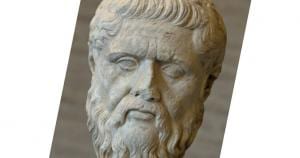 If we wish to follow the Logos where He leads, we need to listen to critics, especially those with interesting things to say. Jeff Williams is a critic of metaphysics. A University of Chicago grad, he agreed to present his argument and I have posted it here unedited (except for some formatting and the title). As result of his rejection of metaphysics, he rejects objective moral law as an illusion.
Mr. Williams previously argued that Athens has no need of Jerusalem, which contributes nothing good to Western civilization. I responded and enjoyed the interaction immensely. Mr. Williams has taken the time to discuss Martin Heidegger, a philosopher not much in favor when I was in graduate school. I have enjoyed reading more Heidegger (alas in translation). As usual, I allowed his post to stand without comment for a time and now here is a response. Mr. Williams suggested to me that I had not gotten him right, so it seemed decent and in order to let him respond. I suggested that Mr. Williams has ended up looking for a pony, because he has found a pile of LEGO blocks shaped like a pony.
Mr. Williams finds my response lacking, so I joyfully invite you to follow the argument where it leads!
Mr. Williams Against Objective Morality
Perhaps we two are destined to eternally consider each other to be in error, which is in no way a bad thing. I shudder in horror at the thought of everyone agreeing with me – a fate no better than solipsistic imprisonment. But as you believed my last response to contain error, so I find with yours.
Your response rests on the assertion that we cannot escape the metaphysical because our very own consciousness, by which we exist as thinking beings, is itself noumenal and beyond physical explanation:
“We all, in fact, begin with a non-physical experience; our consciousness.”
This is a move to establish the metaphysical as real in order to reason from that premise that morality, as an ought rather than the is of the physical, is necessarily derived from the metaphysical. But this argument fails from the defect of the unwarranted premise. Although it was commonly believed among metaphysicians since at least Descartes that mind was proven to be non-physical, that now is not so obviously the case.
In my last response, I traced the continuous appropriation of formerly metaphysical subjects by inquiry into the physical manifestations since the time of Bacon. The word “ontology” had been coined at that time to accommodate the migration ofthe question of being increasingly into this realm of the physical. Consciousness is but the most recent emigrant from the land of metaphysics to that of neuroscience, theoretical physics, and non-metaphysical philosophy. I believe that denying the ability to explain consciousness solely through physical terms will someday look as naïve as those who thought gravity could never be explained. Some physicists are looking into evidence of a sort of panpsychist universe with levels of consciousness varying with levels of complexity, which could ultimately explain entanglement. This is an important premise, for example, in Sean Carroll’s Many Worlds Theory. The philosopher Thomas Nagel has also done important work in this area. Other physicists and neuroscientists study the similarities between quantum indeterminacy and action of wave functions to the function of the brain and how mind could emerge purely from physical waves, which are the basis of all reality. Michio Kaku, among others, is a proponent of this direction of study which could also explain the reality of free will. It’s interesting to note that the two instances of being that seem to not be under deterministic causality are quantum events and the mind.
If the mind proves to be a physical manifestation, the last gasp of metaphysics will expire along with any concept of god. Your claim to experience god could be no more than a metaphysical interpretation of what is properly the mystery of physical Being.
You then claimed:
“They cannot account for the existence of numbers or ideas, even though both numbers and ideas seem to exist to exist to the experts that study such concepts.”
Not only can we, but I did. Much depends on what you mean by existence, but it has been shown that numbers and ideas exist solely in the human subjective mind. Your claim that the experts believe otherwise is somewhat akin to the fallacy of argumentum verecundiam. Kant clearly showed the subjective ground of ideas and number, which is analytically derived in imagination from reason through the subjective senses of space and time. Since then, evolutionary biologists have shown how reason came to evolve in homo sapiens, around when that happened, and the changes in the brain that enabled it. Contemporary neuroscientists such as Donald Hoffman and Anil Seth demonstrate how this happens in the brain. I would clearly count Kant, evolutionary biologists, and contemporary neurologists among the experts.
Moving on to the grounding of morality, you show you probably didn’t understand my argument when you wrote:
“And surely nothing has gone wrong with looking at blood and genes in human history without a ‘love your neighbor’, and ‘love your enemies’ checking our…our interpretation of what is.”
But that was, of course, my point. We are made of complex drives, otherwise we would not need moral sensibilities. These moral sensibilities are a very late evolutionary development which enable our consciousness to reach a higher plain and are all we need to determine the ought from the is through our evolved conscience which is derived from these sensibilities and refined over time. The only question is the grounds for these sensibilities.
I do take offense at the last sentence of the point above:
“No follower of Heidegger should take[sic] about ‘blood’ without caution.”
First, I am not a follower of Heidegger or anybody else. I do take Heidegger’s seminal thoughts on language, poetry and Being as a starting point, but for decades have forged my own path. Second, that particular argument does not derive directly from Heidegger. Third, you will never encounter anyone more opposed to Blut und Boden nationalism than I and, in that regard, I do not repeat Heidegger’s mistake. It sure be clear that I do not mean blood, genes and earth as ethnic and territorial terms, but rather the mysterious ground of human existence overall.
You further that misunderstanding here:
“Mr. Williams should explain how, exactly, logical truth or mathematical truth evolves.”
Well, I should if I ever claimed that, but I never did. The innate ability to think with according to reason, and mathematically which is derivative of reason thought in space and time, evolved with our frontal cortex, but the “truths” of them are static. It is our interpretation of innate sensibilities (as opposed to a prioricategories of understanding) such as morality, taste, beauty, etc. that evolve over time. You coupled to your repeated claim for metaphysical objectification of the world and suggested I answer this:
“…if Mr. Williams has a way of explaining reality without A=Abeing true, then he should tell us what that way is.”
A more careful reading of my last response would reveal that I did explain it as the difference between metaphysicalobjectification and ontological thought. Perhaps an example would help? You know your wife in a deeper sense than objectification and would surely say that your wife is your wife, with “is” being more than just a copula, but would you say she is equal and additive to or replaceable by any other wife? When you reduce to a concept you eliminate the physical essencewhich in this case inheres in the physical being of your wife.
Next, we move on to the topic of our discussion: objective morality. Ironically, you also portray this objective law as altering over time. I had noted that if the morality of the Bible were objective it would also be immutable, yet very few of us would want to return to the laws of Leviticus and Deuteronomy. Our refined moral sense finds much of it barbaric and offensiveto our moral taste. You try to explain this away thus:
“…a good God must educate broken people over time…”
There is an undeniable contradiction here: the Bible cannot be a source of objective morality and change over time. Morality is either objective and immutable or it is alterable over time. Itcannot be both. Even more, a “good God” would not countenance slavery, genocide or stoning of people with different beliefs even in the primitive Bronze Age. I would have expected him to set a better standard rather than one that is now too egregious to accept. It is infinitely more likely that man, on his own, improved his moral senses instead as he distanced himself from Biblical morality. It is undeniable that the Bible provides no acceptable immutable objective law.
Next you construct a strawman in order to more easily confront an argument I made:
“When one says ‘morality is an innate sensibility’ then one has run into explanation by semantics: like the use of instinct to describe why a being acts as he does.”
Even if I had said something like that, instinct would be a better explanation than an imaginary metaphysical construction, but you conflate sensibility with instinct. Instinct is a wired and usually involuntary reaction to specific stimuli. Sensibility is very different in that it is a general emotional attitude toward something that we are able to direct through reason or contemplation. You attempt here to both misstate evolution as araw-toothed drive that always seeks its own individual need over all others and to reduce our mental abilities to mindless instinct. Both are false. As I noted last time, and you still ignore, evolution seeks best fit for adaptation, and many times that involves cooperation among individual instead of competition. The animal world is rife with such examples, and our innate sensibilities for empathy, fairness and love contribute to that enabling cooperation – an adaptation that has allowed us tosurvive beyond any other species.
Ignoring the real argument I made, you then project your own confusion onto me:
“This direction from nature is not sanctified so should I do as nature suggests? Why? This is not a ground for morality but an explanation for why we might choose particular moral positions. Williams is confused.”
We get our nature from Nature (Being), and if you wish to do otherwise, you only de-nature man. It is a ground because we can actually know it physically, understand our place in it, andfind our own nature revealed in it. What you suggest instead is to imagine a realm that we cannot experience and have no reason to believe exists. That is not a ground for morality or anything else. From our nature we understand empathy, fairness and love to be the ground of the good. Because we are such beings, it is in our nature to do so. As I said, we can do no other. Despite your simple denial to the contrary, Being as essence in this physical world is the only possible source of sanctification, and we can only derive the good from this nature. You also ignore the much larger question of the possibility of intention in Being itself, which seems to reveal itself over time; in this case in the arc of morality from Bronze Age barbarism toward the yet distant goal of empathetic cooperation and man’s purpose as the conscious experience of the universe for Being.
I would go further and claim that your own Biblical understanding of morality is itself a projection onto an unreal and imaginary realm of the fears and hopes of man trying to work out his nature. Yours is in fact just another interpretation from our physical nature and the surrounding world, but one from a prior and very primitive stage of development of our consciousness. We have progressed at the same rate as ourthinking moved from metaphysics into ontology rightly thought as physical Being. With consciousness itself having emigrated to physical ontology, the gods are truly dead, and we can begin anew with a better understanding of who we are, and where we go.
Previous Post

February 5, 2020
Dole or Romney or Winning (The State of the Race)
Next Post
February 6, 2020 Physicalism of the Gaps! A Reply to Jeff Williams
Browse Our Archives
Select a Category Apologetics Art Culture Education On Books On Education Philosophy Politics Pop Culture Spiritual Reflections Uncategorized
Select a Month October 2026 September 2026 August 2026 July 2026 July 2025 June 2025 September 2024 July 2024 June 2024 December 2023 June 2023 September 2022 May 2022 April 2022 March 2022 February 2022 July 2021 June 2021 May 2021 April 2021 March 2021 February 2021 January 2021 December 2020 November 2020 October 2020 September 2020 August 2020 July 2020 June 2020 May 2020 April 2020 March 2020 February 2020 January 2020 December 2019 November 2019 October 2019 September 2019 August 2019 July 2019 June 2019 May 2019 April 2019 March 2019 February 2019 January 2019 December 2018 November 2018 October 2018 September 2018 August 2018 July 2018 June 2018 May 2018 April 2018 March 2018 February 2018 January 2018 December 2017 November 2017 October 2017 September 2017 August 2017 July 2017 June 2017 May 2017 April 2017 March 2017 February 2017 January 2017 December 2016 November 2016 October 2016 September 2016 August 2016 July 2016 June 2016 May 2016 April 2016 March 2016 February 2016 January 2016 December 2015 November 2015 October 2015 September 2015 August 2015 July 2015 June 2015 May 2015 April 2015 March 2015 February 2015 January 2015 November 2014 October 2014 September 2014 August 2014 July 2014 June 2014 May 2014 April 2014 March 2014 February 2014 January 2014 December 2013 November 2013 October 2013 September 2013 August 2013 July 2013 June 2013 May 2013 April 2013 March 2013 February 2013 January 2013 December 2012 November 2012 October 2012 September 2012 August 2012 July 2012 June 2012 May 2012
Follow Us!
TAKE THE
Religious Wisdom Quiz
I am a day when the high priest enters the Most Holy Place once a year to make atonement. What day am I?
Select your answer to see how you score.
The Sabbath The Day of Atonement The Day of Trumpets Passover
Books by This Author John Mark Reynolds
Related posts from Eidos

Classical Education Must Teach Us to Make the...

The Iceberg is There: Verbosity Cannot Defeat Reality

One Weeping Icon at Christmas is Enough

The Power of Dissenting Societies: A Thought
TRENDING AT PATHEOS Evangelical

The REST of Your Life: A Creative Wrestles...
This week I had a conversation with a good friend from church....

How the author of the world's best hymn...
I've been working with John Newton for a while now. This makes...

Long before this Lectio Divina, Psalm 130 - the song - started...

What About the Trees? Another Living Parable
After I finished writing the last article about falling leaves as a...

Why Classical Education Is a Conversation, Not a...
Come and Read: Joy in Classical Education When I was a little...

Cornell University has received a great deal of negative publicity and intense...
view all Evangelical blogs
Ad-Free & Subscriber Log-In Subscription Support
- About Us
- 2026 Calendar
- Videos
- Podcasts
- Library of World Religions
- Faith In Media Tracker
- Advertise With Us
- Write for Us
- Privacy Policy
- Terms of Service
- Do Not Sell My Data
- Contact Us
- Radiant Digital
- Manage Newsletter Subscriptions
- Unsubscribe From Notifications
- Sitemap
Copyright 2008-2026, Patheos. All rights reserved.
Subscription Support Ad-Free & Subscriber Log-In
Follow Patheos