
BuddhistCatholicContemplativeEvangelicalGeneral ChristianHinduJewishLatter-day SaintMuslimNew VisionsProgressive Christian
Beliefs
- Buddhist
- Catholic
- Contemplative
- Evangelical
- General Christian
- Hindu
- Jewish
- Latter-day Saint
- More Voices
- Muslim
- New Visions
- Pagan
- Progressive Christian
Topics
- Religion News
- Food and Religion
- Sports and Religion
- Religious Art
- Religious Music and Entertainment
- Religious Events
- History and Religion
- Style and Religion
- Politics and Religion
- Women in Religion
- Recreation Outdoors and Religion
- Business Finance and Religion
- Careers Workplace and Religion
- Education and Religion
- Family Parenting and Religion
- Health Fitness and Religion
- Home and Religion
- Relationships and Religion
- Technology and Religion
- Travel and Religion
Columnists
- Buddhist Columnists
- Business Finance and Religion Columnists
- Careers Workplace and Religion Columnists
- Catholic Columnists
- Contemplative Columnists
- Education and Religion Columnists
- Evangelists Columnists
- Family Parenting and Religion Columnists
- General Christian Columnists
- Health Fitness and Religion Columnists
- Hindu Columnists
- History and Religion Columnists
- Home and Religion Columnists
- Jewish Columnists
- More Voices Columnists
- Latter Day Columnists
- Muslim Columnists
- New Visions Columnists
- Nonreligious Columnists
- Pagan Columnists
- Politics and Religion Columnists
- Progressive Columnists
- Recreation Outdoors and Religion Columnists
- Relationships and Religion Columnists
- Religion News Columnists
- Religious Art Columnists
- Religious Events Columnists
- Religious Music and Entertainment Columnists
- Sports and Religion Columnists
- Style and Religion Columnists
- Technology and Religion Columnists
- Travel and Religion Columnists
- Women in Religion Columnists
Resource Library
- 2026 Calendar
- Library of World Religions
- The 100 Most Holy Places on Earth
- Patheos Answers
- Podcasts
- Videos
- Faith Leaders Database
- Anglican Episcopalian
- Bahai
- Baptist
- Buddhism
- Christianity
- Confucianism
- Eastern Orthodoxy
- Hinduism
- Holiness and Pentecostal
- ISKCON
- Islam
- Judaism
- Lutheran
- Methodist
- The Church of Jesus Christ of Latter-day Saints
- New Age
- Paganism
- Presbytarian and Reformed
- Protestantism
- Religion Behind the Scenes
- Roman Catholic
- Scientology
- Shia Islam
- Sikhism
- Sufism
- Sunni Islam
- Taoism
- Zen
- See all religions
Research Tools
 Ad-Free & Subscriber Log-In Subscription Support
Ad-Free & Subscriber Log-In Subscription Support
Follow Patheos 

- Trending:
- Forgiveness
- |
- Marriage
- |
- Consciousness
- |
- Death Penalty
- |
- Election
- |
- Halloween

- Home
- Evangelical
- Distracting ourselves to tedium (Reading Alan Noble as a Distracted Me 1/8)
Distracting ourselves to tedium (Reading Alan Noble as a Distracted Me 1/8)
Last updated on: October 6, 2018 at 11:14 am by John Mark N. Reynolds
Distracting ourselves to tedium (Reading Alan Noble as a Distracted Me 1/8) 2018-10-06T11:14:36-04:00 John Mark N. Reynolds
Patheos Explore the world's faith through different perspectives on religion and spirituality! Patheos has the views of the prevalent religions and spiritualities of the world.
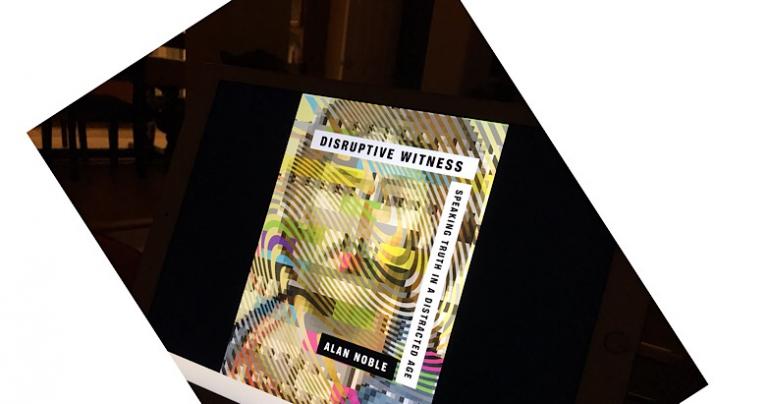 A good teacher begins class with a great question, one that makes us think and consider a new perspective: what if we are distracting ourselves to tedium?
That is how I read Alan Noble, professor and prophet, in his fine new book Disruptive Witness: Speaking the Truth in a Distracted Age.
We were once asked if we are amusing ourselves to death. Actually, most of the distractions we cultivate are not that amusing. Our phones buzz, but there is not much buzz after we respond. I am an easily distracted person who loves data, so much of what Noble writes could have been written for me.
Time to lay my iPhone down.
What if the vast majority of our conversations about Christianity are not really about faith at all?
If we are not talking about the faith, then what are we talking about? Professor Noble suggests:
What if our most passionate and articulate conversations about the gospel with our unbelieving neighbors are actually orchestrated social games, in which both sides leave without having wagered anything?
Is this true of me? Perhaps. I am often distracted. This is not good for deeper thought or sincere dialog.
Even here, writing on an online platform, I need to prefer paper to e-book (except when searching for quotations) and quiet to distraction. Alan Noble has written an interesting book so I cannot check Facebook while reading the text.
Noble suggests that nobody can. Moderns buffer themselves from metaphysical reality by upping the number of physical stimuli. Virtual reality is not, in our experience, virtual: we are playing the game, earning the points, and staring at the screen indeed.
What is the cause of it all? Hear Noble:
These two major trends are (1) the practice of continuous engagement in immediately gratifying activities that resist reflection and meditation, and (2) the growth of secularism, defined as a state in which theism is seen as one of many viable choices for human fullness and satisfaction, and in which the transcendent feels less and less plausible.
Yes, and mostly yes.
We pick what we wish to consume. There is nothing secular about this. Isn’t genuine secularism itself one choice among many? Perhaps if we are distracted we will embrace magical thinking—the atheism of Twitter or theism of TV evangelism—and not the atheism of the Victorian scholar or theism of the martyr. I am not sure that the transcendent feels any less plausible unless by transcendent one means any deep feeling or thought.
What if we are not secular, but shallow?
We are shallow in a cosmos with deep depths. Religious transcendence and secular transcendence both require undistracted time to feel and think. The atheists I have known and respected saw and felt transcendence, even if they did not go far enough. Theirs was not the atheism that had chosen to disbelieve, but the atheism that had, with severe honesty, looked, seen beauty, felt wonder, but not found God.
Why? Who can be sure? I know this: I have more in common with such an atheist than with a theist who simply buys the product of some fast-talking pitchman. So Professor Noble: I do not think we are secular but shallow. We are distracted whatever the religion or irreligion we adopt:
The rise of secularism has inspired a view of technology and fullness rooted thoroughly in this life and established and chosen inwardly, which I believe has helped to justify the creation and adoption of technologies that are not directed toward human flourishing but instead help us project our identity and remain distracted. Outside of a culture of virtue grounded in an external source, science, technology, and the market have been driven to produce a society that prioritizes the sovereign individual.
This is why our atheism is inferior to the atheism of Russell or even Ingersoll. The distracted atheist– the secularist with a Twitter feed–demands a mic drop from each of his multiple avatars. This does not allow for serious thought or wonder. This life is not enough even if one is an atheist. There must be external morality and at least mathematical objects to make science work. The undistracted atheists came to know this truth, but the distracted atheist is the star in his own secular salvation drama.
What if you and I are actually insignificant?
Despite the quibble, Noble is deeply right when he says that we think of ourselves as the stars of our own movie. We might actually be the elf who dies in the first scene, but we think we are Frodo with God as Peter Jackson making us a star:
In a culture where the gospel can be so easily co-opted into individual narratives without any honest spiritual response by a person, how can we witness to the truth of the gospel and defend it so that it goes beyond the hearer’s buffer?
I don’t know. I would not know how to get Internet atheism to stop opining and go read some Graham Oppy. For the religious believers the job is similar:
My admonition in this book is to understand how our culture processes beliefs, so we might better fulfill our duty to love our neighbor and glorify God.
Mild introductory criticisms: Noble does have every academic’s habit of writing in the academic “we.” Sometimes he tends to use a clever term as a substitute for an argument. Mayhaps.
Buy the book.
_______________________
Alan Noble is the “co-founder and editor in chief of Christ and Pop Culture.” If you are not reading Christ and Pop Culture and you are interested in Christ and/or Pop Culture, then bad. Go and subscribe.
I am slow-reading his new book. Part 1.
Rachel Motte edited this essay.
Previous Post

October 1, 2018
The Mercy of Near Sightedness
Next Post

October 3, 2018 Save Me From Silence (Reading Alan Noble as a Distracted Me 2/8)
Browse Our Archives
Select a Category Apologetics Art Culture Education On Books On Education Philosophy Politics Pop Culture Spiritual Reflections Uncategorized
Select a Month October 2026 September 2026 August 2026 July 2026 July 2025 June 2025 September 2024 July 2024 June 2024 December 2023 June 2023 September 2022 May 2022 April 2022 March 2022 February 2022 July 2021 June 2021 May 2021 April 2021 March 2021 February 2021 January 2021 December 2020 November 2020 October 2020 September 2020 August 2020 July 2020 June 2020 May 2020 April 2020 March 2020 February 2020 January 2020 December 2019 November 2019 October 2019 September 2019 August 2019 July 2019 June 2019 May 2019 April 2019 March 2019 February 2019 January 2019 December 2018 November 2018 October 2018 September 2018 August 2018 July 2018 June 2018 May 2018 April 2018 March 2018 February 2018 January 2018 December 2017 November 2017 October 2017 September 2017 August 2017 July 2017 June 2017 May 2017 April 2017 March 2017 February 2017 January 2017 December 2016 November 2016 October 2016 September 2016 August 2016 July 2016 June 2016 May 2016 April 2016 March 2016 February 2016 January 2016 December 2015 November 2015 October 2015 September 2015 August 2015 July 2015 June 2015 May 2015 April 2015 March 2015 February 2015 January 2015 November 2014 October 2014 September 2014 August 2014 July 2014 June 2014 May 2014 April 2014 March 2014 February 2014 January 2014 December 2013 November 2013 October 2013 September 2013 August 2013 July 2013 June 2013 May 2013 April 2013 March 2013 February 2013 January 2013 December 2012 November 2012 October 2012 September 2012 August 2012 July 2012 June 2012 May 2012
Follow Us!
TAKE THE
Religious Wisdom Quiz
How long was the wedding celebrations length in Biblical times?
Select your answer to see how you score.
7 days 10 days 5 days 3 days
Books by This Author John Mark Reynolds
Related posts from Eidos

Classical Education Must Teach Us to Make the...

Classical Education and the Art of Dying Well

Golden, Golden, Golden: My Mother's Last Lesson

TRENDING AT PATHEOS Evangelical

The REST of Your Life: A Creative Wrestles...
This week I had a conversation with a good friend from church....

How the author of the world's best hymn...
I've been working with John Newton for a while now. This makes...

Long before this Lectio Divina, Psalm 130 - the song - started...

What About the Trees? Another Living Parable
After I finished writing the last article about falling leaves as a...

Why Classical Education Is a Conversation, Not a...
Come and Read: Joy in Classical Education When I was a little...

Cornell University has received a great deal of negative publicity and intense...
view all Evangelical blogs
Ad-Free & Subscriber Log-In Subscription Support
- About Us
- 2026 Calendar
- Videos
- Podcasts
- Library of World Religions
- Faith In Media Tracker
- Advertise With Us
- Write for Us
- Privacy Policy
- Terms of Service
- Do Not Sell My Data
- Contact Us
- Radiant Digital
- Manage Newsletter Subscriptions
- Unsubscribe From Notifications
- Sitemap
Copyright 2008-2026, Patheos. All rights reserved.
Subscription Support Ad-Free & Subscriber Log-In
Follow Patheos