
BuddhistCatholicContemplativeEvangelicalGeneral ChristianHinduJewishLatter-day SaintMuslimNew VisionsProgressive Christian
Beliefs
- Buddhist
- Catholic
- Contemplative
- Evangelical
- General Christian
- Hindu
- Jewish
- Latter-day Saint
- More Voices
- Muslim
- New Visions
- Pagan
- Progressive Christian
Topics
- Religion News
- Food and Religion
- Sports and Religion
- Religious Art
- Religious Music and Entertainment
- Religious Events
- History and Religion
- Style and Religion
- Politics and Religion
- Women in Religion
- Recreation Outdoors and Religion
- Business Finance and Religion
- Careers Workplace and Religion
- Education and Religion
- Family Parenting and Religion
- Health Fitness and Religion
- Home and Religion
- Relationships and Religion
- Technology and Religion
- Travel and Religion
Columnists
- Buddhist Columnists
- Business Finance and Religion Columnists
- Careers Workplace and Religion Columnists
- Catholic Columnists
- Contemplative Columnists
- Education and Religion Columnists
- Evangelists Columnists
- Family Parenting and Religion Columnists
- General Christian Columnists
- Health Fitness and Religion Columnists
- Hindu Columnists
- History and Religion Columnists
- Home and Religion Columnists
- Jewish Columnists
- More Voices Columnists
- Latter Day Columnists
- Muslim Columnists
- New Visions Columnists
- Nonreligious Columnists
- Pagan Columnists
- Politics and Religion Columnists
- Progressive Columnists
- Recreation Outdoors and Religion Columnists
- Relationships and Religion Columnists
- Religion News Columnists
- Religious Art Columnists
- Religious Events Columnists
- Religious Music and Entertainment Columnists
- Sports and Religion Columnists
- Style and Religion Columnists
- Technology and Religion Columnists
- Travel and Religion Columnists
- Women in Religion Columnists
Resource Library
- 2026 Calendar
- Library of World Religions
- The 100 Most Holy Places on Earth
- Patheos Answers
- Podcasts
- Videos
- Faith Leaders Database
- Anglican Episcopalian
- Bahai
- Baptist
- Buddhism
- Christianity
- Confucianism
- Eastern Orthodoxy
- Hinduism
- Holiness and Pentecostal
- ISKCON
- Islam
- Judaism
- Lutheran
- Methodist
- The Church of Jesus Christ of Latter-day Saints
- New Age
- Paganism
- Presbytarian and Reformed
- Protestantism
- Religion Behind the Scenes
- Roman Catholic
- Scientology
- Shia Islam
- Sikhism
- Sufism
- Sunni Islam
- Taoism
- Zen
- See all religions
Research Tools
 Ad-Free & Subscriber Log-In Subscription Support
Ad-Free & Subscriber Log-In Subscription Support
Follow Patheos 

- Trending:
- Forgiveness
- |
- Marriage
- |
- Consciousness
- |
- Death Penalty
- |
- Election
- |
- Halloween

- Home
- Evangelical
- God the Moral Relativist? –Questions from M
God the Moral Relativist? –Questions from M
Last updated on: June 6, 2017 at 11:40 am by John Mark N. Reynolds
God the Moral Relativist? –Questions from M 2017-06-06T11:40:40-04:00 John Mark N. Reynolds
Patheos Explore the world's faith through different perspectives on religion and spirituality! Patheos has the views of the prevalent religions and spiritualities of the world.
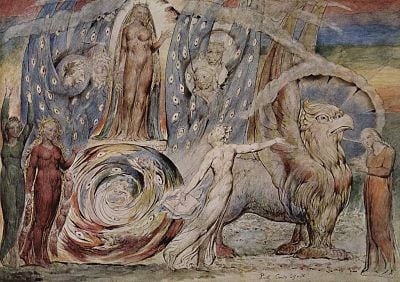 “Did God get saved between the Old Testament and the New Testament?” asked the student.
I laughed, but I understood what she meant. God does seem different and not just between the Testaments. His character seems different between the books of Isaiah and Jeremiah! Of course, you can harmonize the picture of God that you find in Exodus with the God of the Gospel of John, but my student is not the first to notice the difference.
My email-friend M*, thoughtful interlocutor that he is, certainly has noticed:
- It seems like God has a very different character or at least very different way of dealing with people in the Hebrew Bible vs. the New Testament. That would seem to make God a moral relativist. Would you agree or disagree with that?
There is a standard (and perfectly fine) way of answering this sort of question that seeks to harmonize the pictures of God we get in the books of the Bible. You can find a good example here. M* seems a bit like I am, however, and always finds explanations, any explanations a bit like a retcon of a science fiction story. The writers do an episode and then later do another clever episode, but that bit creates a plot anomaly. What to do? A super-clever Joss-Whedon-type pulls a harmonization out the air to keep the series going!
The gang on Lost are in purgatory or Bobby was dreaming or Dawn isn’t really Buffy’s sister . . .
Good for television, but not so compelling as a style of argument. In fact, I do not think that these harmonizations are always a retcon when we are dealing with ancient texts. Our ignorance of the ancient world is very great and new facts are discovered that can make old problems, new insights. If you do not know the political situation between Pontius Pilate and Caesar, then some of what is said to Pilate and how he reacts makes less sense than if you understand Pilate was on a short leash with the Boss back Rome.
That’s not retcon, that is deepening our knowledge. One also cannot say that “a” is incompatible with “b” if there is a good, reasonable way to harmonize “a” and “b.” Of course, that harmonization may not be true, but the point is that then textual tension might only be apparent and not actual. Scholars read old books this way. Do not assume Plato is inconsistent if there is a way to harmonize that is natural to the text. Do not assume the Bible is inconsistent either!
And yet . . .
There is always a temptation at a retcon if we love a book, let us accept the premises of M*’s question. Let’s assume that the God of the Hebrew Bible has a very different way of dealing with people than the God of the New Testament. In other words, let us accept all the premises of the question.
I do not think M* has identified a problem for the traditional Christian in any case.
Why?
Often critics forget that each book of the Bible has a human author. The human author is using his best vocabulary to describe what God is telling him. We forget that even a simple concept like “liberty” comes with centuries of linguistic development and intellectual growth. One cannot say a thing in a language if there is no word for the concept in that language! In addition, telling a person to do a “good” thing that will turn out worse, given the culture, for a person is not moral.
Imagine telling a nomadic culture to build prisons! How exactly would that work? How would you explain the concept to them?
If God is in the job of educating humanity to true adulthood, God has had a long hard process. Just getting one nation to grasp monotheism took centuries.
God is not a moral relativist in general, but is in particular.
There are some things that are always wrong**(such as killing innocent people for fun) and there are some things that are wrong only if they are done too much or too little. I should brush my teeth, but not too much. God might tell me to go brush my teeth in one situation and tell me to refrain in another. The morality of tooth brushing is relative to the situation.
Morality can be relative to the situation! If I open the door, that is no sin unless it was to let the killer into the house.
In the Hebrew Bible, God begins with a broken people who no longer recall much of the truth of God’s nature. God reveals that nature to them over time, the best God can without destroying their intellectual integrity. Each lesson opens new doors: think a video game where one level achieved unlocks the next. God educates us in one concept and we give it a “name.” We are ready for the next concept . . . and so it goes.
God deals with the ignorant differently than God deals with the (relatively) more sophisticated. In rough times, with rough men, God spoke roughly. They would have ignored any other Word. In more gentle times, God speaks gently. We get the best Word we can receive. God does not change, but our sophistication does.
The people in Judges were men of blood and the God they found was a God of blood, just a bit less bloody than Baal. The God they misunderstood, or dimly heard, kept undermining what they thought they heard for what God was saying: love your enemies. The apostle John was a man of thunder with a tender heart and John saw a God with with eyes that were flames of fire, but who told us to love one another.
God does not change, but God changes us. As God changes us, we get a progressive revelation of the person that is God. This person does not contradict the person that we once knew, but refines our knowledge of that person. Barbaric man in all his folly wanted more than an eye for an eye, but God said “no.” More civilized man was happy to take his eye as revenge, but God said “no” in the prophets. Eventually we learned how to show some mercy, not always take the eye, but then God said “love your enemies.”
God shows us the full truth over time: Justice, not revenge. Mercy trumps justice. Mercy washes the world in love.
The changing nature of language and of humankind explains the growing sophistication of our knowledge of God. Atheists are quite wrong: we do not create God in our image, God speaks to us and moves us forward to God’s image. This does not mean that all moral ideas are up for grabs. . . morality narrows, it does not broaden. What God permitted in the past, God forbids today. We have the wealth not to kill, so we must not. We once could marry many, now we see the joys of chastity.
We have been saved, are being saved, and will be saved: not just between Testaments, but in every moment.
—————————-
*M is a non-Christian that sent me 55 questions early this year. He has asked that I not reveal his or her name. I will write as if “he” is a male, but this is for convenience. I do not know if I will get to all his questions. Here are questions 1, 2, 3, 6, 7, 17, 23, 26, 27, 28, 34, 35, 37, 44, 47, 54 , and 55.
**I follow Aristotle in Nicomachean Ethics.
Previous Post

June 5, 2017
Follow the Truth, Best You Can-- Questions from M
Next Post
June 7, 2017 Why did Jesus come then and not now? --Questions from M
Browse Our Archives
Select a Category Apologetics Art Culture Education On Books On Education Philosophy Politics Pop Culture Spiritual Reflections Uncategorized
Select a Month October 2026 September 2026 August 2026 July 2026 July 2025 June 2025 September 2024 July 2024 June 2024 December 2023 June 2023 September 2022 May 2022 April 2022 March 2022 February 2022 July 2021 June 2021 May 2021 April 2021 March 2021 February 2021 January 2021 December 2020 November 2020 October 2020 September 2020 August 2020 July 2020 June 2020 May 2020 April 2020 March 2020 February 2020 January 2020 December 2019 November 2019 October 2019 September 2019 August 2019 July 2019 June 2019 May 2019 April 2019 March 2019 February 2019 January 2019 December 2018 November 2018 October 2018 September 2018 August 2018 July 2018 June 2018 May 2018 April 2018 March 2018 February 2018 January 2018 December 2017 November 2017 October 2017 September 2017 August 2017 July 2017 June 2017 May 2017 April 2017 March 2017 February 2017 January 2017 December 2016 November 2016 October 2016 September 2016 August 2016 July 2016 June 2016 May 2016 April 2016 March 2016 February 2016 January 2016 December 2015 November 2015 October 2015 September 2015 August 2015 July 2015 June 2015 May 2015 April 2015 March 2015 February 2015 January 2015 November 2014 October 2014 September 2014 August 2014 July 2014 June 2014 May 2014 April 2014 March 2014 February 2014 January 2014 December 2013 November 2013 October 2013 September 2013 August 2013 July 2013 June 2013 May 2013 April 2013 March 2013 February 2013 January 2013 December 2012 November 2012 October 2012 September 2012 August 2012 July 2012 June 2012 May 2012
Follow Us!
TAKE THE
Religious Wisdom Quiz
Great is your faithfulness! Your mercies are new every what?
Select your answer to see how you score.
Hour Season Day Morning
Books by This Author John Mark Reynolds
Related posts from Eidos

The Iceberg is There: Verbosity Cannot Defeat Reality

One Weeping Icon at Christmas is Enough

The Power of Dissenting Societies: A Thought

TRENDING AT PATHEOS Evangelical

The REST of Your Life: A Creative Wrestles...
This week I had a conversation with a good friend from church....

How the author of the world's best hymn...
I've been working with John Newton for a while now. This makes...

Long before this Lectio Divina, Psalm 130 - the song - started...

What About the Trees? Another Living Parable
After I finished writing the last article about falling leaves as a...

Why Classical Education Is a Conversation, Not a...
Come and Read: Joy in Classical Education When I was a little...

Cornell University has received a great deal of negative publicity and intense...
view all Evangelical blogs
Ad-Free & Subscriber Log-In Subscription Support
- About Us
- 2026 Calendar
- Videos
- Podcasts
- Library of World Religions
- Faith In Media Tracker
- Advertise With Us
- Write for Us
- Privacy Policy
- Terms of Service
- Do Not Sell My Data
- Contact Us
- Radiant Digital
- Manage Newsletter Subscriptions
- Unsubscribe From Notifications
- Sitemap
Copyright 2008-2026, Patheos. All rights reserved.
Subscription Support Ad-Free & Subscriber Log-In
Follow Patheos