
BuddhistCatholicContemplativeEvangelicalGeneral ChristianHinduJewishLatter-day SaintMuslimNew VisionsProgressive Christian
Beliefs
- Buddhist
- Catholic
- Contemplative
- Evangelical
- General Christian
- Hindu
- Jewish
- Latter-day Saint
- More Voices
- Muslim
- New Visions
- Pagan
- Progressive Christian
Topics
- Religion News
- Food and Religion
- Sports and Religion
- Religious Art
- Religious Music and Entertainment
- Religious Events
- History and Religion
- Style and Religion
- Politics and Religion
- Women in Religion
- Recreation Outdoors and Religion
- Business Finance and Religion
- Careers Workplace and Religion
- Education and Religion
- Family Parenting and Religion
- Health Fitness and Religion
- Home and Religion
- Relationships and Religion
- Technology and Religion
- Travel and Religion
Columnists
- Buddhist Columnists
- Business Finance and Religion Columnists
- Careers Workplace and Religion Columnists
- Catholic Columnists
- Contemplative Columnists
- Education and Religion Columnists
- Evangelists Columnists
- Family Parenting and Religion Columnists
- General Christian Columnists
- Health Fitness and Religion Columnists
- Hindu Columnists
- History and Religion Columnists
- Home and Religion Columnists
- Jewish Columnists
- More Voices Columnists
- Latter Day Columnists
- Muslim Columnists
- New Visions Columnists
- Nonreligious Columnists
- Pagan Columnists
- Politics and Religion Columnists
- Progressive Columnists
- Recreation Outdoors and Religion Columnists
- Relationships and Religion Columnists
- Religion News Columnists
- Religious Art Columnists
- Religious Events Columnists
- Religious Music and Entertainment Columnists
- Sports and Religion Columnists
- Style and Religion Columnists
- Technology and Religion Columnists
- Travel and Religion Columnists
- Women in Religion Columnists
Resource Library
- 2026 Calendar
- Library of World Religions
- The 100 Most Holy Places on Earth
- Patheos Answers
- Podcasts
- Videos
- Faith Leaders Database
- Anglican Episcopalian
- Bahai
- Baptist
- Buddhism
- Christianity
- Confucianism
- Eastern Orthodoxy
- Hinduism
- Holiness and Pentecostal
- ISKCON
- Islam
- Judaism
- Lutheran
- Methodist
- The Church of Jesus Christ of Latter-day Saints
- New Age
- Paganism
- Presbytarian and Reformed
- Protestantism
- Religion Behind the Scenes
- Roman Catholic
- Scientology
- Shia Islam
- Sikhism
- Sufism
- Sunni Islam
- Taoism
- Zen
- See all religions
Research Tools
 Ad-Free & Subscriber Log-In Subscription Support
Ad-Free & Subscriber Log-In Subscription Support
Follow Patheos 

- Trending:
- Forgiveness
- |
- Marriage
- |
- Consciousness
- |
- Death Penalty
- |
- Election
- |
- Halloween

- Home
- Evangelical
- Choosing to Believe? –Questions from M
Choosing to Believe? –Questions from M
Last updated on: June 3, 2017 at 9:02 pm by John Mark N. Reynolds
Choosing to Believe? –Questions from M 2017-06-03T21:02:30-04:00 John Mark N. Reynolds
Patheos Explore the world's faith through different perspectives on religion and spirituality! Patheos has the views of the prevalent religions and spiritualities of the world.
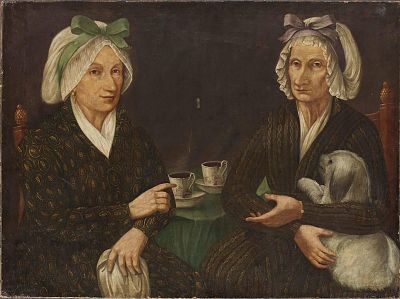
For the discussion, who wouldn’t learn to love coffee?
When I was a boy, I was sure of one thing: I hated the very taste of coffee. Part of this may have been that this was the freeze dried Taster’s Choice era of coffee in our house. It was coffee that was hard to love, though really I disliked all coffee. Instead, I became addicted to Diet Coke, just for the taste of it.
I know. The 1980’s were a mixed bag, Reagan, but also parachute pants.
One day, the drama folk I was hanging with started drinking something called a “latte.” This was milk, something I did not like, with coffee, something I did not like. I did not like it, but I liked the crowd, so I drank it and smiled and soon, I kid you not, I liked it.
I went through a similar process with cooked carrots, thanks to my darling wife, but that is another story. Without any recourse to a miracle, my experience has been that many likes, dislikes, and even opinions can be modified if the motivation is there. The motivation need not be noble (as mine was not) or even rational (as mine was not). I like coffee, because I liked the people that liked coffee. Now my experience is that there are some deep seeded desires that cannot just be willed away, though they can be weakened. I do not have to act on them.
On a Change of Belief
With that in mind, I read a question from my jolly skeptical summer interlocutor M*. M* asks:
- Christianity is centered on faith and belief more so than it is around actions (like say, Buddhism). Do you believe someone can actually choose to believe something? I find that one gets ones beliefs from means other than what one chooses.
This is a different way to describe Christianity than I would choose. I do not see faith, belief, and action as opposing each other as much as buttressing each other. Belief must lead to action or I do not believe. Action should be based on belief (faith) or it is irrational and unwise.
If we leave those (very complicated!) issues to the side, can I choose to believe?
I think so, in some cases. In other cases, I cannot. Suppose I wish that Narnia existed (not as an idea or in Barterra, but in this world). I can promise this is something I really wished were true as a boy, but I never managed to believe it. Why? There was no evidence it was true. My reason looked, but could not find enough hope to pursue the issue. If I had found a hopeful line of inquiry, then hope might have lead to faith and belief.
Belief in actual Narnia is hopeless.**
So “no,” I have discovered I cannot will belief. The other case came with Christianity. I was at a point in my life where with every passion in me I did not wish traditional Christianity to be true. I wanted to say: “Christianity is false.” I wanted to disbelieve. I could cultivate plenty of desire, loathing of certain aspects of Christendom, and any amount of intellectual problems. As a philosophy grad student, I knew where to look, but I could not do it.
The arguments did not persuade me.
This process of failure to believe has a counterpoint. Sometimes I will be motivated to look into an idea for some reason or another and discover that looking into it changes my mind and my beliefs. I hope, I look, I study, and I believe.
What is the process? I am not sure, but Socrates in Plato’s Symposium helps me. He teaches me that desire might lead to hope, hope to faith, faith to seeing and seeing to knowledge. This has been my experience. What motivates the process? Love. I see beauty and beauty produces desire and desire drives me toward the good beloved object. Of course, sometimes my love is misplaced and the object is unworthy as love of secularism turned out to be for me.
How do I know that I believe? I believe when I act. If I do not do what I say I believe, then I do not do it.
Shouldn’t some beliefs count more?
M* has made a good point in a follow up email. He says:
The analogy (forgive me if I’m getting this wrong) is that a belief system is like a spider web, where parts of the web will attach to each other, and then one or two lines will attach out to something. I think that’s a great way of seeing things. I’m afraid, however, that I think religious people can use this to their detriment (as can everyone else who is prone to confirmation bias, cognitive dissonance, logical fallacies, etc.—including me). My issue with that excellent explanation is that one can have a very coherent ideology, but the line of the web that attaches out must be stronger in real life than the spider’s web. . . (Examples follow that will be addressed in later questions from M*)
So, I don’t know exactly what my question is here but I think what I’m asking is whether (to use your great analogy), do you believe the line of the web attaching the rest of the web to the tree has to be any stronger or of a different quality than the rest of the line to support this belief structure or can it be the same, weaker, stronger, etc.?
I hope M* sees from what I have just said that this is exactly right! We can kid ourselves. Some beliefs are more important than other beliefs: some are central and some are not, some could detach from external reality and we would be fine, but others would cause our “web of belief” to fly off into space.
We cannot just believe as we wish, because a wish is not sufficient justification for a belief! Our beliefs must cohere and attach at reality as best we can make them do so. Not every belief (or strand of belief) needs to be equally strong, but some must be very strong and some of those strong beliefs should be attached to the “tree” of external reality. Of course, this is complicated, because (as the question shows) our beliefs shape how we see external reality! That too (for good and bad) is a biconditional relationship.
I am not sure that the line to external reality must be stronger that certain internal lines. Mathematical and logical truths, for example, have no external justification, but I should get those right. However, in general some lines of evidence must cohere. Christianity must work in the external world without giving up too much, or presenting to many coherence problems (with the external world as we see it), or it should (and will) fail.
Here are three predictions about the external world that I think Christianity gets quite right:
- There is a physical and metaphysical reality.
- Humankind is good, but broken. We cannot fix ourselves.
- Jesus
And so I am a Christian and not just a theist!
What if you don’t believe any of those things? Can I force belief? No. God forbid! If you see Jesus, I believe His beauty will produce desire, desire love, and love cause you to hope He is real. You look, listen, and learn. If He is there and not silent, then He will speak and you will know.
From now to the moment of our death (mysterious revelation of truth and last choice!), we commit ourselves and then we see.
—————————-
*M is a non-Christian that sent me 55 questions early this year. He has asked that I not reveal his or her name. I will write as if “he” is a male, but this is for convenience. I do not know if I will get to all his questions. Here are questions 1, 2, 3, 6, 17, 23, 26, 27, 28, 34, 35, 37 , 47, 54 , and 55.
** Yes, yes, I know. Fictional characters are real in one sense of real, but that would be equivocating here. Read the novel.
Previous Post

June 2, 2017
Mind and Body -Questions from M
Next Post
June 4, 2017 Confessor
Browse Our Archives
Select a Category Apologetics Art Culture Education On Books On Education Philosophy Politics Pop Culture Spiritual Reflections Uncategorized
Select a Month October 2026 September 2026 August 2026 July 2026 July 2025 June 2025 September 2024 July 2024 June 2024 December 2023 June 2023 September 2022 May 2022 April 2022 March 2022 February 2022 July 2021 June 2021 May 2021 April 2021 March 2021 February 2021 January 2021 December 2020 November 2020 October 2020 September 2020 August 2020 July 2020 June 2020 May 2020 April 2020 March 2020 February 2020 January 2020 December 2019 November 2019 October 2019 September 2019 August 2019 July 2019 June 2019 May 2019 April 2019 March 2019 February 2019 January 2019 December 2018 November 2018 October 2018 September 2018 August 2018 July 2018 June 2018 May 2018 April 2018 March 2018 February 2018 January 2018 December 2017 November 2017 October 2017 September 2017 August 2017 July 2017 June 2017 May 2017 April 2017 March 2017 February 2017 January 2017 December 2016 November 2016 October 2016 September 2016 August 2016 July 2016 June 2016 May 2016 April 2016 March 2016 February 2016 January 2016 December 2015 November 2015 October 2015 September 2015 August 2015 July 2015 June 2015 May 2015 April 2015 March 2015 February 2015 January 2015 November 2014 October 2014 September 2014 August 2014 July 2014 June 2014 May 2014 April 2014 March 2014 February 2014 January 2014 December 2013 November 2013 October 2013 September 2013 August 2013 July 2013 June 2013 May 2013 April 2013 March 2013 February 2013 January 2013 December 2012 November 2012 October 2012 September 2012 August 2012 July 2012 June 2012 May 2012
Follow Us!
TAKE THE
Religious Wisdom Quiz
Who led the rebuilding of the Jerusalem temple after exile in the book of Ezra?
Select your answer to see how you score.
Zerubbabel Nehemiah Ezra Haggai
Books by This Author John Mark Reynolds
Related posts from Eidos

The Iceberg is There: Verbosity Cannot Defeat Reality

One Weeping Icon at Christmas is Enough

The Power of Dissenting Societies: A Thought

TRENDING AT PATHEOS Evangelical

How the author of the world's best hymn...
I've been working with John Newton for a while now. This makes...

Long before this Lectio Divina, Psalm 130 - the song - started...

What About the Trees? Another Living Parable
After I finished writing the last article about falling leaves as a...

Why Classical Education Is a Conversation, Not a...
Come and Read: Joy in Classical Education When I was a little...

Falling Leaves: A Living Parable on Letting Go
I’ve spent the vast majority of my life in the southeast corner...

Cornell University has received a great deal of negative publicity and intense...
view all Evangelical blogs
Ad-Free & Subscriber Log-In Subscription Support
- About Us
- 2026 Calendar
- Videos
- Podcasts
- Library of World Religions
- Faith In Media Tracker
- Advertise With Us
- Write for Us
- Privacy Policy
- Terms of Service
- Do Not Sell My Data
- Contact Us
- Radiant Digital
- Manage Newsletter Subscriptions
- Unsubscribe From Notifications
- Sitemap
Copyright 2008-2026, Patheos. All rights reserved.
Subscription Support Ad-Free & Subscriber Log-In
Follow Patheos