
BuddhistCatholicContemplativeEvangelicalGeneral ChristianHinduJewishLatter-day SaintMuslimNew VisionsProgressive Christian
Beliefs
- Buddhist
- Catholic
- Contemplative
- Evangelical
- General Christian
- Hindu
- Jewish
- Latter-day Saint
- More Voices
- Muslim
- New Visions
- Pagan
- Progressive Christian
Topics
- Religion News
- Food and Religion
- Sports and Religion
- Religious Art
- Religious Music and Entertainment
- Religious Events
- History and Religion
- Style and Religion
- Politics and Religion
- Women in Religion
- Recreation Outdoors and Religion
- Business Finance and Religion
- Careers Workplace and Religion
- Education and Religion
- Family Parenting and Religion
- Health Fitness and Religion
- Home and Religion
- Relationships and Religion
- Technology and Religion
- Travel and Religion
Columnists
- Buddhist Columnists
- Business Finance and Religion Columnists
- Careers Workplace and Religion Columnists
- Catholic Columnists
- Contemplative Columnists
- Education and Religion Columnists
- Evangelists Columnists
- Family Parenting and Religion Columnists
- General Christian Columnists
- Health Fitness and Religion Columnists
- Hindu Columnists
- History and Religion Columnists
- Home and Religion Columnists
- Jewish Columnists
- More Voices Columnists
- Latter Day Columnists
- Muslim Columnists
- New Visions Columnists
- Nonreligious Columnists
- Pagan Columnists
- Politics and Religion Columnists
- Progressive Columnists
- Recreation Outdoors and Religion Columnists
- Relationships and Religion Columnists
- Religion News Columnists
- Religious Art Columnists
- Religious Events Columnists
- Religious Music and Entertainment Columnists
- Sports and Religion Columnists
- Style and Religion Columnists
- Technology and Religion Columnists
- Travel and Religion Columnists
- Women in Religion Columnists
Resource Library
- 2026 Calendar
- Library of World Religions
- The 100 Most Holy Places on Earth
- Patheos Answers
- Podcasts
- Videos
- Faith Leaders Database
- Anglican Episcopalian
- Bahai
- Baptist
- Buddhism
- Christianity
- Confucianism
- Eastern Orthodoxy
- Hinduism
- Holiness and Pentecostal
- ISKCON
- Islam
- Judaism
- Lutheran
- Methodist
- The Church of Jesus Christ of Latter-day Saints
- New Age
- Paganism
- Presbytarian and Reformed
- Protestantism
- Religion Behind the Scenes
- Roman Catholic
- Scientology
- Shia Islam
- Sikhism
- Sufism
- Sunni Islam
- Taoism
- Zen
- See all religions
Research Tools
 Ad-Free & Subscriber Log-In Subscription Support
Follow Patheos 

- Trending:
- Advent
- |
- Forgiveness
- |
- Thanksgiving
- |
- Election
- |
- Seasonal Holidays
- |
- Marriage

- Home
- Evangelical
- History and Religion
- Why Classical Education Is a Conversation, Not a Curriculum
Why Classical Education Is a Conversation, Not a Curriculum
Last updated on: October 11, 2026 at 12:29 pm by John Mark N. Reynolds
Why Classical Education Is a Conversation, Not a Curriculum 2026-10-11T12:29:51-04:00 John Mark N. Reynolds
Patheos Explore the world's faith through different perspectives on religion and spirituality! Patheos has the views of the prevalent religions and spiritualities of the world.
Come and Read: Joy in Classical Education
When I was a little boy, Dad would give me a job and come home to find it unfinished. This was not because I had not worked on it all day, but because I took a job like “clean the garage” and would engage in a large-scale garage reorganization and deep clean.
Dad, in fact, did not want each tool cleaned. He wanted the garage to be neat and orderly. My desire for “perfection” kept the “good enough” from happening. In fact, the garage was less orderly than when I started.
I had made the perfect garage, the enemy of the good enough to use.
Eidos:
This is the eleventh in a series on classical education. To read part one, click here.
Perfect the Enemy of the Good
As I think about new projects and leveling up in canonical or classical education, the prospect of the job can seem overwhelming. My temptation is to get every detail right, like with the garage project. The perfect, in my mind, often not perfect at all, cannot be the enemy of doing something excellent with what we have.
None of us can control the amount of talent we have been given. We do our best, but it is easy to (rightly) compare ourselves to other people. Our best is not as good as their daily output: we are average, doing what we can. When we consider what should be, we risk discouragement. We are not what we should be, but the should seems so overwhelming in the valley of what “is.”
And so it goes.
Yet in this broken world, we can move Godward. He has mercy, and so, like any good parent, Father God takes our childlike efforts and makes something of them. There is no refrigerator, perhaps, in Heaven for Him to hang our little work, but He rejoices in His children. He does a miracle where we work. As a result, we need not despair.
The Dialectic Does Not Promise Outcomes
Canonical education is a dialogue between God and man. God knows, but we never operate in certainty this side of paradise. We trust God, though we know that we may have misunderstood Him. He has left us words in Scripture, and some are quite plain. We are to “love our enemies” or have only one God. Nothing is so plain or clear that we cannot mess it up.
We are learning, and so God, like any good parent, has mercy on us. The journey to Paradise is the thing by His grace. Our works, the outcomes of what we do, are not guaranteed. Our sincerity is not enough: Linus of Peanuts sincerely believes the Great Pumpkin will arise. The Great Pumpkin will never come, despite the sincerity of his pumpkin patch.
Education is also a dialogue with people created in the image of God. The interplay between body and soul in any one person makes certainty impossible. Hamlet and the questions we must ask about our own mortality and natures remain a vital play because these questions have no final answers. Every person is the same in some ways as every other person, but wonderfully unique as well. Socrates notes we do not even know ourselves!
The dialectical starts in an attempt to know who this thinking person is: myself. This limitation to education is a relief to us. We are seeking justice and hope for mercy. Good outcomes will often result, yet this is no formula. There is no certainty that studying will make us rich or even happier. We might. We can only be as sure as a human can be that the way of wondering, the love we have found for the good God, is the way we must go.
This is not unique to the humanities or theology. Our dialogue in science, the dialectic with the cosmos, is one of wonder. We do not get everything right, even there! Nature is so much simpler than even human psychology that we can make progress more easily. If the history of science is any indication, we will in the future discover that much of what we think is settled “fact” was just a likely story that allowed progress. We study the world because we are human, not because this will lead to any certain “success.”
Avoid Previous Errors and Set the Teachers Free
At least, canonical (classical) education does not repeat old errors. We do not turn people into commodities. This is a human story, and none of us stands outside of that story. Our time, place, and social condition limit our perspective. We are not free, ever really, of the shackles of our own folly or that society has placed on us. Plato is right. We are all prisoners in a cave, and it’s hard to see how we can become free.
The good news for a Christian is that the good God came down from the sunlit world and will set whoever will free. This freedom is a rough way, as He loves us and so does not overwhelm our natures. He wants each one of us to grow as we are into our particular reflection of the good, the true, and the beautiful. Immediate sanctification would leave nothing less, and so bit by bit, Jesus frees us. Until death, we will never be fully free, yet so long as we look Godward, our freedom is certain in Christ Jesus.
This is the hope of canonical education. Even our science is to the glory of God, as our ignorance falls away and we see the truth.
We must not have a prosperity gospel of classical education, in which every societal ill will be solved if only we get our great-books list right.
Do not confuse the dialectic with great texts or classical education. This is a common error! Instead, consider that there would be no scientific methods or scientific progress without the dialectic. The conversation is the key, not the curriculum. If there were no books, then nature, humanity, and the cosmos would be enough. This is why great saints could be educated without school: they dialogued with God and creation. It is not that we can be done with the canon, but the making of books has no end, and this can be wearisome.
Just as one cannot write a perfect canon, an ideal curriculum, or the right rules to make everything good . . . so the pursuit of this perfection can destroy any good that might be done in the nattering negativity of our endless disappointment with ourselves, our fellows, and the cosmos; sometimes we wish God would be more serious and shorten the task. “Just tell us,” we cry, forgetting that what He has told us is too often turned by us into more Gradgrind work.
Mercy. Grace.
I have needed mercy and grace.
I am told by the wise that all humans do. So in the dialectic, the rigorous way of mathematics, science, and philosophy, there must be mercy and more than a bit of jollification. Nothing ultimately depends on our efforts; God is in control. Father God delights to let us play in the fields of the Lord: endless Platonic forms and heavens that stretch beyond true comprehension.
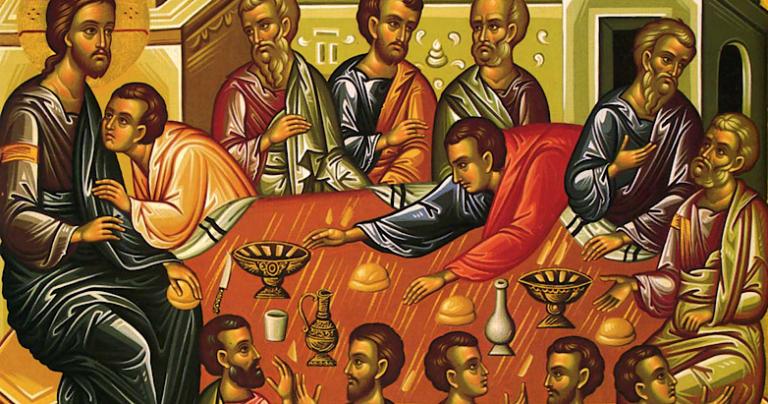
The feast, the marriage feast of the Bridegroom, is where we are headed. Let’s make sure to practice. The joy of the Lord is our dialectical strength.
General Christian
History and Religion
Education and Religion

About John Mark N. Reynolds
John Mark Reynolds is the Vice President of Advancement and Strategic Leadership at the College of Biblical Studies in Houston. As an educational entrepreneur, he was the founding president of The Saint Constantine Schools and College and the founding director of the Torrey Honors College at Biola University. As provost at Houston Christian University, he oversaw the formation of the apologetics and media programs. He is also a philosopher and joyous curmudgeon. He lives with his wife, the Fairest Flower in Christendom, his two granddaughters, daughter, son-in-law, and brother in the jolly Saint Theodora House. You can read more about the author here.
Previous Post
September 21, 2026
Does Classical Education Belong Only to the West?
Next Post

October 19, 2026 Creation as Secondary to Judgment
Browse Our Archives
Select a Category Apologetics Art Culture Education On Books On Education Philosophy Politics Pop Culture Spiritual Reflections Uncategorized
Select a Month October 2026 September 2026 August 2026 July 2026 July 2025 June 2025 September 2024 July 2024 June 2024 December 2023 June 2023 September 2022 May 2022 April 2022 March 2022 February 2022 July 2021 June 2021 May 2021 April 2021 March 2021 February 2021 January 2021 December 2020 November 2020 October 2020 September 2020 August 2020 July 2020 June 2020 May 2020 April 2020 March 2020 February 2020 January 2020 December 2019 November 2019 October 2019 September 2019 August 2019 July 2019 June 2019 May 2019 April 2019 March 2019 February 2019 January 2019 December 2018 November 2018 October 2018 September 2018 August 2018 July 2018 June 2018 May 2018 April 2018 March 2018 February 2018 January 2018 December 2017 November 2017 October 2017 September 2017 August 2017 July 2017 June 2017 May 2017 April 2017 March 2017 February 2017 January 2017 December 2016 November 2016 October 2016 September 2016 August 2016 July 2016 June 2016 May 2016 April 2016 March 2016 February 2016 January 2016 December 2015 November 2015 October 2015 September 2015 August 2015 July 2015 June 2015 May 2015 April 2015 March 2015 February 2015 January 2015 November 2014 October 2014 September 2014 August 2014 July 2014 June 2014 May 2014 April 2014 March 2014 February 2014 January 2014 December 2013 November 2013 October 2013 September 2013 August 2013 July 2013 June 2013 May 2013 April 2013 March 2013 February 2013 January 2013 December 2012 November 2012 October 2012 September 2012 August 2012 July 2012 June 2012 May 2012
Follow Us!
TAKE THE
Religious Wisdom Quiz
Who was the youngest king of Judah?
Select your answer to see how you score.
Josiah Hezekiah Asa Jehoshaphat
Books by This Author John Mark Reynolds
Related posts from Eidos
Creation as Secondary to Judgment
Does Classical Education Belong Only to the West?

Classical Education Must Teach Us to Make the...

Rooted: Why Classical Education Needs Community
TRENDING AT PATHEOS Evangelical

Making Stones Into Bread: Choosing the “Right” Work
I was on my online arts ministry Zoom meeting with the International...

Ukraine’s exhausted Christians face fifth winter of war
By Julian Lukins The full-scale war in Ukraine is taking “a serious...

Russell Brand's Conviction is not anti-Christian Persecution
How do we shed the reputation that the Church is OK with...

Have you ever caught yourself saying, “I’ll do it tomorrow,” or “Now...

Write Your Story: A Great Way to Find...
A few month’s back, my son was scrolling around Facebook and saw...

Throughout history, people have pursued pleasure, possessions, relationships, and success in an...
view all Evangelical blogs
Ad-Free & Subscriber Log-In Subscription Support
- About Us
- 2026 Calendar
- Videos
- Podcasts
- Library of World Religions
- Faith In Media Tracker
- Advertise With Us
- Write for Us
- Privacy Policy
- Terms of Service
- Do Not Sell My Data
- Contact Us
- Radiant Digital
- Manage Newsletter Subscriptions
- Unsubscribe From Notifications
- Sitemap
Copyright 2008-2026, Patheos, part of the Radiant Digital network of media brands. All rights reserved.
Subscription Support Ad-Free & Subscriber Log-In
Follow Patheos