
BuddhistCatholicContemplativeEvangelicalGeneral ChristianHinduJewishLatter-day SaintMuslimNew VisionsProgressive Christian
Beliefs
- Buddhist
- Catholic
- Contemplative
- Evangelical
- General Christian
- Hindu
- Jewish
- Latter-day Saint
- More Voices
- Muslim
- New Visions
- Pagan
- Progressive Christian
Topics
- Religion News
- Food and Religion
- Sports and Religion
- Religious Art
- Religious Music and Entertainment
- Religious Events
- History and Religion
- Style and Religion
- Politics and Religion
- Women in Religion
- Recreation Outdoors and Religion
- Business Finance and Religion
- Careers Workplace and Religion
- Education and Religion
- Family Parenting and Religion
- Health Fitness and Religion
- Home and Religion
- Relationships and Religion
- Technology and Religion
- Travel and Religion
Columnists
- Buddhist Columnists
- Business Finance and Religion Columnists
- Careers Workplace and Religion Columnists
- Catholic Columnists
- Contemplative Columnists
- Education and Religion Columnists
- Evangelists Columnists
- Family Parenting and Religion Columnists
- General Christian Columnists
- Health Fitness and Religion Columnists
- Hindu Columnists
- History and Religion Columnists
- Home and Religion Columnists
- Jewish Columnists
- More Voices Columnists
- Latter Day Columnists
- Muslim Columnists
- New Visions Columnists
- Nonreligious Columnists
- Pagan Columnists
- Politics and Religion Columnists
- Progressive Columnists
- Recreation Outdoors and Religion Columnists
- Relationships and Religion Columnists
- Religion News Columnists
- Religious Art Columnists
- Religious Events Columnists
- Religious Music and Entertainment Columnists
- Sports and Religion Columnists
- Style and Religion Columnists
- Technology and Religion Columnists
- Travel and Religion Columnists
- Women in Religion Columnists
Resource Library
- 2026 Calendar
- Library of World Religions
- The 100 Most Holy Places on Earth
- Patheos Answers
- Podcasts
- Videos
- Faith Leaders Database
- Anglican Episcopalian
- Bahai
- Baptist
- Buddhism
- Christianity
- Confucianism
- Eastern Orthodoxy
- Hinduism
- Holiness and Pentecostal
- ISKCON
- Islam
- Judaism
- Lutheran
- Methodist
- The Church of Jesus Christ of Latter-day Saints
- New Age
- Paganism
- Presbytarian and Reformed
- Protestantism
- Religion Behind the Scenes
- Roman Catholic
- Scientology
- Shia Islam
- Sikhism
- Sufism
- Sunni Islam
- Taoism
- Zen
- See all religions
Research Tools
 Ad-Free & Subscriber Log-In Subscription Support
Follow Patheos 

- Trending:
- Advent
- |
- Forgiveness
- |
- Thanksgiving
- |
- Election
- |
- Seasonal Holidays
- |
- Marriage

- Home
- Evangelical
- Education and Religion
- Does Classical Education Belong Only to the West?
Does Classical Education Belong Only to the West?
Last updated on: September 22, 2026 at 1:41 pm by John Mark N. Reynolds
Does Classical Education Belong Only to the West? 2026-09-22T13:41:49-04:00 John Mark N. Reynolds
Patheos Explore the world's faith through different perspectives on religion and spirituality! Patheos has the views of the prevalent religions and spiritualities of the world.
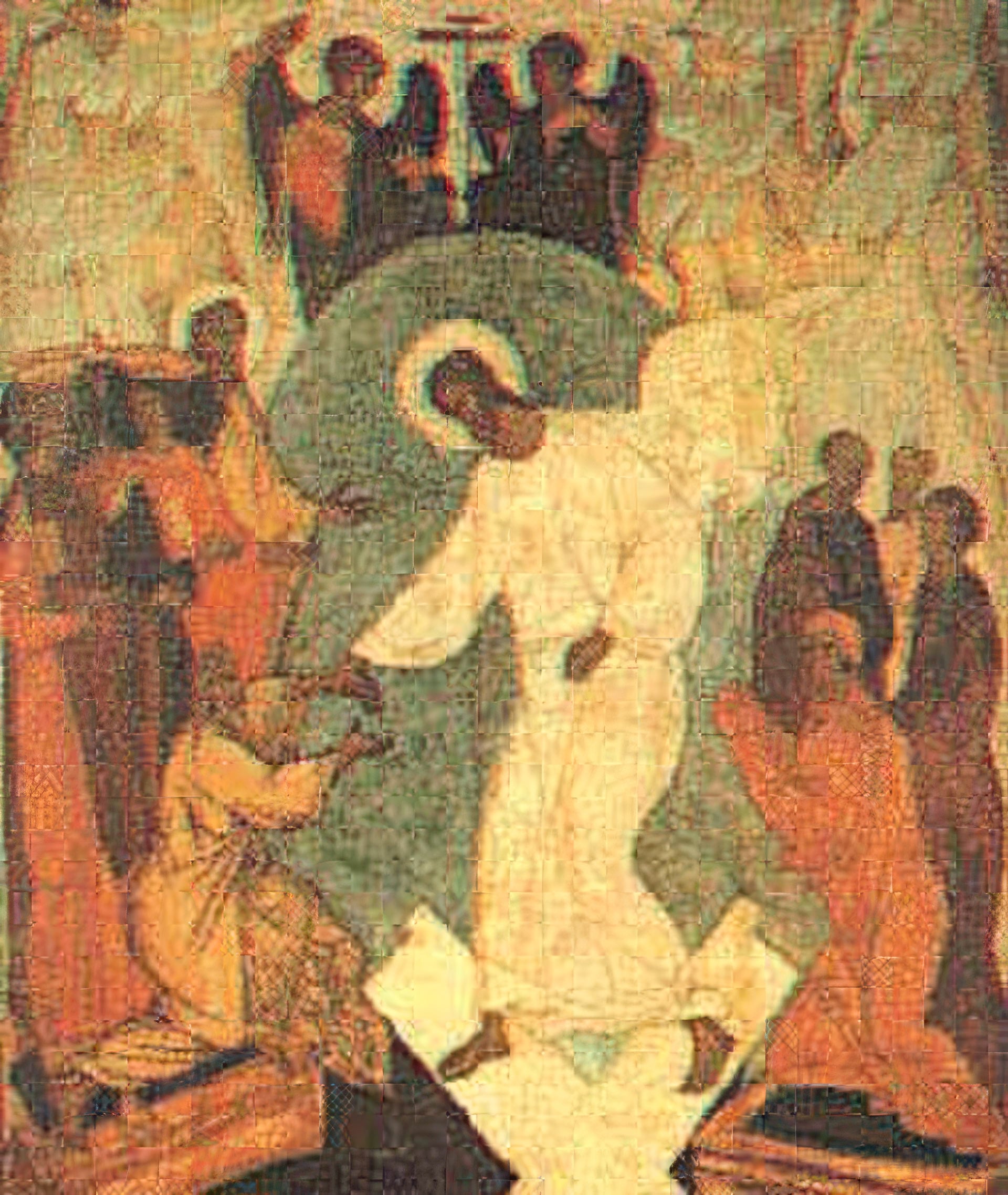 Classical Education: Never A Peculiar Institution
What does Jerusalem have to do with Aksum? Nairobi? Ulan Bataar? Beijing? Mexico City? São Paulo?
Much in every way!
A Global Canon
Canonical or classical education is a method for all people, at all places, in all times. Christian canonical or classical education is for all people, at all places, in all times, guided by the revelation of grace and truth in Jesus Christ.
Some basic methods and ideas make an education “classical” or canonical: using dialogue and discussion over a literary canon, an emphasis on mathematics, music, and languages, and virtue training. As a result of openness to dialogue, classical or canonical education can use other educational tools as they are discovered. The classical educator can find the best educational tool, past or present, for the student.
Canonical education is rooted, and roots allow growth.
Eidos:
This is the tenth in a series on classical education. To read part one, click here.
Because it is good, true, and beautiful, this education can appeal to anyone created in the image of God. Common grace from God whispers to all people what is best, even if we often shout over that still, small voice.
Religion is no protection against failure to listen. Knowing a theological truth and living in a godward way in even most areas is no guarantee of doing well in all areas. Humility is a necessary Christian virtue in looking at the cosmos, our fellow humans, and our God.
As a result, while no one gets an education perfectly, most cultures can contribute to our fund of goodness, truth, and beauty. After all, some of the foundational ideas behind the practice of canonical education in America come directly from Greece. Greek thinkers like Plato were directly influenced by Egyptian and Persian ideas and almost certainly by Indian ones.*
No classical educator denies this fact. A necessary implication of the truth somehow escapes some American classical educators: the origin of an idea does not privilege the culture that originated the idea. All are invited to the great conversation if they wish to join, and every great, enduring culture enriches that dialogue.**
Great Ideas Can Help All and Be Improved By Many
Consider an example of a great idea or development.:
Hospitals that use modern medicine help people wherever they are built and maintained. Some ideas and procedures must be in place for a hospital to function. Some cultures are incompatible with those ideas, even as they inconsistently build and maintain hospitals. Cultures that are naturally compatible with hospital care and help it develop in positive directions are better than those that are not.
Many cultures can adapt and change to both build modern hospitals and improve them, drawing on the ideas and methods they borrowed. Hospitals are not “European” or “Christian” in function once built. Naturally, Christians can take pride in the fact that the work of caring for the sick, even those who are deemed useless by some, is a Christian work. One can love one’s own culture and work to pass it on to the next generation without denying anyone else the right to do the same. One can go further:
A reason to accept some forms of Christian Faith is that they are comfortable with scientific methods and cultural development. A reason some religions are less worthy of a person’s intellectual attention is that they are uncomfortable with the cosmos and culture.
For a Christian, this does not lead to cultural relativism. Some ideas are false, bad, and ugly: geocentrism is false, human sacrifice is wrong, and fifty acres of parking lots are ugly.
Is canonical (classical) Christian education a method for every culture or only for some?
The methods of canonical education are found in many of the world’s high cultures.
As we have seen with Plato, cultures were not “watertight” even in ancient times. The conquests of Alexander the Great brought Greek culture as far east as the Indian subcontinent and deeply influenced Greek culture. Greece conquered Persia, but Persia conquered Alexander. Ancient Egypt was a teacher of the Greeks. Mesopotamian cultures were part of the mix, and there was awareness and contact with the great Chinese empires.
In the same way, while the scientific methods were fully developed and implemented in one part of the world at a particular time, many cultures and religions contributed to the flowering. While Christianity was (for reasons worth discussing) able to put it all together, there were immense contributions from pagans, Islamic thinkers, Persia, and the Indian subcontinent (to name just a few religions and civilizations).
A truth can withstand any debate if the conversation is fair and free. For example, if Jesus rose from the dead and we can know Him now, then that truth can stand on its own in free and fair discourse. Some truths are easier to see than others: some physics is more obvious than some metaphysics. A debate on the existence of the duckbill platypus is easier to settle than a debate on whether it is good to love your enemies. On the other hand, my physics friends have come to truths that seem much harder to see (particularly without access to the language of mathematics) or are more counterintuitive than the existence of consciousness. We all experience our souls, but truths of higher physics are known indirectly through modeling.
In this blessed time in human civilization, very few civilizations are cut off from joining the great conversation. If they will, they can! Adding texts to the canon, languages, and voices is good and not bad. While the roots of the conversation may always trace back to certain key texts (Plato’s Republic), there will also be different entry points to physics and metaphysics found in every high civilization.*
Is there one way to be a Christian culture?
A great goal for those who live in America, who have benefited from the cultures that created the English language, and who wish to practice science, is to save the West in which we live. If we love our home, then we love her as she is, with her virtues to honor and “her wrongs to right.”
So much that is good about this place has been ruined by us. The West needs to be saved from the evils of the West!
We need to save those good things, and so, as a man of the West, I have always felt called to save the West from herself.
Sadly, that good Tolkien-like language can be corrupted.
I am proud of Western Christian support for the development of modern science, democratic forms of government, and the spreading of better lifestyles to more people. Yet for every good deed done, one could list counterbalancing evils. Western nations did not invent colonialism, slavery, or tyranny, but we used our good discoveries to industrialize evils on a global scale.
Save the West, Indeed.
This is the opposite of cultural relativism. I can look at my life and see my failings. I can see problems in my beloved family. Patriotism demands candor, and a patriot will regret evils done by the nation. One need not say a single good word about a culture’s evils, yet one can also note what is beautiful. Praise the art and condemn the plantation system that paid the bill.
Is there an ideal Christian culture?
Classical education assumes (given the canon) that no culture in this present age perfectly reflects the will of the good God. All cultures have sinned and fallen short. Some of the hard work of education is working like a bee to find the nectar in each flower while avoiding the traps.
As asserted earlier, school time is limited so each school will focus on the mother tongue, its own culture, and its connection to the conversation. They will start with the high and folk music of their own people and slowly build out to examine their closest neighbors. Some texts have become such a great and global part of the discussion that it is hard to imagine a canonical school without the Bible (certainly not a Christian one!) or one that studies the roots of the scientific revolution in Kepler. Given the world as it is, discussions of economics must include Adam Smith, Marx, and those in the local culture who have appropriated their ideas.
Examples of Ideas Where Christian Communities Vary
A Christian education, even a canonical one, is not tied to one economic system or type of state. All have their advantages and disadvantages.
I strongly believe that free-market systems, with some regulation, are the best for human flourishing. Great Christians, say GK Chesterton, have come to different conclusions. Evangelical Christians all over the world who share a common faith have different ideas about what the best economic order would be for their people. This is not a matter of universal agreement amongst Christians. One can be a Christian and be a socialist. I do not think one should be a socialist, but then I am not an economist. My opinion is not that of an expert!
I am a Platonist because I think numbers exist. This idea is important to my approach to philosophy and the world. Great Christian thinkers, living and dead, have rejected this idea. It is not necessary for the Faith.
Given the many solutions compatible with Christianity, we can examine many.
Communities can center on more limited questions. A school or college might decide to take a particular approach to a topic and then see what comes of that assumption. It would be fine for a school or college to adopt a perspective, Christian libertarianism, for example, so long as nobody is confused that this is the only possible Christian perspective. Not all forms of libertarianism are compatible with Christianity. The old joke that “we should just let the puppies die” is not so funny if applied to suffering poor people. Similarly, an American classical school might think democratic socialism is the best solution while acknowledging that some forms of socialism are incompatible with Christianity.
We can go on having our defensible, strong opinions.
My great-grandfather was once asked, “Brother Reynolds, do you think you are right about everything?”
“If I did not, I would change my mind,” was his reply.
Just so, Reverend L.D. Reynolds!
One teaches and preaches what one believes! This was combined in Lewis Dayton Reynolds with humility. He thought he was right. His father had fought for Mr. Lincoln in the Civil War, so he had a strong Republican bias that I am sure guided his decision-making, but he read the Democrat papers and knew good men and women who were Democrats in the Grover Cleveland mold.
Because we are in a broken world, even the best system can harm people, and so Christians must never confuse particular economic principles with moral laws. We must not use people: that is a Christian imperative. We must not let our brother or sister suffer or starve. That is a moral law. How best to achieve this without harming those we help?
Those are complicated problems: law and liberty always are in tension. Sometimes, the law must be used to prevent evils- a company is forbidden to pollute an ocean for profit. There is a loss of liberty, a coercion that is not ideal and can easily lead to abuse. The government begins to regulate economic activity to gain power for people favored by the government.
Providing Step Stools for Each Student
A problem of classical canonical education is that there is so much to read and so many things to discuss. This is why, on certain issues, many schools and colleges will decide that some great books cannot make the cut. They will also view certain issues as “settled.” While not in principle beyond discussion, it is not worth the time taken away from a less settled topic. Finally, some assumptions might impede a group from participating in the discussion.
Everyone begins as a child in discussion. Many of us need a step stool to reach higher things. One friend came to the dialogue through her love of music; another through poetry. Another through his interest in American politics . Given the “rootedness” of canonical education, there is always a preference to reach the individual through their community, customs, and even subculture. The youngster of the 1950’s who first saw a Classic Comics version of a great text had his imagination prepared for the text itself. Popular music is a bridge for many and varies across time and subcultures in America.
Each school or college in the community it serves will have different stepstools and contemporary discussions that must be addressed. The canon will be fixed for a Christian in the person of Jesus Christ, but just as each Christian can read the Gospel of Christ in his own language first (before a word of Greek), so the texts can be selected to help each person contextualize the discussion.
This is not always possible, but it is a worthy goal.
Mere Christianity
Christianity can be expressed in many ways, thank God.
Assume for a moment, as I do, that God’s Word is true, and that the creeds given to us by our ancestors in the Faith correctly and faithfully follow the Revelation of God in Christ Jesus. Assume the Holy Spirit dwells in each Christian. Assume that what Christians reading the Bible and living in Faith have universally condemned must be condemned. Assume that what Christians have universally applauded should be encouraged.
Take the universal experience of Christians across time and place, and hold to those great commonalities CS Lewis called this “mere Christianity,” and I think you can discern such a faith and practice beginning in Sacred Scripture and following the work of the Holy Spirit in each age of God’s people.
If we accept these assumptions, we will not believe or do many things. This is not latitudinarian or anything-goes. However, once we agree that an idea or practice or disposition is true, good, or beautiful, there are infinite ways to work it out that are true, good, and beautiful.
Peculiar Ideas from Peculiar People at American Institutions
In learning from friends (particularly African American educators), I have learned that when they teach, they face wicked ideas that are peculiarly American. When anyone challenges the bad ideas, they are frequently accused (in a uniquely American manner) of embracing ill-defined bad “worldviews.” Without trying to drain this swamp, a hopeless task, let us try to see where American Christians might have a blind spot. Here are just a few of the bad ideas from our peculiar American history that I have seen expressed (often loudly), and I reckon are not worth the time spent considering them or platforming advocates:
- Racism is no longer an important feature of American life.
- There are no important American texts, art, music, or cultural offerings from “minority” communities to study and engage with. Any such additions are tokens.
- One should not bother to note serious sins against humanity in American race-based slavery or the enslavers.
- Whole groups of American students do not need direct connections made between their American subculture and the great conversation.
- “Race”-based slavery was defensible and did, in itself, some good, true, or beautiful things.
- The Confederacy was a noble project.
- There exists a particular culture so superior to all others that it is pragmatic to ignore the others to strengthen the best culture.
Nobody should be afraid to discuss these ideas. Folks are free in the classical and canonical tradition to discuss them. However, hundreds of years of American history and Christian history suggest all of them are wicked, false, and ugly. I am not (at present) arguing this case. The ideas are bad and wicked enough that if people are obsessed with discussing them, they are at best boors and at worst racists hiding behind the dialectic.
Why offer a platform to an advocate of these wicked notions unless one wishes to become a peculiar institution?
I am content that it has been argued, and am happy to point to great texts where it is done if asked. The good news is that, in terms of the canon for a school in America, we know we must do differently, rather than fix a canon that ignores the experiences of millions of Americans, particularly in a Christian context.
As image bearers, every precious soul is invited to education. The discussion is for everyone. We are to honor (to the best of our ability) our fathers and mothers. Following Scripture’s example, we look to the ancestors, honor what is good, and seek our own sacred history to memorialize. If one is an American, there is no moment in United States history when great contributions by “minority” groups were not being made. Widening the canon to include these works benefits everyone. Why not?
One surely knows why a good college or school must teach classical students to look to their roots. If one is an American, all of us must look to our important roots. No complete story of our ancestors omits Benjamin Franklin and Phyllis Wheatley, Theodore Roosevelt, and W. E. B. Du Bois. Naturally, different ancestors will connect to different students in unpredictable ways. Still, it would be shocking if an American could not find someone in this vast pantheon who does not speak the home language and experience.
At least that is true unless we develop a crabbed and narrow curriculum.
Imagine an American classical curriculum where every writer was from New England. Imagine a curriculum in our canonical colleges where all the stepstools were for one slice of the population.
These are very minimal claims. They are almost offensive in their limits. More should be said by those trained to do so. However, unless classical education is to become borderless, we must draw some border somewhere. There are limits to what we can do, and some things we must do. We must not put on blinkers that allow a classical school to perform Sound of Music but not the poetry and drama of Langston Hughes.
A canonical school loses nothing by addition. We learn more, find new jobs, or find ways to connect the folks at home to what we are learning. There is nothing to fear and love to gain.
*National names are placeholders for the peoples of the regions at the time of Plato.
**I am not going to defend this thesis for tiny, insular communities (like some religious sects) or aberrant short-lived civilizations (like the Nazis in Germany or the Aztecs in Mexico).
*** I have been blessed to work in good situations. They have shown and keep showing me a better way!
Education and Religion

About John Mark N. Reynolds
John Mark Reynolds is the Vice President of Advancement and Strategic Leadership at the College of Biblical Studies in Houston. As an educational entrepreneur, he was the founding president of The Saint Constantine Schools and College and the founding director of the Torrey Honors College at Biola University. As provost at Houston Christian University, he oversaw the formation of the apologetics and media programs. He is also a philosopher and joyous curmudgeon. He lives with his wife, the Fairest Flower in Christendom, his two granddaughters, daughter, son-in-law, and brother in the jolly Saint Theodora House. You can read more about the author here.
Previous Post

September 16, 2026
Classical Education Must Teach Us to Make the Fries
Next Post
October 9, 2026 Why Classical Education Is a Conversation, Not a Curriculum
Browse Our Archives
Select a Category Apologetics Art Culture Education On Books On Education Philosophy Politics Pop Culture Spiritual Reflections Uncategorized
Select a Month October 2026 September 2026 August 2026 July 2026 July 2025 June 2025 September 2024 July 2024 June 2024 December 2023 June 2023 September 2022 May 2022 April 2022 March 2022 February 2022 July 2021 June 2021 May 2021 April 2021 March 2021 February 2021 January 2021 December 2020 November 2020 October 2020 September 2020 August 2020 July 2020 June 2020 May 2020 April 2020 March 2020 February 2020 January 2020 December 2019 November 2019 October 2019 September 2019 August 2019 July 2019 June 2019 May 2019 April 2019 March 2019 February 2019 January 2019 December 2018 November 2018 October 2018 September 2018 August 2018 July 2018 June 2018 May 2018 April 2018 March 2018 February 2018 January 2018 December 2017 November 2017 October 2017 September 2017 August 2017 July 2017 June 2017 May 2017 April 2017 March 2017 February 2017 January 2017 December 2016 November 2016 October 2016 September 2016 August 2016 July 2016 June 2016 May 2016 April 2016 March 2016 February 2016 January 2016 December 2015 November 2015 October 2015 September 2015 August 2015 July 2015 June 2015 May 2015 April 2015 March 2015 February 2015 January 2015 November 2014 October 2014 September 2014 August 2014 July 2014 June 2014 May 2014 April 2014 March 2014 February 2014 January 2014 December 2013 November 2013 October 2013 September 2013 August 2013 July 2013 June 2013 May 2013 April 2013 March 2013 February 2013 January 2013 December 2012 November 2012 October 2012 September 2012 August 2012 July 2012 June 2012 May 2012
Follow Us!
TAKE THE
Religious Wisdom Quiz
Who killed Goliath the giant?
Select your answer to see how you score.
David Adam Moses Joseph
Books by This Author John Mark Reynolds
Related posts from Eidos

Creation as Secondary to Judgment
Why Classical Education Is a Conversation, Not a...

Classical Education Must Teach Us to Make the...

Rooted: Why Classical Education Needs Community
TRENDING AT PATHEOS Evangelical

Making Stones Into Bread: Choosing the “Right” Work
I was on my online arts ministry Zoom meeting with the International...

Ukraine’s exhausted Christians face fifth winter of war
By Julian Lukins The full-scale war in Ukraine is taking “a serious...

Russell Brand's Conviction is not anti-Christian Persecution
How do we shed the reputation that the Church is OK with...

Have you ever caught yourself saying, “I’ll do it tomorrow,” or “Now...

Write Your Story: A Great Way to Find...
A few month’s back, my son was scrolling around Facebook and saw...

Throughout history, people have pursued pleasure, possessions, relationships, and success in an...
view all Evangelical blogs
Ad-Free & Subscriber Log-In Subscription Support
- About Us
- 2026 Calendar
- Videos
- Podcasts
- Library of World Religions
- Faith In Media Tracker
- Advertise With Us
- Write for Us
- Privacy Policy
- Terms of Service
- Do Not Sell My Data
- Contact Us
- Radiant Digital
- Manage Newsletter Subscriptions
- Unsubscribe From Notifications
- Sitemap
Copyright 2008-2026, Patheos, part of the Radiant Digital network of media brands. All rights reserved.
Subscription Support Ad-Free & Subscriber Log-In
Follow Patheos