
BuddhistCatholicContemplativeEvangelicalGeneral ChristianHinduJewishLatter-day SaintMuslimNew VisionsProgressive Christian
Beliefs
- Buddhist
- Catholic
- Contemplative
- Evangelical
- General Christian
- Hindu
- Jewish
- Latter-day Saint
- More Voices
- Muslim
- New Visions
- Pagan
- Progressive Christian
Topics
- Religion News
- Food and Religion
- Sports and Religion
- Religious Art
- Religious Music and Entertainment
- Religious Events
- History and Religion
- Style and Religion
- Politics and Religion
- Women in Religion
- Recreation Outdoors and Religion
- Business Finance and Religion
- Careers Workplace and Religion
- Education and Religion
- Family Parenting and Religion
- Health Fitness and Religion
- Home and Religion
- Relationships and Religion
- Technology and Religion
- Travel and Religion
Columnists
- Buddhist Columnists
- Business Finance and Religion Columnists
- Careers Workplace and Religion Columnists
- Catholic Columnists
- Contemplative Columnists
- Education and Religion Columnists
- Evangelists Columnists
- Family Parenting and Religion Columnists
- General Christian Columnists
- Health Fitness and Religion Columnists
- Hindu Columnists
- History and Religion Columnists
- Home and Religion Columnists
- Jewish Columnists
- More Voices Columnists
- Latter Day Columnists
- Muslim Columnists
- New Visions Columnists
- Nonreligious Columnists
- Pagan Columnists
- Politics and Religion Columnists
- Progressive Columnists
- Recreation Outdoors and Religion Columnists
- Relationships and Religion Columnists
- Religion News Columnists
- Religious Art Columnists
- Religious Events Columnists
- Religious Music and Entertainment Columnists
- Sports and Religion Columnists
- Style and Religion Columnists
- Technology and Religion Columnists
- Travel and Religion Columnists
- Women in Religion Columnists
Resource Library
- 2026 Calendar
- Library of World Religions
- The 100 Most Holy Places on Earth
- Patheos Answers
- Podcasts
- Videos
- Faith Leaders Database
- Anglican Episcopalian
- Bahai
- Baptist
- Buddhism
- Christianity
- Confucianism
- Eastern Orthodoxy
- Hinduism
- Holiness and Pentecostal
- ISKCON
- Islam
- Judaism
- Lutheran
- Methodist
- The Church of Jesus Christ of Latter-day Saints
- New Age
- Paganism
- Presbytarian and Reformed
- Protestantism
- Religion Behind the Scenes
- Roman Catholic
- Scientology
- Shia Islam
- Sikhism
- Sufism
- Sunni Islam
- Taoism
- Zen
- See all religions
Research Tools
 Ad-Free & Subscriber Log-In Subscription Support
Ad-Free & Subscriber Log-In Subscription Support
Follow Patheos 

- Trending:
- Forgiveness
- |
- Marriage
- |
- Consciousness
- |
- Death Penalty
- |
- Election
- |
- Halloween

- Home
- Evangelical
- Peter and Paul and Difficult Questions
Peter and Paul and Difficult Questions
Last updated on: June 30, 2021 at 10:49 pm by John Mark N. Reynolds
Peter and Paul and Difficult Questions 2021-06-30T22:49:07-04:00 John Mark N. Reynolds
Patheos Explore the world's faith through different perspectives on religion and spirituality! Patheos has the views of the prevalent religions and spiritualities of the world.
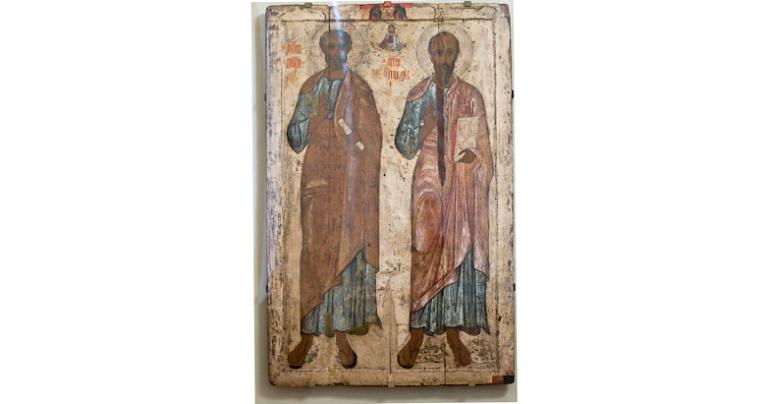
Paul and Peter are often portrayed together: two apostles with contrasting, but not conflicting messages. They were very different, a rabbi and a fisherman. Peter became the Prince of the Apostles, the first amongst apostolic equals. Paul wrote epistles that remain some of the most profound expressions of Christian truth ever written.
The powerful did not want to hear what they were saying. The Empire beheaded Paul and crucified Peter. Before martyrdom, both could see the way things seemed to be going and so both faced mental difficulties: how could Jesus be Lord, but Caesar seem to have all the power? Where was the promise of His coming?
Peter and Paul thought, prayed, and lived within the new Kingdom. They did so the best they could, but both came to see the limits of what they could know.
Despite limits, think we must.
Life can get tedious. The world is not as the world should be, broken by sin, and so can be hard to understand. In fact, there are, most probably, problems that we will never solve to our own satisfaction. The answers may be beyond the capacity of the human intellect!
We have to accept a reasonable uncertainty, the just live by faith. We have faith seeking understanding continuously.
The Christian does not have the option of not thinking, of doing the best reasoning possible. The Second Person of the Divine Trinity is called the Logos, the Word, a term strongly related to thinking well in New Testament times. The Bible calls us to study, to love God with our minds, and God allows Job to make his case. If the case fails, that is not God’s fault and God condemns those false friends who would stop Job from pressing his case.
Our reason has limits, but reason we must. Peter and Paul kept the faith and kept seeking understanding. Their contrasting comments on the process give me hope.
Peter and Paul
Peter had three years with Jesus: a profound experience. We cannot be sure if he was fully literate. Nothing about his job or life would have required much formal education. Paul had, and often displayed, at least some classical and a first-rate Jewish education. He too had a profound experience of the Risen Lord, but not as Peter had. Peter saw Jesus eat and drink. He heard him teach and saw the miracles himself. Peter went to the empty tomb and ate breakfast made by the Risen Lord. Paul was confronted by the ascended Christ in a vision. He experienced healing and heard the testimony of those who had known the Lord. To a great extent, Paul knew Jesus as the rest of us after the first generation of Christian have known Jesus- through the witness of the Holy Spirit, the Scriptures, and the testimony of witnesses.
Peter comments on Paul’s writings:
14 Therefore, beloved, while you are waiting for these things, strive to be found by him at peace, without spot or blemish; 15 and regard the patience of our Lord as salvation. So also our beloved brother Paul wrote to you according to the wisdom given him, 16 speaking of this as he does in all his letters. There are some things in them hard to understand, which the ignorant and unstable twist to their own destruction, as they do the other scriptures.
Peter accepts Paul’s wisdom, but also points to the dangers of difficult answers. There is almost nothing so simple people cannot misunderstand it. Look at what has been done with Christ’s command to love enemies! Wrestling with the deeper things of God provides room for twisting words. Despite this, Peter commends Paul’s writings to the attention of his readers!
Peter could not write like Paul or perhaps think as Paul thought, but he valued the wisdom given him.
Intellectual types might stop there, feeling smug, but Paul stands in the icon with Peter. While Peter, who was no intellectual, merely a saint, affirms the value of intellectually difficult writing. Saint Paul, who was one of history’s great intellectuals, looked at the limits of credentials and reason:
20 Where is the one who is wise? Where is the scribe? Where is the debater of this age? Has not God made foolish the wisdom of the world? 21 For since, in the wisdom of God, the world did not know God through wisdom, God decided, through the foolishness of our proclamation, to save those who believe. 22 For Jews demand signs and Greeks desire wisdom, 23 but we proclaim Christ crucified, a stumbling block to Jews and foolishness to Gentiles, 24 but to those who are the called, both Jews and Greeks, Christ the power of God and the wisdom of God. 25 For God’s foolishness is wiser than human wisdom, and God’s weakness is stronger than human strength.
People do the best we can, but we often confuse credentials with real wisdom. We become “scribes” in the system of our own age and opine. Our opinions can prevail when all there are only words, but then reality comes. There is no negotiating, no debating, reality. Jesus comes, is crucified, and raised from the dead. He is the power and the wisdom of God and against that reality, the one true Word, Greek words failed.
We keep thinking, reality keeps making us modify what we think. Our words must fail, but the Word endures. This gives us a heavy dose of intellectual humility. Intellectual humility was the beginning of science, philosophy, and true theology.
This much endures: Peter’s confession that Jesus is the Christ, the son of the living God, and the gospel that Paul preached. They endure because however we might try to deface that hard won realization and profound teaching, their works were icons to Christ and Christ is immortal truth.
Previous Post

June 28, 2021
The Decadent: Rejoicing in the Nothing They Have Done (The Tempest)
Next Post
June 30, 2021 Invincible Love
Browse Our Archives
Select a Category Apologetics Art Culture Education On Books On Education Philosophy Politics Pop Culture Spiritual Reflections Uncategorized
Select a Month October 2026 September 2026 August 2026 July 2026 July 2025 June 2025 September 2024 July 2024 June 2024 December 2023 June 2023 September 2022 May 2022 April 2022 March 2022 February 2022 July 2021 June 2021 May 2021 April 2021 March 2021 February 2021 January 2021 December 2020 November 2020 October 2020 September 2020 August 2020 July 2020 June 2020 May 2020 April 2020 March 2020 February 2020 January 2020 December 2019 November 2019 October 2019 September 2019 August 2019 July 2019 June 2019 May 2019 April 2019 March 2019 February 2019 January 2019 December 2018 November 2018 October 2018 September 2018 August 2018 July 2018 June 2018 May 2018 April 2018 March 2018 February 2018 January 2018 December 2017 November 2017 October 2017 September 2017 August 2017 July 2017 June 2017 May 2017 April 2017 March 2017 February 2017 January 2017 December 2016 November 2016 October 2016 September 2016 August 2016 July 2016 June 2016 May 2016 April 2016 March 2016 February 2016 January 2016 December 2015 November 2015 October 2015 September 2015 August 2015 July 2015 June 2015 May 2015 April 2015 March 2015 February 2015 January 2015 November 2014 October 2014 September 2014 August 2014 July 2014 June 2014 May 2014 April 2014 March 2014 February 2014 January 2014 December 2013 November 2013 October 2013 September 2013 August 2013 July 2013 June 2013 May 2013 April 2013 March 2013 February 2013 January 2013 December 2012 November 2012 October 2012 September 2012 August 2012 July 2012 June 2012 May 2012
Follow Us!
TAKE THE
Religious Wisdom Quiz
What was the rainbow a sign of in the flood story?
Select your answer to see how you score.
God's promise Danger War Famine
Books by This Author John Mark Reynolds
Related posts from Eidos

Rooted: Why Classical Education Needs Community

Classical Education and the Art of Dying Well

Golden, Golden, Golden: My Mother's Last Lesson

TRENDING AT PATHEOS Evangelical

The REST of Your Life: A Creative Wrestles...
This week I had a conversation with a good friend from church....

How the author of the world's best hymn...
I've been working with John Newton for a while now. This makes...

Long before this Lectio Divina, Psalm 130 - the song - started...

What About the Trees? Another Living Parable
After I finished writing the last article about falling leaves as a...

Why Classical Education Is a Conversation, Not a...
Come and Read: Joy in Classical Education When I was a little...

Cornell University has received a great deal of negative publicity and intense...
view all Evangelical blogs
Ad-Free & Subscriber Log-In Subscription Support
- About Us
- 2026 Calendar
- Videos
- Podcasts
- Library of World Religions
- Faith In Media Tracker
- Advertise With Us
- Write for Us
- Privacy Policy
- Terms of Service
- Do Not Sell My Data
- Contact Us
- Radiant Digital
- Manage Newsletter Subscriptions
- Unsubscribe From Notifications
- Sitemap
Copyright 2008-2026, Patheos. All rights reserved.
Subscription Support Ad-Free & Subscriber Log-In
Follow Patheos