
BuddhistCatholicContemplativeEvangelicalGeneral ChristianHinduJewishLatter-day SaintMuslimNew VisionsProgressive Christian
Beliefs
- Buddhist
- Catholic
- Contemplative
- Evangelical
- General Christian
- Hindu
- Jewish
- Latter-day Saint
- More Voices
- Muslim
- New Visions
- Pagan
- Progressive Christian
Topics
- Religion News
- Food and Religion
- Sports and Religion
- Religious Art
- Religious Music and Entertainment
- Religious Events
- History and Religion
- Style and Religion
- Politics and Religion
- Women in Religion
- Recreation Outdoors and Religion
- Business Finance and Religion
- Careers Workplace and Religion
- Education and Religion
- Family Parenting and Religion
- Health Fitness and Religion
- Home and Religion
- Relationships and Religion
- Technology and Religion
- Travel and Religion
Columnists
- Buddhist Columnists
- Business Finance and Religion Columnists
- Careers Workplace and Religion Columnists
- Catholic Columnists
- Contemplative Columnists
- Education and Religion Columnists
- Evangelists Columnists
- Family Parenting and Religion Columnists
- General Christian Columnists
- Health Fitness and Religion Columnists
- Hindu Columnists
- History and Religion Columnists
- Home and Religion Columnists
- Jewish Columnists
- More Voices Columnists
- Latter Day Columnists
- Muslim Columnists
- New Visions Columnists
- Nonreligious Columnists
- Pagan Columnists
- Politics and Religion Columnists
- Progressive Columnists
- Recreation Outdoors and Religion Columnists
- Relationships and Religion Columnists
- Religion News Columnists
- Religious Art Columnists
- Religious Events Columnists
- Religious Music and Entertainment Columnists
- Sports and Religion Columnists
- Style and Religion Columnists
- Technology and Religion Columnists
- Travel and Religion Columnists
- Women in Religion Columnists
Resource Library
- 2026 Calendar
- Library of World Religions
- The 100 Most Holy Places on Earth
- Patheos Answers
- Podcasts
- Videos
- Faith Leaders Database
- Anglican Episcopalian
- Bahai
- Baptist
- Buddhism
- Christianity
- Confucianism
- Eastern Orthodoxy
- Hinduism
- Holiness and Pentecostal
- ISKCON
- Islam
- Judaism
- Lutheran
- Methodist
- The Church of Jesus Christ of Latter-day Saints
- New Age
- Paganism
- Presbytarian and Reformed
- Protestantism
- Religion Behind the Scenes
- Roman Catholic
- Scientology
- Shia Islam
- Sikhism
- Sufism
- Sunni Islam
- Taoism
- Zen
- See all religions
Research Tools
 Ad-Free & Subscriber Log-In Subscription Support
Ad-Free & Subscriber Log-In Subscription Support
Follow Patheos 

- Trending:
- Forgiveness
- |
- Marriage
- |
- Consciousness
- |
- Death Penalty
- |
- Election
- |
- Halloween

- Home
- Evangelical
- The Word Becomes Flesh
The Word Becomes Flesh
Last updated on: May 20, 2021 at 11:52 pm by John Mark N. Reynolds
The Word Becomes Flesh 2021-05-20T23:52:01-04:00 John Mark N. Reynolds
Patheos Explore the world's faith through different perspectives on religion and spirituality! Patheos has the views of the prevalent religions and spiritualities of the world.
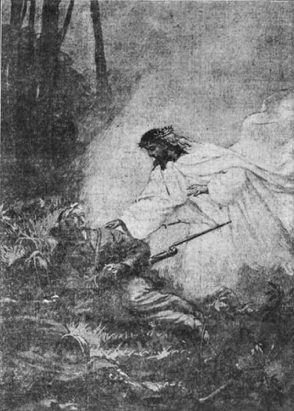 What is the beloved?
What does Plato mean when he speaks of the known unknown, the beloved, the One we love without knowing His name?
Plato never, quite, says. He knows this love is most divine, but Plato never quite calls the object of all our desires “God.” How could he?
The gods of Homer and traditional Greek religion were not worthy of worship. If Plato cleaned them up, and he tried, then he had cleaned them up. The Zeus that you make worthy of worship is less than you and so is not worthy of a free man’s worship!
Plato understood that there must be something more. The love he felt, that motivated his dialogues, was of something, something sufficient to generate this passion in him. The gods were not God, because they were not all goodness, all truth, and utterly beautiful. The captivating nature of God revealed all the Homeric gods to be wicked, false, and ugly.
Plato ended with stories told by a dying man coming back to life to report that there is justice in the life to come. All actions that appears unjust is confirmed to be just, all that should be forgotten is, and nothing is lost that should be retained. Plato had spent most of Republic demonstrating that justice was good for its own sake and not just for good outcomes. He ended Republic with the extravagantly good news that justice was also rewarded for all eternity.
Plato loved justice as much as any man that ever lived. He loved wisdom and the Good. Looking at us, humans, Plato could not imagine that the Good, if God, could ever love us. Like his greatest student, Aristotle, God was beyond us and so God can only worthily think of God! God is all and so God need not condescend to us and might even be wicked to notice us. This is all reason can deliver to us: we are not much. Why would Divine Beauty notice us?
What Plato forgot was that a being, even the Being, in love can choose to love and that love need not be measured by equality. Numbers are equal, but love is not based on anything that can be counted. Love is not based on power, knowledge, or even goodness. All these qualities can be enumerated, but love cannot be counted. Love calls the Lover to the beloved, based on the nature of the Lover. The Divine Lover gives Himself to the beloved and that is all that matters as far as “qualifications” matter. In humankind, love can go awry, but in God, all good, His will is pure.
If God consents to love, if and only if love is good. God would only consent to a love that is good! This is the beautiful circularity of divinity: love begetting love into eternity.
God was our creator and God chose to love His creation. He did not need to do so, love being based on consent, but God did. This was and is unexpected glory! God notices humankind! God loves God’s creation, since as a being whose nature is Love, God made a lovable cosmos. The part of the creation that is most like God, humankind, was made most lovable. God chose to love us in the very way He made us: we are loved from the foundation of the world. We are fallen, but that is nothing to the Divine Lover. His absolute romance gave Himself to salvaging us.
The Christian good news that Plato could not see is that the Beautiful, the very Word of God, came at Christmastide by His own choice! Angels sang. A manger was sanctified. All was joy to the world:
“And the Word was made flesh, and dwelt among us, (and we beheld his glory, the glory as of the only begotten of the Father,) full of grace and truth.” (John 1:14)
This choice enabled all humankind to see the grace and truth of Father God. The Creator of the cosmos acted in solidarity for us out of love. Love is motivated by beauty and God had created us in His image. Even the shattered image of God was enough for God to choose to love us and so Jesus came. The Word became flesh. We can see this Icon of God and imitate Him.
Naturally, the Word is also one in essence with the Father and so when we imitate the Word, we imitate the Father. Where do we get this power of becoming like God? This ability comes from the Creator: of “thine own have we given Thee.” From the beginning, the Creator made humans in His image. Our parents, Adam and Eve, turned from God, but this could not utterly obliterate what God made. Even the shards of a broken mirror can still reflect the light and so every human being carries within himself or herself the possibility of reflecting the True Light. This beautiful reflection cannot save us, we are still broken and in need of the grace of God, yet even a brief reflection of His light from our souls is more beautiful than the light of the stars.
We are objectively beautiful, but this is not a beauty apart from God. This is good on God’s part, because the good God built beauty into the very heart of creation. He reacts to His own choice and loves us. As with Mary, we are given a chance to consent or reject what God gives.
Previous Post

May 17, 2021
The Stories I Hear Behind My Papaw's Chair
Next Post

May 19, 2021 The Evil Blue Light or the Nattering Nabob of Negativity
Browse Our Archives
Select a Category Apologetics Art Culture Education On Books On Education Philosophy Politics Pop Culture Spiritual Reflections Uncategorized
Select a Month October 2026 September 2026 August 2026 July 2026 July 2025 June 2025 September 2024 July 2024 June 2024 December 2023 June 2023 September 2022 May 2022 April 2022 March 2022 February 2022 July 2021 June 2021 May 2021 April 2021 March 2021 February 2021 January 2021 December 2020 November 2020 October 2020 September 2020 August 2020 July 2020 June 2020 May 2020 April 2020 March 2020 February 2020 January 2020 December 2019 November 2019 October 2019 September 2019 August 2019 July 2019 June 2019 May 2019 April 2019 March 2019 February 2019 January 2019 December 2018 November 2018 October 2018 September 2018 August 2018 July 2018 June 2018 May 2018 April 2018 March 2018 February 2018 January 2018 December 2017 November 2017 October 2017 September 2017 August 2017 July 2017 June 2017 May 2017 April 2017 March 2017 February 2017 January 2017 December 2016 November 2016 October 2016 September 2016 August 2016 July 2016 June 2016 May 2016 April 2016 March 2016 February 2016 January 2016 December 2015 November 2015 October 2015 September 2015 August 2015 July 2015 June 2015 May 2015 April 2015 March 2015 February 2015 January 2015 November 2014 October 2014 September 2014 August 2014 July 2014 June 2014 May 2014 April 2014 March 2014 February 2014 January 2014 December 2013 November 2013 October 2013 September 2013 August 2013 July 2013 June 2013 May 2013 April 2013 March 2013 February 2013 January 2013 December 2012 November 2012 October 2012 September 2012 August 2012 July 2012 June 2012 May 2012
Follow Us!
TAKE THE
Religious Wisdom Quiz
Who was called by God to leave his home and go to a land God would show him?
Select your answer to see how you score.
Moses Abram Jacob Noah
Books by This Author John Mark Reynolds
Related posts from Eidos

Classical Education and the Art of Dying Well

Golden, Golden, Golden: My Mother's Last Lesson


When the Center Holds: A Tribute to My...
TRENDING AT PATHEOS Evangelical

The REST of Your Life: A Creative Wrestles...
This week I had a conversation with a good friend from church....

How the author of the world's best hymn...
I've been working with John Newton for a while now. This makes...

Long before this Lectio Divina, Psalm 130 - the song - started...

What About the Trees? Another Living Parable
After I finished writing the last article about falling leaves as a...

Why Classical Education Is a Conversation, Not a...
Come and Read: Joy in Classical Education When I was a little...

Cornell University has received a great deal of negative publicity and intense...
view all Evangelical blogs
Ad-Free & Subscriber Log-In Subscription Support
- About Us
- 2026 Calendar
- Videos
- Podcasts
- Library of World Religions
- Faith In Media Tracker
- Advertise With Us
- Write for Us
- Privacy Policy
- Terms of Service
- Do Not Sell My Data
- Contact Us
- Radiant Digital
- Manage Newsletter Subscriptions
- Unsubscribe From Notifications
- Sitemap
Copyright 2008-2026, Patheos. All rights reserved.
Subscription Support Ad-Free & Subscriber Log-In
Follow Patheos