
BuddhistCatholicContemplativeEvangelicalGeneral ChristianHinduJewishLatter-day SaintMuslimNew VisionsProgressive Christian
Beliefs
- Buddhist
- Catholic
- Contemplative
- Evangelical
- General Christian
- Hindu
- Jewish
- Latter-day Saint
- More Voices
- Muslim
- New Visions
- Pagan
- Progressive Christian
Topics
- Religion News
- Food and Religion
- Sports and Religion
- Religious Art
- Religious Music and Entertainment
- Religious Events
- History and Religion
- Style and Religion
- Politics and Religion
- Women in Religion
- Recreation Outdoors and Religion
- Business Finance and Religion
- Careers Workplace and Religion
- Education and Religion
- Family Parenting and Religion
- Health Fitness and Religion
- Home and Religion
- Relationships and Religion
- Technology and Religion
- Travel and Religion
Columnists
- Buddhist Columnists
- Business Finance and Religion Columnists
- Careers Workplace and Religion Columnists
- Catholic Columnists
- Contemplative Columnists
- Education and Religion Columnists
- Evangelists Columnists
- Family Parenting and Religion Columnists
- General Christian Columnists
- Health Fitness and Religion Columnists
- Hindu Columnists
- History and Religion Columnists
- Home and Religion Columnists
- Jewish Columnists
- More Voices Columnists
- Latter Day Columnists
- Muslim Columnists
- New Visions Columnists
- Nonreligious Columnists
- Pagan Columnists
- Politics and Religion Columnists
- Progressive Columnists
- Recreation Outdoors and Religion Columnists
- Relationships and Religion Columnists
- Religion News Columnists
- Religious Art Columnists
- Religious Events Columnists
- Religious Music and Entertainment Columnists
- Sports and Religion Columnists
- Style and Religion Columnists
- Technology and Religion Columnists
- Travel and Religion Columnists
- Women in Religion Columnists
Resource Library
- 2026 Calendar
- Library of World Religions
- The 100 Most Holy Places on Earth
- Patheos Answers
- Podcasts
- Videos
- Faith Leaders Database
- Anglican Episcopalian
- Bahai
- Baptist
- Buddhism
- Christianity
- Confucianism
- Eastern Orthodoxy
- Hinduism
- Holiness and Pentecostal
- ISKCON
- Islam
- Judaism
- Lutheran
- Methodist
- The Church of Jesus Christ of Latter-day Saints
- New Age
- Paganism
- Presbytarian and Reformed
- Protestantism
- Religion Behind the Scenes
- Roman Catholic
- Scientology
- Shia Islam
- Sikhism
- Sufism
- Sunni Islam
- Taoism
- Zen
- See all religions
Research Tools
 Ad-Free & Subscriber Log-In Subscription Support
Ad-Free & Subscriber Log-In Subscription Support
Follow Patheos 

- Trending:
- Forgiveness
- |
- Marriage
- |
- Consciousness
- |
- Death Penalty
- |
- Election
- |
- Halloween

- Home
- Evangelical
- Rejected Love?
Rejected Love?
Last updated on: May 28, 2021 at 10:28 am by John Mark N. Reynolds
Rejected Love? 2021-05-28T10:28:58-04:00 John Mark N. Reynolds
Patheos Explore the world's faith through different perspectives on religion and spirituality! Patheos has the views of the prevalent religions and spiritualities of the world.
The cosmos is built on Divine Love.
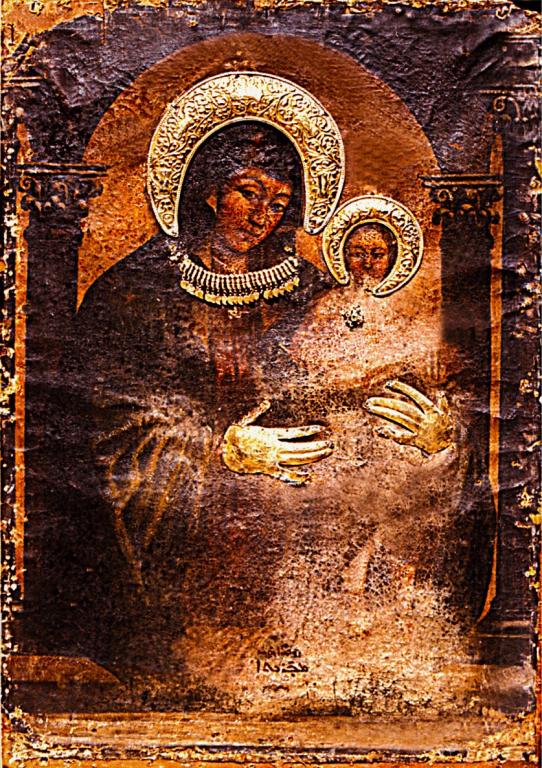 The difficulty, of course, is that once one rejects some element of divine Love the entire order begins to unravel. We can choose badly, but bad results happen when we do. In this life, God causes rain to fall on the just and the unjust providing a stable social order where people who reject Him can find happiness. God’s constant hope is to woo us, giving all of us, better than our choices deserve. At the end of life, if we ultimately turn away, finally reject the source of beauty, we are (literally) out of time.
We go to where our being made over time has brought us.
Dante shows the results in his Comedy. Those who have only read Inferno often do not even read that series of cantos well. The Inferno is God’s inferno where people who would not let go of vice, repent, are given their choice, that very vice, eternally. In most of us, this is pictured as more pathetic than horrific.
Recall that as Dante moves into the earth, the “circles of hell” get smaller. The largest parts of the inferno, the outer rings, are not particularly unpleasant.[1] Dante’s poetic hero Virgil is damned but faces no torture and lives with many other greats an existence many might envy![2] The worst point in the inferno, the very center, has Satan and three other souls. Satan is not lord of the damned, but merely the most damned. He makes himself immobile and impotent through his own self-pity. This horrible area of diabolical whining is small, but even there one can see the love of God allowing the choices of Satan. For Dante, the cosmos is shot through with divine love and only a small bit, the core of the earth, is hopeless, made so by the disposition of the one there toward divine love.
Many who choose badly finally end up doing so because we will not give up some other love*.* Dante pictures two sinful lovers who whirl forever together, insubstantial and lost. They chose adultery over Divinity and they have their reward. They are altogether pitiable.[3] They may moan, but these “lovers” made themselves incapable of changing. They want what they want and that they are miserable is not God’s fault.
Fortunately, the Comedy is a journey where two-thirds of the poetry is describing the redemption and glorification of those who chose differently. Ultimately, the vision is so beautiful that Dante, a man of words so magnificent they helped create modern Italian, has no words to tell us what he has seen. What he does know is that all is moved by love:
139 Thither my own wings could not carry me,
But that a flash my understanding clove,
Whence its desire came to it suddenly.
142 High phantasy lost power and here broke off;
Yet, as a wheel moves smoothly, free from jars,
My will and my desire were turned by love,
145 The love that moves the sun and the other stars.
A rejection of divine Love has eternal consequences, but we need not rush to the end of life to see the problem. Dante himself starts the Comedy lost in a dark wood midway through his life. He has chosen poorly, and his bad choices are not just killing him, but look to be damning his soul. Worst of all, Dante will discover that even what he thinks is his greatest love was a sham. He doesn’t even know his own heart! Dante thinks he loves Beatrice only to have Beatrice tell him at the top of Mount Purgatory that he is a phony romantic. His love is false.[5]
As always, Divine Love makes what Love can of our errors. Dante thinks he loves Beatrice, even if he does not do so in truth, yet even that error can be medicine. When faced with the truth, Dante can choose true love, or he can cling to his delusion. Dante chooses love and so is saved! While there is life and some sort of love, there is hope.
The passion for the divine Beauty motivates a desire greater than any other desire and ends in a reward that is eternal, unchanging, divine. If lesser loves, motivated by lesser beauties, become swollen and get out of place, we are lost. Beauty creates desire and desire can become love, but in a fallen, broken world can also degenerate into false loves.
I know this too well having been a “romantic” and failed. A life of repentance helps as I pursue the beauty that surpasses comprehension and try to love all that is beautiful in proportion and properly. How? I can recognize the dignity of all God’s creation knowing all was not created for me, but for God. I celebrate beauty without “owning” that beauty. Each person has a divine beauty that God created for Himself and has given to that person.
Where is that beauty? If I ask any group of people, they will (almost) universally respond “in the eye of the beholder.” Yet it is the beloved they love, not themselves, so the answer seems more memorized than based on actual experience. I do not see my beloved and say: “I feel beauty!” Instead, I think: “She is beautiful.” So, she is, and that beauty is recognized, not found, in the eyes of this beholder.
Previous Post

May 22, 2021
Beauty Educates
Next Post

May 24, 2021 A Very Odd Way to Get the Key for the Singing, but Sing
Browse Our Archives
Select a Category Apologetics Art Culture Education On Books On Education Philosophy Politics Pop Culture Spiritual Reflections Uncategorized
Select a Month October 2026 September 2026 August 2026 July 2026 July 2025 June 2025 September 2024 July 2024 June 2024 December 2023 June 2023 September 2022 May 2022 April 2022 March 2022 February 2022 July 2021 June 2021 May 2021 April 2021 March 2021 February 2021 January 2021 December 2020 November 2020 October 2020 September 2020 August 2020 July 2020 June 2020 May 2020 April 2020 March 2020 February 2020 January 2020 December 2019 November 2019 October 2019 September 2019 August 2019 July 2019 June 2019 May 2019 April 2019 March 2019 February 2019 January 2019 December 2018 November 2018 October 2018 September 2018 August 2018 July 2018 June 2018 May 2018 April 2018 March 2018 February 2018 January 2018 December 2017 November 2017 October 2017 September 2017 August 2017 July 2017 June 2017 May 2017 April 2017 March 2017 February 2017 January 2017 December 2016 November 2016 October 2016 September 2016 August 2016 July 2016 June 2016 May 2016 April 2016 March 2016 February 2016 January 2016 December 2015 November 2015 October 2015 September 2015 August 2015 July 2015 June 2015 May 2015 April 2015 March 2015 February 2015 January 2015 November 2014 October 2014 September 2014 August 2014 July 2014 June 2014 May 2014 April 2014 March 2014 February 2014 January 2014 December 2013 November 2013 October 2013 September 2013 August 2013 July 2013 June 2013 May 2013 April 2013 March 2013 February 2013 January 2013 December 2012 November 2012 October 2012 September 2012 August 2012 July 2012 June 2012 May 2012
Follow Us!
TAKE THE
Religious Wisdom Quiz
True or False: Hebrews teaches that Jesus is the same yesterday, today, and forever.
Select your answer to see how you score.
TRUE FALSE
Books by This Author John Mark Reynolds
Related posts from Eidos

The Iceberg is There: Verbosity Cannot Defeat Reality

One Weeping Icon at Christmas is Enough

The Power of Dissenting Societies: A Thought

TRENDING AT PATHEOS Evangelical

The REST of Your Life: A Creative Wrestles...
This week I had a conversation with a good friend from church....

How the author of the world's best hymn...
I've been working with John Newton for a while now. This makes...

Long before this Lectio Divina, Psalm 130 - the song - started...

What About the Trees? Another Living Parable
After I finished writing the last article about falling leaves as a...

Why Classical Education Is a Conversation, Not a...
Come and Read: Joy in Classical Education When I was a little...

Cornell University has received a great deal of negative publicity and intense...
view all Evangelical blogs
Ad-Free & Subscriber Log-In Subscription Support
- About Us
- 2026 Calendar
- Videos
- Podcasts
- Library of World Religions
- Faith In Media Tracker
- Advertise With Us
- Write for Us
- Privacy Policy
- Terms of Service
- Do Not Sell My Data
- Contact Us
- Radiant Digital
- Manage Newsletter Subscriptions
- Unsubscribe From Notifications
- Sitemap
Copyright 2008-2026, Patheos. All rights reserved.
Subscription Support Ad-Free & Subscriber Log-In
Follow Patheos