
BuddhistCatholicContemplativeEvangelicalGeneral ChristianHinduJewishLatter-day SaintMuslimNew VisionsProgressive Christian
Beliefs
- Buddhist
- Catholic
- Contemplative
- Evangelical
- General Christian
- Hindu
- Jewish
- Latter-day Saint
- More Voices
- Muslim
- New Visions
- Pagan
- Progressive Christian
Topics
- Religion News
- Food and Religion
- Sports and Religion
- Religious Art
- Religious Music and Entertainment
- Religious Events
- History and Religion
- Style and Religion
- Politics and Religion
- Women in Religion
- Recreation Outdoors and Religion
- Business Finance and Religion
- Careers Workplace and Religion
- Education and Religion
- Family Parenting and Religion
- Health Fitness and Religion
- Home and Religion
- Relationships and Religion
- Technology and Religion
- Travel and Religion
Columnists
- Buddhist Columnists
- Business Finance and Religion Columnists
- Careers Workplace and Religion Columnists
- Catholic Columnists
- Contemplative Columnists
- Education and Religion Columnists
- Evangelists Columnists
- Family Parenting and Religion Columnists
- General Christian Columnists
- Health Fitness and Religion Columnists
- Hindu Columnists
- History and Religion Columnists
- Home and Religion Columnists
- Jewish Columnists
- More Voices Columnists
- Latter Day Columnists
- Muslim Columnists
- New Visions Columnists
- Nonreligious Columnists
- Pagan Columnists
- Politics and Religion Columnists
- Progressive Columnists
- Recreation Outdoors and Religion Columnists
- Relationships and Religion Columnists
- Religion News Columnists
- Religious Art Columnists
- Religious Events Columnists
- Religious Music and Entertainment Columnists
- Sports and Religion Columnists
- Style and Religion Columnists
- Technology and Religion Columnists
- Travel and Religion Columnists
- Women in Religion Columnists
Resource Library
- 2026 Calendar
- Library of World Religions
- The 100 Most Holy Places on Earth
- Patheos Answers
- Podcasts
- Videos
- Faith Leaders Database
- Anglican Episcopalian
- Bahai
- Baptist
- Buddhism
- Christianity
- Confucianism
- Eastern Orthodoxy
- Hinduism
- Holiness and Pentecostal
- ISKCON
- Islam
- Judaism
- Lutheran
- Methodist
- The Church of Jesus Christ of Latter-day Saints
- New Age
- Paganism
- Presbytarian and Reformed
- Protestantism
- Religion Behind the Scenes
- Roman Catholic
- Scientology
- Shia Islam
- Sikhism
- Sufism
- Sunni Islam
- Taoism
- Zen
- See all religions
Research Tools
 Ad-Free & Subscriber Log-In Subscription Support
Ad-Free & Subscriber Log-In Subscription Support
Follow Patheos 

- Trending:
- Forgiveness
- |
- Marriage
- |
- Consciousness
- |
- Death Penalty
- |
- Election
- |
- Halloween

- Home
- Evangelical
- Likely Wrong: Biblical Egalitarianism Regarding Some Religious Roles is Implausible
Likely Wrong: Biblical Egalitarianism Regarding Some Religious Roles is Implausible
Last updated on: May 31, 2021 at 1:15 pm by John Mark N. Reynolds
Likely Wrong: Biblical Egalitarianism Regarding Some Religious Roles is Implausible 2021-05-31T13:15:03-04:00 John Mark N. Reynolds
Patheos Explore the world's faith through different perspectives on religion and spirituality! Patheos has the views of the prevalent religions and spiritualities of the world.
Sometimes the angels are not in the details, but the general structure.
Advocacy scholarship can get almost any result from almost any set of data. There are at least sixty-six books in the Scriptural canon, most Christians think there are more, and in such a broad set of books, if one is determined to find something there, codes for the end times, Free Masonry, egalitarianism in religious roles, then sufficiently clever people can. Advocacy scholarship always wishes to dwell on particular details, never on the sweep of the whole of the corpus being considered.
This is not just true in religious literature!
 If one just looked at Parmenides, then mayhap Plato did not believe in that troublesome theory of forms at least by the end of his life. If the Timaeus seems to refute this possibility, then one need only move Timaeus from being a late period dialog to a late-middle.
The question naturally occurs: why would anyone believe this about Plato in the first place?
If one was a Platonist, convinced that Plato was mostly right about things, and in the middle of the twentieth century found “the Forms” a metaphysical embarrassment, then very clever philosophers could work hard to talk themselves into thinking Plato did not assert the Forms existed by the end of his life. They did! For a bit, this view was even dominant. After a rush of attention, almost nobody outside the initial group ended up buying the argument. Why? One could focus on particulars of the Platonic canon, but the weight of the text pointed to a belief in the Forms. The need to give a new date to Timaeus was just one example of the kind of special pleading in which such scholars (many world class) indulged. They would, I am convinced, have passed a lie detector test that they got their ideas from reading Plato, but seventy odd years later the roots seem obvious.
The difficulty was the inability just to say that the great philosopher was wrong, obviously wrong, about such an important fact in his philosophy.*
Let us consider the collection of books in the Bible and ten sweeping facts about which everyone agrees about the whole of the Biblical witness:
- The creation of Adam is treated differently than the creation of Eve.
- The genealogies center, for the most part, on male descent.
- There is no female equivalent of Moses in terms of importance in the Pentateuch.
- The priesthood was reserved for men from the tribe of Levi.
- The overwhelming examples of spiritual leaders of any kind were male. Note attributed authors of all prophetic books, for example.
- From first to last, God is overwhelmingly portrayed using male images.
- The patriarchs were male and there is no textually equivalent attention given to the category “matriarch.” Abraham is given more attention than Sarah.
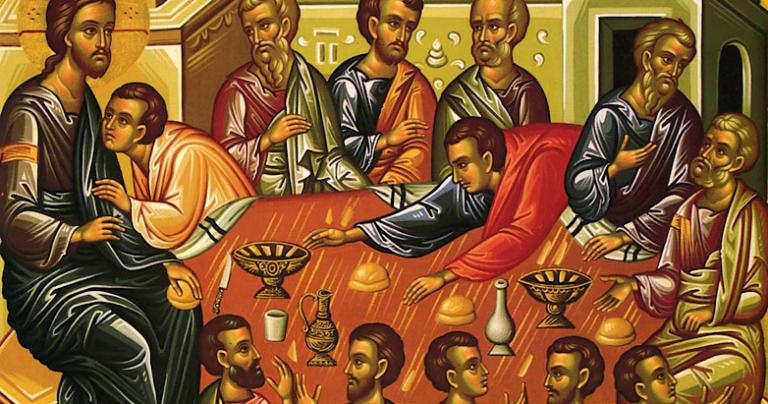
- Jesus was male and picked twelve male apostles.
- The leadership of the New Testament is overwhelmingly male. There are exceptions, but these are not prominent and did not cause, and still does not cause, the vast majority of the world’s Christians (Catholic and Orthodox) to make women priests.
- The author of Revelation, almost surely one of the last of the canonical books to be written, has twelve apostles and patriarchs on thrones. None are American or female. (This will be horrifying for two different groups of people). The thrust of the book in regard to religious roles is not egalitarian.
Given the length of the texts involved, and all the details, one could bog down in advocacy scholarship easily. What are equivalent facts to these from the Bible in terms of quantity of text or importance given to these facts in the text? What is, for example, the female equivalent of the Levitical priesthood?
The question for the fair reader of the texts is to ask: “Is this text overwhelmingly patriarchal in terms of religious roles or egalitarian? Does the collection become more egalitarian?” Is Paul or John obviously more egalitarian than (say) the authors/editors of Isaiah? (Make sure not to confuse equal humanity with religious roles being open to all equally!)
The normal, often acceptable, counter-argument is historical and cultural influences on the writers. One can and should not expect God to speak in mysterious code to His People. He did not. Instead, God would often use comfortable images or language that could be comprehended at the time.
The scholar argues: “The overwhelming surrounding cultures of the time were patriarchal and the texts accommodated the cultures.”
This can be a good argument, but is not persuasive in the case of religious roles.
Ignore for a moment that the Chosen People were also patriarchal or the interesting question of how many matriarchal societies (or egalitarian ones) have ever existed. Instead, simply note that in both the Old and New Testament period, priesting, religious leadership, was one thing that many pagan women did in many cultures at many times. The Old and New Testament provide fewer and less obvious powerful continuing religious roles than one can find in Ancient Rome (for example). There were roles held only by women in Rome that had religious power.
Assume for a moment that a few women are called “apostles” in some sense of the term in the New Testament. This is still not the same as the continued power exercised by several orders of classical era priestesses. The Jewish Old Testament and Christian New Testament provided fewer examples of religious roles for women than one can find in contemporary literature from each period.
Idols, for example, frequently were of powerful female deities. Powerful religious cults were restricted to women and had influence on politics of the time. For a Greek or Roman seeing women in priestly functions would have been natural.
The movement of Scripture from the first text to the last is also not a movement from fewer examples of women in religious authority (particularly priesthood) to more. Instead, women are mentioned in both the Old and New Testament in many different roles, but this is exceptional in the text.
If egalitarianism in religious roles is my wish, give me classical paganism, not Judaism or Christianity as found in the Bible. Do not confuse this with family codes or political power in other cultures. Whatever is true of patriarchy, matriarchy, or egalitarianism in the surrounding cultures regarding family or politics, the New Testament world gave women powerful priestly roles in pagan culture that the Christian world did not ever equal.
A Junia here or there is tokenism.
Naturally, the ontology of being human in the books of the Bible from first to last make women and men equally human. The role of being a priest was reserved to Levites, but I assume nobody thought as a result that members of the tribe of Judah were inferior in terms of being human or that members of the tribe of Issachar could not sacrifice animals nearly as well as Levites. These were roles, icons.
One could adopt a view that this is an unfortunate truth about the Scriptures (as a whole) and that germs of something better are found there. One could adopt the position that since all roles must be open to everyone religiously, that must be what the Bible books really meant.
Maybe.
I do not think that is plausible and will only comfort a few insiders for a time. Much better to adopt a more progressive view of Biblical authority that says the stories in the Bible are often wrong, but the core message of Jesus (insert whatever this century would be comfortable with this being) can be mined from the text. The scholar or particular believer corrects the witness of Scripture. Perhaps best of all, we could doubt the idea that egalitarianism in religious roles is necessary for justice and accept differences.
The force of this particular egalitarian argument regarding religious roles may depend on an opponent with a very bad or extreme set of views.
This advocate of injustice, extreme patriarchy, cannot abide any exceptions to general rules in religious life. Nina, equal to the Apostles, distresses him. He downplays the Mother of God, Queen of Heaven. He cannot, like all the ancient Patriarchates of the East, even consider that Junia was equal to the Apostles. He conflates this one role with every other and so practices and promotes injustice.
Instead as almost all global Christians do, one could accept different roles in religion for males and females and explore ways that both religious roles can be made beautiful and glorious.
I do not believe the mass of scholars will ever look at the entire canon and find there a moment toward feminism or egalitarianism in religious roles.* They do not do so now. The bulk of secular scholarship may keep silent, any stick to beat a dog after all, but few will read the bulk of Scriptures and see egalitarianism increasing in terms of religious roles.*
*I am a Platonist, even about a Form of Good, and so do not share the concern!
**I am a feminist in (I hope) many important respects. I am not commenting here on roles in the family, state, or business where I think justice often demands “both voices.” Like almost all Christians at almost all places at almost all times, I also think some religious roles are restricted to men or to women: fathers or mothers of the Church.
Previous Post

May 29, 2021
Even a Dog Gets a Treat: Man Needs Bread, but not Just Bread Alone

Browse Our Archives
Select a Category Apologetics Art Culture Education On Books On Education Philosophy Politics Pop Culture Spiritual Reflections Uncategorized
Select a Month October 2026 September 2026 August 2026 July 2026 July 2025 June 2025 September 2024 July 2024 June 2024 December 2023 June 2023 September 2022 May 2022 April 2022 March 2022 February 2022 July 2021 June 2021 May 2021 April 2021 March 2021 February 2021 January 2021 December 2020 November 2020 October 2020 September 2020 August 2020 July 2020 June 2020 May 2020 April 2020 March 2020 February 2020 January 2020 December 2019 November 2019 October 2019 September 2019 August 2019 July 2019 June 2019 May 2019 April 2019 March 2019 February 2019 January 2019 December 2018 November 2018 October 2018 September 2018 August 2018 July 2018 June 2018 May 2018 April 2018 March 2018 February 2018 January 2018 December 2017 November 2017 October 2017 September 2017 August 2017 July 2017 June 2017 May 2017 April 2017 March 2017 February 2017 January 2017 December 2016 November 2016 October 2016 September 2016 August 2016 July 2016 June 2016 May 2016 April 2016 March 2016 February 2016 January 2016 December 2015 November 2015 October 2015 September 2015 August 2015 July 2015 June 2015 May 2015 April 2015 March 2015 February 2015 January 2015 November 2014 October 2014 September 2014 August 2014 July 2014 June 2014 May 2014 April 2014 March 2014 February 2014 January 2014 December 2013 November 2013 October 2013 September 2013 August 2013 July 2013 June 2013 May 2013 April 2013 March 2013 February 2013 January 2013 December 2012 November 2012 October 2012 September 2012 August 2012 July 2012 June 2012 May 2012
Follow Us!
TAKE THE
Religious Wisdom Quiz
Who wrote the most letters in the New Testament?
Select your answer to see how you score.
Peter James Paul John
Books by This Author John Mark Reynolds
Related posts from Eidos

Classical Education Must Teach Us to Make the...

Rooted: Why Classical Education Needs Community

Classical Education and the Art of Dying Well

Golden, Golden, Golden: My Mother's Last Lesson
TRENDING AT PATHEOS Evangelical

The REST of Your Life: A Creative Wrestles...
This week I had a conversation with a good friend from church....

How the author of the world's best hymn...
I've been working with John Newton for a while now. This makes...

Long before this Lectio Divina, Psalm 130 - the song - started...

What About the Trees? Another Living Parable
After I finished writing the last article about falling leaves as a...

Why Classical Education Is a Conversation, Not a...
Come and Read: Joy in Classical Education When I was a little...

Cornell University has received a great deal of negative publicity and intense...
view all Evangelical blogs
Ad-Free & Subscriber Log-In Subscription Support
- About Us
- 2026 Calendar
- Videos
- Podcasts
- Library of World Religions
- Faith In Media Tracker
- Advertise With Us
- Write for Us
- Privacy Policy
- Terms of Service
- Do Not Sell My Data
- Contact Us
- Radiant Digital
- Manage Newsletter Subscriptions
- Unsubscribe From Notifications
- Sitemap
Copyright 2008-2026, Patheos. All rights reserved.
Subscription Support Ad-Free & Subscriber Log-In
Follow Patheos