
BuddhistCatholicContemplativeEvangelicalGeneral ChristianHinduJewishLatter-day SaintMuslimNew VisionsProgressive Christian
Beliefs
- Buddhist
- Catholic
- Contemplative
- Evangelical
- General Christian
- Hindu
- Jewish
- Latter-day Saint
- More Voices
- Muslim
- New Visions
- Pagan
- Progressive Christian
Topics
- Religion News
- Food and Religion
- Sports and Religion
- Religious Art
- Religious Music and Entertainment
- Religious Events
- History and Religion
- Style and Religion
- Politics and Religion
- Women in Religion
- Recreation Outdoors and Religion
- Business Finance and Religion
- Careers Workplace and Religion
- Education and Religion
- Family Parenting and Religion
- Health Fitness and Religion
- Home and Religion
- Relationships and Religion
- Technology and Religion
- Travel and Religion
Columnists
- Buddhist Columnists
- Business Finance and Religion Columnists
- Careers Workplace and Religion Columnists
- Catholic Columnists
- Contemplative Columnists
- Education and Religion Columnists
- Evangelists Columnists
- Family Parenting and Religion Columnists
- General Christian Columnists
- Health Fitness and Religion Columnists
- Hindu Columnists
- History and Religion Columnists
- Home and Religion Columnists
- Jewish Columnists
- More Voices Columnists
- Latter Day Columnists
- Muslim Columnists
- New Visions Columnists
- Nonreligious Columnists
- Pagan Columnists
- Politics and Religion Columnists
- Progressive Columnists
- Recreation Outdoors and Religion Columnists
- Relationships and Religion Columnists
- Religion News Columnists
- Religious Art Columnists
- Religious Events Columnists
- Religious Music and Entertainment Columnists
- Sports and Religion Columnists
- Style and Religion Columnists
- Technology and Religion Columnists
- Travel and Religion Columnists
- Women in Religion Columnists
Resource Library
- 2026 Calendar
- Library of World Religions
- The 100 Most Holy Places on Earth
- Patheos Answers
- Podcasts
- Videos
- Faith Leaders Database
- Anglican Episcopalian
- Bahai
- Baptist
- Buddhism
- Christianity
- Confucianism
- Eastern Orthodoxy
- Hinduism
- Holiness and Pentecostal
- ISKCON
- Islam
- Judaism
- Lutheran
- Methodist
- The Church of Jesus Christ of Latter-day Saints
- New Age
- Paganism
- Presbytarian and Reformed
- Protestantism
- Religion Behind the Scenes
- Roman Catholic
- Scientology
- Shia Islam
- Sikhism
- Sufism
- Sunni Islam
- Taoism
- Zen
- See all religions
Research Tools
 Ad-Free & Subscriber Log-In Subscription Support
Ad-Free & Subscriber Log-In Subscription Support
Follow Patheos 

- Trending:
- Forgiveness
- |
- Marriage
- |
- Consciousness
- |
- Death Penalty
- |
- Election
- |
- Halloween

- Home
- Evangelical
- Lord Byron Got One Big Thing Right (Greek Bicentennial)
Lord Byron Got One Big Thing Right (Greek Bicentennial)
Last updated on: April 3, 2021 at 8:51 am by John Mark N. Reynolds
Lord Byron Got One Big Thing Right (Greek Bicentennial) 2021-04-03T08:51:12-04:00 John Mark N. Reynolds
Patheos Explore the world's faith through different perspectives on religion and spirituality! Patheos has the views of the prevalent religions and spiritualities of the world.
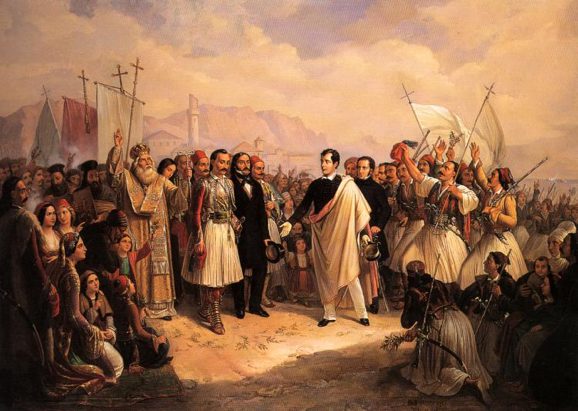 Lord Byron is a poet vaguely known, little read. He can teach all of us something, even if for your sins you never have to read his “classic” poem Don Juan.
Byron himself was a terrible man, a human resource department disaster, with an ear for a jingle and a direct pipeline to the spirit of the age. As a result of his trendiness, he was an early social media star, forgiven for his vices, though like all such people, Byron was not built to endure. As he entered middle age, he was aged, health failing, the wages of continued sin bringing an imminent death. Like all of us, Byron was better than his worst moment, and thankfully better than his worst poetry.*
Like many greater men, he got many things wrong, but at the very end got the biggest thing right. As he was sinking into degenerate death, he was roused by the bravery of the Greeks. His classical Christian education had been a gift of Greece and through the drugs and wine he could recollect this fact. All the morals he flaunted, all the culture he loved, they all found a root in Greece. Lord Byron had sense, perhaps for the first time, to know his debt.
He managed to go to Greece with money to support the War of Independence. He spent a good bit of money, took personal risk. He went from place to place and was honored. None of the money he spent directly led to victory. He won no battles. He died of natural causes in Missolonghi, right before Missolonghi became famous for courage resisting tyranny.
Fools think Lord Byron failed.
The lovers of wisdom know that Byron redeemed his useless life. He was famous, an icon to the outside world, and so his going to Greece, commitment to democracy, death in Greece was an image of a deep reality. Lord Byron used his fame, gained partly by his vile life, to support better men. He went to Greece, lived and died for the liberty of the Greeks, and so ended his life better than he had lived his life.
Consider Byron: famous for decadence. Consider Greece: famous for what she had been, brutalized by tyrants. Lord Byron grasped the debt he owed Hellas, Greece. He knew that there would be no science, certainly no Western poetry, if there had not been Socrates, Plato, Constantine, Basil, Justinian. He came to Greece to pay his debt to Greece and was an image to Western Europe. His death was, sadly, more valuable than his life. Western Europeans were reminded of the debt they owed to Greece.
Lord Byron was a symbol of the sort that is more valuable than the “facts” on the ground. Like some earlier John Wayne who was not himself a hero, but came to represent true heroism by his art, Lord Byron became a folk hero for what he aspired to do rather than what he did. Lord Byron found redemption in his opposition to Ottoman tyranny, as Wayne found a cause in opposing Soviet tyranny.
Byron died better than he lived. He died in Missolonghi. . . a town that was about to become famous.
As to Missolonghi, the Alamo of Hellas**, that is another tale.
Awake! (not Greece -she is awake!)
Awake, my spirit! Think through whom
Thy life-blood tracks its parent lake,
And then strike home!Tread those reviving passions down,
Unworthy manhood! -unto thee
Indifferent should the smile or frown
Of beauty be.If thou regret’st thy youth, why live?
The land of honourable death
Is here: -up to the field, and give
Away thy breath!Seek out -less often sought than found –
A soldier’s grave, for thee the best;
Then look around, and choose thy ground,
And take thy rest.
*And of course Byron could write a great poem. . . his worst better than my best, but he was up-to-date to the point of being hopelessly dated.
**Really the Alamo is the Missolonghi of America.
Previous Post

March 31, 2021
Some Mr. Booth is Planning Tonight
Next Post
April 2, 2021 The Passion of Jesus and Chios (Greek Bicentennial)
Browse Our Archives
Select a Category Apologetics Art Culture Education On Books On Education Philosophy Politics Pop Culture Spiritual Reflections Uncategorized
Select a Month October 2026 September 2026 August 2026 July 2026 July 2025 June 2025 September 2024 July 2024 June 2024 December 2023 June 2023 September 2022 May 2022 April 2022 March 2022 February 2022 July 2021 June 2021 May 2021 April 2021 March 2021 February 2021 January 2021 December 2020 November 2020 October 2020 September 2020 August 2020 July 2020 June 2020 May 2020 April 2020 March 2020 February 2020 January 2020 December 2019 November 2019 October 2019 September 2019 August 2019 July 2019 June 2019 May 2019 April 2019 March 2019 February 2019 January 2019 December 2018 November 2018 October 2018 September 2018 August 2018 July 2018 June 2018 May 2018 April 2018 March 2018 February 2018 January 2018 December 2017 November 2017 October 2017 September 2017 August 2017 July 2017 June 2017 May 2017 April 2017 March 2017 February 2017 January 2017 December 2016 November 2016 October 2016 September 2016 August 2016 July 2016 June 2016 May 2016 April 2016 March 2016 February 2016 January 2016 December 2015 November 2015 October 2015 September 2015 August 2015 July 2015 June 2015 May 2015 April 2015 March 2015 February 2015 January 2015 November 2014 October 2014 September 2014 August 2014 July 2014 June 2014 May 2014 April 2014 March 2014 February 2014 January 2014 December 2013 November 2013 October 2013 September 2013 August 2013 July 2013 June 2013 May 2013 April 2013 March 2013 February 2013 January 2013 December 2012 November 2012 October 2012 September 2012 August 2012 July 2012 June 2012 May 2012
Follow Us!
TAKE THE
Religious Wisdom Quiz
In Romans 8, what does Paul say can separate us from the love of Christ?
Select your answer to see how you score.
Nothing Sin Death The Law
Books by This Author John Mark Reynolds
Related posts from Eidos

Classical Education Must Teach Us to Make the...

Classical Education and the Art of Dying Well

Golden, Golden, Golden: My Mother's Last Lesson

TRENDING AT PATHEOS Evangelical

The REST of Your Life: A Creative Wrestles...
This week I had a conversation with a good friend from church....

How the author of the world's best hymn...
I've been working with John Newton for a while now. This makes...

Long before this Lectio Divina, Psalm 130 - the song - started...

What About the Trees? Another Living Parable
After I finished writing the last article about falling leaves as a...

Why Classical Education Is a Conversation, Not a...
Come and Read: Joy in Classical Education When I was a little...

Cornell University has received a great deal of negative publicity and intense...
view all Evangelical blogs
Ad-Free & Subscriber Log-In Subscription Support
- About Us
- 2026 Calendar
- Videos
- Podcasts
- Library of World Religions
- Faith In Media Tracker
- Advertise With Us
- Write for Us
- Privacy Policy
- Terms of Service
- Do Not Sell My Data
- Contact Us
- Radiant Digital
- Manage Newsletter Subscriptions
- Unsubscribe From Notifications
- Sitemap
Copyright 2008-2026, Patheos. All rights reserved.
Subscription Support Ad-Free & Subscriber Log-In
Follow Patheos