
BuddhistCatholicContemplativeEvangelicalGeneral ChristianHinduJewishLatter-day SaintMuslimNew VisionsProgressive Christian
Beliefs
- Buddhist
- Catholic
- Contemplative
- Evangelical
- General Christian
- Hindu
- Jewish
- Latter-day Saint
- More Voices
- Muslim
- New Visions
- Pagan
- Progressive Christian
Topics
- Religion News
- Food and Religion
- Sports and Religion
- Religious Art
- Religious Music and Entertainment
- Religious Events
- History and Religion
- Style and Religion
- Politics and Religion
- Women in Religion
- Recreation Outdoors and Religion
- Business Finance and Religion
- Careers Workplace and Religion
- Education and Religion
- Family Parenting and Religion
- Health Fitness and Religion
- Home and Religion
- Relationships and Religion
- Technology and Religion
- Travel and Religion
Columnists
- Buddhist Columnists
- Business Finance and Religion Columnists
- Careers Workplace and Religion Columnists
- Catholic Columnists
- Contemplative Columnists
- Education and Religion Columnists
- Evangelists Columnists
- Family Parenting and Religion Columnists
- General Christian Columnists
- Health Fitness and Religion Columnists
- Hindu Columnists
- History and Religion Columnists
- Home and Religion Columnists
- Jewish Columnists
- More Voices Columnists
- Latter Day Columnists
- Muslim Columnists
- New Visions Columnists
- Nonreligious Columnists
- Pagan Columnists
- Politics and Religion Columnists
- Progressive Columnists
- Recreation Outdoors and Religion Columnists
- Relationships and Religion Columnists
- Religion News Columnists
- Religious Art Columnists
- Religious Events Columnists
- Religious Music and Entertainment Columnists
- Sports and Religion Columnists
- Style and Religion Columnists
- Technology and Religion Columnists
- Travel and Religion Columnists
- Women in Religion Columnists
Resource Library
- 2026 Calendar
- Library of World Religions
- The 100 Most Holy Places on Earth
- Patheos Answers
- Podcasts
- Videos
- Faith Leaders Database
- Anglican Episcopalian
- Bahai
- Baptist
- Buddhism
- Christianity
- Confucianism
- Eastern Orthodoxy
- Hinduism
- Holiness and Pentecostal
- ISKCON
- Islam
- Judaism
- Lutheran
- Methodist
- The Church of Jesus Christ of Latter-day Saints
- New Age
- Paganism
- Presbytarian and Reformed
- Protestantism
- Religion Behind the Scenes
- Roman Catholic
- Scientology
- Shia Islam
- Sikhism
- Sufism
- Sunni Islam
- Taoism
- Zen
- See all religions
Research Tools
 Ad-Free & Subscriber Log-In Subscription Support
Ad-Free & Subscriber Log-In Subscription Support
Follow Patheos 

- Trending:
- Forgiveness
- |
- Marriage
- |
- Consciousness
- |
- Death Penalty
- |
- Election
- |
- Halloween

- Home
- Evangelical
- Searching for Truth: On Pragmatics, Babies and Bathwater
Searching for Truth: On Pragmatics, Babies and Bathwater
Last updated on: March 18, 2021 at 12:13 pm by John Mark N. Reynolds
Searching for Truth: On Pragmatics, Babies and Bathwater 2021-03-18T12:13:00-04:00 John Mark N. Reynolds
Patheos Explore the world's faith through different perspectives on religion and spirituality! Patheos has the views of the prevalent religions and spiritualities of the world.
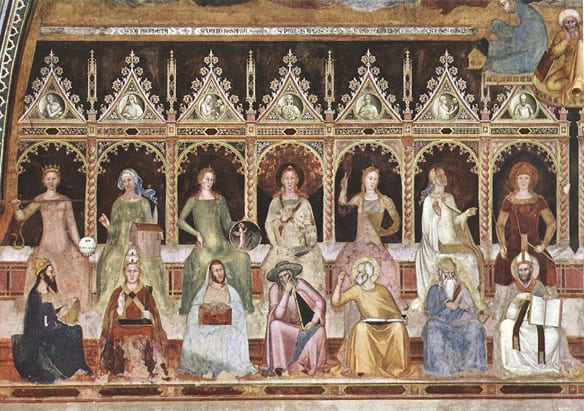
A good life is more than pragmatic, but does take into account what works. If we are just pragmatic, we may lose the truth. Sometimes ideas seem to work, but the “seeming” is deceptive or based on too limited a sample! God’s opinion surely counts as does His judgment for eternity.
We all agree we should be wise, but being wise is hard. Wisdom is an excellent Beloved, even if none of us will see her clearly until Paradise. We follow in her steps, Lady Philosophy*. Recently, I got two suggestions about finding wisdom, one common, but not so helpful, one based on ancient wisdom that was very correcting.
Wisdom and Truth: Not Just Pragmatic
Talk of Wisdom sounds too ethereal to some. Since I am given to loving what my dissertation advisor called “flowery” language, I should listen to such criticisms carefully. Maybe we should just do “what works” without any talk about ‘truth’ and certainly none about “Lady Philosophy!”
As one person commented on some of my thoughts on beauty and goodness:
Truth, knowledge, and science are pragmatically the same e.g. what works. When old knowledge stops working, it is up to science and statistical data to discover why the old knowledge failed. Something changed.
If “truth, knowledge, and science” are pragmatically the same, then why should I use science and stats to tell me why “old knowledge” does not work? There are other ways of human knowing, even if we do not count divine revelation. The arts reveal deep truths about the cosmos and beauty. Why not prioritize that way of knowing?
Perhaps we should do so because of the pragmatic successes of science: making life better with everything from vaccines to violins. Yet to do so we would have to leave aside the pragmatic failures of science: creating technology that allows for viruses to travel more quickly globally or giving us fearsome weapons of mass destruction. We cannot credit the good to science and ignore the bad without noting that science is done by scientists and not angels. We have good reason not to trust their moral judgement over any other class.
Science and sociology might tell me that the “old knowledge” is not working even why it is not working, but will do nothing to tell me if it should work. Science and sociology might be able to suggest the best means to make the “old knowledge” work again, but not whether I should wish this to be so. Maybe there is not “truth” about what is good, other than what works, but shouldn’t we all be sure before we say this is so? After all, many societies none of us wish to live in seemed to “work” for some members, though not for others. What counts as knowledge “working?” Does the prisoner in the gulag count equally to Stalin in our studies? If so, who says so?
Nobody would be comfortable with saying: “I will challenge my ideas when they do not work for me.” The majority by numbers might “benefit” from Jim Crow, but surely the system was evil. In the early days of the twentieth century, some scientists valued artificial environments over natural ones. Why was this wrong? If two courses of action both carry benefits, then who decides what is best? We used to be told that we should strive to change the environment, now we are cautioned not to do so. The outcomes of actions we take can be given by the scientists, but our values will inform which we choose.
This does not mean that another class, priests, politicians, or professional philosophers, should be left in command. All of us are human. As a group, taking all the wisdom we can find, using all the good methods out there, we do what we can to seek wisdom, truth, and knowledge.
“Surely if we just get our values right, hard work, and our methods down, then all will be well!” This is not so as there are many examples of people setting out to do the right thing with the best methods known and still going badly awry. The history of charitable organizations is littered with people using best science and fine ethical ideas and ending up making a mess.
The mess matters.
On Babies and Bathwater
A wise academic pushed back against an argument I was making cautioning not to “throw out the baby with the bathwater” when considering a serious cultural critique, especially from someone who disagrees with some foundational ideas. Suppose the argument is unsound, noting this might be useful, but not if it distracts from dealing with a terrible problem. It is wise to pause over a disagreement in the soundness of the argument to ask what motivated the argument. What is the bottom line based on the ethical ideals one holds?
Better to pause and work to fix the problem. Sinclair even should be thanked for exposing such errors.
Pragmatically, the more a person loved free markets, the greater the danger in allowing such evils to continue. If revolutions are generally bad, reactionaries father revolutions through festering social ills unaddressed and unended. The evils of the “dark Satanic mills”**also should have given a seeker of wisdom serous pause. Were the Christian socialists right after all? Merely nattering about Sinclair’s errors was not good enough: saying “mistakes were made” will not work.
Personally, at this is most important, the Gilded Age vices harmed people in God’s image. Since people are more important than ideas, solutions to the terrors of the meatpacking industry and Gilded age excess must be the focus! Christian ethics, assuming one begins with Christian ethics, demand love for one’s neighbor and treating one’s neighbor as one wishes to be treated. In the case of the robber barons, a Christian need not and should not defend their evil practices. If generally free market solutions, guided by ethics, are the best of all flawed solutions, then finding the solution is the best advice.
One need not embrace bad arguments, even can comment on them if briefly, but stand in solidarity against with the suffering and support those doing something. The slave labor from which we benefit, legalized abortion, institutional racism, or corrupt religious structures remain in our day, in our own camps, to receive our primary energy.
*See a book good for our times, the Medieval best seller, The Consolation of Philosophy. Boethius understood how easily we confuse our ideas with Wisdom.
**Blake may have meant Dante’s vision, but surely the evils Dickens’ describes, the factories of Coketown, and the schools that defended them, were Satanic.
***I am thankful for a much admired Christian scholar for setting me to thinking on this topic. I appreciate the wisdom, leaving her unnamed so she needn’t associate with my views.
Previous Post

March 15, 2021
On Ideas without Mind: Could Be, but Probably Not?
Next Post

March 17, 2021 Many Levels, Greater Joy
Browse Our Archives
Select a Category Apologetics Art Culture Education On Books On Education Philosophy Politics Pop Culture Spiritual Reflections Uncategorized
Select a Month October 2026 September 2026 August 2026 July 2026 July 2025 June 2025 September 2024 July 2024 June 2024 December 2023 June 2023 September 2022 May 2022 April 2022 March 2022 February 2022 July 2021 June 2021 May 2021 April 2021 March 2021 February 2021 January 2021 December 2020 November 2020 October 2020 September 2020 August 2020 July 2020 June 2020 May 2020 April 2020 March 2020 February 2020 January 2020 December 2019 November 2019 October 2019 September 2019 August 2019 July 2019 June 2019 May 2019 April 2019 March 2019 February 2019 January 2019 December 2018 November 2018 October 2018 September 2018 August 2018 July 2018 June 2018 May 2018 April 2018 March 2018 February 2018 January 2018 December 2017 November 2017 October 2017 September 2017 August 2017 July 2017 June 2017 May 2017 April 2017 March 2017 February 2017 January 2017 December 2016 November 2016 October 2016 September 2016 August 2016 July 2016 June 2016 May 2016 April 2016 March 2016 February 2016 January 2016 December 2015 November 2015 October 2015 September 2015 August 2015 July 2015 June 2015 May 2015 April 2015 March 2015 February 2015 January 2015 November 2014 October 2014 September 2014 August 2014 July 2014 June 2014 May 2014 April 2014 March 2014 February 2014 January 2014 December 2013 November 2013 October 2013 September 2013 August 2013 July 2013 June 2013 May 2013 April 2013 March 2013 February 2013 January 2013 December 2012 November 2012 October 2012 September 2012 August 2012 July 2012 June 2012 May 2012
Follow Us!
TAKE THE
Religious Wisdom Quiz
What does Paul tell Titus that the grace of God teaches us to do?
Select your answer to see how you score.
Say no to ungodliness and live self-controlled, upright and godly lives Obey the authorities Spread the gospel Love one another
Books by This Author John Mark Reynolds
Related posts from Eidos

Rooted: Why Classical Education Needs Community

Classical Education and the Art of Dying Well

Golden, Golden, Golden: My Mother's Last Lesson

TRENDING AT PATHEOS Evangelical

The REST of Your Life: A Creative Wrestles...
This week I had a conversation with a good friend from church....

How the author of the world's best hymn...
I've been working with John Newton for a while now. This makes...

Long before this Lectio Divina, Psalm 130 - the song - started...

What About the Trees? Another Living Parable
After I finished writing the last article about falling leaves as a...

Why Classical Education Is a Conversation, Not a...
Come and Read: Joy in Classical Education When I was a little...

Cornell University has received a great deal of negative publicity and intense...
view all Evangelical blogs
Ad-Free & Subscriber Log-In Subscription Support
- About Us
- 2026 Calendar
- Videos
- Podcasts
- Library of World Religions
- Faith In Media Tracker
- Advertise With Us
- Write for Us
- Privacy Policy
- Terms of Service
- Do Not Sell My Data
- Contact Us
- Radiant Digital
- Manage Newsletter Subscriptions
- Unsubscribe From Notifications
- Sitemap
Copyright 2008-2026, Patheos. All rights reserved.
Subscription Support Ad-Free & Subscriber Log-In
Follow Patheos