
BuddhistCatholicContemplativeEvangelicalGeneral ChristianHinduJewishLatter-day SaintMuslimNew VisionsProgressive Christian
Beliefs
- Buddhist
- Catholic
- Contemplative
- Evangelical
- General Christian
- Hindu
- Jewish
- Latter-day Saint
- More Voices
- Muslim
- New Visions
- Pagan
- Progressive Christian
Topics
- Religion News
- Food and Religion
- Sports and Religion
- Religious Art
- Religious Music and Entertainment
- Religious Events
- History and Religion
- Style and Religion
- Politics and Religion
- Women in Religion
- Recreation Outdoors and Religion
- Business Finance and Religion
- Careers Workplace and Religion
- Education and Religion
- Family Parenting and Religion
- Health Fitness and Religion
- Home and Religion
- Relationships and Religion
- Technology and Religion
- Travel and Religion
Columnists
- Buddhist Columnists
- Business Finance and Religion Columnists
- Careers Workplace and Religion Columnists
- Catholic Columnists
- Contemplative Columnists
- Education and Religion Columnists
- Evangelists Columnists
- Family Parenting and Religion Columnists
- General Christian Columnists
- Health Fitness and Religion Columnists
- Hindu Columnists
- History and Religion Columnists
- Home and Religion Columnists
- Jewish Columnists
- More Voices Columnists
- Latter Day Columnists
- Muslim Columnists
- New Visions Columnists
- Nonreligious Columnists
- Pagan Columnists
- Politics and Religion Columnists
- Progressive Columnists
- Recreation Outdoors and Religion Columnists
- Relationships and Religion Columnists
- Religion News Columnists
- Religious Art Columnists
- Religious Events Columnists
- Religious Music and Entertainment Columnists
- Sports and Religion Columnists
- Style and Religion Columnists
- Technology and Religion Columnists
- Travel and Religion Columnists
- Women in Religion Columnists
Resource Library
- 2026 Calendar
- Library of World Religions
- The 100 Most Holy Places on Earth
- Patheos Answers
- Podcasts
- Videos
- Faith Leaders Database
- Anglican Episcopalian
- Bahai
- Baptist
- Buddhism
- Christianity
- Confucianism
- Eastern Orthodoxy
- Hinduism
- Holiness and Pentecostal
- ISKCON
- Islam
- Judaism
- Lutheran
- Methodist
- The Church of Jesus Christ of Latter-day Saints
- New Age
- Paganism
- Presbytarian and Reformed
- Protestantism
- Religion Behind the Scenes
- Roman Catholic
- Scientology
- Shia Islam
- Sikhism
- Sufism
- Sunni Islam
- Taoism
- Zen
- See all religions
Research Tools
 Ad-Free & Subscriber Log-In Subscription Support
Ad-Free & Subscriber Log-In Subscription Support
Follow Patheos 

- Trending:
- Forgiveness
- |
- Marriage
- |
- Consciousness
- |
- Death Penalty
- |
- Election
- |
- Halloween

- Home
- Evangelical
- On Language: Ignoring Context and History Leads to Grotesqueries
On Language: Ignoring Context and History Leads to Grotesqueries
Last updated on: February 22, 2021 at 12:39 am by John Mark N. Reynolds
On Language: Ignoring Context and History Leads to Grotesqueries 2021-02-22T00:39:40-04:00 John Mark N. Reynolds
Patheos Explore the world's faith through different perspectives on religion and spirituality! Patheos has the views of the prevalent religions and spiritualities of the world.
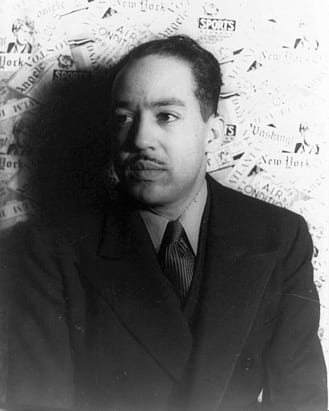
Consider the power of language to liberate or brutalize. We can all learn from one of America’s greatest poets: Langston Hughes.
Uncle Tom
Within—The beaten pride.
Without—The grinning face,
The low, obsequious,
Double bow,
The sly and servile grace
Of one the white folks
Long ago
Taught well
To know his Place.
Language does not, cannot, always mean what the dictionary says. A word may seem servile, but within, coded for other people to hear, the speaker is still proud. He may be beaten, but he is still a man. The dictionary may only account for the use of the powerful, the tyrants. A mass of people may develop more sly meanings.
A great evil of systematic racism is when it forces good men to submit to evil men for the sake of family and survival. Pride can be beaten down and language becomes coded. Everyone gets the “joke” but the tyrant. The oppressed understand what is being said with the “double bow,” but the rulers do not. These systems have existed in oppressive cultures from Selma to Stalingrad. Is this double meaning good? What should a person do in such circumstances?
I am not fit to judge. A great man, a Frederick Douglass, rises up and speaks the truth. Others take a different course and if it is not quite right, it is not quite wrong either.
The coded language of “the sly and servile grace” for anyone “taught well to know his place” means that history and context will always matter. We cannot just turn to dictionaries of common usages as these are often written for the common usage of those with power. They want to believe that the “grinning face” is real and miss much of the meaning of the double bow. The meaning is at least this: if you have taught a man to know any place other than the role of a full image bearer of God, then you have done a very wicked thing. If a tyrant succeeds in making a man obsequious, then this is a sure sign of his evil. There is no escape from it.
The tyrant also may miss the sly new uses of language, not captured in technical dictionaries, made by the oppressed. Context and history matter. This is why some of us can never say some things, use some terms, without being wrong, because to others what “we mean” is not enough. There is context to other people, other sons and daughters of God, from which there is no escape. The powerful, or those that think they have power, wish this were not so, but it is so.
We must listen to how another person uses a term. All of us must grasp that the best dictionary may miss the way some group of people, not studied by dictionary makers, use terms. Yet even if the dictionaries were perfect, capturing every usage, the multiple ways a term can be used requires utmost clarity. This is especially true when terms have been used to oppress.
An Example of Missing Context
Langston Hughes makes this obvious in his poetry, but I see this in debates all the time.
Once I interrupted a discussion where a person who did not use English as his primary language was being battered by a critic. The discussion turned on the use of terms like “animal” and “faith.” These are terms with several different standard meanings and also technical definitions in different fields of study. In some contexts, they also occur fraught with difficulty based on history. For example, some have used “animal” to dehumanize people of other races. In a context of race differences, the resistance to one definition of animal was not just about which dictionary to use. The critic was missing important linguistic and historical context he was enacting with the student.
Obviously, all humans are animals in the scientific sense. No educated Christian denies that all people are mammals in that context.
However, “an animal” also can refer to some mammal that is not rational, not human: “someone who behaves in a brutal or bestial manner.” This secondary meaning has been applied to other “races.” As a result, when a Christian from a particular background resents or pushes back on being called an animal, or merely an animal, there is a context and history to that resistance. He or she might be resisting one meaning without denying the other, because the term has been greatly misused. No person, no human, is merely a beast and certainly is not bestial by nature. We are more than mere animals in that context.
Definitions matter, but so does understanding what is meant or what terms have been forced to mean. When people were taught to “jump Jim Crow,” then certain dances, words, and images, harmless in themselves, became the means to put down an entire people group. When a man or woman said: “Yes, sir,” then “Yes, sir” could carry a sub-text of defiance. The powerful might hear “Go down Moses” as about only the Exodus of Jewish people, while the singer might be pining for an end to systematic racism.
The refusal to recognize context, or the history of usage, is a dangerous error.
We cannot take the words “literally,” when they are being used at the end of a particular history with a “sly and servile grace.” If we insist on our own definitions, refusing to see how words might be used differently, then we might, if we have the cultural or educational power, beat down people’s pride to agree with us. We should also not be shocked if our “victory” indicates a profound defeat.
—————————–
 *Hughes, Langston. Selected Poems of Langston Hughes (Vintage Classics) (p. 160). Knopf Doubleday Publishing Group. Kindle Edition.
Langston Hughes is my favorite American poet . . . since fifth grade! (This was one of the few things to come from that no-good year.) He always is worth reading.
Previous Post

February 20, 2021
The Two Way Evil of Hate
Next Post
February 22, 2021 Lying about Goodness
Browse Our Archives
Select a Category Apologetics Art Culture Education On Books On Education Philosophy Politics Pop Culture Spiritual Reflections Uncategorized
Select a Month October 2026 September 2026 August 2026 July 2026 July 2025 June 2025 September 2024 July 2024 June 2024 December 2023 June 2023 September 2022 May 2022 April 2022 March 2022 February 2022 July 2021 June 2021 May 2021 April 2021 March 2021 February 2021 January 2021 December 2020 November 2020 October 2020 September 2020 August 2020 July 2020 June 2020 May 2020 April 2020 March 2020 February 2020 January 2020 December 2019 November 2019 October 2019 September 2019 August 2019 July 2019 June 2019 May 2019 April 2019 March 2019 February 2019 January 2019 December 2018 November 2018 October 2018 September 2018 August 2018 July 2018 June 2018 May 2018 April 2018 March 2018 February 2018 January 2018 December 2017 November 2017 October 2017 September 2017 August 2017 July 2017 June 2017 May 2017 April 2017 March 2017 February 2017 January 2017 December 2016 November 2016 October 2016 September 2016 August 2016 July 2016 June 2016 May 2016 April 2016 March 2016 February 2016 January 2016 December 2015 November 2015 October 2015 September 2015 August 2015 July 2015 June 2015 May 2015 April 2015 March 2015 February 2015 January 2015 November 2014 October 2014 September 2014 August 2014 July 2014 June 2014 May 2014 April 2014 March 2014 February 2014 January 2014 December 2013 November 2013 October 2013 September 2013 August 2013 July 2013 June 2013 May 2013 April 2013 March 2013 February 2013 January 2013 December 2012 November 2012 October 2012 September 2012 August 2012 July 2012 June 2012 May 2012
Follow Us!
TAKE THE
Religious Wisdom Quiz
What was the first plague in Egypt?
Select your answer to see how you score.
Locusts Water turned to blood Boils Darkness
Books by This Author John Mark Reynolds
Related posts from Eidos

Classical Education Must Teach Us to Make the...

Rooted: Why Classical Education Needs Community


When the Center Holds: A Tribute to My...
TRENDING AT PATHEOS Evangelical

The REST of Your Life: A Creative Wrestles...
This week I had a conversation with a good friend from church....

How the author of the world's best hymn...
I've been working with John Newton for a while now. This makes...

Long before this Lectio Divina, Psalm 130 - the song - started...

What About the Trees? Another Living Parable
After I finished writing the last article about falling leaves as a...

Why Classical Education Is a Conversation, Not a...
Come and Read: Joy in Classical Education When I was a little...

Cornell University has received a great deal of negative publicity and intense...
view all Evangelical blogs
Ad-Free & Subscriber Log-In Subscription Support
- About Us
- 2026 Calendar
- Videos
- Podcasts
- Library of World Religions
- Faith In Media Tracker
- Advertise With Us
- Write for Us
- Privacy Policy
- Terms of Service
- Do Not Sell My Data
- Contact Us
- Radiant Digital
- Manage Newsletter Subscriptions
- Unsubscribe From Notifications
- Sitemap
Copyright 2008-2026, Patheos. All rights reserved.
Subscription Support Ad-Free & Subscriber Log-In
Follow Patheos