
BuddhistCatholicContemplativeEvangelicalGeneral ChristianHinduJewishLatter-day SaintMuslimNew VisionsProgressive Christian
Beliefs
- Buddhist
- Catholic
- Contemplative
- Evangelical
- General Christian
- Hindu
- Jewish
- Latter-day Saint
- More Voices
- Muslim
- New Visions
- Pagan
- Progressive Christian
Topics
- Religion News
- Food and Religion
- Sports and Religion
- Religious Art
- Religious Music and Entertainment
- Religious Events
- History and Religion
- Style and Religion
- Politics and Religion
- Women in Religion
- Recreation Outdoors and Religion
- Business Finance and Religion
- Careers Workplace and Religion
- Education and Religion
- Family Parenting and Religion
- Health Fitness and Religion
- Home and Religion
- Relationships and Religion
- Technology and Religion
- Travel and Religion
Columnists
- Buddhist Columnists
- Business Finance and Religion Columnists
- Careers Workplace and Religion Columnists
- Catholic Columnists
- Contemplative Columnists
- Education and Religion Columnists
- Evangelists Columnists
- Family Parenting and Religion Columnists
- General Christian Columnists
- Health Fitness and Religion Columnists
- Hindu Columnists
- History and Religion Columnists
- Home and Religion Columnists
- Jewish Columnists
- More Voices Columnists
- Latter Day Columnists
- Muslim Columnists
- New Visions Columnists
- Nonreligious Columnists
- Pagan Columnists
- Politics and Religion Columnists
- Progressive Columnists
- Recreation Outdoors and Religion Columnists
- Relationships and Religion Columnists
- Religion News Columnists
- Religious Art Columnists
- Religious Events Columnists
- Religious Music and Entertainment Columnists
- Sports and Religion Columnists
- Style and Religion Columnists
- Technology and Religion Columnists
- Travel and Religion Columnists
- Women in Religion Columnists
Resource Library
- 2026 Calendar
- Library of World Religions
- The 100 Most Holy Places on Earth
- Patheos Answers
- Podcasts
- Videos
- Faith Leaders Database
- Anglican Episcopalian
- Bahai
- Baptist
- Buddhism
- Christianity
- Confucianism
- Eastern Orthodoxy
- Hinduism
- Holiness and Pentecostal
- ISKCON
- Islam
- Judaism
- Lutheran
- Methodist
- The Church of Jesus Christ of Latter-day Saints
- New Age
- Paganism
- Presbytarian and Reformed
- Protestantism
- Religion Behind the Scenes
- Roman Catholic
- Scientology
- Shia Islam
- Sikhism
- Sufism
- Sunni Islam
- Taoism
- Zen
- See all religions
Research Tools
 Ad-Free & Subscriber Log-In Subscription Support
Ad-Free & Subscriber Log-In Subscription Support
Follow Patheos 

- Trending:
- Forgiveness
- |
- Marriage
- |
- Consciousness
- |
- Death Penalty
- |
- Election
- |
- Halloween

- Home
- Evangelical
- The Church is One
The Church is One
Last updated on: January 27, 2021 at 6:45 pm by John Mark N. Reynolds
The Church is One 2021-01-27T18:45:26-04:00 John Mark N. Reynolds
Patheos Explore the world's faith through different perspectives on religion and spirituality! Patheos has the views of the prevalent religions and spiritualities of the world.

The Orthodox Church is the one, holy, catholic and apostolic church. The Church is one, and no salvation is found outside the Church. The unity of the Orthodox, catholicity, is a completeness. Where the grace of God is present, the Church is present. This is normally based on the grace of God poured out to the individual member of the Church through the sacraments of the Church and other means of grace. This grace grants the Church, and individual members of the Church, right doctrine about and right relationship with God in the work of salvation. Because the world is broken by sin, the unity of the Church, which is certain and known absolutely by God, is a “known unknown” to us.
We know the unity exists, but we will be consistently uncertain of boundaries. Some communities are most probably Orthodox, while others are most probably not. Individuals are members of the Church when they are recipients of the saving grace of God. Many will be recognizably Orthodox, yet some that seem Orthodox are not and other individuals that do not seem so Orthodox are recipients of divine grace. Only at the end of time will we know the truth as a certainty.
The Orthodox begin with a different view of catholicity defined by the fullness of the Spirit and led by Christ. As the Body of Christ, the Church must be one, but the Orthodox recognize that the Spirit moves where he wills in individuals. There is a philosophic limit to what can be known about God’s work in individuals, so there must be ambiguity about the outer limits of the Church.
The ambiguity of our present knowledge is both true and practically important. Practical discussions and recognition of saving grace can take place on an individual level between Christians without lowering the doctrinal and ecclesiastical divisions that the Orthodox must maintain. Far from being a disadvantage, the reality of ambiguity forces the Orthodox to look to God and live by the Spirit in pastoral ministry and the daily life of the layman. We know where the Church is, but not where it is not.
A father in Christ, Father Michael Trigg, died too early.2 With his Oxford doctorate and educational administrative background, he served as a university administrator and a parish priest. In one phase of his higher educational career, Trigg had been hired by a Christian university and was examined on his beliefs numerous times, but suddenly found his faith questioned. He had a peculiar disadvantage in every discussion because he was an Orthodox Christian. He was quizzed endlessly about his beliefs, and a committee demanded he submit a creedal statement. He sent the Creed of Nicaea. Pedantic scholars were not satisfied. “Of course,” they said, “now what do you believe?”
“This.” He was sure about what was most certain but would not pretend to have knowledge where he had none. Like all Orthodox Christians, he was true even to death. The Orthodox have no formula to produce absolute limits to the Church, but there are some things the faithful do know. He was not simple minded. He simply knew what was knowable and refused to commit to what was not. Trigg recognized the difference between what is true and what he could know was true and was willing to assert as certainly the case.3 That is a distinction most often missed.
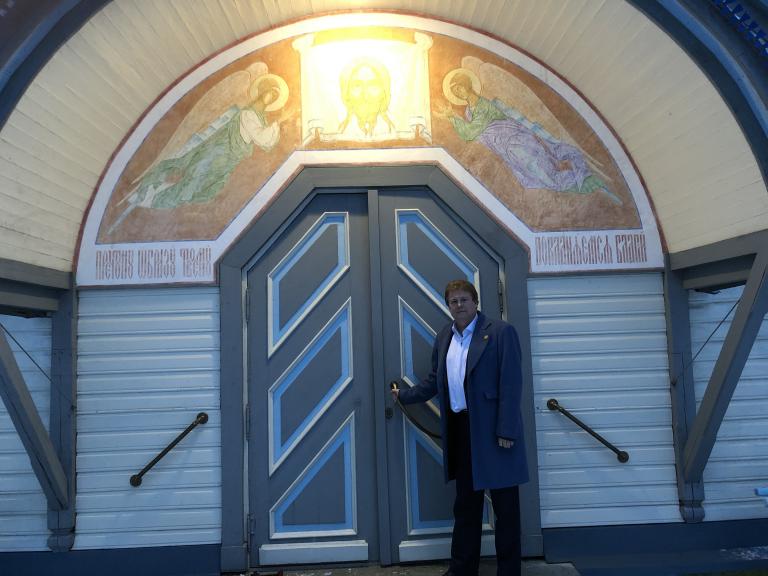 Orthodoxy begins with the profound ideas that the church is the body of Christ and that this body cannot be divided. The body is one since the Lord Jesus could not have two bodies or a divided body and live. That will not answer all questions by any means, but what if the church, the Body of Christ, is not defined by one person, one group, and is not “invisible?” What if a man asserts, with the Fathers and Mothers of the Church, that there is one visible holy, catholic, and apostolic church?
“Where is this Church?”
“Where Christ is.”
This is not going to be enough for those who crave personal certainty as opposed to divine reality. The Church is known, God knows, the holy angels know, the company of saints know, but you and I do not know. We only deal in probabilities. We live by faith, reasonable hope.
Find the rest of my article here.
Previous Post
January 26, 2021
Hungry for the Truth
Next Post

January 28, 2021 The Sad Sack
Browse Our Archives
Select a Category Apologetics Art Culture Education On Books On Education Philosophy Politics Pop Culture Spiritual Reflections Uncategorized
Select a Month October 2026 September 2026 August 2026 July 2026 July 2025 June 2025 September 2024 July 2024 June 2024 December 2023 June 2023 September 2022 May 2022 April 2022 March 2022 February 2022 July 2021 June 2021 May 2021 April 2021 March 2021 February 2021 January 2021 December 2020 November 2020 October 2020 September 2020 August 2020 July 2020 June 2020 May 2020 April 2020 March 2020 February 2020 January 2020 December 2019 November 2019 October 2019 September 2019 August 2019 July 2019 June 2019 May 2019 April 2019 March 2019 February 2019 January 2019 December 2018 November 2018 October 2018 September 2018 August 2018 July 2018 June 2018 May 2018 April 2018 March 2018 February 2018 January 2018 December 2017 November 2017 October 2017 September 2017 August 2017 July 2017 June 2017 May 2017 April 2017 March 2017 February 2017 January 2017 December 2016 November 2016 October 2016 September 2016 August 2016 July 2016 June 2016 May 2016 April 2016 March 2016 February 2016 January 2016 December 2015 November 2015 October 2015 September 2015 August 2015 July 2015 June 2015 May 2015 April 2015 March 2015 February 2015 January 2015 November 2014 October 2014 September 2014 August 2014 July 2014 June 2014 May 2014 April 2014 March 2014 February 2014 January 2014 December 2013 November 2013 October 2013 September 2013 August 2013 July 2013 June 2013 May 2013 April 2013 March 2013 February 2013 January 2013 December 2012 November 2012 October 2012 September 2012 August 2012 July 2012 June 2012 May 2012
Follow Us!
TAKE THE
Religious Wisdom Quiz
According to James, where does wisdom that is pure, peace-loving, and considerate come from?
Select your answer to see how you score.
From heaven From study From Prayer From experience
Books by This Author John Mark Reynolds
Related posts from Eidos

Rooted: Why Classical Education Needs Community

Classical Education and the Art of Dying Well

Golden, Golden, Golden: My Mother's Last Lesson

TRENDING AT PATHEOS Evangelical

The REST of Your Life: A Creative Wrestles...
This week I had a conversation with a good friend from church....

How the author of the world's best hymn...
I've been working with John Newton for a while now. This makes...

Long before this Lectio Divina, Psalm 130 - the song - started...

What About the Trees? Another Living Parable
After I finished writing the last article about falling leaves as a...

Why Classical Education Is a Conversation, Not a...
Come and Read: Joy in Classical Education When I was a little...

Cornell University has received a great deal of negative publicity and intense...
view all Evangelical blogs
Ad-Free & Subscriber Log-In Subscription Support
- About Us
- 2026 Calendar
- Videos
- Podcasts
- Library of World Religions
- Faith In Media Tracker
- Advertise With Us
- Write for Us
- Privacy Policy
- Terms of Service
- Do Not Sell My Data
- Contact Us
- Radiant Digital
- Manage Newsletter Subscriptions
- Unsubscribe From Notifications
- Sitemap
Copyright 2008-2026, Patheos. All rights reserved.
Subscription Support Ad-Free & Subscriber Log-In
Follow Patheos