
BuddhistCatholicContemplativeEvangelicalGeneral ChristianHinduJewishLatter-day SaintMuslimNew VisionsProgressive Christian
Beliefs
- Buddhist
- Catholic
- Contemplative
- Evangelical
- General Christian
- Hindu
- Jewish
- Latter-day Saint
- More Voices
- Muslim
- New Visions
- Pagan
- Progressive Christian
Topics
- Religion News
- Food and Religion
- Sports and Religion
- Religious Art
- Religious Music and Entertainment
- Religious Events
- History and Religion
- Style and Religion
- Politics and Religion
- Women in Religion
- Recreation Outdoors and Religion
- Business Finance and Religion
- Careers Workplace and Religion
- Education and Religion
- Family Parenting and Religion
- Health Fitness and Religion
- Home and Religion
- Relationships and Religion
- Technology and Religion
- Travel and Religion
Columnists
- Buddhist Columnists
- Business Finance and Religion Columnists
- Careers Workplace and Religion Columnists
- Catholic Columnists
- Contemplative Columnists
- Education and Religion Columnists
- Evangelists Columnists
- Family Parenting and Religion Columnists
- General Christian Columnists
- Health Fitness and Religion Columnists
- Hindu Columnists
- History and Religion Columnists
- Home and Religion Columnists
- Jewish Columnists
- More Voices Columnists
- Latter Day Columnists
- Muslim Columnists
- New Visions Columnists
- Nonreligious Columnists
- Pagan Columnists
- Politics and Religion Columnists
- Progressive Columnists
- Recreation Outdoors and Religion Columnists
- Relationships and Religion Columnists
- Religion News Columnists
- Religious Art Columnists
- Religious Events Columnists
- Religious Music and Entertainment Columnists
- Sports and Religion Columnists
- Style and Religion Columnists
- Technology and Religion Columnists
- Travel and Religion Columnists
- Women in Religion Columnists
Resource Library
- 2026 Calendar
- Library of World Religions
- The 100 Most Holy Places on Earth
- Patheos Answers
- Podcasts
- Videos
- Faith Leaders Database
- Anglican Episcopalian
- Bahai
- Baptist
- Buddhism
- Christianity
- Confucianism
- Eastern Orthodoxy
- Hinduism
- Holiness and Pentecostal
- ISKCON
- Islam
- Judaism
- Lutheran
- Methodist
- The Church of Jesus Christ of Latter-day Saints
- New Age
- Paganism
- Presbytarian and Reformed
- Protestantism
- Religion Behind the Scenes
- Roman Catholic
- Scientology
- Shia Islam
- Sikhism
- Sufism
- Sunni Islam
- Taoism
- Zen
- See all religions
Research Tools
 Ad-Free & Subscriber Log-In Subscription Support
Ad-Free & Subscriber Log-In Subscription Support
Follow Patheos 

- Trending:
- Forgiveness
- |
- Marriage
- |
- Consciousness
- |
- Death Penalty
- |
- Election
- |
- Halloween

- Home
- Evangelical
- Not in the Eye of the Beholder
Not in the Eye of the Beholder
Last updated on: February 19, 2021 at 11:57 pm by John Mark N. Reynolds
Not in the Eye of the Beholder 2021-02-19T23:57:05-04:00 John Mark N. Reynolds
Patheos Explore the world's faith through different perspectives on religion and spirituality! Patheos has the views of the prevalent religions and spiritualities of the world.
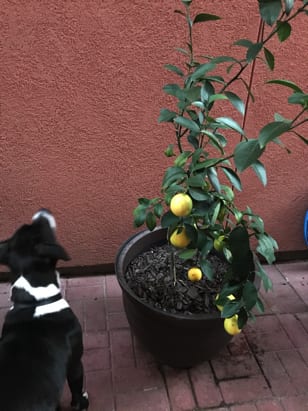 Sincere questions can show a desire for a relationship and a mind still awake to possibilities. We ask, because the beauty, the truth, and the goodness are there and we most often must get consent to go there.
One reason we miss objective beauty is that we think beauty is something in us, in the eye of the beholder. If we see beauty, we think that the beauty itself is merely our feelings: beauty is in us. We see a rose and the beauty attracts us to the rose. If not careful, the next thought will be “I should have that rose.” Our proclaiming the rose “beautiful” (based on our subjective opinion) somehow makes the rose ours when all we have done is correctly identify a quality in something else.
Making this mistake is far worse when done with people. When we see beauty in a person, the beauty is his or her very own beauty. We can admire that beauty, but our recognition gives us no claim to the beauty. Beauty is real, in the object or person we are seeing, and this beauty stirs love in us. This is good and appropriate. If we merely could thank God for beauty, and praise the beautiful, then all would be well. Instead, we think we have done something to change or glorify the object by our attribution of beauty to the object. This is crazy. After all, knowing an object is six feet tall does not gives us some right or relationship to the object! Recognizing a quality in something or someone changes us but need not change the object or person we observe.
The most beautiful manmade object I have ever seen is Michelangelo’s statue David. When I walked down the corridor toward the statue, I lost track of everything else in the room. The beauty is there and even though I do not understand the intricacies of sculpture or all of the message of the David, I marveled. This thing was beautiful.
I noticed, however, that there was a strong temptation to rush off and buy a cheap imitation of the statue. There was a gift shop to the right of the great monument and most tourists rushed from “seeing” to buying. They would take the art home in the form of a plastic imitation, a refrigerator magnet, or puzzle!
The David is beautiful, and beauty creates desire, but in a healthy soul there is a recognition when the object of desire is not for me. The David belongs in Florence. Michelangelo designed this work to make a statement about the city of Florence, the papacy, and political power. I love Houston, but the David does not belong in Houston even if Houston is now bigger, richer, and more powerful than Florence.
Even if we could buy it, we almost surely should not.
The David does not belong in my house. The real sculpture would not fit. The feet would be on my first floor and the head in the third! Having an image to recall the beauty of the original might be acceptable if the imitation has a beauty of its own. Still, there is something odd, inauthentic, about a copy of beauty and my desire to own that copy.
Why not commission some new work of art from a student at the College? If the beauty of the David makes us long for more beauty in Houston, then let us create more beauty in Houston that is authentic to Houston. Beauty shows us a lack of something desirable. This creates desire, but desire can be inappropriate, like wishing to own David or to take this amazing work of art out of its natural context.
The beauty of David was Michelangelo’s gift to Florence and the beauty loses context elsewhere.
Museums also rend beauty just this way, think of the Elgin marbles cut off from the Greeks, from Athens, from the blue sky where they should be framed. I am thankful that the English may have saved them from physical destruction, but this came at the cost of spiritual destruction. Beauty is not for buying, but for appreciation and when beauty is looted or acquired, then beauty is partially lost.
With humans, the issue is even more serious. Each person owns his or her own beauty, since that objective reality is a gift to them from the good God. We can see, appreciate, love, sense our own need for beauty, but that does nothing to give us “ownership” or right to that beauty.
We are not beautiful when we see beauty in the beloved. We merely acknowledge what is real. Justice would allow us a private veneration, but nothing more. The world is alive with beauty that is not our own, not for us, but there to be acknowledged and loved.
This superabundance of beauty is good if we (God forgive us!) acknowledge that this beauty is not “our own.” We can, of course, look to self, know ourselves, and see the beauty that is within us. This beauty is God’s gift to us, and we can, or cannot, gift this beauty to some beloved.
Mostly, however, we see that the superfluidity of beauty is for general joy, not particular to ourselves, and so we rejoice in the Lord of Beauty. Any particular joy belongs to God and to the person, or thing, to which God has granted beauty. In aggregate, we can rejoice in the beauty of creation. We must “take” beauty only with consent in persons, or with great care in “things.”
We learn what beauty is, how to love appropriately, and learn boundaries. This is a lesson I learned later than I wished I had, but a lesson that must be learned, nonetheless, if one is to be happy. There can be no happiness for the person who seizes any beauty that is not his own. There can be little happiness for the man who does not see the vast amount of beauty in the cosmos or for the person who sees that beauty and thinks the beauty is his own to have.
We must rejoice in abundance without desiring all for self. This is very hard to do and so life becomes an education.
Previous Post

January 15, 2021
Weirdly Cold
Next Post

January 17, 2021 A Lesson in Beauty from the Fig Tree
Browse Our Archives
Select a Category Apologetics Art Culture Education On Books On Education Philosophy Politics Pop Culture Spiritual Reflections Uncategorized
Select a Month October 2026 September 2026 August 2026 July 2026 July 2025 June 2025 September 2024 July 2024 June 2024 December 2023 June 2023 September 2022 May 2022 April 2022 March 2022 February 2022 July 2021 June 2021 May 2021 April 2021 March 2021 February 2021 January 2021 December 2020 November 2020 October 2020 September 2020 August 2020 July 2020 June 2020 May 2020 April 2020 March 2020 February 2020 January 2020 December 2019 November 2019 October 2019 September 2019 August 2019 July 2019 June 2019 May 2019 April 2019 March 2019 February 2019 January 2019 December 2018 November 2018 October 2018 September 2018 August 2018 July 2018 June 2018 May 2018 April 2018 March 2018 February 2018 January 2018 December 2017 November 2017 October 2017 September 2017 August 2017 July 2017 June 2017 May 2017 April 2017 March 2017 February 2017 January 2017 December 2016 November 2016 October 2016 September 2016 August 2016 July 2016 June 2016 May 2016 April 2016 March 2016 February 2016 January 2016 December 2015 November 2015 October 2015 September 2015 August 2015 July 2015 June 2015 May 2015 April 2015 March 2015 February 2015 January 2015 November 2014 October 2014 September 2014 August 2014 July 2014 June 2014 May 2014 April 2014 March 2014 February 2014 January 2014 December 2013 November 2013 October 2013 September 2013 August 2013 July 2013 June 2013 May 2013 April 2013 March 2013 February 2013 January 2013 December 2012 November 2012 October 2012 September 2012 August 2012 July 2012 June 2012 May 2012
Follow Us!
TAKE THE
Religious Wisdom Quiz
What sign did God give Noah as a promise not to flood the earth again?
Select your answer to see how you score.
Dove Rainbow Olive branch Thunder
Books by This Author John Mark Reynolds
Related posts from Eidos

Rooted: Why Classical Education Needs Community


When the Center Holds: A Tribute to My...

The Iceberg is There: Verbosity Cannot Defeat Reality
TRENDING AT PATHEOS Evangelical

The REST of Your Life: A Creative Wrestles...
This week I had a conversation with a good friend from church....

How the author of the world's best hymn...
I've been working with John Newton for a while now. This makes...

Long before this Lectio Divina, Psalm 130 - the song - started...

What About the Trees? Another Living Parable
After I finished writing the last article about falling leaves as a...

Why Classical Education Is a Conversation, Not a...
Come and Read: Joy in Classical Education When I was a little...

Cornell University has received a great deal of negative publicity and intense...
view all Evangelical blogs
Ad-Free & Subscriber Log-In Subscription Support
- About Us
- 2026 Calendar
- Videos
- Podcasts
- Library of World Religions
- Faith In Media Tracker
- Advertise With Us
- Write for Us
- Privacy Policy
- Terms of Service
- Do Not Sell My Data
- Contact Us
- Radiant Digital
- Manage Newsletter Subscriptions
- Unsubscribe From Notifications
- Sitemap
Copyright 2008-2026, Patheos. All rights reserved.
Subscription Support Ad-Free & Subscriber Log-In
Follow Patheos