
BuddhistCatholicContemplativeEvangelicalGeneral ChristianHinduJewishLatter-day SaintMuslimNew VisionsProgressive Christian
Beliefs
- Buddhist
- Catholic
- Contemplative
- Evangelical
- General Christian
- Hindu
- Jewish
- Latter-day Saint
- More Voices
- Muslim
- New Visions
- Pagan
- Progressive Christian
Topics
- Religion News
- Food and Religion
- Sports and Religion
- Religious Art
- Religious Music and Entertainment
- Religious Events
- History and Religion
- Style and Religion
- Politics and Religion
- Women in Religion
- Recreation Outdoors and Religion
- Business Finance and Religion
- Careers Workplace and Religion
- Education and Religion
- Family Parenting and Religion
- Health Fitness and Religion
- Home and Religion
- Relationships and Religion
- Technology and Religion
- Travel and Religion
Columnists
- Buddhist Columnists
- Business Finance and Religion Columnists
- Careers Workplace and Religion Columnists
- Catholic Columnists
- Contemplative Columnists
- Education and Religion Columnists
- Evangelists Columnists
- Family Parenting and Religion Columnists
- General Christian Columnists
- Health Fitness and Religion Columnists
- Hindu Columnists
- History and Religion Columnists
- Home and Religion Columnists
- Jewish Columnists
- More Voices Columnists
- Latter Day Columnists
- Muslim Columnists
- New Visions Columnists
- Nonreligious Columnists
- Pagan Columnists
- Politics and Religion Columnists
- Progressive Columnists
- Recreation Outdoors and Religion Columnists
- Relationships and Religion Columnists
- Religion News Columnists
- Religious Art Columnists
- Religious Events Columnists
- Religious Music and Entertainment Columnists
- Sports and Religion Columnists
- Style and Religion Columnists
- Technology and Religion Columnists
- Travel and Religion Columnists
- Women in Religion Columnists
Resource Library
- 2026 Calendar
- Library of World Religions
- The 100 Most Holy Places on Earth
- Patheos Answers
- Podcasts
- Videos
- Faith Leaders Database
- Anglican Episcopalian
- Bahai
- Baptist
- Buddhism
- Christianity
- Confucianism
- Eastern Orthodoxy
- Hinduism
- Holiness and Pentecostal
- ISKCON
- Islam
- Judaism
- Lutheran
- Methodist
- The Church of Jesus Christ of Latter-day Saints
- New Age
- Paganism
- Presbytarian and Reformed
- Protestantism
- Religion Behind the Scenes
- Roman Catholic
- Scientology
- Shia Islam
- Sikhism
- Sufism
- Sunni Islam
- Taoism
- Zen
- See all religions
Research Tools
 Ad-Free & Subscriber Log-In Subscription Support
Ad-Free & Subscriber Log-In Subscription Support
Follow Patheos 

- Trending:
- Forgiveness
- |
- Marriage
- |
- Consciousness
- |
- Death Penalty
- |
- Election
- |
- Halloween

- Home
- Evangelical
- God wants what is Good and Beautiful
God wants what is Good and Beautiful
Last updated on: January 29, 2021 at 7:49 pm by John Mark N. Reynolds
God wants what is Good and Beautiful 2021-01-29T19:49:48-04:00 John Mark N. Reynolds
Patheos Explore the world's faith through different perspectives on religion and spirituality! Patheos has the views of the prevalent religions and spiritualities of the world.
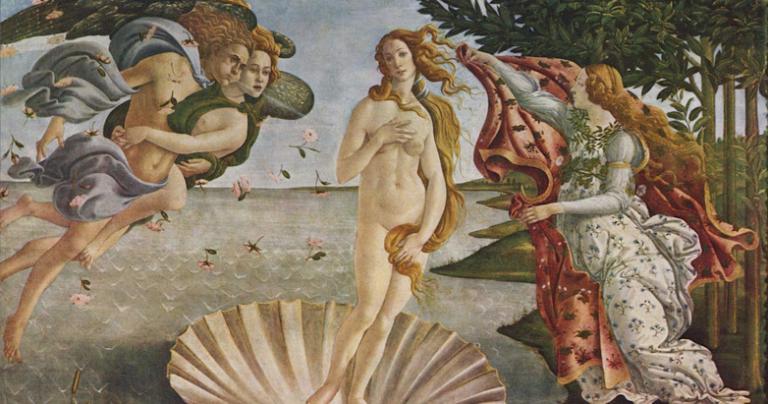 God is love and has built a cosmos that is based on love. As a result, God allows us to consent to serve Him. One aspect of goodness in the cosmos, obvious to all of us, is beauty. Everywhere we look there is beauty. This is a sign not just His existence, but of His nature.
There is also ugliness and evil, some of which we can explain by our misuse (my misuse!) of our ability to consent. Plato notwithstanding, we do not always choose the good. The stone we throw at the cosmos causes ripples of pain, not the sort that brings growth, but destructive, gratuitous pain. There are a finite number of actions, but they are so vast no human can measure all the possible results. We cannot be sure that “we live in the best of all possible worlds” just based on the external data. We must also see God and His nature. If we see God, through means apart from the goodness and beauty of the universe, then like Job we may be able to trust (reasonably) that the outcome will be as good as it can be.
This process begins in childhood and might move something like this:
- How beautiful my Mother is!
- How beautiful the family is!
- How beautiful the stars are!
- How splendid is the community!
- How glorious are these ideas!
- Conclusion: This is the work of a splendid, divine Craftsman*
- And yet some things are not beautiful, are not good, some are very ugly and evil, what of this?
- Is this a sign that I have gotten things wrong? Could be. . .let us see.
- Arguments from philosophy and religious experience persuade me that the beauty is what is basic, not the ugliness, the cosmos is heading toward justice, not injustice.
All will be well in eternity. One reason to think this is true is our surety that we are supersaturated in natural beauty. The ugliness is impossible to explain, because in a free will cosmos there would be no way to finally “explain” the plan. The cosmos is just too complicated, so there is a necessary ignorance of what a good Craftsman could and is doing. The calculation of the possibilities is too great and there is not just one best outcome. Imagine a perfect cosmos, interlocking in multiple dimensions, hit by even the simplest evil or ugly action.**The ripples across space and time would be great. God would heal, reconcile, but that healing and reconciliation would impossible for us to see in the short span of human history. God has eternity. We have millennia.
The good news in this is that there is also not just one “best” outcome. God also has choice.*** For example, one good outcome in the cosmos would be the beauty of the Isle of Skye where I spent the best afternoon of my life. Whatever, I might wish God could have placed something else beautiful where we find Skye without harm. God has choices between goods. An analogy is our ability to choose what to eat for dinner tonight. Our preferences rule: sushi, vegetarian, or tilapia? Will we have ice cream or chocolates for dessert? We can choose! Beautification, to pick on good, has many possibilities. Thank God.
Saying all of this did not mollify an atheist critic on social media:
I vastly prefer plainly stated arguments over narrative in case you wondered.
Amen. Let us be as concise and clear as we can be. There is much to be learned from beautiful poetry, but we need not be long or flowery!
This “goods are different, they can’t be quantified” approach just does not hold up. EVEN ice cream vs chocolate has different effects on the world eg, ice cream more calories than chocolate. To calories, the point is that the effects in the world are different, and after a particular effect, the causal chain keeps going. Dominos keep falling, whether or not we want to stop thinking about whether a particular domino is important, they do continue, and each one has a good value. IOW I think you 1) make a category error but 2) fail to take into account the passage of time/follow on effects.
We do not have falling dominoes. That is simple. We have actions that reverberate in every dimension over all of time. My central idea is that even the most neutral action (!) has (almost) incalculable impact. My choosing to respond to this person changes everything. You getting up this morning made the cosmos different. We cannot hope to know what is best given all the free will choices made and our own mental limitation. We see so little form our tiny Earth bound perspective.
Take the example given: calories. More calories can be good for a person as many an elderly person has discovered when going to the doctor! What is best? This is complex! What is best for my physical health (no cheesecake) may reduce my pleasure in eating, a different good. We cannot assign a “number” to any good and say which is best without seeing all the implications. This is my very point. We cannot know so the problem of the world by the atheist is a whine based on ignorance.
There are horrid things, but much beauty. The most horrid things are human things, done by us. Why think a good God, over eternity, could not bend the arc of history toward justice? The response to this:
Can god not do anything he puts his mind to? This does not seem like a serious objection to me. You agree some goods are better than others. That’s enough, one does not have to propose a scale. He knows.
There are three problems here. First, God can do anything God decides to do. God is rational, so God can do what a rational being would do. He cannot, for example, do irrational things, since that would contradict His nature! Not being able to do what you do not wish to do is not a limitation that matters to God’s power.
Second, some goods are better than others, but sometimes, out of sheer preference, we prefer the lesser good. Reading Plato is always better than reading lesser books, but the lesser books are not evil. Sometimes I like reading a rip-roaring fantasy novel, some Brandon Sanderson tome. That is not making the world bad, just exercising my free will. After all, God is always a better conversation partner than anyone else, but nobody thinks we should never talk to anyone but God!
Finally, God knows what God will choose to do, but that does not mean God could not have done differently. If God wished to make six feet tall, that is good. If God wished to make me five feet talk, that also would be good. There is not moral or beatific difference. Of course, healing the ugliness is hard, correcting the injustice or evil. There would be, however, many ways to do so, many balms to apply. There is no reason to think one would be preferable to another.
I cannot compose a beautiful song, Bach could. Bach is better than I am, but there are still homey cases where my homely music is worth playing and singing. We might choose this little pleasure in our little situation over something greater. That is the beauty of free will in a cosmos where almost nothing is forbidden. That we as humans fixated on the few forbidden things is our problem.
My critic remains unpersuaded:
There’s a slight wrinkle when you want to use beauty as a measure. The correct measure is simply goods. “Does this beauty create goods? How do the goods compare”.
Let me state it plainly: You can have a million johns and it still won’t be Bach. Because this is a qualitative question. But “how much beauty” isn’t the Q. The Q is what *goods*.
So. To close the loop here, this can be asked slightly differently. “Is a world with X in it more good than a world with Y in it” where X is a painting by someone, and Y is a painting by someone else, for example. And then you can iterate as below if you want:
You are going to hate this but here is the answer. More simple iterating, I can find out an answer this way:
Is Bach > John?
Is Bach > John John?
Is Bach > John John John?
Is Bach > John John John John John?
Of course this does not work. Bach is always greater than any number of my home spun compositions. You cannot, as my dialog partner conceded, accumulate a pile of lesser goods to get greatness. More good, something more beautiful, can be better, but we can also choose differently. I do not have to ever eat dessert, but sometimes I can! There are any number of perfectly good possible worlds where things are very different.
How is this possible?
You cannot measure “goodness” on a scientific scale. If there is no gratuitous pain, free will is preserved, and all is healed and whole, then any number of things might have happened. Titian might not have painted, but done some other perfectly fine thing. We might have not seen a “Big Dipper,” but some other arrangement of stars in the sky. Given God’s power, and the many choices God has given us, there is not one outcome, like the old choose-your-own-adventures-books. There are many. Of course none of them should include our using torture (ever!), but if we do, then the methods of healing the pain are varied and take place over infinity.
The good news is that the good and the beautiful, the greater and the less, are all licit and we can choose any based on what we will.****
*See Plato in Phaedrus, Symposium, and Timaeus for the seminal expression of these ideas! Try AE Taylor “Does God Exist” for a modern take.
**We are not talking here merely of irregularity, the crush notes in God’s composition, or mistakes, or growing pains. These are not evil. We mean acts of evil that Aristotle would call “base by nature.” For example, throwing battery acid into the ocean for fun is never a good act.
***I speak as if God is “in time” because that is the way we speak! One should write “timelessly,” but an article that is already overly long would get longer.
****Of course, some goods may be overdone and become bad. Some goods may be inappropriate at a time, but that still leaves many choices at any moment. What will Hope and I choose tonight? What larks!
Previous Post

January 20, 2021
Beautiful You
Next Post

January 22, 2021 A Thriving Soul: Beauty, Pleasure, Pain
Browse Our Archives
Select a Category Apologetics Art Culture Education On Books On Education Philosophy Politics Pop Culture Spiritual Reflections Uncategorized
Select a Month October 2026 September 2026 August 2026 July 2026 July 2025 June 2025 September 2024 July 2024 June 2024 December 2023 June 2023 September 2022 May 2022 April 2022 March 2022 February 2022 July 2021 June 2021 May 2021 April 2021 March 2021 February 2021 January 2021 December 2020 November 2020 October 2020 September 2020 August 2020 July 2020 June 2020 May 2020 April 2020 March 2020 February 2020 January 2020 December 2019 November 2019 October 2019 September 2019 August 2019 July 2019 June 2019 May 2019 April 2019 March 2019 February 2019 January 2019 December 2018 November 2018 October 2018 September 2018 August 2018 July 2018 June 2018 May 2018 April 2018 March 2018 February 2018 January 2018 December 2017 November 2017 October 2017 September 2017 August 2017 July 2017 June 2017 May 2017 April 2017 March 2017 February 2017 January 2017 December 2016 November 2016 October 2016 September 2016 August 2016 July 2016 June 2016 May 2016 April 2016 March 2016 February 2016 January 2016 December 2015 November 2015 October 2015 September 2015 August 2015 July 2015 June 2015 May 2015 April 2015 March 2015 February 2015 January 2015 November 2014 October 2014 September 2014 August 2014 July 2014 June 2014 May 2014 April 2014 March 2014 February 2014 January 2014 December 2013 November 2013 October 2013 September 2013 August 2013 July 2013 June 2013 May 2013 April 2013 March 2013 February 2013 January 2013 December 2012 November 2012 October 2012 September 2012 August 2012 July 2012 June 2012 May 2012
Follow Us!
TAKE THE
Religious Wisdom Quiz
Great is your faithfulness! Your mercies are new every what?
Select your answer to see how you score.
Season Morning Hour Day
Books by This Author John Mark Reynolds
Related posts from Eidos

Classical Education and the Art of Dying Well

Golden, Golden, Golden: My Mother's Last Lesson


When the Center Holds: A Tribute to My...
TRENDING AT PATHEOS Evangelical

The REST of Your Life: A Creative Wrestles...
This week I had a conversation with a good friend from church....

How the author of the world's best hymn...
I've been working with John Newton for a while now. This makes...

Long before this Lectio Divina, Psalm 130 - the song - started...

What About the Trees? Another Living Parable
After I finished writing the last article about falling leaves as a...

Why Classical Education Is a Conversation, Not a...
Come and Read: Joy in Classical Education When I was a little...

Cornell University has received a great deal of negative publicity and intense...
view all Evangelical blogs
Ad-Free & Subscriber Log-In Subscription Support
- About Us
- 2026 Calendar
- Videos
- Podcasts
- Library of World Religions
- Faith In Media Tracker
- Advertise With Us
- Write for Us
- Privacy Policy
- Terms of Service
- Do Not Sell My Data
- Contact Us
- Radiant Digital
- Manage Newsletter Subscriptions
- Unsubscribe From Notifications
- Sitemap
Copyright 2008-2026, Patheos. All rights reserved.
Subscription Support Ad-Free & Subscriber Log-In
Follow Patheos