
BuddhistCatholicContemplativeEvangelicalGeneral ChristianHinduJewishLatter-day SaintMuslimNew VisionsProgressive Christian
Beliefs
- Buddhist
- Catholic
- Contemplative
- Evangelical
- General Christian
- Hindu
- Jewish
- Latter-day Saint
- More Voices
- Muslim
- New Visions
- Pagan
- Progressive Christian
Topics
- Religion News
- Food and Religion
- Sports and Religion
- Religious Art
- Religious Music and Entertainment
- Religious Events
- History and Religion
- Style and Religion
- Politics and Religion
- Women in Religion
- Recreation Outdoors and Religion
- Business Finance and Religion
- Careers Workplace and Religion
- Education and Religion
- Family Parenting and Religion
- Health Fitness and Religion
- Home and Religion
- Relationships and Religion
- Technology and Religion
- Travel and Religion
Columnists
- Buddhist Columnists
- Business Finance and Religion Columnists
- Careers Workplace and Religion Columnists
- Catholic Columnists
- Contemplative Columnists
- Education and Religion Columnists
- Evangelists Columnists
- Family Parenting and Religion Columnists
- General Christian Columnists
- Health Fitness and Religion Columnists
- Hindu Columnists
- History and Religion Columnists
- Home and Religion Columnists
- Jewish Columnists
- More Voices Columnists
- Latter Day Columnists
- Muslim Columnists
- New Visions Columnists
- Nonreligious Columnists
- Pagan Columnists
- Politics and Religion Columnists
- Progressive Columnists
- Recreation Outdoors and Religion Columnists
- Relationships and Religion Columnists
- Religion News Columnists
- Religious Art Columnists
- Religious Events Columnists
- Religious Music and Entertainment Columnists
- Sports and Religion Columnists
- Style and Religion Columnists
- Technology and Religion Columnists
- Travel and Religion Columnists
- Women in Religion Columnists
Resource Library
- 2026 Calendar
- Library of World Religions
- The 100 Most Holy Places on Earth
- Patheos Answers
- Podcasts
- Videos
- Faith Leaders Database
- Anglican Episcopalian
- Bahai
- Baptist
- Buddhism
- Christianity
- Confucianism
- Eastern Orthodoxy
- Hinduism
- Holiness and Pentecostal
- ISKCON
- Islam
- Judaism
- Lutheran
- Methodist
- The Church of Jesus Christ of Latter-day Saints
- New Age
- Paganism
- Presbytarian and Reformed
- Protestantism
- Religion Behind the Scenes
- Roman Catholic
- Scientology
- Shia Islam
- Sikhism
- Sufism
- Sunni Islam
- Taoism
- Zen
- See all religions
Research Tools
 Ad-Free & Subscriber Log-In Subscription Support
Ad-Free & Subscriber Log-In Subscription Support
Follow Patheos 

- Trending:
- Forgiveness
- |
- Marriage
- |
- Consciousness
- |
- Death Penalty
- |
- Election
- |
- Halloween

- Home
- Evangelical
- Other People’s Heroes
Other People’s Heroes
Last updated on: February 2, 2021 at 12:10 am by John Mark N. Reynolds
Other People’s Heroes 2021-02-02T00:10:35-04:00 John Mark N. Reynolds
Patheos Explore the world's faith through different perspectives on religion and spirituality! Patheos has the views of the prevalent religions and spiritualities of the world.
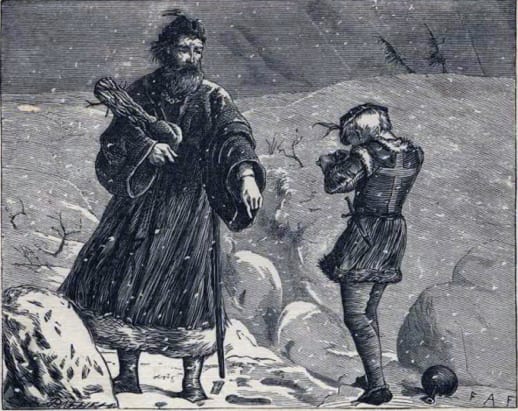 Christmas is almost a month behind us, but Christmas is coming. The lessons of that sacred feast, and the revealing of Jesus in the Epiphany are still close, and coming closer. One lesson would be very valuable just now to those who do not how to seek justice while having power. The day after Christmas, the Church wisely decided to celebrate the Feast of the first martyr, Stephen. We are reminded that not everyone was happy about the Good News. Sometimes the only thing to do is to stand for justice regardless of the outcome.
This feast has a carol associated with it that also reminds us of the nature of good Christian governance. Sometimes, after all, if one is kind, sensible, not given to paranoia, one wins. What if the emperor converts or a man finds himself the ruler? This is most dangerous! No kingdom lasts. None are a perfect image of the Kingdom coming, but looking at other nations heroes can help us know how to behave ourselves. After all in this Republic, if we are Americans, we are the ultimate rulers! How should we then live?
Here is the song:
Good King Wenceslas looked out on the Feast of Stephen,
When the snow lay round about, deep and crisp and even.
Brightly shone the moon that night, though the frost was cruel,
When a poor man came in sight, gathering winter fuel.“Hither, page, and stand by me, if you know it, telling,
Yonder peasant, who is he? Where and what his dwelling?”
“Sire, he lives a good league hence, underneath the mountain,
Right against the forest fence, by Saint Agnes’ fountain.”“Bring me food and bring me wine, bring me pine logs hither,
You and I will see him dine, when we bear them thither.”
Page and monarch, forth they went, forth they went together,
Through the cold wind’s wild lament and the bitter weather.“Sire, the night is darker now, and the wind blows stronger,
Fails my heart, I know not how; I can go no longer.”
“Mark my footsteps, my good page, tread now in them boldly,
You shall find the winter’s rage freeze your blood less coldly.”In his master’s steps he trod, where the snow lay dinted;
Heat was in the very sod which the saint had printed.
Therefore, Christian men, be sure, wealth or rank possessing,
You who now will bless the poor shall yourselves find blessing.
The carol is based on the legends that grew up around the rule of the Duke of Bohemia, Saint Wenceslaus. According to the Anglican Breviary Duke Wenceslaus ruled justly.
“To the orphaned, the widowed, and the destitute, he was very charitable so that sometimes in the winter he carried firewood to the needy on his own shoulders. He helped oftentimes to bury the poor, he set captives free; and at the dead of night he went many times to the prisons to comfort with money and advice them that were detained therein.”
Whatever the actual history of his life (which from this distance it is hard to ascertain), the important thing to notice is what kind of legends crept around a model Christian ruler. You can know a great deal about a religion based on the myths it wants to tell about its heroes!
First, Christianity has always recognized the equality of all persons before God. Whether the Good Duke actually carried wood for a poor man, it is the sort of thing the Church encouraged rulers to do. Rulers had a different function than their subjects, but they were not better as men.
This assumption is so normal to us as moderns that it is hard to recall how difficult it was for the Church to teach it to the Europeans. The Church herself did not always consistently hold to this doctrine, but never could deny it. The Lord Jesus Christ Himself, when He took on flesh, did not come as a member of the elite, but to a working class family without political power.
This commonplace fact of Christmas was constantly used to rebuke Christian princes or governors with pretensions to superiority.
Christians can respect the job of ruling, but we do not owe the person of the ruler any more (or less!) dignity than the woodcutter.
Second, the charity of a good monarch was personal. Christians long recognized that a state that attempted to eliminate poverty as official policy was a dangerous expansion of power. Given their experience with Caesar, they were happy to check the power of government and not expand it.
At the same time, the monarch was urged to live simply in his personal life. Statecraft might require a palace, but the ideal monarch would live a rigorous personal life. He would eat simply and dress modestly. The absolute kings living in glorious settings such as the Sun King of France were a degenerate class in a culture losing its Christian moorings.
The Church recognized that the danger of ruling was losing track of how everyone else lived. The command to a good ruler was to serve the poor . . . sometimes literally washing their feet. They were urged to extensive personal charity (building schools and hospitals). Personal charity ennobled both the giver and receiver.
We forget sometimes that the gap between how a good king of the Middle Ages lived and how a free peasant lived was not so great as the difference between the super-rich and the very poor today. Partly this is the result of increased wealth, but it is also a result of a false view of possessions. While nobody should steal from a rich man in order to give to a poor man, the rich man is wrong if he allows his neighbor to suffer. Charity cannot be forced, but it can be commanded.
A king who lived in luxury while his people starved was a wicked ruler.
Third, the great job of a Christian ruler is to do justice. This justice must be impartial to the status of those before his bench. The rich must not get lighter punishment than the poor. Too often in the American legal system injustice occurs because the rich are able to buy better lawyers or deceive juries with high priced experts who lie for cash.
Finally, Christians learned slowly over time how to practice the great truths of the Faith. We always believed all humans were created equal, but practicing it in the fallen world was (and is) hard. Our ancestors made mistakes as do we.
To cite one example, Christianity was born in a world that condoned torture and thought it useful. At first, the majority Christian view was that torture, under some circumstances, was justified in a fallen world. There was always a minority who worried about it, but practical considerations seemed to justify the practice.
However, like the views of Christians on the death penalty, over time the deeper belief that each human contained the image of God began to undermine the practice of torture. Over time most Christian states abandoned it or made it so restricted that in practice it vanished. Experience with modern secular states that used the power of science to torture (like the Soviet Union) confirmed the fact that this was one power the state could not use safely.
(It is ironic that the torture chambers of the late Middle Ages which were emptied by the Church are our image of torture while few think of the scientific torments of Stalinist Russia.)
Fundamentally, the role models for Christian rulers were kind men and not so much warriors. Many sainted rulers were martyrs who failed at war (such as Saint King Edmund). Even Crusaders like Saint Louis were best loved for their buildings and charity and not for their (often unsuccessful) warfare. Good Christian rulers like Duke Wenceslaus were not remembered for their use of torture, but for their chartity!
This made a difference in how Christians viewed the “ideals” for government. We expect personal charity from our rulers and justice in their official capacity. We have come see torture as incompatible with good governance and war as a last resort.
In this time, with great prudence, let us live peaceably when we can and, if we have power, try to emulate Wenceslaus by some act of personal charity toward the poor or oppressed.
Modified from a post published at the old Torrey Honors Institute blog.
Previous Post
January 18, 2021
Don't Make the Objective Subjective
Next Post

January 20, 2021 Beautiful You
Browse Our Archives
Select a Category Apologetics Art Culture Education On Books On Education Philosophy Politics Pop Culture Spiritual Reflections Uncategorized
Select a Month October 2026 September 2026 August 2026 July 2026 July 2025 June 2025 September 2024 July 2024 June 2024 December 2023 June 2023 September 2022 May 2022 April 2022 March 2022 February 2022 July 2021 June 2021 May 2021 April 2021 March 2021 February 2021 January 2021 December 2020 November 2020 October 2020 September 2020 August 2020 July 2020 June 2020 May 2020 April 2020 March 2020 February 2020 January 2020 December 2019 November 2019 October 2019 September 2019 August 2019 July 2019 June 2019 May 2019 April 2019 March 2019 February 2019 January 2019 December 2018 November 2018 October 2018 September 2018 August 2018 July 2018 June 2018 May 2018 April 2018 March 2018 February 2018 January 2018 December 2017 November 2017 October 2017 September 2017 August 2017 July 2017 June 2017 May 2017 April 2017 March 2017 February 2017 January 2017 December 2016 November 2016 October 2016 September 2016 August 2016 July 2016 June 2016 May 2016 April 2016 March 2016 February 2016 January 2016 December 2015 November 2015 October 2015 September 2015 August 2015 July 2015 June 2015 May 2015 April 2015 March 2015 February 2015 January 2015 November 2014 October 2014 September 2014 August 2014 July 2014 June 2014 May 2014 April 2014 March 2014 February 2014 January 2014 December 2013 November 2013 October 2013 September 2013 August 2013 July 2013 June 2013 May 2013 April 2013 March 2013 February 2013 January 2013 December 2012 November 2012 October 2012 September 2012 August 2012 July 2012 June 2012 May 2012
Follow Us!
TAKE THE
Religious Wisdom Quiz
Who replaced Haman as the king's chief adviser?
Select your answer to see how you score.
Zerubbabel Sanballat Mordecai Ezra
Books by This Author John Mark Reynolds
Related posts from Eidos

Classical Education and the Art of Dying Well

Golden, Golden, Golden: My Mother's Last Lesson


When the Center Holds: A Tribute to My...
TRENDING AT PATHEOS Evangelical

The REST of Your Life: A Creative Wrestles...
This week I had a conversation with a good friend from church....

How the author of the world's best hymn...
I've been working with John Newton for a while now. This makes...

Long before this Lectio Divina, Psalm 130 - the song - started...

What About the Trees? Another Living Parable
After I finished writing the last article about falling leaves as a...

Why Classical Education Is a Conversation, Not a...
Come and Read: Joy in Classical Education When I was a little...

Cornell University has received a great deal of negative publicity and intense...
view all Evangelical blogs
Ad-Free & Subscriber Log-In Subscription Support
- About Us
- 2026 Calendar
- Videos
- Podcasts
- Library of World Religions
- Faith In Media Tracker
- Advertise With Us
- Write for Us
- Privacy Policy
- Terms of Service
- Do Not Sell My Data
- Contact Us
- Radiant Digital
- Manage Newsletter Subscriptions
- Unsubscribe From Notifications
- Sitemap
Copyright 2008-2026, Patheos. All rights reserved.
Subscription Support Ad-Free & Subscriber Log-In
Follow Patheos