
BuddhistCatholicContemplativeEvangelicalGeneral ChristianHinduJewishLatter-day SaintMuslimNew VisionsProgressive Christian
Beliefs
- Buddhist
- Catholic
- Contemplative
- Evangelical
- General Christian
- Hindu
- Jewish
- Latter-day Saint
- More Voices
- Muslim
- New Visions
- Pagan
- Progressive Christian
Topics
- Religion News
- Food and Religion
- Sports and Religion
- Religious Art
- Religious Music and Entertainment
- Religious Events
- History and Religion
- Style and Religion
- Politics and Religion
- Women in Religion
- Recreation Outdoors and Religion
- Business Finance and Religion
- Careers Workplace and Religion
- Education and Religion
- Family Parenting and Religion
- Health Fitness and Religion
- Home and Religion
- Relationships and Religion
- Technology and Religion
- Travel and Religion
Columnists
- Buddhist Columnists
- Business Finance and Religion Columnists
- Careers Workplace and Religion Columnists
- Catholic Columnists
- Contemplative Columnists
- Education and Religion Columnists
- Evangelists Columnists
- Family Parenting and Religion Columnists
- General Christian Columnists
- Health Fitness and Religion Columnists
- Hindu Columnists
- History and Religion Columnists
- Home and Religion Columnists
- Jewish Columnists
- More Voices Columnists
- Latter Day Columnists
- Muslim Columnists
- New Visions Columnists
- Nonreligious Columnists
- Pagan Columnists
- Politics and Religion Columnists
- Progressive Columnists
- Recreation Outdoors and Religion Columnists
- Relationships and Religion Columnists
- Religion News Columnists
- Religious Art Columnists
- Religious Events Columnists
- Religious Music and Entertainment Columnists
- Sports and Religion Columnists
- Style and Religion Columnists
- Technology and Religion Columnists
- Travel and Religion Columnists
- Women in Religion Columnists
Resource Library
- 2026 Calendar
- Library of World Religions
- The 100 Most Holy Places on Earth
- Patheos Answers
- Podcasts
- Videos
- Faith Leaders Database
- Anglican Episcopalian
- Bahai
- Baptist
- Buddhism
- Christianity
- Confucianism
- Eastern Orthodoxy
- Hinduism
- Holiness and Pentecostal
- ISKCON
- Islam
- Judaism
- Lutheran
- Methodist
- The Church of Jesus Christ of Latter-day Saints
- New Age
- Paganism
- Presbytarian and Reformed
- Protestantism
- Religion Behind the Scenes
- Roman Catholic
- Scientology
- Shia Islam
- Sikhism
- Sufism
- Sunni Islam
- Taoism
- Zen
- See all religions
Research Tools
 Ad-Free & Subscriber Log-In Subscription Support
Ad-Free & Subscriber Log-In Subscription Support
Follow Patheos 

- Trending:
- Forgiveness
- |
- Marriage
- |
- Consciousness
- |
- Death Penalty
- |
- Election
- |
- Halloween

- Home
- Evangelical
- The Transformation done by the Lowly (Fifth Day of Christmas)
The Transformation done by the Lowly (Fifth Day of Christmas)
Last updated on: December 31, 2020 at 5:43 pm by John Mark N. Reynolds
The Transformation done by the Lowly (Fifth Day of Christmas) 2020-12-31T17:43:42-04:00 John Mark N. Reynolds
Patheos Explore the world's faith through different perspectives on religion and spirituality! Patheos has the views of the prevalent religions and spiritualities of the world.
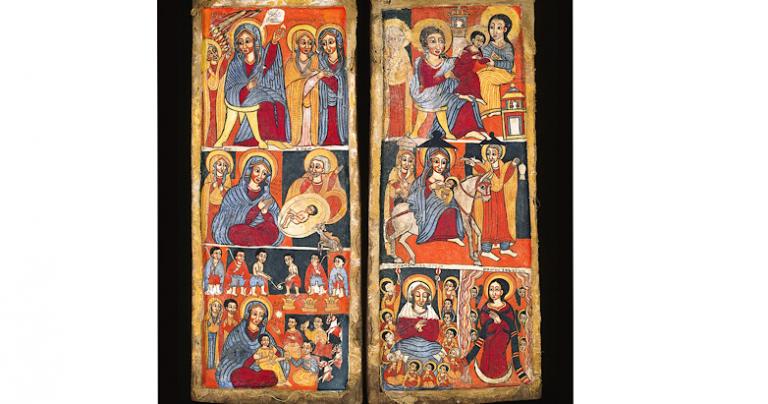
Ethiopian Orthodox
All was transformed, each culture, every thought, by Christmas. Each good from every time was kept in safety for all time as itself.
One can see an example in the metamorphosis of mere Hellenism to the glories of Hellenic, classical, Christian society. Nothing of the old pagan, philosophical tradition was (intentionally) lost. All was kept in context, the good and the bad, yet the Gospel written in Greek soon made all of Greek part of the divine order. There was no force needed. Why? The process began with those forced to adopt the Hellenism, bathed in it by Roman oppressors and their fellow travelers, who used the language, the images, to tell a broader truth.
When the humble find God, the powerful of this world cannot triumph. Whatever is beautiful, like the writings of Homer and Plato, are given new context by the Magnificat. The old is incorporated into a new so great and loving that nothing good, true, or beautiful in the old need be lost. The defects of such a culture, as Saint Basil pointed out, need not, should not, be denied either. After all, especially when we grow powerful, what we think are defects may not be! What do turn out to be wrong in any culture, especially our own, should turn us to self-examination and repentance.
Christmas is partially the process of the transformation of the culture of the powerful, the Roman occupiers and their local enablers, into something good and beautiful. This is a metamorphosis of the lowly forced to see what the occupiers would have them see. A Fredrick Douglass can take the culture forced on him and made it more divine by taking seriously what is good and condemning what is bad.
The Temple had been built by Herod, but tradition glorified that blood stained structure with the presence of the Mother of God. History brought the Son of God to that house and so the Temple fulfilled a greater theological purpose. Herod could take from sacred history
The colonizer comes and takes what he wishes and destroys what he does not value. Outside of Divine memory, where nothing good is lost, the appropriation is destructive.
Why?
The context is lost. The mother teaches her child peacefully, naturally within a beloved community. The tyrant imposes from outside, rending some beauty to his own ends.
We are all, of course, the product of tyranny and humility. The Sermon on the Mount, the verbal expression of Christmas, turns us from the tyranny to meekness. We draw down on our authentic roots and then the Church introduces us to the world. We rejoice as ourselves before the throne of King Jesus as part of throng containing every nation as themselves.
Babel is not reversed: we never go backwards. Instead, each tradition, each language, finds authentic commonality in our God without being lost. This is less translation than linguistic theosis: we speak as our mothers taught us made perfect. All is known and comprehended in God who helps us comprehend every tongue.
The cave of Bethlehem is not the cave-like structure of Plato’s Republic VII, yet the greater gives context to the lesser. The stable is larger than the Republic. Aksum finds a place. The Celestial Kingdom is there. All is known, comprehended, and made whole in the Christ. Like the Mother of God, we have all eternity to ponder Him in our hearts.
Previous Post

December 28, 2020
Beauty has Saved the World (Fourth Day of Christmas)
Next Post
December 30, 2020 Cracked Like Old Stained Glass (Sixth Day of Christmas)
Browse Our Archives
Select a Category Apologetics Art Culture Education On Books On Education Philosophy Politics Pop Culture Spiritual Reflections Uncategorized
Select a Month October 2026 September 2026 August 2026 July 2026 July 2025 June 2025 September 2024 July 2024 June 2024 December 2023 June 2023 September 2022 May 2022 April 2022 March 2022 February 2022 July 2021 June 2021 May 2021 April 2021 March 2021 February 2021 January 2021 December 2020 November 2020 October 2020 September 2020 August 2020 July 2020 June 2020 May 2020 April 2020 March 2020 February 2020 January 2020 December 2019 November 2019 October 2019 September 2019 August 2019 July 2019 June 2019 May 2019 April 2019 March 2019 February 2019 January 2019 December 2018 November 2018 October 2018 September 2018 August 2018 July 2018 June 2018 May 2018 April 2018 March 2018 February 2018 January 2018 December 2017 November 2017 October 2017 September 2017 August 2017 July 2017 June 2017 May 2017 April 2017 March 2017 February 2017 January 2017 December 2016 November 2016 October 2016 September 2016 August 2016 July 2016 June 2016 May 2016 April 2016 March 2016 February 2016 January 2016 December 2015 November 2015 October 2015 September 2015 August 2015 July 2015 June 2015 May 2015 April 2015 March 2015 February 2015 January 2015 November 2014 October 2014 September 2014 August 2014 July 2014 June 2014 May 2014 April 2014 March 2014 February 2014 January 2014 December 2013 November 2013 October 2013 September 2013 August 2013 July 2013 June 2013 May 2013 April 2013 March 2013 February 2013 January 2013 December 2012 November 2012 October 2012 September 2012 August 2012 July 2012 June 2012 May 2012
Follow Us!
TAKE THE
Religious Wisdom Quiz
Who said, "Though he slay me, yet will I hope in him"?
Select your answer to see how you score.
David Job Peter Isaiah
Books by This Author John Mark Reynolds
Related posts from Eidos

Classical Education and the Art of Dying Well

Golden, Golden, Golden: My Mother's Last Lesson


When the Center Holds: A Tribute to My...
TRENDING AT PATHEOS Evangelical

The REST of Your Life: A Creative Wrestles...
This week I had a conversation with a good friend from church....

How the author of the world's best hymn...
I've been working with John Newton for a while now. This makes...

Long before this Lectio Divina, Psalm 130 - the song - started...

What About the Trees? Another Living Parable
After I finished writing the last article about falling leaves as a...

Why Classical Education Is a Conversation, Not a...
Come and Read: Joy in Classical Education When I was a little...

Cornell University has received a great deal of negative publicity and intense...
view all Evangelical blogs
Ad-Free & Subscriber Log-In Subscription Support
- About Us
- 2026 Calendar
- Videos
- Podcasts
- Library of World Religions
- Faith In Media Tracker
- Advertise With Us
- Write for Us
- Privacy Policy
- Terms of Service
- Do Not Sell My Data
- Contact Us
- Radiant Digital
- Manage Newsletter Subscriptions
- Unsubscribe From Notifications
- Sitemap
Copyright 2008-2026, Patheos. All rights reserved.
Subscription Support Ad-Free & Subscriber Log-In
Follow Patheos