
BuddhistCatholicContemplativeEvangelicalGeneral ChristianHinduJewishLatter-day SaintMuslimNew VisionsProgressive Christian
Beliefs
- Buddhist
- Catholic
- Contemplative
- Evangelical
- General Christian
- Hindu
- Jewish
- Latter-day Saint
- More Voices
- Muslim
- New Visions
- Pagan
- Progressive Christian
Topics
- Religion News
- Food and Religion
- Sports and Religion
- Religious Art
- Religious Music and Entertainment
- Religious Events
- History and Religion
- Style and Religion
- Politics and Religion
- Women in Religion
- Recreation Outdoors and Religion
- Business Finance and Religion
- Careers Workplace and Religion
- Education and Religion
- Family Parenting and Religion
- Health Fitness and Religion
- Home and Religion
- Relationships and Religion
- Technology and Religion
- Travel and Religion
Columnists
- Buddhist Columnists
- Business Finance and Religion Columnists
- Careers Workplace and Religion Columnists
- Catholic Columnists
- Contemplative Columnists
- Education and Religion Columnists
- Evangelists Columnists
- Family Parenting and Religion Columnists
- General Christian Columnists
- Health Fitness and Religion Columnists
- Hindu Columnists
- History and Religion Columnists
- Home and Religion Columnists
- Jewish Columnists
- More Voices Columnists
- Latter Day Columnists
- Muslim Columnists
- New Visions Columnists
- Nonreligious Columnists
- Pagan Columnists
- Politics and Religion Columnists
- Progressive Columnists
- Recreation Outdoors and Religion Columnists
- Relationships and Religion Columnists
- Religion News Columnists
- Religious Art Columnists
- Religious Events Columnists
- Religious Music and Entertainment Columnists
- Sports and Religion Columnists
- Style and Religion Columnists
- Technology and Religion Columnists
- Travel and Religion Columnists
- Women in Religion Columnists
Resource Library
- 2026 Calendar
- Library of World Religions
- The 100 Most Holy Places on Earth
- Patheos Answers
- Podcasts
- Videos
- Faith Leaders Database
- Anglican Episcopalian
- Bahai
- Baptist
- Buddhism
- Christianity
- Confucianism
- Eastern Orthodoxy
- Hinduism
- Holiness and Pentecostal
- ISKCON
- Islam
- Judaism
- Lutheran
- Methodist
- The Church of Jesus Christ of Latter-day Saints
- New Age
- Paganism
- Presbytarian and Reformed
- Protestantism
- Religion Behind the Scenes
- Roman Catholic
- Scientology
- Shia Islam
- Sikhism
- Sufism
- Sunni Islam
- Taoism
- Zen
- See all religions
Research Tools
 Ad-Free & Subscriber Log-In Subscription Support
Ad-Free & Subscriber Log-In Subscription Support
Follow Patheos 

- Trending:
- Forgiveness
- |
- Marriage
- |
- Consciousness
- |
- Death Penalty
- |
- Election
- |
- Halloween

- Home
- Evangelical
- Earthly and Heavenly Venus: Donne’s Triumphant Vindication of Harmony
Earthly and Heavenly Venus: Donne’s Triumphant Vindication of Harmony
Last updated on: December 23, 2020 at 1:25 am by John Mark N. Reynolds
Earthly and Heavenly Venus: Donne’s Triumphant Vindication of Harmony 2020-12-23T01:25:42-04:00 John Mark N. Reynolds
Patheos Explore the world's faith through different perspectives on religion and spirituality! Patheos has the views of the prevalent religions and spiritualities of the world.
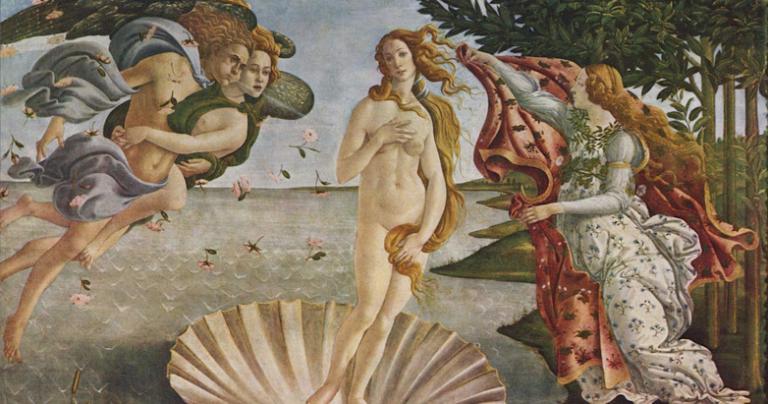
Love (true love) and desire should go together, but sometimes do not. That Hideous Strength, the most important novel for this time, begins with a reflection on a failing marriage and ends in a marriage joyfully consummated. CS Lewis fills, mayhap overfills the book with themes, but one is the relationship of the body to the soul.
Picking up on themes in the speeches of Plato’s Timaeus with a heavy use of early and Medieval Christian cosmology, Lewis presents a world of dualities: heart and mind, magic and science, heaven and earth, body and spirit. In most of the cosmos, the dualities harmonize in a third, a spirit that brings them together, but on Earth, due to our separation from God, any two natures are likely to split.
We know disharmony on Earth.
Body and soul do not harmonize as they should. Our broken human spiritual nature, our noetic self, can no longer do the job. The passion that the beauty of both body and soul arouses in us often goes wrong, sometimes tragically wrong. This is portrayed in the shattered marriage of Jane and Mark Studdock where all the dualities are being ripped apart: male and female, work and play, desire and fecundity. The Holy Spirit which should mediate in a marriage is missing.
Jane Studdock is eager to get back to work on her doctoral dissertation with the unpromising thesis: Donne’s Triumphant Vindication of the Body. This is unpromising, because so overdone. (Jane, unlike a male student in the book, is at least not beginning with the sentence: “Donne was born. . .”
The great poet John Donne began writing about desire, mostly centered in bodies, and ended in a Beatific Vision of God. The lazy road is to see the two as inconsistent, the slightly more promising way of reading the great poet finds a basic consistency, and the genuine doctoral thesis would be working out how the earthly erotic fits with the heavenly. That is a very hard task to do in words.
Lewis makes the simple point that Christian marriage is the (or can be) the triumphant vindication of the body, soul, desire, and love. Stating how this works (as Mother Dimble would point out) is hard to those of us raised in an age when genuine marriages are rare, but was easier for those who saw or see the genuine harmony of all the dualities. After all being in love with the beloved is much easier than describing such a state! For that we need a poet like John Donne and even then we are tempted to read the “earthy” and “religious” passion as opposed or in conflict.
Donne’s poetry is not a triumphant vindication of the body, but of the body and soul in harmony. Donne does not vindicate men or women, but passionately unites the two in the only relationship that can produce immortal souls. Donne gives each of the ancient and basic truths, body, soul, male, female, earth, heaven, a hard reality and then insists that both can exist in one life: his own.
That Hideous Strength ends, as all reality will, in a splendid renewal of a marriage. In the book, the saved marriage is that of Jane and Mark, but in the world to come all of us are united to the good God: we are bride to His Son.
Previous Post

December 18, 2020
One Truth, Different Icons, One Family History
Next Post
December 20, 2020 Herod versus Mary at Christmas
Browse Our Archives
Select a Category Apologetics Art Culture Education On Books On Education Philosophy Politics Pop Culture Spiritual Reflections Uncategorized
Select a Month October 2026 September 2026 August 2026 July 2026 July 2025 June 2025 September 2024 July 2024 June 2024 December 2023 June 2023 September 2022 May 2022 April 2022 March 2022 February 2022 July 2021 June 2021 May 2021 April 2021 March 2021 February 2021 January 2021 December 2020 November 2020 October 2020 September 2020 August 2020 July 2020 June 2020 May 2020 April 2020 March 2020 February 2020 January 2020 December 2019 November 2019 October 2019 September 2019 August 2019 July 2019 June 2019 May 2019 April 2019 March 2019 February 2019 January 2019 December 2018 November 2018 October 2018 September 2018 August 2018 July 2018 June 2018 May 2018 April 2018 March 2018 February 2018 January 2018 December 2017 November 2017 October 2017 September 2017 August 2017 July 2017 June 2017 May 2017 April 2017 March 2017 February 2017 January 2017 December 2016 November 2016 October 2016 September 2016 August 2016 July 2016 June 2016 May 2016 April 2016 March 2016 February 2016 January 2016 December 2015 November 2015 October 2015 September 2015 August 2015 July 2015 June 2015 May 2015 April 2015 March 2015 February 2015 January 2015 November 2014 October 2014 September 2014 August 2014 July 2014 June 2014 May 2014 April 2014 March 2014 February 2014 January 2014 December 2013 November 2013 October 2013 September 2013 August 2013 July 2013 June 2013 May 2013 April 2013 March 2013 February 2013 January 2013 December 2012 November 2012 October 2012 September 2012 August 2012 July 2012 June 2012 May 2012
Follow Us!
TAKE THE
Religious Wisdom Quiz
How long, Lord, must I call for help and you do not listen? Why do you make me look at injustice? This prophet questioned God's justice. Who am I?
Select your answer to see how you score.
Job Jeremiah Asaph Habakkuk
Books by This Author John Mark Reynolds
Related posts from Eidos

Classical Education Must Teach Us to Make the...

Classical Education and the Art of Dying Well

Golden, Golden, Golden: My Mother's Last Lesson

TRENDING AT PATHEOS Evangelical

The REST of Your Life: A Creative Wrestles...
This week I had a conversation with a good friend from church....

How the author of the world's best hymn...
I've been working with John Newton for a while now. This makes...

Long before this Lectio Divina, Psalm 130 - the song - started...

What About the Trees? Another Living Parable
After I finished writing the last article about falling leaves as a...

Why Classical Education Is a Conversation, Not a...
Come and Read: Joy in Classical Education When I was a little...

Cornell University has received a great deal of negative publicity and intense...
view all Evangelical blogs
Ad-Free & Subscriber Log-In Subscription Support
- About Us
- 2026 Calendar
- Videos
- Podcasts
- Library of World Religions
- Faith In Media Tracker
- Advertise With Us
- Write for Us
- Privacy Policy
- Terms of Service
- Do Not Sell My Data
- Contact Us
- Radiant Digital
- Manage Newsletter Subscriptions
- Unsubscribe From Notifications
- Sitemap
Copyright 2008-2026, Patheos. All rights reserved.
Subscription Support Ad-Free & Subscriber Log-In
Follow Patheos