
BuddhistCatholicContemplativeEvangelicalGeneral ChristianHinduJewishLatter-day SaintMuslimNew VisionsProgressive Christian
Beliefs
- Buddhist
- Catholic
- Contemplative
- Evangelical
- General Christian
- Hindu
- Jewish
- Latter-day Saint
- More Voices
- Muslim
- New Visions
- Pagan
- Progressive Christian
Topics
- Religion News
- Food and Religion
- Sports and Religion
- Religious Art
- Religious Music and Entertainment
- Religious Events
- History and Religion
- Style and Religion
- Politics and Religion
- Women in Religion
- Recreation Outdoors and Religion
- Business Finance and Religion
- Careers Workplace and Religion
- Education and Religion
- Family Parenting and Religion
- Health Fitness and Religion
- Home and Religion
- Relationships and Religion
- Technology and Religion
- Travel and Religion
Columnists
- Buddhist Columnists
- Business Finance and Religion Columnists
- Careers Workplace and Religion Columnists
- Catholic Columnists
- Contemplative Columnists
- Education and Religion Columnists
- Evangelists Columnists
- Family Parenting and Religion Columnists
- General Christian Columnists
- Health Fitness and Religion Columnists
- Hindu Columnists
- History and Religion Columnists
- Home and Religion Columnists
- Jewish Columnists
- More Voices Columnists
- Latter Day Columnists
- Muslim Columnists
- New Visions Columnists
- Nonreligious Columnists
- Pagan Columnists
- Politics and Religion Columnists
- Progressive Columnists
- Recreation Outdoors and Religion Columnists
- Relationships and Religion Columnists
- Religion News Columnists
- Religious Art Columnists
- Religious Events Columnists
- Religious Music and Entertainment Columnists
- Sports and Religion Columnists
- Style and Religion Columnists
- Technology and Religion Columnists
- Travel and Religion Columnists
- Women in Religion Columnists
Resource Library
- 2026 Calendar
- Library of World Religions
- The 100 Most Holy Places on Earth
- Patheos Answers
- Podcasts
- Videos
- Faith Leaders Database
- Anglican Episcopalian
- Bahai
- Baptist
- Buddhism
- Christianity
- Confucianism
- Eastern Orthodoxy
- Hinduism
- Holiness and Pentecostal
- ISKCON
- Islam
- Judaism
- Lutheran
- Methodist
- The Church of Jesus Christ of Latter-day Saints
- New Age
- Paganism
- Presbytarian and Reformed
- Protestantism
- Religion Behind the Scenes
- Roman Catholic
- Scientology
- Shia Islam
- Sikhism
- Sufism
- Sunni Islam
- Taoism
- Zen
- See all religions
Research Tools
 Ad-Free & Subscriber Log-In Subscription Support
Ad-Free & Subscriber Log-In Subscription Support
Follow Patheos 

- Trending:
- Forgiveness
- |
- Marriage
- |
- Consciousness
- |
- Death Penalty
- |
- Election
- |
- Halloween

- Home
- Evangelical
- A Critic Responds to His Critic
A Critic Responds to His Critic
Last updated on: August 30, 2020 at 7:43 pm by John Mark N. Reynolds
A Critic Responds to His Critic 2020-08-30T19:43:37-04:00 John Mark N. Reynolds
Patheos Explore the world's faith through different perspectives on religion and spirituality! Patheos has the views of the prevalent religions and spiritualities of the world.
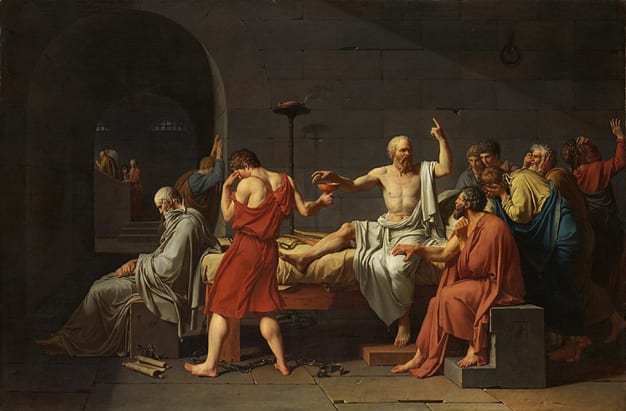
http://www.metmuseum.org/art/collection/search/436105
Jeff Williams has presented his ideas frequently here and one professor, Dr. Eric Holloway, took on his approach to ideas. Mr. Williams responded, a response sadly delayed by my decision to focus on the positive during the early stages of the pandemic. To be fair to him, I present his response to his critic (unedited) here:
A Response to a Very Sincere Critic
Theists find it increasingly difficult to justify their faith as human knowledge advances, and with that become increasingly emotional in response. Those reactions often include facile denial, misrepresentation, misunderstanding, and evasion. Rarely, however, do they include anything like substantive engagement with the argument that has so disturbed their composure. I’ve reached the point where I believe that if I haven’t set someone off into a rage, I probably haven’t sufficiently made my point. In that regard, I would like to thank Dr. Eric Holloway for his heartfelt response to the ideas and arguments I have put forth in this estimable blog.
From what I could gather, it appears the good Doctor has two objections to my presentation which, while not exactly rebuttals or substantive engagements, effectively express his viewpoint. These two are:
- I am a snob.
- I rely solely on the fallacy of argumentum ad verecundiam.
To the question of snobbery, I would point out that I initially introduced myself as a simple semiliterate biker who lives under a bridge specifically to avoid that indictment. However, be the offense my fault or not, it simply is so that my brilliance and erudition are of such magnitude that even a lead encasement can’t fully contain the glow. My sincere apologies for any discomfort I caused the good Doctor.
As to the second charge, Dr. Holloway does admit his failure to grasp the substance of my argument:
“but I ask one thing. That the challenge be intelligible,
so I can evaluate what the problem is with my own view, and learn
something new.
What sort of challenge is not intelligible? Snobbery.”
I am a bit surprised that his advanced degrees in computer science hadn’t better prepared him for understanding difficult philosophical issues, rendering the discussion for him unintelligible and therefore snobbery. What do they teach in computer science then? Apparently not much in the way of epistemology, ontology, or metaphysics. He should have attended the University of Chicago where such deficiencies never go unaddressed.
A more careful reading would reveal an argument that questions the validity of the Cartesian metaphysical assumption of nonphysical mind, the successful trend among thinkers from Bacon to the present to increasingly incorporate metaphysical topics into the realm of objective science, and why mind is but the latest example. It also traces increased scientific knowledge, especially in physics and neuroscience, that was unavailable to Descartes, and a discussion of why these new avenues reside within a new paradigm that has some potential to establish mind as a physical entity.
Should the good doctor ever discover the subtle distinction between appeal to authority and building an argument from principles and discoveries of leading thinkers, I would welcome him to return with a calmer and more substantive response to the arguments I made. He could do it here, or in the comments section of the essay to which I linked above.
—————————
Background on the Discussion (Link Loaded Summary, Very Skippable): What is going on?
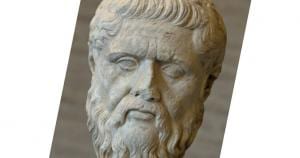 If we wish to follow the Logos where He leads, we need to listen to critics, especially those with interesting things to say. Jeff Williams is a critic of metaphysics. A University of Chicago grad, he agreed to present his argument and I have posted it here unedited (except for some formatting and the title). As result of his rejection of metaphysics, he rejects objective moral law as an illusion.
Mr. Williams previously argued that Athens has no need of Jerusalem, which contributes nothing good to Western civilization. I responded and enjoyed the interaction immensely. Mr. Williams has taken the time to discuss Martin Heidegger, a philosopher not much in favor when I was in graduate school. I have enjoyed reading more Heidegger (alas in translation). As usual, I allowed his post to stand without comment for a time and now here is a response. Mr. Williams suggested to me that I had not gotten him right, so it seemed decent and in order to let him respond. I suggested that Mr. Williams has ended up looking for a pony, because he has found a pile of LEGO blocks shaped like a pony.
Mr. Williams finds my response lacking, so I joyfully invite you to follow the argument where it leads. In this case, it leads to a sadly dogmatic physicalism (or materialism) that sees “gaps” or problems where there are none. We also learn that having a bad history of the philosophy of science can lead to some bad conclusions. Williams has come back to straighten me out. Sadly, I am not straightened out by this response, since I do not think Mr. Williams makes arguments. On the other hand, Williams is my friend, because he is honest, forthright, well read, and unafraid to speak what he thinks is true.
This is vital to the dialectic, the very basis of our finding the Logos, the Lord Jesus. My take on his fascinating assertions comes in two parts: one, two.
Mr. Williams felt I had done him wrong so he wished to summarize his credentials and his case. The first are impressive, the reader can decide on the merits of the second. Our reader or so will be delighted to discover that I will only have a brief response to this extensive rebuttal by Williams. We may then turn to Shakespeare!
Previous Post

August 27, 2020
Internet Atheists, the last true Victorians
Next Post

August 29, 2020 On Shakespeare (A Response from a Critic)
Browse Our Archives
Select a Category Apologetics Art Culture Education On Books On Education Philosophy Politics Pop Culture Spiritual Reflections Uncategorized
Select a Month October 2026 September 2026 August 2026 July 2026 July 2025 June 2025 September 2024 July 2024 June 2024 December 2023 June 2023 September 2022 May 2022 April 2022 March 2022 February 2022 July 2021 June 2021 May 2021 April 2021 March 2021 February 2021 January 2021 December 2020 November 2020 October 2020 September 2020 August 2020 July 2020 June 2020 May 2020 April 2020 March 2020 February 2020 January 2020 December 2019 November 2019 October 2019 September 2019 August 2019 July 2019 June 2019 May 2019 April 2019 March 2019 February 2019 January 2019 December 2018 November 2018 October 2018 September 2018 August 2018 July 2018 June 2018 May 2018 April 2018 March 2018 February 2018 January 2018 December 2017 November 2017 October 2017 September 2017 August 2017 July 2017 June 2017 May 2017 April 2017 March 2017 February 2017 January 2017 December 2016 November 2016 October 2016 September 2016 August 2016 July 2016 June 2016 May 2016 April 2016 March 2016 February 2016 January 2016 December 2015 November 2015 October 2015 September 2015 August 2015 July 2015 June 2015 May 2015 April 2015 March 2015 February 2015 January 2015 November 2014 October 2014 September 2014 August 2014 July 2014 June 2014 May 2014 April 2014 March 2014 February 2014 January 2014 December 2013 November 2013 October 2013 September 2013 August 2013 July 2013 June 2013 May 2013 April 2013 March 2013 February 2013 January 2013 December 2012 November 2012 October 2012 September 2012 August 2012 July 2012 June 2012 May 2012
Follow Us!
TAKE THE
Religious Wisdom Quiz
How many books are in the entire Bible?
Select your answer to see how you score.
73 80 39 66
Books by This Author John Mark Reynolds
Related posts from Eidos

Rooted: Why Classical Education Needs Community


When the Center Holds: A Tribute to My...

Dangerously Credentialed Minds
TRENDING AT PATHEOS Evangelical

The REST of Your Life: A Creative Wrestles...
This week I had a conversation with a good friend from church....

How the author of the world's best hymn...
I've been working with John Newton for a while now. This makes...

Long before this Lectio Divina, Psalm 130 - the song - started...

What About the Trees? Another Living Parable
After I finished writing the last article about falling leaves as a...

Why Classical Education Is a Conversation, Not a...
Come and Read: Joy in Classical Education When I was a little...

Cornell University has received a great deal of negative publicity and intense...
view all Evangelical blogs
Ad-Free & Subscriber Log-In Subscription Support
- About Us
- 2026 Calendar
- Videos
- Podcasts
- Library of World Religions
- Faith In Media Tracker
- Advertise With Us
- Write for Us
- Privacy Policy
- Terms of Service
- Do Not Sell My Data
- Contact Us
- Radiant Digital
- Manage Newsletter Subscriptions
- Unsubscribe From Notifications
- Sitemap
Copyright 2008-2026, Patheos. All rights reserved.
Subscription Support Ad-Free & Subscriber Log-In
Follow Patheos