
BuddhistCatholicContemplativeEvangelicalGeneral ChristianHinduJewishLatter-day SaintMuslimNew VisionsProgressive Christian
Beliefs
- Buddhist
- Catholic
- Contemplative
- Evangelical
- General Christian
- Hindu
- Jewish
- Latter-day Saint
- More Voices
- Muslim
- New Visions
- Pagan
- Progressive Christian
Topics
- Religion News
- Food and Religion
- Sports and Religion
- Religious Art
- Religious Music and Entertainment
- Religious Events
- History and Religion
- Style and Religion
- Politics and Religion
- Women in Religion
- Recreation Outdoors and Religion
- Business Finance and Religion
- Careers Workplace and Religion
- Education and Religion
- Family Parenting and Religion
- Health Fitness and Religion
- Home and Religion
- Relationships and Religion
- Technology and Religion
- Travel and Religion
Columnists
- Buddhist Columnists
- Business Finance and Religion Columnists
- Careers Workplace and Religion Columnists
- Catholic Columnists
- Contemplative Columnists
- Education and Religion Columnists
- Evangelists Columnists
- Family Parenting and Religion Columnists
- General Christian Columnists
- Health Fitness and Religion Columnists
- Hindu Columnists
- History and Religion Columnists
- Home and Religion Columnists
- Jewish Columnists
- More Voices Columnists
- Latter Day Columnists
- Muslim Columnists
- New Visions Columnists
- Nonreligious Columnists
- Pagan Columnists
- Politics and Religion Columnists
- Progressive Columnists
- Recreation Outdoors and Religion Columnists
- Relationships and Religion Columnists
- Religion News Columnists
- Religious Art Columnists
- Religious Events Columnists
- Religious Music and Entertainment Columnists
- Sports and Religion Columnists
- Style and Religion Columnists
- Technology and Religion Columnists
- Travel and Religion Columnists
- Women in Religion Columnists
Resource Library
- 2026 Calendar
- Library of World Religions
- The 100 Most Holy Places on Earth
- Patheos Answers
- Podcasts
- Videos
- Faith Leaders Database
- Anglican Episcopalian
- Bahai
- Baptist
- Buddhism
- Christianity
- Confucianism
- Eastern Orthodoxy
- Hinduism
- Holiness and Pentecostal
- ISKCON
- Islam
- Judaism
- Lutheran
- Methodist
- The Church of Jesus Christ of Latter-day Saints
- New Age
- Paganism
- Presbytarian and Reformed
- Protestantism
- Religion Behind the Scenes
- Roman Catholic
- Scientology
- Shia Islam
- Sikhism
- Sufism
- Sunni Islam
- Taoism
- Zen
- See all religions
Research Tools
 Ad-Free & Subscriber Log-In Subscription Support
Ad-Free & Subscriber Log-In Subscription Support
Follow Patheos 

- Trending:
- Forgiveness
- |
- Marriage
- |
- Consciousness
- |
- Death Penalty
- |
- Election
- |
- Halloween

- Home
- Evangelical
- Keeping our Brothers and Sisters
Keeping our Brothers and Sisters
Last updated on: July 11, 2020 at 7:35 pm by John Mark N. Reynolds
Keeping our Brothers and Sisters 2020-07-11T19:35:51-04:00 John Mark N. Reynolds
Patheos Explore the world's faith through different perspectives on religion and spirituality! Patheos has the views of the prevalent religions and spiritualities of the world.
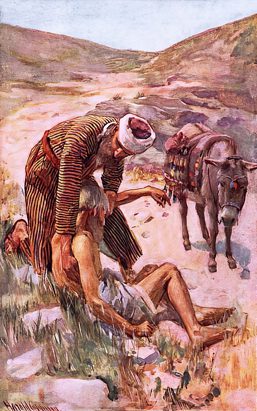 Moral men have a duty to help their neighbors, but nobody has an obligation to force other people to help.
Jesus told a story of a Good Samaritan who crossed difficult social and cultural barriers to provide relief to an injured man. This is a good model for our own behavior. We should help the hurting neighbor even if he is a pariah in our community. The mortgage broker who has lost his job is also my neighbor and when he is hurting and repentant should receive pity, charity, and care and not just sermons about his errors.
Moral behavior is most valuable to our growth when it is not easy to do. There is a constant temptation to avoid doing our moral duty by ignoring it or passing off the dirty work of duty to somebody else.
The Scroogish Samaritan ignores his moral duty to help his neighbor. He assumes everybody should care only for self and destroys common culture by his selfishness. The Statist Samaritan forces everybody else to help the injured man and so gains a cheap feeling of virtue, but undermines any real virtue.
The Scrooge believes that it is enough for “a man to mind his own business” and forgets that he is tied to the fate of everyone else in his common culture. History shows prosperity cannot last when it is dependent on the hopeless poverty of others.
It is immoral to allow such an unjust system to survive. Even in a perfectly just society, it would be useless to lecture the hurting about their mistakes before dealing with their pain. Telling a hungry mother with starving children about the virtues of liberty without first feeding her is cruel and breeds revolutions. The moral man must deal with blinding pain in the hurting before he tries to show the victim a way to avoid future hurts.
It is true that you should teach a man to fish and not just give him a fish, but before teaching him to fish, he has to be fit to learn. You cannot teach a starving man to fish. First, give him a fish. Second, teach him the skills that will give him the ability to become a giver of charity and not just a receiver. The goal of any charity is to allow the man who receives it to also be able to gain the astounding blessings of being a giver.
Sadly, it is so much more blessed to give than to receive that the Statist Samaritan tries to give all the blessings to the state. He loves the state and so wishes to turn everyone’s appreciation for charity to it.
Not surprisingly, charity that is coerced does harm to everyone. The injured party may be helped at first, but only at the cost of doing injustice to others. Taxing Peter forces Peter to help Paul which often does little for Paul, but almost certainly will make Peter resent Paul. Peter should help Paul, but making him do it will teach both men bad lessons. The taxed feels resentment as the object of his charity lacks a human face. He gives his coerced taxes to faceless bureaucracy, and the recipient becomes the ward of government.
When we pass our moral duties over to the state, we lose the power to do charity ourselves. We turn an act of charity into coercion, and give the state too much power. People are habituated to look to the state to meet their needs and not their communities, churches, and family. This weakens every non-state institution and risks tyranny.
Forced charity is inefficient because it rarely distinguishes between worthy and unworthy attempts at charity. By cutting everyone a check or putting everyone in “one size fits all” programs, it is radically inefficient and often harms the giver and the recipient. The government takes a slice of the money in order to maintain the program. Often the program itself will outlive its usefulness, but keeps using tax money. The closest thing to immortality ever created by humankind is a government program.
Forced charity is bad for us because in removing our liberty to choose between goods it makes us perpetual dependents. No good person wants to be perpetually dependent on his neighbor because his neighbor has a face and knows him. It is much easier to become a perpetual dependent on the government because the government is faceless.
Of course, in some extraordinary circumstances the community itself has been devastated or is so dysfunctional that the state must act. A horrific natural disaster can leave too few neighbors left to help. A deeply embedded racist culture can use local state power and cultural institutions to practice injustice. In such horrific cases, federal power may be necessary to solve gross problems.
Christian teaching and natural law teaches that good men and women should help each other. This charity is best when it is private and not coerced. American popular culture would be wise to celebrate the Samaritan and stop holding up as heroic conspicuous consumers, Scrooges, or statists.
Previous Post

July 10, 2020
God Bless the Romans
Next Post

July 12, 2020 O Holy Wisdom
Browse Our Archives
Select a Category Apologetics Art Culture Education On Books On Education Philosophy Politics Pop Culture Spiritual Reflections Uncategorized
Select a Month October 2026 September 2026 August 2026 July 2026 July 2025 June 2025 September 2024 July 2024 June 2024 December 2023 June 2023 September 2022 May 2022 April 2022 March 2022 February 2022 July 2021 June 2021 May 2021 April 2021 March 2021 February 2021 January 2021 December 2020 November 2020 October 2020 September 2020 August 2020 July 2020 June 2020 May 2020 April 2020 March 2020 February 2020 January 2020 December 2019 November 2019 October 2019 September 2019 August 2019 July 2019 June 2019 May 2019 April 2019 March 2019 February 2019 January 2019 December 2018 November 2018 October 2018 September 2018 August 2018 July 2018 June 2018 May 2018 April 2018 March 2018 February 2018 January 2018 December 2017 November 2017 October 2017 September 2017 August 2017 July 2017 June 2017 May 2017 April 2017 March 2017 February 2017 January 2017 December 2016 November 2016 October 2016 September 2016 August 2016 July 2016 June 2016 May 2016 April 2016 March 2016 February 2016 January 2016 December 2015 November 2015 October 2015 September 2015 August 2015 July 2015 June 2015 May 2015 April 2015 March 2015 February 2015 January 2015 November 2014 October 2014 September 2014 August 2014 July 2014 June 2014 May 2014 April 2014 March 2014 February 2014 January 2014 December 2013 November 2013 October 2013 September 2013 August 2013 July 2013 June 2013 May 2013 April 2013 March 2013 February 2013 January 2013 December 2012 November 2012 October 2012 September 2012 August 2012 July 2012 June 2012 May 2012
Follow Us!
TAKE THE
Religious Wisdom Quiz
What Christian group follows the "Westminster Confession of Faith"?
Select your answer to see how you score.
Presbyterians Baptists Lutherans Catholics
Books by This Author John Mark Reynolds
Related posts from Eidos

Classical Education and the Art of Dying Well

Golden, Golden, Golden: My Mother's Last Lesson


When the Center Holds: A Tribute to My...
TRENDING AT PATHEOS Evangelical

The REST of Your Life: A Creative Wrestles...
This week I had a conversation with a good friend from church....

How the author of the world's best hymn...
I've been working with John Newton for a while now. This makes...

Long before this Lectio Divina, Psalm 130 - the song - started...

What About the Trees? Another Living Parable
After I finished writing the last article about falling leaves as a...

Why Classical Education Is a Conversation, Not a...
Come and Read: Joy in Classical Education When I was a little...

Cornell University has received a great deal of negative publicity and intense...
view all Evangelical blogs
Ad-Free & Subscriber Log-In Subscription Support
- About Us
- 2026 Calendar
- Videos
- Podcasts
- Library of World Religions
- Faith In Media Tracker
- Advertise With Us
- Write for Us
- Privacy Policy
- Terms of Service
- Do Not Sell My Data
- Contact Us
- Radiant Digital
- Manage Newsletter Subscriptions
- Unsubscribe From Notifications
- Sitemap
Copyright 2008-2026, Patheos. All rights reserved.
Subscription Support Ad-Free & Subscriber Log-In
Follow Patheos