
BuddhistCatholicContemplativeEvangelicalGeneral ChristianHinduJewishLatter-day SaintMuslimNew VisionsProgressive Christian
Beliefs
- Buddhist
- Catholic
- Contemplative
- Evangelical
- General Christian
- Hindu
- Jewish
- Latter-day Saint
- More Voices
- Muslim
- New Visions
- Pagan
- Progressive Christian
Topics
- Religion News
- Food and Religion
- Sports and Religion
- Religious Art
- Religious Music and Entertainment
- Religious Events
- History and Religion
- Style and Religion
- Politics and Religion
- Women in Religion
- Recreation Outdoors and Religion
- Business Finance and Religion
- Careers Workplace and Religion
- Education and Religion
- Family Parenting and Religion
- Health Fitness and Religion
- Home and Religion
- Relationships and Religion
- Technology and Religion
- Travel and Religion
Columnists
- Buddhist Columnists
- Business Finance and Religion Columnists
- Careers Workplace and Religion Columnists
- Catholic Columnists
- Contemplative Columnists
- Education and Religion Columnists
- Evangelists Columnists
- Family Parenting and Religion Columnists
- General Christian Columnists
- Health Fitness and Religion Columnists
- Hindu Columnists
- History and Religion Columnists
- Home and Religion Columnists
- Jewish Columnists
- More Voices Columnists
- Latter Day Columnists
- Muslim Columnists
- New Visions Columnists
- Nonreligious Columnists
- Pagan Columnists
- Politics and Religion Columnists
- Progressive Columnists
- Recreation Outdoors and Religion Columnists
- Relationships and Religion Columnists
- Religion News Columnists
- Religious Art Columnists
- Religious Events Columnists
- Religious Music and Entertainment Columnists
- Sports and Religion Columnists
- Style and Religion Columnists
- Technology and Religion Columnists
- Travel and Religion Columnists
- Women in Religion Columnists
Resource Library
- 2026 Calendar
- Library of World Religions
- The 100 Most Holy Places on Earth
- Patheos Answers
- Podcasts
- Videos
- Faith Leaders Database
- Anglican Episcopalian
- Bahai
- Baptist
- Buddhism
- Christianity
- Confucianism
- Eastern Orthodoxy
- Hinduism
- Holiness and Pentecostal
- ISKCON
- Islam
- Judaism
- Lutheran
- Methodist
- The Church of Jesus Christ of Latter-day Saints
- New Age
- Paganism
- Presbytarian and Reformed
- Protestantism
- Religion Behind the Scenes
- Roman Catholic
- Scientology
- Shia Islam
- Sikhism
- Sufism
- Sunni Islam
- Taoism
- Zen
- See all religions
Research Tools
 Ad-Free & Subscriber Log-In Subscription Support
Ad-Free & Subscriber Log-In Subscription Support
Follow Patheos 

- Trending:
- Forgiveness
- |
- Marriage
- |
- Consciousness
- |
- Death Penalty
- |
- Election
- |
- Halloween

- Home
- Evangelical
- What We Fear (Plagues and Dracula)
What We Fear (Plagues and Dracula)
Last updated on: March 10, 2020 at 10:32 pm by John Mark N. Reynolds
What We Fear (Plagues and Dracula) 2020-03-10T22:32:32-04:00 John Mark N. Reynolds
Patheos Explore the world's faith through different perspectives on religion and spirituality! Patheos has the views of the prevalent religions and spiritualities of the world.
 What we love defines our best possibilities and what we fear our worst.
Love, desire, can be fuel to reason, but fear breaks down our ability to think. Fear is passion with no possibility of noble action, only of ever more evil possibilities. Love, like any virtue, can be twisted and so misused. Our charity may be false or weakened by fear or a desire for power.
“Fear,” as I am using the word, is a terror that is pure aversion. You cannot love what you fear and perfect love will cast out all fear. There is an English use of “fear” that can mean a reverence or appropriate respect for power, the fear of the lord and of the Lord! This is not the sort of fear that kills. We should have a reverential awe when facing the power of a nuclear reactor, the Sun, or (most of all) God omnipotent.
This is reasonable.
Fear claws at us in the night and unmans us. This is, must be, the enemy of reasoned action. If we love truly, then we will do what is best for the beloved. In the time of a virus, we will keep calm, have great respect and awe for the terrible power of that virus, but we will not panic. Panic is the child of fear.
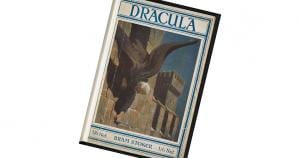
The College is reading Dracula at present in a plague year. This underrated novel, ignore all the motion pictures, is a brilliant exposition of what we fear. Dracula is an ancient terror that, the author reminds us constantly, is no longer believable until he appears and upturns the assumptions of the late Victorian era. He is a throwback, something that we believed defeated.
No. He is fully capable of darkening the light of the West.
Science is not the problem. Scientists help defeat Dracula. A trouble for our heroes in the novel is an overconfidence in scientism, that we have nature cracked and broken, understood and reduced to a servant. We have not, because nature is not merely stuff. There is another world and if this world intersects with our world, then this may overthrow all our comfortable assumptions.
We might face an apocalypse, even if this time we probably do not. Whatever happens, we almost wish to panic as we know that this could be a forerunner for that: an anti-Baptist warning us of the soon coming of the antichrist.
What does happen is the reverse of fear, shaking our confidence in the regular order of modern society. Dracula stands for the fearful thing for Victorians and can be used for us as well. Dracula is the unexpected, uncontrollable, that makes us panic.
How can we fight this unearthly thing?
The peasants in the early portions of the Dracula have a reverential awe of the vampire, but they have a crucifix, prayers, and a sensible view of how to avoid the evil. A few have been co-opted to become servants of evil. They are not afraid, not the way the moderns will be later in the book.
Against this Bram Stoker puts the man of reason. He knows science, can even be a scientist. He studies the problem and proposes a solution. He does so without fear, though with respect for the power of the vampire.
Be rational. Be loving. Fear not.
That is the message of Christianity in the time of Dracula.
Previous Post

March 9, 2020
Academy Scholar and Holy Fool: On the Wisdom of the Uncredentialed
Next Post
March 11, 2020 How to Defeat What We Fear (Plagues and Dracula)
Browse Our Archives
Select a Category Apologetics Art Culture Education On Books On Education Philosophy Politics Pop Culture Spiritual Reflections Uncategorized
Select a Month October 2026 September 2026 August 2026 July 2026 July 2025 June 2025 September 2024 July 2024 June 2024 December 2023 June 2023 September 2022 May 2022 April 2022 March 2022 February 2022 July 2021 June 2021 May 2021 April 2021 March 2021 February 2021 January 2021 December 2020 November 2020 October 2020 September 2020 August 2020 July 2020 June 2020 May 2020 April 2020 March 2020 February 2020 January 2020 December 2019 November 2019 October 2019 September 2019 August 2019 July 2019 June 2019 May 2019 April 2019 March 2019 February 2019 January 2019 December 2018 November 2018 October 2018 September 2018 August 2018 July 2018 June 2018 May 2018 April 2018 March 2018 February 2018 January 2018 December 2017 November 2017 October 2017 September 2017 August 2017 July 2017 June 2017 May 2017 April 2017 March 2017 February 2017 January 2017 December 2016 November 2016 October 2016 September 2016 August 2016 July 2016 June 2016 May 2016 April 2016 March 2016 February 2016 January 2016 December 2015 November 2015 October 2015 September 2015 August 2015 July 2015 June 2015 May 2015 April 2015 March 2015 February 2015 January 2015 November 2014 October 2014 September 2014 August 2014 July 2014 June 2014 May 2014 April 2014 March 2014 February 2014 January 2014 December 2013 November 2013 October 2013 September 2013 August 2013 July 2013 June 2013 May 2013 April 2013 March 2013 February 2013 January 2013 December 2012 November 2012 October 2012 September 2012 August 2012 July 2012 June 2012 May 2012
Follow Us!
TAKE THE
Religious Wisdom Quiz
What special power did Joseph have?
Select your answer to see how you score.
Building altars Writing scrolls Interpreting dreams Fighting giants
Books by This Author John Mark Reynolds
Related posts from Eidos

Classical Education Must Teach Us to Make the...

Yet I Love Her: History and the Church


The Iceberg is There: Verbosity Cannot Defeat Reality
TRENDING AT PATHEOS Evangelical

The REST of Your Life: A Creative Wrestles...
This week I had a conversation with a good friend from church....

How the author of the world's best hymn...
I've been working with John Newton for a while now. This makes...

Long before this Lectio Divina, Psalm 130 - the song - started...

What About the Trees? Another Living Parable
After I finished writing the last article about falling leaves as a...

Why Classical Education Is a Conversation, Not a...
Come and Read: Joy in Classical Education When I was a little...

Cornell University has received a great deal of negative publicity and intense...
view all Evangelical blogs
Ad-Free & Subscriber Log-In Subscription Support
- About Us
- 2026 Calendar
- Videos
- Podcasts
- Library of World Religions
- Faith In Media Tracker
- Advertise With Us
- Write for Us
- Privacy Policy
- Terms of Service
- Do Not Sell My Data
- Contact Us
- Radiant Digital
- Manage Newsletter Subscriptions
- Unsubscribe From Notifications
- Sitemap
Copyright 2008-2026, Patheos. All rights reserved.
Subscription Support Ad-Free & Subscriber Log-In
Follow Patheos