
BuddhistCatholicContemplativeEvangelicalGeneral ChristianHinduJewishLatter-day SaintMuslimNew VisionsProgressive Christian
Beliefs
- Buddhist
- Catholic
- Contemplative
- Evangelical
- General Christian
- Hindu
- Jewish
- Latter-day Saint
- More Voices
- Muslim
- New Visions
- Pagan
- Progressive Christian
Topics
- Religion News
- Food and Religion
- Sports and Religion
- Religious Art
- Religious Music and Entertainment
- Religious Events
- History and Religion
- Style and Religion
- Politics and Religion
- Women in Religion
- Recreation Outdoors and Religion
- Business Finance and Religion
- Careers Workplace and Religion
- Education and Religion
- Family Parenting and Religion
- Health Fitness and Religion
- Home and Religion
- Relationships and Religion
- Technology and Religion
- Travel and Religion
Columnists
- Buddhist Columnists
- Business Finance and Religion Columnists
- Careers Workplace and Religion Columnists
- Catholic Columnists
- Contemplative Columnists
- Education and Religion Columnists
- Evangelists Columnists
- Family Parenting and Religion Columnists
- General Christian Columnists
- Health Fitness and Religion Columnists
- Hindu Columnists
- History and Religion Columnists
- Home and Religion Columnists
- Jewish Columnists
- More Voices Columnists
- Latter Day Columnists
- Muslim Columnists
- New Visions Columnists
- Nonreligious Columnists
- Pagan Columnists
- Politics and Religion Columnists
- Progressive Columnists
- Recreation Outdoors and Religion Columnists
- Relationships and Religion Columnists
- Religion News Columnists
- Religious Art Columnists
- Religious Events Columnists
- Religious Music and Entertainment Columnists
- Sports and Religion Columnists
- Style and Religion Columnists
- Technology and Religion Columnists
- Travel and Religion Columnists
- Women in Religion Columnists
Resource Library
- 2026 Calendar
- Library of World Religions
- The 100 Most Holy Places on Earth
- Patheos Answers
- Podcasts
- Videos
- Faith Leaders Database
- Anglican Episcopalian
- Bahai
- Baptist
- Buddhism
- Christianity
- Confucianism
- Eastern Orthodoxy
- Hinduism
- Holiness and Pentecostal
- ISKCON
- Islam
- Judaism
- Lutheran
- Methodist
- The Church of Jesus Christ of Latter-day Saints
- New Age
- Paganism
- Presbytarian and Reformed
- Protestantism
- Religion Behind the Scenes
- Roman Catholic
- Scientology
- Shia Islam
- Sikhism
- Sufism
- Sunni Islam
- Taoism
- Zen
- See all religions
Research Tools
 Ad-Free & Subscriber Log-In Subscription Support
Ad-Free & Subscriber Log-In Subscription Support
Follow Patheos 

- Trending:
- Forgiveness
- |
- Marriage
- |
- Consciousness
- |
- Death Penalty
- |
- Election
- |
- Halloween

- Home
- Evangelical
- You Cannot Use Caps to Do Away With God: Metaphysics by Capitalization Part I (A Reply to Jeff Williams)
You Cannot Use Caps to Do Away With God: Metaphysics by Capitalization Part I (A Reply to Jeff Williams)
Last updated on: February 11, 2020 at 12:38 am by John Mark N. Reynolds
You Cannot Use Caps to Do Away With God: Metaphysics by Capitalization Part I (A Reply to Jeff Williams) 2020-02-11T00:38:41-04:00 John Mark N. Reynolds
Patheos Explore the world's faith through different perspectives on religion and spirituality! Patheos has the views of the prevalent religions and spiritualities of the world.
Background on the Discussion (Skippable): What is going on?
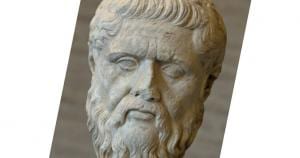 If we wish to follow the Logos where He leads, we need to listen to critics, especially those with interesting things to say. Jeff Williams is a critic of metaphysics. A University of Chicago grad, he agreed to present his argument and I have posted it here unedited (except for some formatting and the title). As result of his rejection of metaphysics, he rejects objective moral law as an illusion.
Mr. Williams previously argued that Athens has no need of Jerusalem, which contributes nothing good to Western civilization. I responded and enjoyed the interaction immensely. Mr. Williams has taken the time to discuss Martin Heidegger, a philosopher not much in favor when I was in graduate school. I have enjoyed reading more Heidegger (alas in translation). As usual, I allowed his post to stand without comment for a time and now here is a response. Mr. Williams suggested to me that I had not gotten him right, so it seemed decent and in order to let him respond. I suggested that Mr. Williams has ended up looking for a pony, because he has found a pile of LEGO blocks shaped like a pony.
Mr. Williams finds my response lacking, so I joyfully invite you to follow the argument where it leads. In this case, it leads to a sadly dogmatic physicalism (or materialism) that sees “gaps” or problems where there are none. We also learn that having a bad history of the philosophy of science can lead to some bad conclusions. Williams has come back to straighten me out. Sadly, I am not straightened out by this response, since I do not think Mr. Williams makes arguments. On the other hand, Williams is my friend, because he is honest, forthright, well read, and unafraid to speak what he thinks is true.
This is vital to the dialectic, the very basis of our finding the Logos, the Lord Jesus. My discussion of assertions is in two parts. Here is part two.
A Preface: On Arguments: Assertions and Background Assumptions
An assertion is not an argument. If I say, “There is a God.”, then that is a statement of what I think is true. Depending on what you think of me, this may be a bit of evidence for the truth or falsity of the claim. Still no matter who you are (and I am not much), this is not much of an argument!
Mr. Williams makes a great many assertions, so many that he may forget that he is not making any arguments. An argument gives reasons, these reach conclusions. Those conclusions might lead to other arguments that eventually produce a complete view of reality. The danger is that such assertions contain unexamined assumptions that hasten an observer to conclusions, hasty conclusions.
Much of my task has been to point out those assumptions. Mr. Williams has, for example, a certain view of the past, an almost entirely false view, but one that undergirds his assertions. For Mr. Williams, Athens did not need Jerusalem, but Jerusalem (Christianity) is the only reason we care about Athens (classical philosophy) at all.
This is why Mr. Williams’ complaint misses the mark:
I trust that in the spirit of the dialectic my friend will directly and substantively address it rather than once again take us on a visit to a 19th century mathematician, time travel to a future heart transplant, back in time to Christians of the Middle ages, and then to Canton Ohio for the football hall of fame. Breathtaking to be sure but having nothing to do with the case I made.
We must follow the argument where it leads, but we must not hide the. . .football. . .or we shall accept a view of reality we find attractive, while not noticing those hidden assumptions. Writing in the twenty-first century, we are filled with the assumptions, truths, bigotries of previous times. To write about what is will mean to try, even if almost impossibly hard, to flush out all the assumptions behind our assertions.
I shan’t then be able to keep from the past, since the past made us. As a result, when Mr. Williams asserts metaphysics is dead, or science can tell us what we need to know, we must examine why anyone would think such things. Are they true? Where did the ideas originate? This is not so we can reject them for their origins, but so we can see if the original arguments that persuaded our ancestors to accept them are good and persuasive.
So often we go on thinking a thing merely because the broken, falsified arguments underneath are never examined. So it is with Heidegger’s view of the Pre-Socratic philosophers. His conclusions based on the data he had at the time were brilliant, but sadly we know more about the Pre-Socratics now. A mediocrity can rebuke a genius if the genius built his brilliance on a lie.
So it goes with much of Williams’ ideas, persuasive only if we do not ask: “Why in Heaven’s name would anyone believe such things in the first place?” His argument depends on all being stuff (matter and energy), but this is almost surely false. I am not distracting the arguments just trying to do as I was taught: getting to the bottom of it all.
No assumption must be left unexamined.
On Tricky Me, Mr. Williams Issues a Blast, but Trickiness Requires a Mind :
Mom, nearly perfect, once suggested to me that in a debate, one should keep calm. If one became. . .hot. . .either a great evil had been done or the shaft had gone home.
Perhaps.
Williams seems exercised, but we are friends, so I cannot have been wicked. He suggests:
I know my good friend Dr. Reynolds well, or at least well enough to know how when he’s flailing in debate his custom is to resort to the tricks of the apologist trade: red herrings, strawmen and sweeping statements rather than address the argument being made.
Let me be very serious for a moment: this would be very bad. Those I love who taught me would be ashamed if I were to just wish to win. My Mom thought a desire merely to win an argument wicked if the truth got lost. I take this seriously and I hope this is not true.
Yet I wonder about this. Suppose for a moment, that all of it is true. I am at a loss how, with his view of reality Williams can believe it. Oddly, nothing is easier for a Christian, or at least for me, than to know that one is often an ass. So a view of reality that does not allow Mr. Williams to find me an ass, or at least tricksy, is a very bad world view indeed.
Yet this a problem Mr. Williams has.
Mr. Williams is a physicalist. He thinks everything, all there is, is stuff: a giant heap o’ matter. Let us grant this assumption for a moment. The atoms are not tricksy. The molecules are not tricksy. Where can we find the origins of my tricksy behavior when all we have is matter and energy being regular as nature is regular?
Pile up all the stuff you can find and not one puckish moment will result. It’s hard to get something out something else entirely. A view of reality that cannot account for my failure, obvious to all, is not much of a world view. Never charge a man for a problem that cannot exist in your view of reality.
An Aside: On Interpreting Texts- The Just Can Read by Reasonable Faith (Skip this Aside if You Hurried)
Interesting people will often throw out quips as interesting as the central point. Mr Williams is a bit puckish:
(Yes, I know he presents me as a product of the University of Chicago, but I point out he has never presented the slightest bit of evidence to back that up.)
This is most excellent as a bit of humor. We need only read Mr. Williams to know that his (Twitter) claim to a University of Chicago degree seems likely (and good for University of Chicago to have such alum)! This credential is not, in the slightest, incompatible with a further claim he makes to be a biker who lives under bridges.
Am I sure Williams went to Chicago? I am not. Do I assume he did? Given his care in his earliest piece that is very dependent on Heidegger, I do.
Do I think he lives under bridges with his bike?
Mayhap.
I have known others as clever with similar lifestyles in my life, but I doubt he does.
Why?
He speaks (always) like a Chicago graduate, a very particular patois. When he writes about the bike and the bridge, he is much more puckish. I assume then that he has a bike, a Chicago degree, and was a wag in his day.
Maybe.
Why pause over this trivia?
This shows something about the nature of texts and reading. I have only read Williams. I have never met him and he is hard to Google. (This is the curse of a common name.) I love reading him.
Stop.
Think about this.
We can know people through text and make reasonable conclusions about them. They may be wrong, but over time we get good enough to make decent guesses. Williams’ tone makes it more likely than not he is a Chicago grad. The same banter, and facts about the culture, make it more likely than not he does not live under a bridge.
We can make reasonable conclusions
Reality Contains Objective Morality: Williams Sums His Case, Such as His Case Is
Williams does all of us a favor by summing his case:
We should first revisit why our friend is flailing here. The issue is my contention that there is no objective morality, which I approached from two angles:
We have already seen that given his physicalism, all is stuff, there is no good reason to think I should be able to “flail,” Where does this mental mistake originate? How does a pile of matter produce a flailing mind? However, once more to Williams’ assertions:
- the overcoming of metaphysics eliminates gods and any supposed related objective truths or laws;
Metaphysics has not been overcome. Philosophers, in world class journals, keep doing metaphysics. Perhaps Williams is right, but very fine programs all over the world, some almost void of religion, would reject this assumption. We will soon see why Williams misses this vibrant, publishing, community.
- the evolutionary history of sensibilities that promote cooperation, such as empathy fairness and love, and their reflection in the refinement of what we consider moral over the past few millennia.
Let’s assume Williams science is perfect, his history sound, and his description of the origin of what we “consider moral” just so. That does nothing for our understanding of what we should do. He has (presumably perfectly) stated what is true, but that does nothing to help quell doubts the moment we think, God helps us, should we accept this “refinement.”
“History” has done nothing. History is not a person. “Evolution” has done nothing, evolution grinds along without purpose by definition. Williams ignores that nature and evolution also is red in tooth and claw. Because he is a decent man, he picked good things that are and has tried to build a “should” on it all. Sadly, personal decency combined with a pile of facts does not suppress contrary facts (death of the unfit) and those with less decency who conjure different “oughts” from this pliable interpretation of “is.”
Williams badly states my case:
He wagered his response on an attempt to reclaim metaphysics, which rested solely on the claim that consciousness was non-physical. Not being able to establish that beyond “it seems so”, he was unable to honestly counter the scientific advances that point to consciousness ultimately revealing a purely physical existence.
This is simply false. I point out that ideas and numbers seem non-physical and there is no conclusive case that they are not. The hard problem of consciousness is merely another difficulty, though one all of us have experienced. There are exactly no scientific advances that point to to “consciousness ultimately revealing a purely physical existence.” There are advances in brain science, thank scientists and God who made them, but knowing all there is to know about the organ does not eliminate the organist.
Williams assumes physicalism and so sees progress, because how could he not?
When I say “Hamlet” does not seem like matter and energy, I am starting where we must. Ideas, the play, the conscience of the King, simply are nothing like a Lego outside of existing. Here is a basic problem for Mr. Williams: we can say of a physical thing that more or less (joules, wats, yards, meters) makes it more stuff. Try doing that with consciences: what is the unit of conciseness or of ideas or of numbers?
What unit would make consciousness more consciousness?
We have an idea or we do not, but we do not say that five more idea units will give us more ideas.
These metaphysical substances do not “seem” like physical things, because they are not studied, created, or measured in the same way.
On the Analytic and Continental Divide
Williams, without defining terms, introduces a divide in philosophy. He says:
But first, I mean to call attention to a rhetorical devise Dr. Reynolds often falls back on in argumentation. Here he repeatedly tries to diminish my argument by insinuating a lesser importance to continental philosophy and a more substantial pedigree for Anglo-American analytic writers and pre-Enlightenment metaphysics. I’m torn between claiming the fallacy of argumentum ad verecundiam or proudly accepting minority status. So, I’ll do both.
I do not mean to insinuate a lesser importance to continental philosophy and hope the dominance of “analytic” approaches in prestige departments in the English speaking world has not disconcerted Williams. It is a big world, after all, and most people do not speak English.
And after all, the entire distinction is too vague to be very useful and has grown more so since the 1990’s.
My case against Williams’ assertions did not depend on this division. I argue that the metaphysical, religious, and pre-Enlightenment are not dead. I did not argue, do not even think, that the “Continental” (whatever that is precisely) has no value. To the contrary, I think that it might! Husserl was on the continent and his philosophy of science inspired my friend Professor Dallas Willard to brilliance.
When I was in graduate school, there were attempts to carefully distinguish the “two approaches” in historical terms. They generally were not useful or rigorous. As a result, I could not be rejecting Williams ideas because they are in some ambiguous “wrong school,” but because I am not persuaded by his assertions. When he dismisses Thomism as a living field of study, when it is a field of study with thinkers in excellent universities all over the world (English and non-English), his only reason for doing so is that they are “common thinkers.”
To be perfectly honest, I have, in the past, used the term “analytic” to describe my own graduate education, since that was how the department was described to me. This was meant to describe an approach (high emphasis on formal logic, language, and the Anglo-American philosophical tradition) to philosophy that dominated top tier English schools. There are obviously other approaches that, for example, deemphasize logic. Such an approach is not my preference, but so it goes. After all, one can prefer an approach without disregarding another approach or thinking it has no value.
In any case, nothing in my case depends on Williams being “continental.”
Williams, by contrast, often has attacked there being any credible metaphysics or worth to pre-Enlightenment thought. I have argued this is not proven and often depends on a bad history of science and ideas. That does not imply that I think there is no value in post-Enlightenment and (whatever it is exactly) Continental thought.
Williams is wrong, but my argument for his wrongheaded assertions have not depended on where his ideas originated geographically.
Excelsior!
.

Browse Our Archives
Select a Category Apologetics Art Culture Education On Books On Education Philosophy Politics Pop Culture Spiritual Reflections Uncategorized
Select a Month October 2026 September 2026 August 2026 July 2026 July 2025 June 2025 September 2024 July 2024 June 2024 December 2023 June 2023 September 2022 May 2022 April 2022 March 2022 February 2022 July 2021 June 2021 May 2021 April 2021 March 2021 February 2021 January 2021 December 2020 November 2020 October 2020 September 2020 August 2020 July 2020 June 2020 May 2020 April 2020 March 2020 February 2020 January 2020 December 2019 November 2019 October 2019 September 2019 August 2019 July 2019 June 2019 May 2019 April 2019 March 2019 February 2019 January 2019 December 2018 November 2018 October 2018 September 2018 August 2018 July 2018 June 2018 May 2018 April 2018 March 2018 February 2018 January 2018 December 2017 November 2017 October 2017 September 2017 August 2017 July 2017 June 2017 May 2017 April 2017 March 2017 February 2017 January 2017 December 2016 November 2016 October 2016 September 2016 August 2016 July 2016 June 2016 May 2016 April 2016 March 2016 February 2016 January 2016 December 2015 November 2015 October 2015 September 2015 August 2015 July 2015 June 2015 May 2015 April 2015 March 2015 February 2015 January 2015 November 2014 October 2014 September 2014 August 2014 July 2014 June 2014 May 2014 April 2014 March 2014 February 2014 January 2014 December 2013 November 2013 October 2013 September 2013 August 2013 July 2013 June 2013 May 2013 April 2013 March 2013 February 2013 January 2013 December 2012 November 2012 October 2012 September 2012 August 2012 July 2012 June 2012 May 2012
Follow Us!
TAKE THE
Religious Wisdom Quiz
What does "Ichabod" mean?
Select your answer to see how you score.
No glory God's gift Blessed son Holy child
Books by This Author John Mark Reynolds
Related posts from Eidos

Classical Education and the Art of Dying Well

Golden, Golden, Golden: My Mother's Last Lesson


When the Center Holds: A Tribute to My...
TRENDING AT PATHEOS Evangelical

The REST of Your Life: A Creative Wrestles...
This week I had a conversation with a good friend from church....

How the author of the world's best hymn...
I've been working with John Newton for a while now. This makes...

Long before this Lectio Divina, Psalm 130 - the song - started...

What About the Trees? Another Living Parable
After I finished writing the last article about falling leaves as a...

Why Classical Education Is a Conversation, Not a...
Come and Read: Joy in Classical Education When I was a little...

Cornell University has received a great deal of negative publicity and intense...
view all Evangelical blogs
Ad-Free & Subscriber Log-In Subscription Support
- About Us
- 2026 Calendar
- Videos
- Podcasts
- Library of World Religions
- Faith In Media Tracker
- Advertise With Us
- Write for Us
- Privacy Policy
- Terms of Service
- Do Not Sell My Data
- Contact Us
- Radiant Digital
- Manage Newsletter Subscriptions
- Unsubscribe From Notifications
- Sitemap
Copyright 2008-2026, Patheos. All rights reserved.
Subscription Support Ad-Free & Subscriber Log-In
Follow Patheos