
BuddhistCatholicContemplativeEvangelicalGeneral ChristianHinduJewishLatter-day SaintMuslimNew VisionsProgressive Christian
Beliefs
- Buddhist
- Catholic
- Contemplative
- Evangelical
- General Christian
- Hindu
- Jewish
- Latter-day Saint
- More Voices
- Muslim
- New Visions
- Pagan
- Progressive Christian
Topics
- Religion News
- Food and Religion
- Sports and Religion
- Religious Art
- Religious Music and Entertainment
- Religious Events
- History and Religion
- Style and Religion
- Politics and Religion
- Women in Religion
- Recreation Outdoors and Religion
- Business Finance and Religion
- Careers Workplace and Religion
- Education and Religion
- Family Parenting and Religion
- Health Fitness and Religion
- Home and Religion
- Relationships and Religion
- Technology and Religion
- Travel and Religion
Columnists
- Buddhist Columnists
- Business Finance and Religion Columnists
- Careers Workplace and Religion Columnists
- Catholic Columnists
- Contemplative Columnists
- Education and Religion Columnists
- Evangelists Columnists
- Family Parenting and Religion Columnists
- General Christian Columnists
- Health Fitness and Religion Columnists
- Hindu Columnists
- History and Religion Columnists
- Home and Religion Columnists
- Jewish Columnists
- More Voices Columnists
- Latter Day Columnists
- Muslim Columnists
- New Visions Columnists
- Nonreligious Columnists
- Pagan Columnists
- Politics and Religion Columnists
- Progressive Columnists
- Recreation Outdoors and Religion Columnists
- Relationships and Religion Columnists
- Religion News Columnists
- Religious Art Columnists
- Religious Events Columnists
- Religious Music and Entertainment Columnists
- Sports and Religion Columnists
- Style and Religion Columnists
- Technology and Religion Columnists
- Travel and Religion Columnists
- Women in Religion Columnists
Resource Library
- 2026 Calendar
- Library of World Religions
- The 100 Most Holy Places on Earth
- Patheos Answers
- Podcasts
- Videos
- Faith Leaders Database
- Anglican Episcopalian
- Bahai
- Baptist
- Buddhism
- Christianity
- Confucianism
- Eastern Orthodoxy
- Hinduism
- Holiness and Pentecostal
- ISKCON
- Islam
- Judaism
- Lutheran
- Methodist
- The Church of Jesus Christ of Latter-day Saints
- New Age
- Paganism
- Presbytarian and Reformed
- Protestantism
- Religion Behind the Scenes
- Roman Catholic
- Scientology
- Shia Islam
- Sikhism
- Sufism
- Sunni Islam
- Taoism
- Zen
- See all religions
Research Tools
 Ad-Free & Subscriber Log-In Subscription Support
Ad-Free & Subscriber Log-In Subscription Support
Follow Patheos 

- Trending:
- Forgiveness
- |
- Marriage
- |
- Consciousness
- |
- Death Penalty
- |
- Election
- |
- Halloween

- Home
- Evangelical
- Too Brittle for the World (In Memoriam)
Too Brittle for the World (In Memoriam)
Last updated on: February 16, 2020 at 8:19 pm by John Mark N. Reynolds
Too Brittle for the World (In Memoriam) 2020-02-16T20:19:18-04:00 John Mark N. Reynolds
Patheos Explore the world's faith through different perspectives on religion and spirituality! Patheos has the views of the prevalent religions and spiritualities of the world.
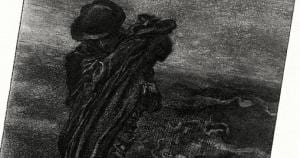 Our pain, my pain, your pain, some we caused, some I caused, pain is real. What is to be done?
Shattered by life, we must find a way to be strong. We do not need a pat on the head, condescension, but strength to grow and carry on. A fragile faith cannot survive: the irreligious gurus of the academy or the evangelists on TV are selling a system. Challenge it. Ask: “Yes, but in heaven’s name why would anyone believe any of this?”and nothing is left. If we do not, then God or life will do so through pain.
The collapse of our false reality is sudden and absolute as pain destroys our falsehoods.
Some faiths, reasonable as far as they go, are too brittle for the world. The school for souls, this life, is hard and we grow, but if we adopt an inflexible set of ideas, then we will break. We must flex to thrive and only the flexible survive. Truth is absolute, applied in endless variations full of wonder.
Sadly, the system is broken, we are broken, I am broken, and so we misapply the eternal. Pain is temporal, joy is eternal. We confuse the two.
The Victorians in the English speaking world experienced the wonderful pain of change: challenges to ideas, culture, and old ways that had to go. They responded as people always respond: well, badly, and not at all. Those who ignored the changing times had less pain, but no spiritual heirs. They were anticipatory fossils. Those who responded badly fought the needed change and were broken. Those who embraced the needed and beautiful change, like those who see the glory of each season, found goodness and truth.
Why did many English speaking Victorians miss the beauty of change? They embraced injustice to the poor.
Victorians knew the dark Satanic mills, Dantean horrors, were evil, but still sent children to work there. We shudder, watch a film version of Dickens’ prophetic A Christmas Carol, and do not consider our own vices.
One of my favorite poets, Alfred Tennyson, lost a dear friend at a young age. He was a man of words, so like so many of us with social media, he mourned in public with a poem*: In Memoriam.* He was a genius, so unlike many of us, he mourned in public brilliantly.
Tennyson began as a conventional Christian in a society that had been Christian for a millennium and a half. He ended a maybe-theist and confused. His poetry faded. His friend died and he mourned as Christians do, but the intellectual culture of the time was eroding his faith.*
The faith had become brittle, because faith was not exercised. If challenged, it could retreat, not even counter-punch, just sloganeer. If “Mother’s prayers are watching you,” what need of science or university education to make converts? Tennyson mourned, as all people do, but he was sorrowful in the context of an age that was stripping him of hope.
Time was looking deep: nature red in claw and fang was millions of years of pain doing nothing for the souls of animals. Against this, Tennyson clung like a drowning man to the hope of Christianity, but not to the intellectually robust defense of the faith. The age did not call up an Anselm, Augustine, or even a Dorothy Sayers or CS Lewis. Too often elite Christians accommodated change, good and bad, and so lost intellectual coherence. The spirit of the age demanded a “scientific racism” and so everyone, but especially secularizing progressives, got worse on racial justice issues.
Deep time, all those deaths over centuries, combined with the terrible death of a friend rocked Tennyson, just as it would rock us. Sadly, the creeds were said, but not deeply believed. Assent and outer show too often had overtaken reality: the Prince of Wales, pious in public, playboy in private.
The rot spread and Tennyson did not in the end have many answers. He knew, somehow, that the old order had changed, giving way to the new, and he did not like all the change. But what was to be done?
Doubt, honest dialog with the world, pain, and wisdom, might have saved Tennyson from much meaningless pain, but doubt was not encouraged:
You tell me, doubt is Devil-born. I know not: one indeed I knew In many a subtle question versed,
Who touch’s a jarring lyre at first,
But ever strove to make it true: Perplex t in faith, but pure in deeds,
At last he beat his music out.
There lives more faith in honest doubt,
Believe me, than in half the creeds. He fought his doubts and gather’s strength, He would not make his judgment blind, He faced the spectres of the mind And laid them: thus he came at length To find a stronger faith his own; And Power was with him in the night,
Which makes the darkness and the light,
And dwells not in the light alone, But in the darkness and the cloud,
As over Sinai’s peaks of old,
While Israel made their gods of gold,
Al tho the trumpet blew so loud.
Just so.
The man who confused toxic doubt, the kind that can never be satisfied or act without near certainty, with the questions a disciple can ask Jesus on the road to Emmaus. We are unsure, we hurt, the horrible pain of a broken world is not like growing pains or hunger. This pain is taken by God and redeemed, but God did not break the world.
Tennyson lived in an age where the best did great good, ending slavery all over the world, feeding the poor, building schools for all: stamping out ignorance and want. The worst misused science to build even greater racism, abuse of wealth, a vast colonial empire for the worldly, fleshly, and devils.
Tennyson, at last, clung to beauty and courage. He did not tell himself lies. Perhaps, in this age, we can do better with the Tennyson’s we meet. We are not their equals, certainly, but we can point them to other ways of thinking, happier ways. We can allow him to combine beauty with truth and so find a goodness otherwise unavailable.
May his soul Rest In Peace.
———————————-
This was not so much the scientific theory suggested by Charles Darwin. First, In Memoriam was written and published long before Origin. Instead it was the philosophical prot0-Darwinism, what he called “ combined with the idea of death over millions of years that was so hard.
Who trusted God was love indeed
And love Creation’s final law—
Tho’ Nature, red in tooth and claw
With ravine, shriek’s against his creed— Who loved, who suffered countless ills, Who battled for the True, the Just, Be blown about the desert dust, Or seal’s within the iron hills 1 No more 1 A monster then, a dream,
A discord. Dragons of the prime,
That tare each other in their slime,
Were mellow music match’s with him.
Previous Post

February 13, 2020
Love is Hidden (Jane Eyre)
Next Post

February 15, 2020 One Body, Two Heads: the Image Education Needs
Browse Our Archives
Select a Category Apologetics Art Culture Education On Books On Education Philosophy Politics Pop Culture Spiritual Reflections Uncategorized
Select a Month October 2026 September 2026 August 2026 July 2026 July 2025 June 2025 September 2024 July 2024 June 2024 December 2023 June 2023 September 2022 May 2022 April 2022 March 2022 February 2022 July 2021 June 2021 May 2021 April 2021 March 2021 February 2021 January 2021 December 2020 November 2020 October 2020 September 2020 August 2020 July 2020 June 2020 May 2020 April 2020 March 2020 February 2020 January 2020 December 2019 November 2019 October 2019 September 2019 August 2019 July 2019 June 2019 May 2019 April 2019 March 2019 February 2019 January 2019 December 2018 November 2018 October 2018 September 2018 August 2018 July 2018 June 2018 May 2018 April 2018 March 2018 February 2018 January 2018 December 2017 November 2017 October 2017 September 2017 August 2017 July 2017 June 2017 May 2017 April 2017 March 2017 February 2017 January 2017 December 2016 November 2016 October 2016 September 2016 August 2016 July 2016 June 2016 May 2016 April 2016 March 2016 February 2016 January 2016 December 2015 November 2015 October 2015 September 2015 August 2015 July 2015 June 2015 May 2015 April 2015 March 2015 February 2015 January 2015 November 2014 October 2014 September 2014 August 2014 July 2014 June 2014 May 2014 April 2014 March 2014 February 2014 January 2014 December 2013 November 2013 October 2013 September 2013 August 2013 July 2013 June 2013 May 2013 April 2013 March 2013 February 2013 January 2013 December 2012 November 2012 October 2012 September 2012 August 2012 July 2012 June 2012 May 2012
Follow Us!
TAKE THE
Religious Wisdom Quiz
What is the name of the lake into which the beast and false prophet are thrown?
Select your answer to see how you score.
Gehenna The outer darkness The lake of burning sulfur (lake of fire) The abyss
Books by This Author John Mark Reynolds
Related posts from Eidos

Classical Education Must Teach Us to Make the...

Classical Education and the Art of Dying Well

Golden, Golden, Golden: My Mother's Last Lesson

TRENDING AT PATHEOS Evangelical

The REST of Your Life: A Creative Wrestles...
This week I had a conversation with a good friend from church....

How the author of the world's best hymn...
I've been working with John Newton for a while now. This makes...

Long before this Lectio Divina, Psalm 130 - the song - started...

What About the Trees? Another Living Parable
After I finished writing the last article about falling leaves as a...

Why Classical Education Is a Conversation, Not a...
Come and Read: Joy in Classical Education When I was a little...

Cornell University has received a great deal of negative publicity and intense...
view all Evangelical blogs
Ad-Free & Subscriber Log-In Subscription Support
- About Us
- 2026 Calendar
- Videos
- Podcasts
- Library of World Religions
- Faith In Media Tracker
- Advertise With Us
- Write for Us
- Privacy Policy
- Terms of Service
- Do Not Sell My Data
- Contact Us
- Radiant Digital
- Manage Newsletter Subscriptions
- Unsubscribe From Notifications
- Sitemap
Copyright 2008-2026, Patheos. All rights reserved.
Subscription Support Ad-Free & Subscriber Log-In
Follow Patheos