
BuddhistCatholicContemplativeEvangelicalGeneral ChristianHinduJewishLatter-day SaintMuslimNew VisionsProgressive Christian
Beliefs
- Buddhist
- Catholic
- Contemplative
- Evangelical
- General Christian
- Hindu
- Jewish
- Latter-day Saint
- More Voices
- Muslim
- New Visions
- Pagan
- Progressive Christian
Topics
- Religion News
- Food and Religion
- Sports and Religion
- Religious Art
- Religious Music and Entertainment
- Religious Events
- History and Religion
- Style and Religion
- Politics and Religion
- Women in Religion
- Recreation Outdoors and Religion
- Business Finance and Religion
- Careers Workplace and Religion
- Education and Religion
- Family Parenting and Religion
- Health Fitness and Religion
- Home and Religion
- Relationships and Religion
- Technology and Religion
- Travel and Religion
Columnists
- Buddhist Columnists
- Business Finance and Religion Columnists
- Careers Workplace and Religion Columnists
- Catholic Columnists
- Contemplative Columnists
- Education and Religion Columnists
- Evangelists Columnists
- Family Parenting and Religion Columnists
- General Christian Columnists
- Health Fitness and Religion Columnists
- Hindu Columnists
- History and Religion Columnists
- Home and Religion Columnists
- Jewish Columnists
- More Voices Columnists
- Latter Day Columnists
- Muslim Columnists
- New Visions Columnists
- Nonreligious Columnists
- Pagan Columnists
- Politics and Religion Columnists
- Progressive Columnists
- Recreation Outdoors and Religion Columnists
- Relationships and Religion Columnists
- Religion News Columnists
- Religious Art Columnists
- Religious Events Columnists
- Religious Music and Entertainment Columnists
- Sports and Religion Columnists
- Style and Religion Columnists
- Technology and Religion Columnists
- Travel and Religion Columnists
- Women in Religion Columnists
Resource Library
- 2026 Calendar
- Library of World Religions
- The 100 Most Holy Places on Earth
- Patheos Answers
- Podcasts
- Videos
- Faith Leaders Database
- Anglican Episcopalian
- Bahai
- Baptist
- Buddhism
- Christianity
- Confucianism
- Eastern Orthodoxy
- Hinduism
- Holiness and Pentecostal
- ISKCON
- Islam
- Judaism
- Lutheran
- Methodist
- The Church of Jesus Christ of Latter-day Saints
- New Age
- Paganism
- Presbytarian and Reformed
- Protestantism
- Religion Behind the Scenes
- Roman Catholic
- Scientology
- Shia Islam
- Sikhism
- Sufism
- Sunni Islam
- Taoism
- Zen
- See all religions
Research Tools
 Ad-Free & Subscriber Log-In Subscription Support
Ad-Free & Subscriber Log-In Subscription Support
Follow Patheos 

- Trending:
- Forgiveness
- |
- Marriage
- |
- Consciousness
- |
- Death Penalty
- |
- Election
- |
- Halloween

- Home
- Evangelical
- The Ark of Education
The Ark of Education
Last updated on: February 18, 2020 at 11:40 pm by John Mark N. Reynolds
The Ark of Education 2020-02-18T23:40:29-04:00 John Mark N. Reynolds
Patheos Explore the world's faith through different perspectives on religion and spirituality! Patheos has the views of the prevalent religions and spiritualities of the world.
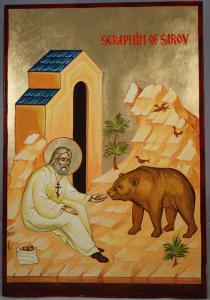 The Church can be the ark of education: taking scholarship and learning into the future against waves of barbarism.
For educators, the Church plays a special role. We are not clergy nor are we (normally) functionaries of the Church, yet we will teach theological truths because the Church contains truth. The Church also can be counted on, despite all the imperfections of people in the Church, to preserve education in difficult times.
A healthy society contains a sound church, loving families, just government, and flourishing social structures, including schools. Eastern Roman history presents a norm of an educational system supported by the government, patrons, and the family. The Church tended to the formation of clergy, though not in a seminary (or higher educational) system. The monasteries and churches, with the help of spiritual elders, provided the formation needed.
A society with multiple sources of authority will be safer from tyranny. If allowed independence, a good patriarch can check a bad Emperor. A good teacher can illuminate bad teachings from a priest. A virtuous parent can protect from a patron gone wrong.
As the history of the Eastern Roman Empire demonstrates, sometimes the government will fall into decay, then wealth plummets, and families hardly have the means to survive. When Eastern Christians became a politically powerless minority, often the church was the only way that Christians were allowed to organize. In other situations, only the Church had the resources or facilities to keep any educational program going. The Church did fill such gaps and so what could be saved was saved, though naturally with many failures. Secular authorities could pick up the task again in cases where political power was restored or prosperity returned to families. This happened several times in the history of the Eastern Roman Empire.
The Church uniquely out of all the normal structures in society can fulfill the educational mission. Liturgical worship reveals to us the Triune God, including the Son, the Divine Word of God. The Word of God Himself points to the importance of both the spoken and written word. Wherever the Christian Church has gone, relatively widespread literacy followed.
The reading of Sacred Scriptures in the liturgical life of the Church necessitates at least some literacy. The Church produced many books and the copying and preservation of all teachings, sermons, and liturgical instructions also encouraged forming a literate public. These documents were generally in the language of the people in the East and so the Church often spurred the creation of a national language and literature. Quite a few people have to be able to read and write for the traditions of the Church to continue.
The Church can save much in culture in hard times because she is very durable due to her mission. Tyrants often failed to destroy the Church in the past. This durability is gained whether her mission is sacred, God-protected, or merely deeply helpful in asking eternal questions. If her mission is sacred, then God has promised that she, the Bride of Christ, will endure to the end of time. However, even if she happened to be mistaken, the mistake is so intellectually interesting, the culture produced so beautiful, and the virtues she commands cultivated that her teachings, liturgy, and training endure.
This suggests a practical reason that the educator should not separate himself from the Church entirely. Tyrants or terrible periods in human history will come and in those times education or even human knowledge will face perils. The Church has shown herself to be resilient and able to save much, educate many, even in the most difficult times. She is an ark of safety so the tools of learning are not lost.
————————————————————-
For a popular summary of the contributions of the Eastern Empire to the West see Brownworth, Lars. Lost to the West: the Forgotten Byzantine Empire that Rescued Western Civilization. Broadway Book, 2009
“In Byzantium, primary education was available for both genders, and thanks to the stability of Justinian’s rule, virtually every level of society was literate. Universities throughout the empire continued the Aristotelian and Platonic traditions that were by now over a millennium old, and the works of the great scientists of antiquity were compiled in both public and private libraries.”
One of several Eastern Empire revivals in education occurred in the 9th century. The Emperor Theophilus was noteworthy in his spending on education. (Brownworth, Location 2460)
More scholarly: Vasiliev, Alexander. History of the Byzantine Empire (University of Wisconsin Press, 2012), Kindle Edition.
Previous Post

February 17, 2020
Universal Education: the Light Knows No True Barriers
Next Post

February 19, 2020 The Tension in a Good Education
Browse Our Archives
Select a Category Apologetics Art Culture Education On Books On Education Philosophy Politics Pop Culture Spiritual Reflections Uncategorized
Select a Month October 2026 September 2026 August 2026 July 2026 July 2025 June 2025 September 2024 July 2024 June 2024 December 2023 June 2023 September 2022 May 2022 April 2022 March 2022 February 2022 July 2021 June 2021 May 2021 April 2021 March 2021 February 2021 January 2021 December 2020 November 2020 October 2020 September 2020 August 2020 July 2020 June 2020 May 2020 April 2020 March 2020 February 2020 January 2020 December 2019 November 2019 October 2019 September 2019 August 2019 July 2019 June 2019 May 2019 April 2019 March 2019 February 2019 January 2019 December 2018 November 2018 October 2018 September 2018 August 2018 July 2018 June 2018 May 2018 April 2018 March 2018 February 2018 January 2018 December 2017 November 2017 October 2017 September 2017 August 2017 July 2017 June 2017 May 2017 April 2017 March 2017 February 2017 January 2017 December 2016 November 2016 October 2016 September 2016 August 2016 July 2016 June 2016 May 2016 April 2016 March 2016 February 2016 January 2016 December 2015 November 2015 October 2015 September 2015 August 2015 July 2015 June 2015 May 2015 April 2015 March 2015 February 2015 January 2015 November 2014 October 2014 September 2014 August 2014 July 2014 June 2014 May 2014 April 2014 March 2014 February 2014 January 2014 December 2013 November 2013 October 2013 September 2013 August 2013 July 2013 June 2013 May 2013 April 2013 March 2013 February 2013 January 2013 December 2012 November 2012 October 2012 September 2012 August 2012 July 2012 June 2012 May 2012
Follow Us!
TAKE THE
Religious Wisdom Quiz
What does Paul tell Titus that the grace of God teaches us to do?
Select your answer to see how you score.
Say no to ungodliness and live self-controlled, upright and godly lives Obey the authorities Spread the gospel Love one another
Books by This Author John Mark Reynolds
Related posts from Eidos

Why Classical Education Is a Conversation, Not a...

Does Classical Education Belong Only to the West?

Classical Education Must Teach Us to Make the...

Rooted: Why Classical Education Needs Community
TRENDING AT PATHEOS Evangelical

The REST of Your Life: A Creative Wrestles...
This week I had a conversation with a good friend from church....

How the author of the world's best hymn...
I've been working with John Newton for a while now. This makes...

Long before this Lectio Divina, Psalm 130 - the song - started...

What About the Trees? Another Living Parable
After I finished writing the last article about falling leaves as a...

Why Classical Education Is a Conversation, Not a...
Come and Read: Joy in Classical Education When I was a little...

Cornell University has received a great deal of negative publicity and intense...
view all Evangelical blogs
Ad-Free & Subscriber Log-In Subscription Support
- About Us
- 2026 Calendar
- Videos
- Podcasts
- Library of World Religions
- Faith In Media Tracker
- Advertise With Us
- Write for Us
- Privacy Policy
- Terms of Service
- Do Not Sell My Data
- Contact Us
- Radiant Digital
- Manage Newsletter Subscriptions
- Unsubscribe From Notifications
- Sitemap
Copyright 2008-2026, Patheos. All rights reserved.
Subscription Support Ad-Free & Subscriber Log-In
Follow Patheos