
BuddhistCatholicContemplativeEvangelicalGeneral ChristianHinduJewishLatter-day SaintMuslimNew VisionsProgressive Christian
Beliefs
- Buddhist
- Catholic
- Contemplative
- Evangelical
- General Christian
- Hindu
- Jewish
- Latter-day Saint
- More Voices
- Muslim
- New Visions
- Pagan
- Progressive Christian
Topics
- Religion News
- Food and Religion
- Sports and Religion
- Religious Art
- Religious Music and Entertainment
- Religious Events
- History and Religion
- Style and Religion
- Politics and Religion
- Women in Religion
- Recreation Outdoors and Religion
- Business Finance and Religion
- Careers Workplace and Religion
- Education and Religion
- Family Parenting and Religion
- Health Fitness and Religion
- Home and Religion
- Relationships and Religion
- Technology and Religion
- Travel and Religion
Columnists
- Buddhist Columnists
- Business Finance and Religion Columnists
- Careers Workplace and Religion Columnists
- Catholic Columnists
- Contemplative Columnists
- Education and Religion Columnists
- Evangelists Columnists
- Family Parenting and Religion Columnists
- General Christian Columnists
- Health Fitness and Religion Columnists
- Hindu Columnists
- History and Religion Columnists
- Home and Religion Columnists
- Jewish Columnists
- More Voices Columnists
- Latter Day Columnists
- Muslim Columnists
- New Visions Columnists
- Nonreligious Columnists
- Pagan Columnists
- Politics and Religion Columnists
- Progressive Columnists
- Recreation Outdoors and Religion Columnists
- Relationships and Religion Columnists
- Religion News Columnists
- Religious Art Columnists
- Religious Events Columnists
- Religious Music and Entertainment Columnists
- Sports and Religion Columnists
- Style and Religion Columnists
- Technology and Religion Columnists
- Travel and Religion Columnists
- Women in Religion Columnists
Resource Library
- 2026 Calendar
- Library of World Religions
- The 100 Most Holy Places on Earth
- Patheos Answers
- Podcasts
- Videos
- Faith Leaders Database
- Anglican Episcopalian
- Bahai
- Baptist
- Buddhism
- Christianity
- Confucianism
- Eastern Orthodoxy
- Hinduism
- Holiness and Pentecostal
- ISKCON
- Islam
- Judaism
- Lutheran
- Methodist
- The Church of Jesus Christ of Latter-day Saints
- New Age
- Paganism
- Presbytarian and Reformed
- Protestantism
- Religion Behind the Scenes
- Roman Catholic
- Scientology
- Shia Islam
- Sikhism
- Sufism
- Sunni Islam
- Taoism
- Zen
- See all religions
Research Tools
 Ad-Free & Subscriber Log-In Subscription Support
Ad-Free & Subscriber Log-In Subscription Support
Follow Patheos 

- Trending:
- Forgiveness
- |
- Marriage
- |
- Consciousness
- |
- Death Penalty
- |
- Election
- |
- Halloween

- Home
- Evangelical
- “Pandemic” or Words That Frighten Us: Keep Calm, Carry On
“Pandemic” or Words That Frighten Us: Keep Calm, Carry On
Last updated on: February 27, 2020 at 5:10 am by John Mark N. Reynolds
“Pandemic” or Words That Frighten Us: Keep Calm, Carry On 2020-02-25T20:13:13-04:00 John Mark N. Reynolds
Patheos Explore the world's faith through different perspectives on religion and spirituality! Patheos has the views of the prevalent religions and spiritualities of the world.
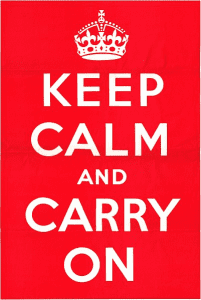 Keep calm. Carry on.
Be careful about words and how they can roil us.
I once saw a group of academics start to get very heated over the word postmodern until someone realized that the artists and the philosophers did not have a shared definition of the same term. They were both correct in concerns about the other if both had been using the same word in the same way.
Beware “science” words imported into other fields. An unfortunate number of people thought the “theory of relativity” in science said something about ethical relativity: same word, wildly different usages in the context of the experts in field.
A “pandemic” of a virus would not be good news, but my social media feed is full of unhinged reactions. The word “pandemic” is confusing people as are a great many non-experts getting clicks by opining. A flu-like illness is not the “zombie apocalypse” and this is not a sign the end is nigh or so say the relevant experts.
I am not any kind of expert on the science. Go read them, but beforehand let’s talk about how to “hear” scientists.
Philosophers do work on forming clear definitions of words in context. On that front, I can offer a caution: science-speak is not average-person speak. Find out what the experts mean and ask what they are doing for their own families.
Ask yourself: what is the real risk to my friends and family? What is the worst case and how likely is it? Take a hard look at risk and probability (a field philosophers do think about!): Actions to slow down the spread of this virus might disrupt our normal lives, but if you drove on major highways today you took a risk that was relatively substantial without panic. We do dangerous things all the time.
Experts (I am not one) might experience very widespread COVID-19 coronavirus. The death rate is at worse 2% and almost surely lower since (experts tell us), mild cases probably do not get diagnosed, and so are not included in the statistic. If in a high risk group (as defined by scientists), take the advice these experts give you.
As someone who has studied how science works (philosophy of science), I can comment on what those of us who do not do science should know and do when a situation like this occurs (medical scientists are the experts):
- Find experts, start with the Centers for Disease Control, and listen. Realize the government prepares for the worst and we usually get something less.
- When listening to a scientist, recall they may be communicating with words in the “science domain.” Scientists are not always the best at communicating with non-scientists. Example: If a scientist says something is “highly improbable,” do not panic because she just said “there is a chance this terrible thing might happen.” No! She is saying she cannot totally rule it out (that’s almost impossible to do). Scientists cannot rule out most horrible things that could happen to us tomorrow, but are highly improbable. Beware the earnest reporter who has seen too many disaster movies asking if a horrid thing could happen. The honest answer will often be “maybe, probably not.” That’s not a cue to pain. Many, many, many things might happen. We might get hit by a large asteroid. We might all die of a different dread disease. There are many bad things in all our lives that are so much more probable than what a scientist calls “highly improbable.” We should put the risk of the highly improbable out of our minds.
- Take normal precautions recommended by experts. Who are the experts here? Listen to medical doctors, but follow more than one in case you have landed on a lunatic. There are experts on pandemics and they will tell you what to do.
- This is not a movie. The “seeming crank” on social media probably is.
- Wash your hands.
Historically in situations like these, the panic is worse than the problem. Don’t panic. Keep calm. Carry on.
Previous Post

February 26, 2020
The Story Will Save Education
Next Post
February 28, 2020 Down with Argumentum Ad Snobbinem! (Guest Voice: Dr. Eric Holloway)
Browse Our Archives
Select a Category Apologetics Art Culture Education On Books On Education Philosophy Politics Pop Culture Spiritual Reflections Uncategorized
Select a Month October 2026 September 2026 August 2026 July 2026 July 2025 June 2025 September 2024 July 2024 June 2024 December 2023 June 2023 September 2022 May 2022 April 2022 March 2022 February 2022 July 2021 June 2021 May 2021 April 2021 March 2021 February 2021 January 2021 December 2020 November 2020 October 2020 September 2020 August 2020 July 2020 June 2020 May 2020 April 2020 March 2020 February 2020 January 2020 December 2019 November 2019 October 2019 September 2019 August 2019 July 2019 June 2019 May 2019 April 2019 March 2019 February 2019 January 2019 December 2018 November 2018 October 2018 September 2018 August 2018 July 2018 June 2018 May 2018 April 2018 March 2018 February 2018 January 2018 December 2017 November 2017 October 2017 September 2017 August 2017 July 2017 June 2017 May 2017 April 2017 March 2017 February 2017 January 2017 December 2016 November 2016 October 2016 September 2016 August 2016 July 2016 June 2016 May 2016 April 2016 March 2016 February 2016 January 2016 December 2015 November 2015 October 2015 September 2015 August 2015 July 2015 June 2015 May 2015 April 2015 March 2015 February 2015 January 2015 November 2014 October 2014 September 2014 August 2014 July 2014 June 2014 May 2014 April 2014 March 2014 February 2014 January 2014 December 2013 November 2013 October 2013 September 2013 August 2013 July 2013 June 2013 May 2013 April 2013 March 2013 February 2013 January 2013 December 2012 November 2012 October 2012 September 2012 August 2012 July 2012 June 2012 May 2012
Follow Us!
TAKE THE
Religious Wisdom Quiz
What Christian group is known for wearing black hats and beards?
Select your answer to see how you score.
Mennonites Amish Quakers Orthodox Jews
Books by This Author John Mark Reynolds
Related posts from Eidos

Classical Education and the Art of Dying Well

Golden, Golden, Golden: My Mother's Last Lesson


When the Center Holds: A Tribute to My...
TRENDING AT PATHEOS Evangelical

The REST of Your Life: A Creative Wrestles...
This week I had a conversation with a good friend from church....

How the author of the world's best hymn...
I've been working with John Newton for a while now. This makes...

Long before this Lectio Divina, Psalm 130 - the song - started...

What About the Trees? Another Living Parable
After I finished writing the last article about falling leaves as a...

Why Classical Education Is a Conversation, Not a...
Come and Read: Joy in Classical Education When I was a little...

Cornell University has received a great deal of negative publicity and intense...
view all Evangelical blogs
Ad-Free & Subscriber Log-In Subscription Support
- About Us
- 2026 Calendar
- Videos
- Podcasts
- Library of World Religions
- Faith In Media Tracker
- Advertise With Us
- Write for Us
- Privacy Policy
- Terms of Service
- Do Not Sell My Data
- Contact Us
- Radiant Digital
- Manage Newsletter Subscriptions
- Unsubscribe From Notifications
- Sitemap
Copyright 2008-2026, Patheos. All rights reserved.
Subscription Support Ad-Free & Subscriber Log-In
Follow Patheos