
BuddhistCatholicContemplativeEvangelicalGeneral ChristianHinduJewishLatter-day SaintMuslimNew VisionsProgressive Christian
Beliefs
- Buddhist
- Catholic
- Contemplative
- Evangelical
- General Christian
- Hindu
- Jewish
- Latter-day Saint
- More Voices
- Muslim
- New Visions
- Pagan
- Progressive Christian
Topics
- Religion News
- Food and Religion
- Sports and Religion
- Religious Art
- Religious Music and Entertainment
- Religious Events
- History and Religion
- Style and Religion
- Politics and Religion
- Women in Religion
- Recreation Outdoors and Religion
- Business Finance and Religion
- Careers Workplace and Religion
- Education and Religion
- Family Parenting and Religion
- Health Fitness and Religion
- Home and Religion
- Relationships and Religion
- Technology and Religion
- Travel and Religion
Columnists
- Buddhist Columnists
- Business Finance and Religion Columnists
- Careers Workplace and Religion Columnists
- Catholic Columnists
- Contemplative Columnists
- Education and Religion Columnists
- Evangelists Columnists
- Family Parenting and Religion Columnists
- General Christian Columnists
- Health Fitness and Religion Columnists
- Hindu Columnists
- History and Religion Columnists
- Home and Religion Columnists
- Jewish Columnists
- More Voices Columnists
- Latter Day Columnists
- Muslim Columnists
- New Visions Columnists
- Nonreligious Columnists
- Pagan Columnists
- Politics and Religion Columnists
- Progressive Columnists
- Recreation Outdoors and Religion Columnists
- Relationships and Religion Columnists
- Religion News Columnists
- Religious Art Columnists
- Religious Events Columnists
- Religious Music and Entertainment Columnists
- Sports and Religion Columnists
- Style and Religion Columnists
- Technology and Religion Columnists
- Travel and Religion Columnists
- Women in Religion Columnists
Resource Library
- 2026 Calendar
- Library of World Religions
- The 100 Most Holy Places on Earth
- Patheos Answers
- Podcasts
- Videos
- Faith Leaders Database
- Anglican Episcopalian
- Bahai
- Baptist
- Buddhism
- Christianity
- Confucianism
- Eastern Orthodoxy
- Hinduism
- Holiness and Pentecostal
- ISKCON
- Islam
- Judaism
- Lutheran
- Methodist
- The Church of Jesus Christ of Latter-day Saints
- New Age
- Paganism
- Presbytarian and Reformed
- Protestantism
- Religion Behind the Scenes
- Roman Catholic
- Scientology
- Shia Islam
- Sikhism
- Sufism
- Sunni Islam
- Taoism
- Zen
- See all religions
Research Tools
 Ad-Free & Subscriber Log-In Subscription Support
Ad-Free & Subscriber Log-In Subscription Support
Follow Patheos 

- Trending:
- Forgiveness
- |
- Marriage
- |
- Consciousness
- |
- Death Penalty
- |
- Election
- |
- Halloween

- Home
- Evangelical
- On Animal Suffering: Further Questions from a Thoughtful Critic
On Animal Suffering: Further Questions from a Thoughtful Critic
Last updated on: January 14, 2020 at 10:45 pm by John Mark N. Reynolds
On Animal Suffering: Further Questions from a Thoughtful Critic 2020-01-14T22:45:20-04:00 John Mark N. Reynolds
Patheos Explore the world's faith through different perspectives on religion and spirituality! Patheos has the views of the prevalent religions and spiritualities of the world.
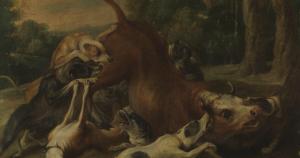 God loves animals, declaring them good, saving them from cataclysm, bringing them forward to paradise. He created one kind of animal, mankind, in His image, but we have used God’s gift of free will badly. This put a bit of grit in the fine-tuned cosmic machine and we have not stopped harming nature.
What of pain in the higher animals? These play fellows, as CS Lewis called them, may lack reason, but they appear to experience pain. While we cannot imagine what it is to be an aardvark, they appear to experience gratuitous pain. How could a good God let this happen?
Christian theology reveals a good God to us, just and loving, and that means God has provided for humanity to be redeemed. In the person of Jesus Christ, the God-man, we can see God and having seen Him, love Him. What of the animals? What is God’s plan for the aardvarks? Will they suffer, when they suffer gratuitously, for nothing?
We cannot know the details of any plan God may have for His creatures, but we can be sure there is a plan. If we do not know the plan, then how can we know there is one? A thoughtful critical, lawyer and apologetics gadfly Steve Baughman, suggested this was just special pleading. It is not.
One can know that a certain thing exists, given the other evidence, without knowing all or even much about it. Professor Alfred Geier, following Plato, called this the “known unknown.” The God revealed to His people will leave nothing undone and allow no injustice. Fortunately, God has all eternity and a vast cosmos (full of many worlds!) to give to those animals who experience pain. We do not know, need not know, the details of that plan, but logic demands that it exist.
Baughman thinks the redemption of animals leads to more questions than it answers. Now to a Socratic investigatory this seems very good: a theory is fecund if it leads to interesting questions. Baughman, however, suggests defeated questions for the idea of animal redemption and they are very serious:
And the deeper we get, the more questions your theory raises. Why is their intense suffering even necessary? Soul building? Building compassion in humans? And why trillions of sentient beings every year?
Why is animal suffering necessary?
Again this question will never get a full answer, because to know for sure exactly why just this animal had to suffer just now, I would need a full story of the cosmos. Every thing is connected to every other thing. Humans and angels (at least) have free will and choose, sometimes badly. God is bringing together all events for the best good of all creation and this calculus (while knowable) is not knowable by us. This is why Job must see God and in seeing the Beloved realize that all will be well based on God’s character.
The complete answer would require omniscience. This is true of any particular act, but animal suffering is impossible for a human to understand. I simply can never know what it is like to be a koala trapped in an Australian fire. What is the grace God gives? What is the experience of pain like to such a creature? To even hope to answer the question of what adequate redemption would be or to understand the full scope of the problem of this creature, beloved of God, one would have to know what it is to be a koala and no human has access to this reference point.
We can imagine the pain if we were in the same situation, we can register what looks like emotions we share, but we do not know what a kola experiences in fact. However, the suffering of the koala seems real, or of many of the higher creatures caught in fires like those now raging in Australia, the work of the super-predator man.
What will God do?
I do not know.
Why do I think God will do something?
I know God will do something, because of the nature of God revealed to us. I can suggest what God might do, not because I know God’s plan, but to show that such a plan is easy to conceive. Will it be just this plan? Almost surely not, because the cosmos is complex and I know too little of what is out in it.
With all of that in mind, I return to the simple question: “Why is all this animal suffering necessary?”
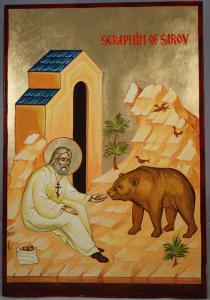 It is not necessary from the creation of the world, but is necessary now, because of what humankind has done to the world. It is an accidental, not essential feature of our ecosphere.
Why does this suffering continue?
The suffering continues, because we have not yet come to the end of time. God will, we are told, bring all things to a consummation and in that ending make all whole. He has all the time and power needed to compensate for that suffering. What will that be for a koala?
We cannot know, but surely great pleasures, such as are fit for such a creature, enduring over a renewed existence without fear would be fitting. So far as we need, there are numerous worlds, enough for all the creatures to find safe haven, and find just restitution.
Animal suffering may have meaning to animals, but we cannot know. They serve their own ends, in God’s plan, their own purpose and only sometimes come into our story. When they do, we work with them and they teach us as we elevate them. The suffering of animals, the painful deaths of beloved pets, do teach us and if that is part of their work at this moment of creation, teaching us, then that too will have a reward. Scripture and the saints suggest animals will be with us in paradise and perhaps those that do dwell with us in the new middle earth will be those that had to suffer for our sake. One work of paradise might be serving those creatures and loving them!
There have been (to us) nearly countless life forms on this globe since the moment of creation. Few species, however, know and experience pain or experience (what appears to be) feeling. These kind of animals mostly do not die as prey. Those that do are part of a cycle of life which has a divine meaning we do not comprehend. If animals have souls, as most Christians have thought*, they may not be individualized just as the human soul is. Do non-human animals share a common soul or is transmigration the way God has chosen to deal with their existence?
We do not know, but have no reason whatsoever to think the cycle of life works for a koala just as it does for a human. In fact, since we are not koala, we know it does not!
And of course after such speculation, the critic is tempted to dismiss it as a clever attempt to save a failing thesis. It is not, because one would wonder such things and speculate just this way if there was no animal pain at all.
What is it to be the cat Athena? I wanted to know about our cats, and what they felt because I loved them! There was, I soon realized, no way to “be a cat.” Cats (bad musicals notwithstanding) are not people with fur. They are themselves. God created them. God said they were good. There are numerous ways God could interact with cat kind. Given God’s revealed nature, I assumed there were some good ways and the Faith gives me liberty to engage in theological speculation (if I do not take my ideas too seriously).
Isn’t it glorious that cats are not people? Polar bears are not people? Dogs are not people? All have some relationship to the good God who made them!
In short, there is no reason to look at animal suffering and assume a Christian has no resources to address the question. The Christian need add nothing to the faith to see that God and God’s animals may have (to quote an old hero of mine) nearly infinite ways of dealing with such nearly infinite diversity.
Thank God.
Previous Post
January 13, 2020
On Animal Suffering: A Response to a Thoughtful Critic
Next Post

January 15, 2020 Things Change, Most Change is Hoop La!
Browse Our Archives
Select a Category Apologetics Art Culture Education On Books On Education Philosophy Politics Pop Culture Spiritual Reflections Uncategorized
Select a Month October 2026 September 2026 August 2026 July 2026 July 2025 June 2025 September 2024 July 2024 June 2024 December 2023 June 2023 September 2022 May 2022 April 2022 March 2022 February 2022 July 2021 June 2021 May 2021 April 2021 March 2021 February 2021 January 2021 December 2020 November 2020 October 2020 September 2020 August 2020 July 2020 June 2020 May 2020 April 2020 March 2020 February 2020 January 2020 December 2019 November 2019 October 2019 September 2019 August 2019 July 2019 June 2019 May 2019 April 2019 March 2019 February 2019 January 2019 December 2018 November 2018 October 2018 September 2018 August 2018 July 2018 June 2018 May 2018 April 2018 March 2018 February 2018 January 2018 December 2017 November 2017 October 2017 September 2017 August 2017 July 2017 June 2017 May 2017 April 2017 March 2017 February 2017 January 2017 December 2016 November 2016 October 2016 September 2016 August 2016 July 2016 June 2016 May 2016 April 2016 March 2016 February 2016 January 2016 December 2015 November 2015 October 2015 September 2015 August 2015 July 2015 June 2015 May 2015 April 2015 March 2015 February 2015 January 2015 November 2014 October 2014 September 2014 August 2014 July 2014 June 2014 May 2014 April 2014 March 2014 February 2014 January 2014 December 2013 November 2013 October 2013 September 2013 August 2013 July 2013 June 2013 May 2013 April 2013 March 2013 February 2013 January 2013 December 2012 November 2012 October 2012 September 2012 August 2012 July 2012 June 2012 May 2012
Follow Us!
TAKE THE
Religious Wisdom Quiz
What animals did Jesus ride into Jerusalem?
Select your answer to see how you score.
A horse A camel An ox A donkey
Books by This Author John Mark Reynolds
Related posts from Eidos

Classical Education and the Art of Dying Well

Golden, Golden, Golden: My Mother's Last Lesson


When the Center Holds: A Tribute to My...
TRENDING AT PATHEOS Evangelical

The REST of Your Life: A Creative Wrestles...
This week I had a conversation with a good friend from church....

How the author of the world's best hymn...
I've been working with John Newton for a while now. This makes...

Long before this Lectio Divina, Psalm 130 - the song - started...

What About the Trees? Another Living Parable
After I finished writing the last article about falling leaves as a...

Why Classical Education Is a Conversation, Not a...
Come and Read: Joy in Classical Education When I was a little...

Cornell University has received a great deal of negative publicity and intense...
view all Evangelical blogs
Ad-Free & Subscriber Log-In Subscription Support
- About Us
- 2026 Calendar
- Videos
- Podcasts
- Library of World Religions
- Faith In Media Tracker
- Advertise With Us
- Write for Us
- Privacy Policy
- Terms of Service
- Do Not Sell My Data
- Contact Us
- Radiant Digital
- Manage Newsletter Subscriptions
- Unsubscribe From Notifications
- Sitemap
Copyright 2008-2026, Patheos. All rights reserved.
Subscription Support Ad-Free & Subscriber Log-In
Follow Patheos