
BuddhistCatholicContemplativeEvangelicalGeneral ChristianHinduJewishLatter-day SaintMuslimNew VisionsProgressive Christian
Beliefs
- Buddhist
- Catholic
- Contemplative
- Evangelical
- General Christian
- Hindu
- Jewish
- Latter-day Saint
- More Voices
- Muslim
- New Visions
- Pagan
- Progressive Christian
Topics
- Religion News
- Food and Religion
- Sports and Religion
- Religious Art
- Religious Music and Entertainment
- Religious Events
- History and Religion
- Style and Religion
- Politics and Religion
- Women in Religion
- Recreation Outdoors and Religion
- Business Finance and Religion
- Careers Workplace and Religion
- Education and Religion
- Family Parenting and Religion
- Health Fitness and Religion
- Home and Religion
- Relationships and Religion
- Technology and Religion
- Travel and Religion
Columnists
- Buddhist Columnists
- Business Finance and Religion Columnists
- Careers Workplace and Religion Columnists
- Catholic Columnists
- Contemplative Columnists
- Education and Religion Columnists
- Evangelists Columnists
- Family Parenting and Religion Columnists
- General Christian Columnists
- Health Fitness and Religion Columnists
- Hindu Columnists
- History and Religion Columnists
- Home and Religion Columnists
- Jewish Columnists
- More Voices Columnists
- Latter Day Columnists
- Muslim Columnists
- New Visions Columnists
- Nonreligious Columnists
- Pagan Columnists
- Politics and Religion Columnists
- Progressive Columnists
- Recreation Outdoors and Religion Columnists
- Relationships and Religion Columnists
- Religion News Columnists
- Religious Art Columnists
- Religious Events Columnists
- Religious Music and Entertainment Columnists
- Sports and Religion Columnists
- Style and Religion Columnists
- Technology and Religion Columnists
- Travel and Religion Columnists
- Women in Religion Columnists
Resource Library
- 2026 Calendar
- Library of World Religions
- The 100 Most Holy Places on Earth
- Patheos Answers
- Podcasts
- Videos
- Faith Leaders Database
- Anglican Episcopalian
- Bahai
- Baptist
- Buddhism
- Christianity
- Confucianism
- Eastern Orthodoxy
- Hinduism
- Holiness and Pentecostal
- ISKCON
- Islam
- Judaism
- Lutheran
- Methodist
- The Church of Jesus Christ of Latter-day Saints
- New Age
- Paganism
- Presbytarian and Reformed
- Protestantism
- Religion Behind the Scenes
- Roman Catholic
- Scientology
- Shia Islam
- Sikhism
- Sufism
- Sunni Islam
- Taoism
- Zen
- See all religions
Research Tools
 Ad-Free & Subscriber Log-In Subscription Support
Ad-Free & Subscriber Log-In Subscription Support
Follow Patheos 

- Trending:
- Forgiveness
- |
- Marriage
- |
- Consciousness
- |
- Death Penalty
- |
- Election
- |
- Halloween

- Home
- Evangelical
- Guest Voice: Reading as a Pathway to Freedom (Jack Franicevich)
Guest Voice: Reading as a Pathway to Freedom (Jack Franicevich)
Last updated on: January 31, 2020 at 12:54 pm by John Mark N. Reynolds
Guest Voice: Reading as a Pathway to Freedom (Jack Franicevich) 2020-01-31T12:54:55-04:00 John Mark N. Reynolds
Patheos Explore the world's faith through different perspectives on religion and spirituality! Patheos has the views of the prevalent religions and spiritualities of the world.
When you know bright people, sometimes they say things so well, you know other people should hear what they think. Today I get to share something from one such new voice.
Jack Franicevich is a graduate of Biola University and the Torrey Honors Institute. He lives in Phoenix, where he is teaching 9th grade and preparing for ordination in the ACNA.
Mr. Franicevich:
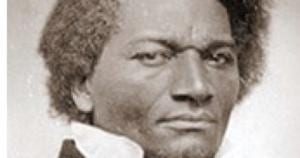 I teach humanities at a Title I charter in Phoenix called Maryvale Preparatory Academy. We are a K-10 that is two years away from becoming a K-12, and most of our students will become the first college graduates in their families. I teach 9th graders a course in American letters.
Earlier this week, during a discussion of Fredrick Douglass’ autobiography, we asked how his claim that reading is the “pathway from slavery to freedom” could be true. Here was our best idea:
Reading not only gives us “perspective,” it also introduces us to authors and figures we can “relate” to. This is especially significant in the context of Douglass’ story, because he doesn’t “relate” to his relatives. His grandmother lives too far away to visit; having only met his mother four times, he found himself unmoved by her death; and, having never corporately experienced the love of their common mother, he feels no bonds of brotherhood with his birth-siblings.
We noted that slaves like Douglass do not have access to one of the foundational American understanding of patriotism and fatherhood: accepting war in your day that your sons might have peace in theirs. We remember this image from Patrick Henry, Thomas Paine, and Francis Scott Key. Even Huckleberry’s friend, Jim, a slave himself, runs away not for his own liberation but for the chance to buy-back his wife and children.
But with no home, no father, no mother, and no children, what motivation does the young Douglass have to stand up?
Reading gives people relatives. Tom Sawyer was not a pirate, nor had he ever met one, but the affinity he felt with the pirates in the stories he read gave him a sense of familial identity with them. Whenever his little gang of robbers did things contrary to “the books,” he was offended, both on his own behalf and on behalf of pirates.
One student brought up an old conversation in which we had defined “annotations” as “the records of your conversation with the author.” This made us realize that all of our reading, even the dry, propositional claims, is familial. When the goodness, truth, and beauty of something in a book impresses itself on us, whatever action we take that accord with those principles is not just an action that accords with those principles, but an action taken in the memory of, in the authority of, in the honor of, or in the name of, our expanding family. The arguments which strengthen Douglass ‘ resolve were taught to him by the white woman who taught him the A-B-C; the boys whom he tricked into teaching him how to read; and all the greats whom “The Columbian Orator” anthologizes. Another student pointed out an image of Douglass’ annotations of the book— reading and annotating George Washington makes him a son of our nation’s father and, therefore, a greater American in his own right.
Masters dehumanized their slaves by de-familiating them. Reading is “the pathway to freedom” because it gives Douglass a family in whose name he can act with courage and conviction. This is Douglass’ experience of reading abolitionists and orators and I hope it is my students’ reading experience.
That’s where we got in class. As a Christian, I think we can take one more step:
This is also, by grace, the experience of baptized Christians who read the Scriptures, and act in the memory, and the family name of Christ, becoming sons who only do that which we see our Father doing.
Previous Post
January 30, 2020
Bearing the Cross (David J. Garrow)
Browse Our Archives
Select a Category Apologetics Art Culture Education On Books On Education Philosophy Politics Pop Culture Spiritual Reflections Uncategorized
Select a Month October 2026 September 2026 August 2026 July 2026 July 2025 June 2025 September 2024 July 2024 June 2024 December 2023 June 2023 September 2022 May 2022 April 2022 March 2022 February 2022 July 2021 June 2021 May 2021 April 2021 March 2021 February 2021 January 2021 December 2020 November 2020 October 2020 September 2020 August 2020 July 2020 June 2020 May 2020 April 2020 March 2020 February 2020 January 2020 December 2019 November 2019 October 2019 September 2019 August 2019 July 2019 June 2019 May 2019 April 2019 March 2019 February 2019 January 2019 December 2018 November 2018 October 2018 September 2018 August 2018 July 2018 June 2018 May 2018 April 2018 March 2018 February 2018 January 2018 December 2017 November 2017 October 2017 September 2017 August 2017 July 2017 June 2017 May 2017 April 2017 March 2017 February 2017 January 2017 December 2016 November 2016 October 2016 September 2016 August 2016 July 2016 June 2016 May 2016 April 2016 March 2016 February 2016 January 2016 December 2015 November 2015 October 2015 September 2015 August 2015 July 2015 June 2015 May 2015 April 2015 March 2015 February 2015 January 2015 November 2014 October 2014 September 2014 August 2014 July 2014 June 2014 May 2014 April 2014 March 2014 February 2014 January 2014 December 2013 November 2013 October 2013 September 2013 August 2013 July 2013 June 2013 May 2013 April 2013 March 2013 February 2013 January 2013 December 2012 November 2012 October 2012 September 2012 August 2012 July 2012 June 2012 May 2012
Follow Us!
TAKE THE
Religious Wisdom Quiz
What is the name of the lake into which the beast and false prophet are thrown?
Select your answer to see how you score.
Gehenna The outer darkness The lake of burning sulfur (lake of fire) The abyss
Books by This Author John Mark Reynolds
Related posts from Eidos

Why Classical Education Is a Conversation, Not a...

Does Classical Education Belong Only to the West?

Classical Education Must Teach Us to Make the...

Rooted: Why Classical Education Needs Community
TRENDING AT PATHEOS Evangelical

The REST of Your Life: A Creative Wrestles...
This week I had a conversation with a good friend from church....

How the author of the world's best hymn...
I've been working with John Newton for a while now. This makes...

Long before this Lectio Divina, Psalm 130 - the song - started...

What About the Trees? Another Living Parable
After I finished writing the last article about falling leaves as a...

Why Classical Education Is a Conversation, Not a...
Come and Read: Joy in Classical Education When I was a little...

Cornell University has received a great deal of negative publicity and intense...
view all Evangelical blogs
Ad-Free & Subscriber Log-In Subscription Support
- About Us
- 2026 Calendar
- Videos
- Podcasts
- Library of World Religions
- Faith In Media Tracker
- Advertise With Us
- Write for Us
- Privacy Policy
- Terms of Service
- Do Not Sell My Data
- Contact Us
- Radiant Digital
- Manage Newsletter Subscriptions
- Unsubscribe From Notifications
- Sitemap
Copyright 2008-2026, Patheos. All rights reserved.
Subscription Support Ad-Free & Subscriber Log-In
Follow Patheos