
BuddhistCatholicContemplativeEvangelicalGeneral ChristianHinduJewishLatter-day SaintMuslimNew VisionsProgressive Christian
Beliefs
- Buddhist
- Catholic
- Contemplative
- Evangelical
- General Christian
- Hindu
- Jewish
- Latter-day Saint
- More Voices
- Muslim
- New Visions
- Pagan
- Progressive Christian
Topics
- Religion News
- Food and Religion
- Sports and Religion
- Religious Art
- Religious Music and Entertainment
- Religious Events
- History and Religion
- Style and Religion
- Politics and Religion
- Women in Religion
- Recreation Outdoors and Religion
- Business Finance and Religion
- Careers Workplace and Religion
- Education and Religion
- Family Parenting and Religion
- Health Fitness and Religion
- Home and Religion
- Relationships and Religion
- Technology and Religion
- Travel and Religion
Columnists
- Buddhist Columnists
- Business Finance and Religion Columnists
- Careers Workplace and Religion Columnists
- Catholic Columnists
- Contemplative Columnists
- Education and Religion Columnists
- Evangelists Columnists
- Family Parenting and Religion Columnists
- General Christian Columnists
- Health Fitness and Religion Columnists
- Hindu Columnists
- History and Religion Columnists
- Home and Religion Columnists
- Jewish Columnists
- More Voices Columnists
- Latter Day Columnists
- Muslim Columnists
- New Visions Columnists
- Nonreligious Columnists
- Pagan Columnists
- Politics and Religion Columnists
- Progressive Columnists
- Recreation Outdoors and Religion Columnists
- Relationships and Religion Columnists
- Religion News Columnists
- Religious Art Columnists
- Religious Events Columnists
- Religious Music and Entertainment Columnists
- Sports and Religion Columnists
- Style and Religion Columnists
- Technology and Religion Columnists
- Travel and Religion Columnists
- Women in Religion Columnists
Resource Library
- 2026 Calendar
- Library of World Religions
- The 100 Most Holy Places on Earth
- Patheos Answers
- Podcasts
- Videos
- Faith Leaders Database
- Anglican Episcopalian
- Bahai
- Baptist
- Buddhism
- Christianity
- Confucianism
- Eastern Orthodoxy
- Hinduism
- Holiness and Pentecostal
- ISKCON
- Islam
- Judaism
- Lutheran
- Methodist
- The Church of Jesus Christ of Latter-day Saints
- New Age
- Paganism
- Presbytarian and Reformed
- Protestantism
- Religion Behind the Scenes
- Roman Catholic
- Scientology
- Shia Islam
- Sikhism
- Sufism
- Sunni Islam
- Taoism
- Zen
- See all religions
Research Tools
 Ad-Free & Subscriber Log-In Subscription Support
Ad-Free & Subscriber Log-In Subscription Support
Follow Patheos 

- Trending:
- Forgiveness
- |
- Marriage
- |
- Consciousness
- |
- Death Penalty
- |
- Election
- |
- Halloween

- Home
- Evangelical
- If Ignorance Were Bliss: then Dawkins Would Be Happy Much of the Time
If Ignorance Were Bliss: then Dawkins Would Be Happy Much of the Time
Last updated on: December 16, 2019 at 11:25 pm by John Mark N. Reynolds
If Ignorance Were Bliss: then Dawkins Would Be Happy Much of the Time 2019-12-16T23:25:48-04:00 John Mark N. Reynolds
Patheos Explore the world's faith through different perspectives on religion and spirituality! Patheos has the views of the prevalent religions and spiritualities of the world.
From Richard Dawkins’ Twitter feed:
Surprised by common reverence for Plato. Alexandrians like Eratosthenes made superb progress. But what did Plato say that was actually right? And didn’t he mislead generations of theologians & philosophers into thinking you could find truth by making stuff up in an armchair?
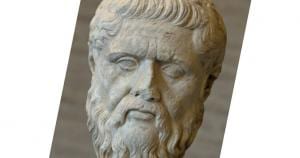 I am not surprised by the common respect for Plato, philosophers do not revere philosophers, because Plato introduced most of the great questions of philosophy and proposed several solutions that remain viable for theist and atheist philosophers alike. I am surprised that Richard Dawkins knows so little about the history of science.
One could treat this Tweet with the disdain it deserves: Plato did not literally think you could find truth by “making stuff up” in an armchair, armchairs not yet existing and “making up stuff” (fantasy) being the subject of withering criticism in Republic. (See the low view of “fantasy” in 509d ff)
More seriously, Dawkins is accusing Plato of opposing science and experimentation and leading others to do the same. Since the methods to which Dawkins alludes had not been discovered yet, Plato surely could not have opposed them! As his one great work of scientific hypothesis (Timaeus) demonstrates, Plato did not oppose observations of the natural world. He used those observations to develop his ideas and make his “theory” more likely. Plato did not think “stories” about the natural world could be more than likely and in this he anticipates certain forms of modern philosophy of science in the tentative nature of scientific explanation and the need for better “stories” as different data was accumulated.
To quote the astronomer Timaeus on the limits of his theorizing:
. . . we prove unable to give accounts that are always in all respects self-consistent and perfectly exact, be not thou surprised; rather we should be content if we can furnish accounts that are inferior to none in likelihood, remembering that both I who speak and you who judge are but human creatures, so that it becomes us to accept the likely account of these matters and forbear to search beyond it.
Throughout the dialog, Timaeus offers provisional answers based on his observations and speculations, recognizing that better ideas might come, but these must be likely and not merely ideal speculation. The Platonist approach, like modern physics, prioritizes mathematics without ignoring experimentation.
Dawkins, I suspect, has the outdated view that the Hellenistic and Roman Neoplatonist were anti-science. Here is a review of just one recent book that explodes this ahistorical myth.
Plato did inspire key aspects of the scientific revolution, Kepler being just one notable example. Plato in Timaeus and his discussions of cosmology gave mathematics an elevated role. Numeracy, geometry, and what we would call mathematical modeling were necessary disciplines for Plato and those who agreed with his approach. Observation and fitting those observations to the most elegant mathematical models pushed science and mathematics forward. Platonism was a deep influence on Leibniz, to cite just one great mathematician and thinker. Note as well that in the Western world, Timaeus, the great Platonic treatise on the cosmos and biology, was the main Plato to be had. As a result, Plato the cosmologist was the Plato of the late Middle Ages.
And Eratosthenes was deeply influenced by Platonism, but perhaps enough is enough in piling on poor Professor Dawkins.
Dawkins is not so much wrong as blissfully ignorant of history, philosophy of science, history of science, and the history of mathematics. This makes opining easy! Plato gives hope to such a sophist, some latter day Thrasymachus, but only if he will let his error go.
——————————————-
See my When Athens Met Jerusalem for an introduction Plato.
Previous Post

December 15, 2019
The Genealogies of Christmas
Next Post

December 17, 2019 For the Love of the Logos: Ten Helps
Browse Our Archives
Select a Category Apologetics Art Culture Education On Books On Education Philosophy Politics Pop Culture Spiritual Reflections Uncategorized
Select a Month October 2026 September 2026 August 2026 July 2026 July 2025 June 2025 September 2024 July 2024 June 2024 December 2023 June 2023 September 2022 May 2022 April 2022 March 2022 February 2022 July 2021 June 2021 May 2021 April 2021 March 2021 February 2021 January 2021 December 2020 November 2020 October 2020 September 2020 August 2020 July 2020 June 2020 May 2020 April 2020 March 2020 February 2020 January 2020 December 2019 November 2019 October 2019 September 2019 August 2019 July 2019 June 2019 May 2019 April 2019 March 2019 February 2019 January 2019 December 2018 November 2018 October 2018 September 2018 August 2018 July 2018 June 2018 May 2018 April 2018 March 2018 February 2018 January 2018 December 2017 November 2017 October 2017 September 2017 August 2017 July 2017 June 2017 May 2017 April 2017 March 2017 February 2017 January 2017 December 2016 November 2016 October 2016 September 2016 August 2016 July 2016 June 2016 May 2016 April 2016 March 2016 February 2016 January 2016 December 2015 November 2015 October 2015 September 2015 August 2015 July 2015 June 2015 May 2015 April 2015 March 2015 February 2015 January 2015 November 2014 October 2014 September 2014 August 2014 July 2014 June 2014 May 2014 April 2014 March 2014 February 2014 January 2014 December 2013 November 2013 October 2013 September 2013 August 2013 July 2013 June 2013 May 2013 April 2013 March 2013 February 2013 January 2013 December 2012 November 2012 October 2012 September 2012 August 2012 July 2012 June 2012 May 2012
Follow Us!
TAKE THE
Religious Wisdom Quiz
Which couple taught Apollos more accurately about Jesus in Ephesus?
Select your answer to see how you score.
Lydia and Titus Ananias and Sapphira Mary and Joseph Priscilla and Aquila
Books by This Author John Mark Reynolds
Related posts from Eidos

Classical Education Must Teach Us to Make the...

Yet I Love Her: History and the Church


The Iceberg is There: Verbosity Cannot Defeat Reality
TRENDING AT PATHEOS Evangelical

The REST of Your Life: A Creative Wrestles...
This week I had a conversation with a good friend from church....

How the author of the world's best hymn...
I've been working with John Newton for a while now. This makes...

Long before this Lectio Divina, Psalm 130 - the song - started...

What About the Trees? Another Living Parable
After I finished writing the last article about falling leaves as a...

Why Classical Education Is a Conversation, Not a...
Come and Read: Joy in Classical Education When I was a little...

Cornell University has received a great deal of negative publicity and intense...
view all Evangelical blogs
Ad-Free & Subscriber Log-In Subscription Support
- About Us
- 2026 Calendar
- Videos
- Podcasts
- Library of World Religions
- Faith In Media Tracker
- Advertise With Us
- Write for Us
- Privacy Policy
- Terms of Service
- Do Not Sell My Data
- Contact Us
- Radiant Digital
- Manage Newsletter Subscriptions
- Unsubscribe From Notifications
- Sitemap
Copyright 2008-2026, Patheos. All rights reserved.
Subscription Support Ad-Free & Subscriber Log-In
Follow Patheos