
BuddhistCatholicContemplativeEvangelicalGeneral ChristianHinduJewishLatter-day SaintMuslimNew VisionsProgressive Christian
Beliefs
- Buddhist
- Catholic
- Contemplative
- Evangelical
- General Christian
- Hindu
- Jewish
- Latter-day Saint
- More Voices
- Muslim
- New Visions
- Pagan
- Progressive Christian
Topics
- Religion News
- Food and Religion
- Sports and Religion
- Religious Art
- Religious Music and Entertainment
- Religious Events
- History and Religion
- Style and Religion
- Politics and Religion
- Women in Religion
- Recreation Outdoors and Religion
- Business Finance and Religion
- Careers Workplace and Religion
- Education and Religion
- Family Parenting and Religion
- Health Fitness and Religion
- Home and Religion
- Relationships and Religion
- Technology and Religion
- Travel and Religion
Columnists
- Buddhist Columnists
- Business Finance and Religion Columnists
- Careers Workplace and Religion Columnists
- Catholic Columnists
- Contemplative Columnists
- Education and Religion Columnists
- Evangelists Columnists
- Family Parenting and Religion Columnists
- General Christian Columnists
- Health Fitness and Religion Columnists
- Hindu Columnists
- History and Religion Columnists
- Home and Religion Columnists
- Jewish Columnists
- More Voices Columnists
- Latter Day Columnists
- Muslim Columnists
- New Visions Columnists
- Nonreligious Columnists
- Pagan Columnists
- Politics and Religion Columnists
- Progressive Columnists
- Recreation Outdoors and Religion Columnists
- Relationships and Religion Columnists
- Religion News Columnists
- Religious Art Columnists
- Religious Events Columnists
- Religious Music and Entertainment Columnists
- Sports and Religion Columnists
- Style and Religion Columnists
- Technology and Religion Columnists
- Travel and Religion Columnists
- Women in Religion Columnists
Resource Library
- 2026 Calendar
- Library of World Religions
- The 100 Most Holy Places on Earth
- Patheos Answers
- Podcasts
- Videos
- Faith Leaders Database
- Anglican Episcopalian
- Bahai
- Baptist
- Buddhism
- Christianity
- Confucianism
- Eastern Orthodoxy
- Hinduism
- Holiness and Pentecostal
- ISKCON
- Islam
- Judaism
- Lutheran
- Methodist
- The Church of Jesus Christ of Latter-day Saints
- New Age
- Paganism
- Presbytarian and Reformed
- Protestantism
- Religion Behind the Scenes
- Roman Catholic
- Scientology
- Shia Islam
- Sikhism
- Sufism
- Sunni Islam
- Taoism
- Zen
- See all religions
Research Tools
 Ad-Free & Subscriber Log-In Subscription Support
Ad-Free & Subscriber Log-In Subscription Support
Follow Patheos 

- Trending:
- Forgiveness
- |
- Marriage
- |
- Consciousness
- |
- Death Penalty
- |
- Election
- |
- Halloween

- Home
- Evangelical
- A Winter’s Tale
A Winter’s Tale
Last updated on: November 10, 2019 at 9:42 pm by John Mark N. Reynolds
A Winter’s Tale 2019-11-10T21:42:57-04:00 John Mark N. Reynolds
Patheos Explore the world's faith through different perspectives on religion and spirituality! Patheos has the views of the prevalent religions and spiritualities of the world.
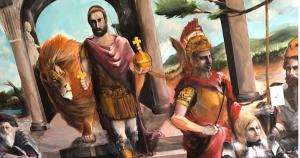 Winter, traditionally, was a time for tales in the northern parts of the world. People mostly farmed and while there is always work on the farm, in the winter there is less and much takes place inside because it must. Light and heat were expensive, at least in terms of labor, and so folk gathered near each other. Then the teller of tales came into his or her own. The story teller could draw on folk tales, shaped over hundreds of years, pieces of epics if memory was good enough, family lore, and imagination.
Myths were made: not false stories, but stories that told deep truths using fiction. The story was true in what the tale intended to convey- not history, but meaning. Fables, parables, tall tales, saint’s stories were all told. I was born so long ago that I could hear bits of this done at the end of the summer’s day or in the bleak midwinter. I saw the custom fade away under the pressure of television and the death of the tale tellers, and now have lived long enough to regret the loss bitterly.
We need oral tradition and the ability to listen that comes with the winter’s tale. The stories scarcely ever are new, but repeated enough that a next generation of tellers can pass on the tradition. Whatever else we do in the winter holidays stretching from All Hallows’, Thanksgiving, through the fast of Advent, to blessed Christmastide, perhaps we can make a place to renew the old stories. Find someone old enough to recollect a few, rehearse the family lore, and toast the heroes, saints, and legends of the past.
If nobody is left, then there is still hope. The grace of God can give a new generation a winter’s tale to create a new spring for a family, community, or church. We can be born again, renewed, the old can be made new again, even if for a time much has been forgotten that should not have been.
Shakespeare gave us a Winter’s Tale that contains a winter’s tale told by a little boy. That boy will soon slip away from the horrible madness that grips his time. His story is not completed, but his mother, Hermione, carries hope in her heart. She carries forward, what is seemingly dead, the “happily ever after” of the best Christian tales. Against all hope, God’s good grace allows a rebirth of much that has been lost. The story of her little boy is never finished, but he is not forgotten. He is memorialized in the restoration of the family and in the hope of his future resurrection.
The difference between the Queen, who is full of grace, and the King is both the desire to listen to tales and live a mythic life. Too many are content to do “best practices” in whatever situation they face and certainly this is better than doing what will surely not work! The King puts his advisors in impossible situations, but the Queen is not defeated because she refuses to accept the rules he has made. She goes deeper to the mythic and turns her life into a winter tale.
How can we do this practically? When we face a choice between bad and worse, we might look to grace and mercy and see if we can find a way between the bad and worse. Hermione finds (in Shakespeare’s tale) a way to “die” and live. Constantine the Great faced a decaying city of Rome as Roman Emperor and refused to save Rome while saving Rome. He built a new Rome! Walt Disney faced the loss of Oswald the Lucky Rabbit, his first great character, by neither giving up nor engaging in endless recriminations, but by developing Mickey Mouse. He voiced the Mouse, leading by doing. Disney lived a mythic life and so made cartoons that were somehow more, felt like more, than his competition.
May we also learn a winter tale of life in a dark time, grace in a merciless time, and mercy for the graceless.
Next Post

November 9, 2019 Thwarted Ambition? Avoid “Edmunding”
Browse Our Archives
Select a Category Apologetics Art Culture Education On Books On Education Philosophy Politics Pop Culture Spiritual Reflections Uncategorized
Select a Month October 2026 September 2026 August 2026 July 2026 July 2025 June 2025 September 2024 July 2024 June 2024 December 2023 June 2023 September 2022 May 2022 April 2022 March 2022 February 2022 July 2021 June 2021 May 2021 April 2021 March 2021 February 2021 January 2021 December 2020 November 2020 October 2020 September 2020 August 2020 July 2020 June 2020 May 2020 April 2020 March 2020 February 2020 January 2020 December 2019 November 2019 October 2019 September 2019 August 2019 July 2019 June 2019 May 2019 April 2019 March 2019 February 2019 January 2019 December 2018 November 2018 October 2018 September 2018 August 2018 July 2018 June 2018 May 2018 April 2018 March 2018 February 2018 January 2018 December 2017 November 2017 October 2017 September 2017 August 2017 July 2017 June 2017 May 2017 April 2017 March 2017 February 2017 January 2017 December 2016 November 2016 October 2016 September 2016 August 2016 July 2016 June 2016 May 2016 April 2016 March 2016 February 2016 January 2016 December 2015 November 2015 October 2015 September 2015 August 2015 July 2015 June 2015 May 2015 April 2015 March 2015 February 2015 January 2015 November 2014 October 2014 September 2014 August 2014 July 2014 June 2014 May 2014 April 2014 March 2014 February 2014 January 2014 December 2013 November 2013 October 2013 September 2013 August 2013 July 2013 June 2013 May 2013 April 2013 March 2013 February 2013 January 2013 December 2012 November 2012 October 2012 September 2012 August 2012 July 2012 June 2012 May 2012
Follow Us!
TAKE THE
Religious Wisdom Quiz
What does Paul tell the Thessalonians to do without ceasing?
Select your answer to see how you score.
Pray Rejoice Study the word Give thanks
Books by This Author John Mark Reynolds
Related posts from Eidos

Classical Education and the Art of Dying Well

Golden, Golden, Golden: My Mother's Last Lesson


When the Center Holds: A Tribute to My...
TRENDING AT PATHEOS Evangelical

The REST of Your Life: A Creative Wrestles...
This week I had a conversation with a good friend from church....

How the author of the world's best hymn...
I've been working with John Newton for a while now. This makes...

Long before this Lectio Divina, Psalm 130 - the song - started...

What About the Trees? Another Living Parable
After I finished writing the last article about falling leaves as a...

Why Classical Education Is a Conversation, Not a...
Come and Read: Joy in Classical Education When I was a little...

Cornell University has received a great deal of negative publicity and intense...
view all Evangelical blogs
Ad-Free & Subscriber Log-In Subscription Support
- About Us
- 2026 Calendar
- Videos
- Podcasts
- Library of World Religions
- Faith In Media Tracker
- Advertise With Us
- Write for Us
- Privacy Policy
- Terms of Service
- Do Not Sell My Data
- Contact Us
- Radiant Digital
- Manage Newsletter Subscriptions
- Unsubscribe From Notifications
- Sitemap
Copyright 2008-2026, Patheos. All rights reserved.
Subscription Support Ad-Free & Subscriber Log-In
Follow Patheos