
BuddhistCatholicContemplativeEvangelicalGeneral ChristianHinduJewishLatter-day SaintMuslimNew VisionsProgressive Christian
Beliefs
- Buddhist
- Catholic
- Contemplative
- Evangelical
- General Christian
- Hindu
- Jewish
- Latter-day Saint
- More Voices
- Muslim
- New Visions
- Pagan
- Progressive Christian
Topics
- Religion News
- Food and Religion
- Sports and Religion
- Religious Art
- Religious Music and Entertainment
- Religious Events
- History and Religion
- Style and Religion
- Politics and Religion
- Women in Religion
- Recreation Outdoors and Religion
- Business Finance and Religion
- Careers Workplace and Religion
- Education and Religion
- Family Parenting and Religion
- Health Fitness and Religion
- Home and Religion
- Relationships and Religion
- Technology and Religion
- Travel and Religion
Columnists
- Buddhist Columnists
- Business Finance and Religion Columnists
- Careers Workplace and Religion Columnists
- Catholic Columnists
- Contemplative Columnists
- Education and Religion Columnists
- Evangelists Columnists
- Family Parenting and Religion Columnists
- General Christian Columnists
- Health Fitness and Religion Columnists
- Hindu Columnists
- History and Religion Columnists
- Home and Religion Columnists
- Jewish Columnists
- More Voices Columnists
- Latter Day Columnists
- Muslim Columnists
- New Visions Columnists
- Nonreligious Columnists
- Pagan Columnists
- Politics and Religion Columnists
- Progressive Columnists
- Recreation Outdoors and Religion Columnists
- Relationships and Religion Columnists
- Religion News Columnists
- Religious Art Columnists
- Religious Events Columnists
- Religious Music and Entertainment Columnists
- Sports and Religion Columnists
- Style and Religion Columnists
- Technology and Religion Columnists
- Travel and Religion Columnists
- Women in Religion Columnists
Resource Library
- 2026 Calendar
- Library of World Religions
- The 100 Most Holy Places on Earth
- Patheos Answers
- Podcasts
- Videos
- Faith Leaders Database
- Anglican Episcopalian
- Bahai
- Baptist
- Buddhism
- Christianity
- Confucianism
- Eastern Orthodoxy
- Hinduism
- Holiness and Pentecostal
- ISKCON
- Islam
- Judaism
- Lutheran
- Methodist
- The Church of Jesus Christ of Latter-day Saints
- New Age
- Paganism
- Presbytarian and Reformed
- Protestantism
- Religion Behind the Scenes
- Roman Catholic
- Scientology
- Shia Islam
- Sikhism
- Sufism
- Sunni Islam
- Taoism
- Zen
- See all religions
Research Tools
 Ad-Free & Subscriber Log-In Subscription Support
Ad-Free & Subscriber Log-In Subscription Support
Follow Patheos 

- Trending:
- Forgiveness
- |
- Marriage
- |
- Consciousness
- |
- Death Penalty
- |
- Election
- |
- Halloween

- Home
- Evangelical
- How to End up at Castle Dracula
How to End up at Castle Dracula
Last updated on: October 25, 2019 at 8:36 am by John Mark N. Reynolds
How to End up at Castle Dracula 2019-10-25T08:36:56-04:00 John Mark N. Reynolds
Patheos Explore the world's faith through different perspectives on religion and spirituality! Patheos has the views of the prevalent religions and spiritualities of the world.
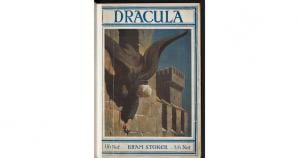 A vampire sucks the blood of the living, but only to stay undead: the perfect image of the ideologue, the man with unreal ideas.
Dracula is in part a myth based on the very real conflict between the world as it is and the artificial world that ignores half of reality. The horrors begin when our carefully cultivated, college credentialed worldview clashes with truth.
Think for a moment. We, all of us, begin conscious: we are. We experience, interpret and understand the world through our mind that is the continuous work of that consciousness. If there is anything about which we are sure, consciousness must be that “thing.” We know nothing before consciousness and nothing without a quality that matter and energy cannot capture.
This is uncomfortable for the ideologue: the materialist. He must use the world he knows only through his mind to explain how his consciousness, indeed his entire mind, is matter. This is an odd decision, perhaps motivated to make the cosmos simpler: matter and energy. Hard reality keeps intruding: what of number? Isn’t there something there when we talk about mathematical objects? What of ideas? Hamlet, the play, is stored in our minds, where certain triggers stored on paper, digital images, or even stone tablets produce the play that can captivate the consciousness of kings and commoners. The good, the truth, and beauty also exist and if we ignore them then we are easily tricked by the twisted, the false, and the ugly.
Bram Stoker should be as least partially understood as creating a response to the unreal ideologue who sees the world as if there are no more things in heaven and earth than are dreamed of in his materialist ideology. The Count is a symbol, a metaphor, for the danger for those who ignore Heaven and so are subject to Hell.
If we will not have God and the angels, then we are prey for devils. This is not anti-scientific, Stoker was keen on scientific progress. Of course vampires do not exist, they are the symbol for the underside of the reality some ignore. Dracula is sexuality depraved, the spiritual removed and the animal exalted, not bound in marriage pointing to paradise. Dracula is deathless, when death is a severe mercy to the poor body dragging and endless non-existence forward. Dracula consumes, but without creation. Dracula exalts in war: he knows only nature red in tooth and claw.
Dracula is the modern educated man, able to talk of culture, consume finer things, Dracula is supernatural, like all of us are, body and soul, but he lives like a beast whatever his fine talk. The novel sets up the folly of the ensouled ignoring the Divine and the diabolical, because one is busy noting the recipe for a paprika dish, or condescending to the “natives.” As the Western man moves to the Orthodox Christian East, he finds himself speaking a different language, since these folk live in all of reality and not just in the Oxbridge approved parts.
Yet Stoker is kind. Some survive, because they are decent, Christian fundamentally under the credentialed materialism. Here a young man, stupid enough to end up a Count Dracula’s castle despite all warnings:
Just before I was leaving, the old lady came up to my room and said in a hysterical way: “Must you go? Oh! Young Herr, must you go?”
She was in such an excited state that she seemed to have lost her grip of what German she knew, and mixed it all up with some other language which I did not know at all. I was just able to follow her by asking many questions. When I told her that I must go at once, and that I was engaged on important business, she asked again: “Do you know what day it is?”
I answered that it was the fourth of May. She shook her head as she said again: “Oh, yes! I know that! I know that, but do you know what day it is?”
On my saying that I did not understand, she went on: “It is the eve of St. George’s Day. Do you not know that tonight, when the clock strikes midnight, all the evil things in the world will have full sway? Do you know where you are going, and what you are going to?”
She was in such evident distress that I tried to comfort her, but without effect. Finally, she went down on her knees and implored me not to go; at least to wait a day or two before starting. It was all very ridiculous but I did not feel comfortable. However, there was business to be done, and I could allow nothing to interfere with it. I tried to raise her up, and said, as gravely as I could, that I thanked her, but my duty was imperative, and that I must go. She then rose and dried her eyes, and taking a crucifix from her neck offered it to me.
I did not know what to do, for, as an English Churchman, I have been taught to regard such things as in some measure idolatrous, and yet it seemed so ungracious to refuse an old lady meaning so well and in such a state of mind. She saw, I suppose, the doubt in my face, for she put the rosary round my neck and said, “For your mother’s sake,” and went out of the room. I am writing up this part of the diary whilst I am waiting for the coach, which is, of course, late; and the crucifix is still round my neck. Whether it is the old lady’s fear, or the many ghostly traditions of this place, or the crucifix itself, I do not know, but I am not feeling nearly as easy in my mind as usual.
This captures the unwarranted condescension of the credentialed quite well, but also the basic humanity that can save us. We know we think, so that we are. We know there is more to the world than what the frame of our screen allows us to see. The screen shows us what men want us to see. The world, dark where the screen light ends, is still there and we ignore it at our peril.
But not just at our peril. Ending up in Dracula’s castle is bad enough, but missing the Beatific Vision, God, Good, Truth, and Beauty, is to miss the very best of all joys.
Previous Post

October 24, 2019
More All Hallows’: Damnation to Demons, Grace to All People
Next Post

October 26, 2019 A Political Update: Nobody Still Knows
Browse Our Archives
Select a Category Apologetics Art Culture Education On Books On Education Philosophy Politics Pop Culture Spiritual Reflections Uncategorized
Select a Month October 2026 September 2026 August 2026 July 2026 July 2025 June 2025 September 2024 July 2024 June 2024 December 2023 June 2023 September 2022 May 2022 April 2022 March 2022 February 2022 July 2021 June 2021 May 2021 April 2021 March 2021 February 2021 January 2021 December 2020 November 2020 October 2020 September 2020 August 2020 July 2020 June 2020 May 2020 April 2020 March 2020 February 2020 January 2020 December 2019 November 2019 October 2019 September 2019 August 2019 July 2019 June 2019 May 2019 April 2019 March 2019 February 2019 January 2019 December 2018 November 2018 October 2018 September 2018 August 2018 July 2018 June 2018 May 2018 April 2018 March 2018 February 2018 January 2018 December 2017 November 2017 October 2017 September 2017 August 2017 July 2017 June 2017 May 2017 April 2017 March 2017 February 2017 January 2017 December 2016 November 2016 October 2016 September 2016 August 2016 July 2016 June 2016 May 2016 April 2016 March 2016 February 2016 January 2016 December 2015 November 2015 October 2015 September 2015 August 2015 July 2015 June 2015 May 2015 April 2015 March 2015 February 2015 January 2015 November 2014 October 2014 September 2014 August 2014 July 2014 June 2014 May 2014 April 2014 March 2014 February 2014 January 2014 December 2013 November 2013 October 2013 September 2013 August 2013 July 2013 June 2013 May 2013 April 2013 March 2013 February 2013 January 2013 December 2012 November 2012 October 2012 September 2012 August 2012 July 2012 June 2012 May 2012
Follow Us!
TAKE THE
Religious Wisdom Quiz
What does Jesus say about storing up treasures on earth?
Select your answer to see how you score.
Only store in banks Store as much as possible Treasure is godliness Do not, because they are temporary
Books by This Author John Mark Reynolds
Related posts from Eidos

Classical Education Must Teach Us to Make the...

Classical Education and the Art of Dying Well

Golden, Golden, Golden: My Mother's Last Lesson

TRENDING AT PATHEOS Evangelical

The REST of Your Life: A Creative Wrestles...
This week I had a conversation with a good friend from church....

How the author of the world's best hymn...
I've been working with John Newton for a while now. This makes...

Long before this Lectio Divina, Psalm 130 - the song - started...

What About the Trees? Another Living Parable
After I finished writing the last article about falling leaves as a...

Why Classical Education Is a Conversation, Not a...
Come and Read: Joy in Classical Education When I was a little...

Cornell University has received a great deal of negative publicity and intense...
view all Evangelical blogs
Ad-Free & Subscriber Log-In Subscription Support
- About Us
- 2026 Calendar
- Videos
- Podcasts
- Library of World Religions
- Faith In Media Tracker
- Advertise With Us
- Write for Us
- Privacy Policy
- Terms of Service
- Do Not Sell My Data
- Contact Us
- Radiant Digital
- Manage Newsletter Subscriptions
- Unsubscribe From Notifications
- Sitemap
Copyright 2008-2026, Patheos. All rights reserved.
Subscription Support Ad-Free & Subscriber Log-In
Follow Patheos