
BuddhistCatholicContemplativeEvangelicalGeneral ChristianHinduJewishLatter-day SaintMuslimNew VisionsProgressive Christian
Beliefs
- Buddhist
- Catholic
- Contemplative
- Evangelical
- General Christian
- Hindu
- Jewish
- Latter-day Saint
- More Voices
- Muslim
- New Visions
- Pagan
- Progressive Christian
Topics
- Religion News
- Food and Religion
- Sports and Religion
- Religious Art
- Religious Music and Entertainment
- Religious Events
- History and Religion
- Style and Religion
- Politics and Religion
- Women in Religion
- Recreation Outdoors and Religion
- Business Finance and Religion
- Careers Workplace and Religion
- Education and Religion
- Family Parenting and Religion
- Health Fitness and Religion
- Home and Religion
- Relationships and Religion
- Technology and Religion
- Travel and Religion
Columnists
- Buddhist Columnists
- Business Finance and Religion Columnists
- Careers Workplace and Religion Columnists
- Catholic Columnists
- Contemplative Columnists
- Education and Religion Columnists
- Evangelists Columnists
- Family Parenting and Religion Columnists
- General Christian Columnists
- Health Fitness and Religion Columnists
- Hindu Columnists
- History and Religion Columnists
- Home and Religion Columnists
- Jewish Columnists
- More Voices Columnists
- Latter Day Columnists
- Muslim Columnists
- New Visions Columnists
- Nonreligious Columnists
- Pagan Columnists
- Politics and Religion Columnists
- Progressive Columnists
- Recreation Outdoors and Religion Columnists
- Relationships and Religion Columnists
- Religion News Columnists
- Religious Art Columnists
- Religious Events Columnists
- Religious Music and Entertainment Columnists
- Sports and Religion Columnists
- Style and Religion Columnists
- Technology and Religion Columnists
- Travel and Religion Columnists
- Women in Religion Columnists
Resource Library
- 2026 Calendar
- Library of World Religions
- The 100 Most Holy Places on Earth
- Patheos Answers
- Podcasts
- Videos
- Faith Leaders Database
- Anglican Episcopalian
- Bahai
- Baptist
- Buddhism
- Christianity
- Confucianism
- Eastern Orthodoxy
- Hinduism
- Holiness and Pentecostal
- ISKCON
- Islam
- Judaism
- Lutheran
- Methodist
- The Church of Jesus Christ of Latter-day Saints
- New Age
- Paganism
- Presbytarian and Reformed
- Protestantism
- Religion Behind the Scenes
- Roman Catholic
- Scientology
- Shia Islam
- Sikhism
- Sufism
- Sunni Islam
- Taoism
- Zen
- See all religions
Research Tools
 Ad-Free & Subscriber Log-In Subscription Support
Ad-Free & Subscriber Log-In Subscription Support
Follow Patheos 

- Trending:
- Forgiveness
- |
- Marriage
- |
- Consciousness
- |
- Death Penalty
- |
- Election
- |
- Halloween

- Home
- Evangelical
- The Joy of Unexpected Mercy: Life’s Comedy of Errors
The Joy of Unexpected Mercy: Life’s Comedy of Errors
Last updated on: September 11, 2019 at 8:23 am by John Mark N. Reynolds
The Joy of Unexpected Mercy: Life’s Comedy of Errors 2019-09-11T08:23:22-04:00 John Mark N. Reynolds
Patheos Explore the world's faith through different perspectives on religion and spirituality! Patheos has the views of the prevalent religions and spiritualities of the world.
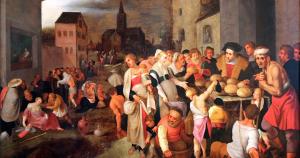 Mercy cannot be demanded. Mercy is a gift, not a debt. Mercy is what God gives those that err, but turn even a bit towards Him.
When we receive mercy, the joy is unexpected, wonderful, good news. Some good news we create: our plans come to fruition. That is happy, but many events are not under our control and when life works out beyond our plans or even despite our failures, this is also joyous. Our first birth was very difficult and Hope was sick after delivery. We do not know still what was wrong, only that she grew sicker over two days. One day she was well again and this was so good. Our baby nuzzled up to his mother and all was gloriously well: splendid mercy.
Mercy is so happy, so joyful, only comedy can prepare us to hope. The Comedy of Errors, Shakespeare’s shortest, jolliest, comedy is divine mercy defeating humanity’s error.
The Comedy of Errors has many levels, yet fundamentally it is a divine comedy. The world works out in the play as the world should and always would if people did not choose badly. When we watch such theater, and laugh at the absurdity of human choices, we are healed. Nobody in the play communicates, they assume, posture, do what they think will be socially prudent. This error leads to a multiplication of error to comedic effect.
God takes the error that could produce a tragedy and makes a comedy.
God stands ready to maximize goodness, truth, and beauty, but that entails justice. The people in Comedy make foolish mistakes, but also sin, visiting a courtesan is not good for a marriage. Nature is cruel, but people are suspicious, fail to communicate, and are foolish.
We err. God takes our errors and over time makes of it a comedy of errors: history ends in a wedding between the God-man and His bride, God and humanity become one. Many events, tragic in isolation, become (almost) comic in the context of a world where all is well.
The indentured servants, the two twins named Dromio, are treated badly. They are born under the same star as the aristocratic twins, but class keeps them down. When one is released from indenture, set free, this is one of the first actions that begins bringing unexpected mercies and joys.
Within this hour I was his bondman sir,
But he, I thank him, gnaw’d in two my cords:
Now am I Dromio and his man unbound.
This act does not cause the mercy to come, but puts the characters in position to receive mercy. The servant-master relationship is disordered, stuck in old patterns, but the conclusion gives hope and good cheer.
The marriage in the play is troubled, not hopeless, but not loving. The “errors” of identification make obvious the problems: the wife is in love, but treated badly, the husband is selfish, given to vice. One great mercy is reunion of this man with his mother, now an abbess, who will have little tolerance for his failures. Deprived of mother and father, Antipholus of Ephesus does not love well. Shakespeare gives us hope that he will be guided by his father and corrected by his mother. He needs both.
The abbess is the mother of the twins, and she has been in travail, like the Mother of God for thirty three years in travel with her Son:
Thirty-three years have I but gone in travail Of you, my sons, and till this present hour My heavy burden ne’er delivered. The Duke, my husband, and my children both, And you the calendars of their nativity, Go to a gossips’ feast, and joy with me.
Jesus was born in Bethlehem, but Mary mothered him for a lifetime through the cross to the upper room at Pentecost. Thirty-three years she was in travail, a sword piercing her heart, but then came joy and feasting as her Son was delivered from death. She was the mother of God: heard the Word of God and believed.
Joy came as a severe mercy.
Shakespeare gives us this story with a light touch. He begins with the father sentenced to death and hides the mother in an abbey. Nothing is too serious, yet while we laugh we are reminded the world of our errors is often redeemed, all is redeemed in the end.
We will come to an abbey, if we persist, and find brothers, mother, and Father.
Or so Shakespeare thinks.
Thank God.

Next Post

September 12, 2019 Sappho: The Beauty of Eros
Browse Our Archives
Select a Category Apologetics Art Culture Education On Books On Education Philosophy Politics Pop Culture Spiritual Reflections Uncategorized
Select a Month October 2026 September 2026 August 2026 July 2026 July 2025 June 2025 September 2024 July 2024 June 2024 December 2023 June 2023 September 2022 May 2022 April 2022 March 2022 February 2022 July 2021 June 2021 May 2021 April 2021 March 2021 February 2021 January 2021 December 2020 November 2020 October 2020 September 2020 August 2020 July 2020 June 2020 May 2020 April 2020 March 2020 February 2020 January 2020 December 2019 November 2019 October 2019 September 2019 August 2019 July 2019 June 2019 May 2019 April 2019 March 2019 February 2019 January 2019 December 2018 November 2018 October 2018 September 2018 August 2018 July 2018 June 2018 May 2018 April 2018 March 2018 February 2018 January 2018 December 2017 November 2017 October 2017 September 2017 August 2017 July 2017 June 2017 May 2017 April 2017 March 2017 February 2017 January 2017 December 2016 November 2016 October 2016 September 2016 August 2016 July 2016 June 2016 May 2016 April 2016 March 2016 February 2016 January 2016 December 2015 November 2015 October 2015 September 2015 August 2015 July 2015 June 2015 May 2015 April 2015 March 2015 February 2015 January 2015 November 2014 October 2014 September 2014 August 2014 July 2014 June 2014 May 2014 April 2014 March 2014 February 2014 January 2014 December 2013 November 2013 October 2013 September 2013 August 2013 July 2013 June 2013 May 2013 April 2013 March 2013 February 2013 January 2013 December 2012 November 2012 October 2012 September 2012 August 2012 July 2012 June 2012 May 2012
Follow Us!
TAKE THE
Religious Wisdom Quiz
Who said, "As for me, I know that my redeemer lives"?
Select your answer to see how you score.
Moses Abraham Job Joseph
Books by This Author John Mark Reynolds
Related posts from Eidos

Classical Education Must Teach Us to Make the...

Classical Education and the Art of Dying Well

Golden, Golden, Golden: My Mother's Last Lesson

TRENDING AT PATHEOS Evangelical

The REST of Your Life: A Creative Wrestles...
This week I had a conversation with a good friend from church....

How the author of the world's best hymn...
I've been working with John Newton for a while now. This makes...

Long before this Lectio Divina, Psalm 130 - the song - started...

What About the Trees? Another Living Parable
After I finished writing the last article about falling leaves as a...

Why Classical Education Is a Conversation, Not a...
Come and Read: Joy in Classical Education When I was a little...

Cornell University has received a great deal of negative publicity and intense...
view all Evangelical blogs
Ad-Free & Subscriber Log-In Subscription Support
- About Us
- 2026 Calendar
- Videos
- Podcasts
- Library of World Religions
- Faith In Media Tracker
- Advertise With Us
- Write for Us
- Privacy Policy
- Terms of Service
- Do Not Sell My Data
- Contact Us
- Radiant Digital
- Manage Newsletter Subscriptions
- Unsubscribe From Notifications
- Sitemap
Copyright 2008-2026, Patheos. All rights reserved.
Subscription Support Ad-Free & Subscriber Log-In
Follow Patheos