
BuddhistCatholicContemplativeEvangelicalGeneral ChristianHinduJewishLatter-day SaintMuslimNew VisionsProgressive Christian
Beliefs
- Buddhist
- Catholic
- Contemplative
- Evangelical
- General Christian
- Hindu
- Jewish
- Latter-day Saint
- More Voices
- Muslim
- New Visions
- Pagan
- Progressive Christian
Topics
- Religion News
- Food and Religion
- Sports and Religion
- Religious Art
- Religious Music and Entertainment
- Religious Events
- History and Religion
- Style and Religion
- Politics and Religion
- Women in Religion
- Recreation Outdoors and Religion
- Business Finance and Religion
- Careers Workplace and Religion
- Education and Religion
- Family Parenting and Religion
- Health Fitness and Religion
- Home and Religion
- Relationships and Religion
- Technology and Religion
- Travel and Religion
Columnists
- Buddhist Columnists
- Business Finance and Religion Columnists
- Careers Workplace and Religion Columnists
- Catholic Columnists
- Contemplative Columnists
- Education and Religion Columnists
- Evangelists Columnists
- Family Parenting and Religion Columnists
- General Christian Columnists
- Health Fitness and Religion Columnists
- Hindu Columnists
- History and Religion Columnists
- Home and Religion Columnists
- Jewish Columnists
- More Voices Columnists
- Latter Day Columnists
- Muslim Columnists
- New Visions Columnists
- Nonreligious Columnists
- Pagan Columnists
- Politics and Religion Columnists
- Progressive Columnists
- Recreation Outdoors and Religion Columnists
- Relationships and Religion Columnists
- Religion News Columnists
- Religious Art Columnists
- Religious Events Columnists
- Religious Music and Entertainment Columnists
- Sports and Religion Columnists
- Style and Religion Columnists
- Technology and Religion Columnists
- Travel and Religion Columnists
- Women in Religion Columnists
Resource Library
- 2026 Calendar
- Library of World Religions
- The 100 Most Holy Places on Earth
- Patheos Answers
- Podcasts
- Videos
- Faith Leaders Database
- Anglican Episcopalian
- Bahai
- Baptist
- Buddhism
- Christianity
- Confucianism
- Eastern Orthodoxy
- Hinduism
- Holiness and Pentecostal
- ISKCON
- Islam
- Judaism
- Lutheran
- Methodist
- The Church of Jesus Christ of Latter-day Saints
- New Age
- Paganism
- Presbytarian and Reformed
- Protestantism
- Religion Behind the Scenes
- Roman Catholic
- Scientology
- Shia Islam
- Sikhism
- Sufism
- Sunni Islam
- Taoism
- Zen
- See all religions
Research Tools
 Ad-Free & Subscriber Log-In Subscription Support
Ad-Free & Subscriber Log-In Subscription Support
Follow Patheos 

- Trending:
- Forgiveness
- |
- Marriage
- |
- Consciousness
- |
- Death Penalty
- |
- Election
- |
- Halloween

- Home
- Evangelical
- On Doing What We Know (Guest Voice: Jill Bergen)
On Doing What We Know (Guest Voice: Jill Bergen)
Last updated on: September 25, 2019 at 4:42 pm by John Mark N. Reynolds
On Doing What We Know (Guest Voice: Jill Bergen) 2019-09-25T16:42:23-04:00 John Mark N. Reynolds
Patheos Explore the world's faith through different perspectives on religion and spirituality! Patheos has the views of the prevalent religions and spiritualities of the world.
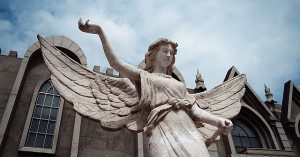 I asked for guest voices and today I am pleased to introduce a voice that with grace will become a regular: Jill Bergen.
Jill Elizabeth Bergen is a writer and educator with nearly twenty years of experience in classical education. She is a member of the Torrey Honors Institute and holds an MA in Education with an emphasis in Philosophy of Education. She and her husband, Bradley, reside in Southern California.
She mentions our friend and fellow student, gone to glory, Angie Good. May her soul Rest In Peace.
Bergen writes on doing what we know:
Inspired by my friend Angie Good, who has been in heaven twenty years this month. She knew, and she acted.
A favorite teacher of mine once told us that unless we could explain an idea to our grandmother, we didn’t actually know it. Apart from possibly underestimating our grandmothers, this was true, as being able to articulate an idea clearly and succinctly indicates a grasp of said idea. But articulation only goes so far. He later posed a much deeper question that addressed the extent of our knowledge, or lack thereof: if we believed something, why didn’t we act like it?
I’m going to assume, for our purposes here, the common definition that knowledge is simply justified true belief. A thing we think is true is knowledge when we have good reasons for thinking it true, and it in fact is the case. Additionally, I’ll assume that reasonably thoughtful people believe things because they think they are true, and they have some decent justification for them. Therefore, if our justified beliefs are true, they are knowledge. So, the question could be rephrased as, if we know something, why don’t we act like it? In addition to articulating knowledge, is the real evidence of personal knowledge action?
I have no trouble believing my office chair will hold me; in fact, I would assert that I know the chair will hold me, barring sabotage, and my cat—the only household member devious enough to be a saboteur—is unlikely to know how to use a screwdriver. So, I sit. I don’t waver in thought; I just do it. My knowledge of the chair’s safety produces definitive action.
Belief in God entails certain other beliefs. As Christians we believe that, for instance, “If a brother or sister is poorly clothed and lacking in daily food, and one of you says to them, ‘Go in peace, be warmed and filled,’ without giving them the things needed for the body, what good is that” (English Standard Version James 1:14-16)? Why is it so easy then, knowing that we should help, to pass people on the street who need food and shelter and not help? Why would we ever ignore knowledge? Is it that we do not actually know that charity is good, or is there a competing desire or belief that we use as an excuse to act inconsistently with our knowledge? What does it mean to claim to know something if we cannot do what it entails?
What would happen if we acted on all our beliefs like I act on the knowledge my chair will hold me? Granted, there are a number of nuanced issues here—the relationship between our belief and knowledge could be tenuous, or we could believe something but have trouble living it out for various reasons—but the question remains: if we know something, why don’t we act like it? Are we not acting like someone who refuses to sit in a chair they know is sound? Thankfully, God is merciful, because most of us have failed to act as if we know our beliefs are true. The important thing is to figure out why—whether it truly be a lack of knowledge or a failure to act on knowledge—so we can start providing active evidence that we know truth.
Previous Post
September 24, 2019
No Orcs: George Von Trapp
Next Post

September 26, 2019 The Death of the City is not a Comedy
Browse Our Archives
Select a Category Apologetics Art Culture Education On Books On Education Philosophy Politics Pop Culture Spiritual Reflections Uncategorized
Select a Month October 2026 September 2026 August 2026 July 2026 July 2025 June 2025 September 2024 July 2024 June 2024 December 2023 June 2023 September 2022 May 2022 April 2022 March 2022 February 2022 July 2021 June 2021 May 2021 April 2021 March 2021 February 2021 January 2021 December 2020 November 2020 October 2020 September 2020 August 2020 July 2020 June 2020 May 2020 April 2020 March 2020 February 2020 January 2020 December 2019 November 2019 October 2019 September 2019 August 2019 July 2019 June 2019 May 2019 April 2019 March 2019 February 2019 January 2019 December 2018 November 2018 October 2018 September 2018 August 2018 July 2018 June 2018 May 2018 April 2018 March 2018 February 2018 January 2018 December 2017 November 2017 October 2017 September 2017 August 2017 July 2017 June 2017 May 2017 April 2017 March 2017 February 2017 January 2017 December 2016 November 2016 October 2016 September 2016 August 2016 July 2016 June 2016 May 2016 April 2016 March 2016 February 2016 January 2016 December 2015 November 2015 October 2015 September 2015 August 2015 July 2015 June 2015 May 2015 April 2015 March 2015 February 2015 January 2015 November 2014 October 2014 September 2014 August 2014 July 2014 June 2014 May 2014 April 2014 March 2014 February 2014 January 2014 December 2013 November 2013 October 2013 September 2013 August 2013 July 2013 June 2013 May 2013 April 2013 March 2013 February 2013 January 2013 December 2012 November 2012 October 2012 September 2012 August 2012 July 2012 June 2012 May 2012
Follow Us!
TAKE THE
Religious Wisdom Quiz
Which two apostles went up to the temple at the "hour of prayer" and healed a lame man in Acts 3?
Select your answer to see how you score.
Philip and Stephen James and Jude Peter and John Paul and Barnabas
Books by This Author John Mark Reynolds
Related posts from Eidos

Why Classical Education Is a Conversation, Not a...

Rooted: Why Classical Education Needs Community

Classical Education: Discussion for Everyone
Speaking Math: the Language of Classical Education
TRENDING AT PATHEOS Evangelical

The REST of Your Life: A Creative Wrestles...
This week I had a conversation with a good friend from church....

How the author of the world's best hymn...
I've been working with John Newton for a while now. This makes...

Long before this Lectio Divina, Psalm 130 - the song - started...

What About the Trees? Another Living Parable
After I finished writing the last article about falling leaves as a...

Why Classical Education Is a Conversation, Not a...
Come and Read: Joy in Classical Education When I was a little...

Cornell University has received a great deal of negative publicity and intense...
view all Evangelical blogs
Ad-Free & Subscriber Log-In Subscription Support
- About Us
- 2026 Calendar
- Videos
- Podcasts
- Library of World Religions
- Faith In Media Tracker
- Advertise With Us
- Write for Us
- Privacy Policy
- Terms of Service
- Do Not Sell My Data
- Contact Us
- Radiant Digital
- Manage Newsletter Subscriptions
- Unsubscribe From Notifications
- Sitemap
Copyright 2008-2026, Patheos. All rights reserved.
Subscription Support Ad-Free & Subscriber Log-In
Follow Patheos