
BuddhistCatholicContemplativeEvangelicalGeneral ChristianHinduJewishLatter-day SaintMuslimNew VisionsProgressive Christian
Beliefs
- Buddhist
- Catholic
- Contemplative
- Evangelical
- General Christian
- Hindu
- Jewish
- Latter-day Saint
- More Voices
- Muslim
- New Visions
- Pagan
- Progressive Christian
Topics
- Religion News
- Food and Religion
- Sports and Religion
- Religious Art
- Religious Music and Entertainment
- Religious Events
- History and Religion
- Style and Religion
- Politics and Religion
- Women in Religion
- Recreation Outdoors and Religion
- Business Finance and Religion
- Careers Workplace and Religion
- Education and Religion
- Family Parenting and Religion
- Health Fitness and Religion
- Home and Religion
- Relationships and Religion
- Technology and Religion
- Travel and Religion
Columnists
- Buddhist Columnists
- Business Finance and Religion Columnists
- Careers Workplace and Religion Columnists
- Catholic Columnists
- Contemplative Columnists
- Education and Religion Columnists
- Evangelists Columnists
- Family Parenting and Religion Columnists
- General Christian Columnists
- Health Fitness and Religion Columnists
- Hindu Columnists
- History and Religion Columnists
- Home and Religion Columnists
- Jewish Columnists
- More Voices Columnists
- Latter Day Columnists
- Muslim Columnists
- New Visions Columnists
- Nonreligious Columnists
- Pagan Columnists
- Politics and Religion Columnists
- Progressive Columnists
- Recreation Outdoors and Religion Columnists
- Relationships and Religion Columnists
- Religion News Columnists
- Religious Art Columnists
- Religious Events Columnists
- Religious Music and Entertainment Columnists
- Sports and Religion Columnists
- Style and Religion Columnists
- Technology and Religion Columnists
- Travel and Religion Columnists
- Women in Religion Columnists
Resource Library
- 2026 Calendar
- Library of World Religions
- The 100 Most Holy Places on Earth
- Patheos Answers
- Podcasts
- Videos
- Faith Leaders Database
- Anglican Episcopalian
- Bahai
- Baptist
- Buddhism
- Christianity
- Confucianism
- Eastern Orthodoxy
- Hinduism
- Holiness and Pentecostal
- ISKCON
- Islam
- Judaism
- Lutheran
- Methodist
- The Church of Jesus Christ of Latter-day Saints
- New Age
- Paganism
- Presbytarian and Reformed
- Protestantism
- Religion Behind the Scenes
- Roman Catholic
- Scientology
- Shia Islam
- Sikhism
- Sufism
- Sunni Islam
- Taoism
- Zen
- See all religions
Research Tools
 Ad-Free & Subscriber Log-In Subscription Support
Ad-Free & Subscriber Log-In Subscription Support
Follow Patheos 

- Trending:
- Forgiveness
- |
- Marriage
- |
- Consciousness
- |
- Death Penalty
- |
- Election
- |
- Halloween

- Home
- Evangelical
- A Saint for Our Leader? (The Problem of Winning and Shakespeare’s Henry VI)
A Saint for Our Leader? (The Problem of Winning and Shakespeare’s Henry VI)
Last updated on: September 5, 2019 at 11:59 pm by John Mark N. Reynolds
A Saint for Our Leader? (The Problem of Winning and Shakespeare’s Henry VI) 2019-09-05T23:59:08-04:00 John Mark N. Reynolds
Patheos Explore the world's faith through different perspectives on religion and spirituality! Patheos has the views of the prevalent religions and spiritualities of the world.
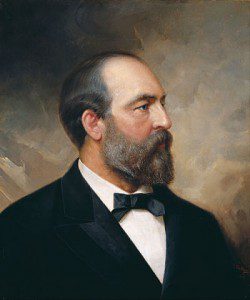 I have been told Americans elect a president and not a pastor. This is true: no president as president baptizes children into the church! Even when we elected a former pastor as president, James Garfield, we did so not so he could preach or administer the Lord’s Supper, but to lead our body politic. Voters liked his background as a Christian minister, yet put him in office for civil service reform!
I doubt, however, this is very controversial. What these folk seem to mean is that one needs a tough old SOB to get things done and as tough old SOB’s are not saints, they will vote for a SOB that will advance their agenda. This shows a shocking ignorance of saints. Saint Lawrence was put on a griddle and burned for being a Christain and the saint could still crack wise about needing to be turned on the griddle as he was tortured.
Whatever else he was, Saint Lawrence was a tough son of the Church. When one rejects the possibility of a saint as leader, one shoots too low. There is long history of rulers who, mistakes and all, made effective leaders and lived saintly lives.
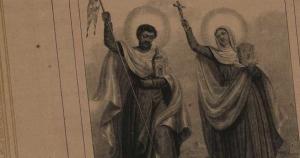 My favorite such ruler is Kaleb of Aksum, a forerunner to Ethiophia, who managed to defend his nation and do justice. He kept a high civilization going, even helping his Christian neighbors, when much of the rest of the area was chaotic. He was following and improving on a tradition pioneered by Constantine the Great.
Thousands of Christians prayed for hundreds of years that the persecution would cease and the Roman Emperor would see the light. Constantine did both: literally. Nobody had produced a manual for how to be a Christian and a Roman Emperor so nobody should emulate all Constantine did as he invented the role, but he got the big things right. Saint Constantine saved classical civilization for the future by moving Rome from Rome, a brilliant solution that kept secular (non-Church) education going for another thousand years. Meanwhile, he also favored Christianity as an effective worldview to save the Empire without making Christianity the “official” state religion. This worked and Rome gained a millennium of existence, much of it intellectually and artistically gorgeous. Blessed Constantine was baptized on his death bed: being an emperor meant making “bad” decisions and that was viewed as dangerous to his soul. He was often a SOB, though no Christian defends that part of his record. He is sainted for the good he did, not for the bad.
Later rulers, think King Saint Louis or Good Duke Wenceslaus, did better. The ideal Christian prince did justice to the poor, attacked corruption, defended the weak, and kept the realm safe. Again, such rulers made mistakes, but ruling is fraught with peril. The Russian princes Boris and Glen were canonized for dying rather than resist evil with violence and risk a civil war. There are many historic models, many errors, but a long process over time of knowing what to do if Christian ideas won.
Winning is hard as every revolutionary, suddenly (and sometimes surprisingly) discovers. The saintly ruler has in common failures (he is only human) and an attempt at sanctity. The local Christians did not pick some sympathetic tough guy and elevate him for instrumental reasons. Trying our best we too often got the Blessed Nicholas II of Russia, not a great ruler (!) with deep flaws, but a man who died well opposing greater evil.
Imagine what would happen if we gave up on standards at all!
The fear of the saintly king may be some Victorian idea that “Christianity” enervated a man, making him womanly (!). This was the criticism of macho atheists of the late nineteenth century. As late as my childhood, NFL teams (allegedly) worried about religious football players as they might be “soft.” The stereotype for a Christian ruler might have been a king like Henry VI in Shakespeares series of plays on this sad king of England.
Henry is the son of Henry V, the great victor of Agincourt (also a Christian prince by the way), but one give to monkish living. Shakespeare’s Henry prays a great deal and is soft on his foes. He is easily manipulated by different factions and is just too nice at times to be king.
Or so a superficial reading of the play might lead one to think: religion makes a leader“weak.”*
Instead, Shakespeare plays with such assumptions: the praying Henry survives when other “manly” leaders do not. Shakespeare wrote Henry V after writing the three plays we call Henry VI (I, II, III). Note how he describes the loss of the great Henry V’s empire:
This star of England. Fortune made his sword, By which the world’s best garden he achieved, And of it left his son imperial lord. Henry the Sixth, in infant bands crowned king Of France and England, did this king succeed, Whose state so many had the managing That they lost France and made his England bleed, Which oft our stage hath shown—and, for their sake, In your fair minds let this acceptance take.
Shakespeare blames the “SOB” nobles, not the weakness of Henry VI. Of course, Shakespeare does portray Henry VI as afflicted with mental and physical disorders, but his piety is not the cause, but the iron core that pulls the man through such afflictions. Henry VI is too good for his time: patron of the arts and education. In education alone, he founded schools like Eaton and King’s College Cambridge. Given better nobility, Henry VI could have been great. His nobles saw his weaknesses, and devalued his virtues, and tore the Kingdom apart.
Henry VI endured it all: his very weakness made the SOBs underestimate him, keeping him alive, and his piety kept him building enduring works for England. Shakespeare’s Henry VI is ill served, but lives nearly to the end of the War of the Roses. When he is finally killed, he goes through an apotheosis. His piety did not lose France, his sanctity did not bring on the War of the Roses. Instead, the SOB nobles who thought might was needed for right lost the wars (to Saint Joan of Arc!) and self-destructed.
All Soul’s College, Henry’s work, has given Britain generations of leaders in many fields. Henry was weak physically, but strong in spirit. He persisted and though (the some day) Richard III kills him and Henry VI is given a vision of Richard and England’s doom. Richard has killed his son for “preemption,” Henry, now very strong in God, says:
Hadst thou been killed when first thou didst presume, Thou hadst not lived to kill a son of mine. And thus I prophesy: that many a thousand Which now mistrust no parcel of my fear, And many an old man’s sigh, and many a widow‘s, And many an orphan’s water-standing eye—Men for their sons’, wives for their husbands‘, Orphans for their parents’ timeless death—Shall rue the hour that ever thou wast born. The owl shrieked at thy birth—an evil sign; The night-crow cried, aboding luckless time; Dogs howled, and hideous tempests shook down trees; The raven rooked her on the chimney’s top; And chatt’ring pies in dismal discords sung. Thy mother felt more than a mother’s pain, And yet brought forth less than a mother’s hope—To wit, an indigested and deformed lump, Not like the fruit of such a goodly tree. Teeth hadst thou in thy head when thou wast born, To signify thou cam‘st to bite the world; And if the rest be true which I have heard Thou cam’st—
Shakespeare’s Richard III became a true SOB as ruler as Shakespeare’s Henry foretold. The old King, who would rather have been a commoner, would have died to save England, and hated war, laid down his life with piety. He was a saint and mightier than the SOB. See:
RICHARD I’ll hear no more. Die, prophet, in thy speech, He stabs him For this, amongst the rest, was I ordained. KING HENRY Ay, and for much more slaughter after this. O, God forgive my sins, and pardon thee.
He dies
Maybe a man like that would make a good leader of this republic just now. If not, perhaps it is our vice, fractiousness, and hate that make us unworthy of a saint as leader.
————————————-
*And yes this old secular trope is offensive when it comes to women! The great monarchs Elizabeth I, Victoria, and Elizabeth II show the falsity of a fear of women in power.
Previous Post

September 4, 2019
Dishonor, Death, and Jollification (Henry IV Part 1)
Next Post

September 6, 2019 Prophesy: Wait and See
Browse Our Archives
Select a Category Apologetics Art Culture Education On Books On Education Philosophy Politics Pop Culture Spiritual Reflections Uncategorized
Select a Month October 2026 September 2026 August 2026 July 2026 July 2025 June 2025 September 2024 July 2024 June 2024 December 2023 June 2023 September 2022 May 2022 April 2022 March 2022 February 2022 July 2021 June 2021 May 2021 April 2021 March 2021 February 2021 January 2021 December 2020 November 2020 October 2020 September 2020 August 2020 July 2020 June 2020 May 2020 April 2020 March 2020 February 2020 January 2020 December 2019 November 2019 October 2019 September 2019 August 2019 July 2019 June 2019 May 2019 April 2019 March 2019 February 2019 January 2019 December 2018 November 2018 October 2018 September 2018 August 2018 July 2018 June 2018 May 2018 April 2018 March 2018 February 2018 January 2018 December 2017 November 2017 October 2017 September 2017 August 2017 July 2017 June 2017 May 2017 April 2017 March 2017 February 2017 January 2017 December 2016 November 2016 October 2016 September 2016 August 2016 July 2016 June 2016 May 2016 April 2016 March 2016 February 2016 January 2016 December 2015 November 2015 October 2015 September 2015 August 2015 July 2015 June 2015 May 2015 April 2015 March 2015 February 2015 January 2015 November 2014 October 2014 September 2014 August 2014 July 2014 June 2014 May 2014 April 2014 March 2014 February 2014 January 2014 December 2013 November 2013 October 2013 September 2013 August 2013 July 2013 June 2013 May 2013 April 2013 March 2013 February 2013 January 2013 December 2012 November 2012 October 2012 September 2012 August 2012 July 2012 June 2012 May 2012
Follow Us!
TAKE THE
Religious Wisdom Quiz
True or False: Ezra read the Book of the Law to the people from morning until noon.
Select your answer to see how you score.
FALSE TRUE
Books by This Author John Mark Reynolds
Related posts from Eidos

Classical Education Must Teach Us to Make the...

Yet I Love Her: History and the Church
He Thought He was Right: Liberality Must Kiss...

TRENDING AT PATHEOS Evangelical

The REST of Your Life: A Creative Wrestles...
This week I had a conversation with a good friend from church....

How the author of the world's best hymn...
I've been working with John Newton for a while now. This makes...

Long before this Lectio Divina, Psalm 130 - the song - started...

What About the Trees? Another Living Parable
After I finished writing the last article about falling leaves as a...

Why Classical Education Is a Conversation, Not a...
Come and Read: Joy in Classical Education When I was a little...

Cornell University has received a great deal of negative publicity and intense...
view all Evangelical blogs
Ad-Free & Subscriber Log-In Subscription Support
- About Us
- 2026 Calendar
- Videos
- Podcasts
- Library of World Religions
- Faith In Media Tracker
- Advertise With Us
- Write for Us
- Privacy Policy
- Terms of Service
- Do Not Sell My Data
- Contact Us
- Radiant Digital
- Manage Newsletter Subscriptions
- Unsubscribe From Notifications
- Sitemap
Copyright 2008-2026, Patheos. All rights reserved.
Subscription Support Ad-Free & Subscriber Log-In
Follow Patheos