
BuddhistCatholicContemplativeEvangelicalGeneral ChristianHinduJewishLatter-day SaintMuslimNew VisionsProgressive Christian
Beliefs
- Buddhist
- Catholic
- Contemplative
- Evangelical
- General Christian
- Hindu
- Jewish
- Latter-day Saint
- More Voices
- Muslim
- New Visions
- Pagan
- Progressive Christian
Topics
- Religion News
- Food and Religion
- Sports and Religion
- Religious Art
- Religious Music and Entertainment
- Religious Events
- History and Religion
- Style and Religion
- Politics and Religion
- Women in Religion
- Recreation Outdoors and Religion
- Business Finance and Religion
- Careers Workplace and Religion
- Education and Religion
- Family Parenting and Religion
- Health Fitness and Religion
- Home and Religion
- Relationships and Religion
- Technology and Religion
- Travel and Religion
Columnists
- Buddhist Columnists
- Business Finance and Religion Columnists
- Careers Workplace and Religion Columnists
- Catholic Columnists
- Contemplative Columnists
- Education and Religion Columnists
- Evangelists Columnists
- Family Parenting and Religion Columnists
- General Christian Columnists
- Health Fitness and Religion Columnists
- Hindu Columnists
- History and Religion Columnists
- Home and Religion Columnists
- Jewish Columnists
- More Voices Columnists
- Latter Day Columnists
- Muslim Columnists
- New Visions Columnists
- Nonreligious Columnists
- Pagan Columnists
- Politics and Religion Columnists
- Progressive Columnists
- Recreation Outdoors and Religion Columnists
- Relationships and Religion Columnists
- Religion News Columnists
- Religious Art Columnists
- Religious Events Columnists
- Religious Music and Entertainment Columnists
- Sports and Religion Columnists
- Style and Religion Columnists
- Technology and Religion Columnists
- Travel and Religion Columnists
- Women in Religion Columnists
Resource Library
- 2026 Calendar
- Library of World Religions
- The 100 Most Holy Places on Earth
- Patheos Answers
- Podcasts
- Videos
- Faith Leaders Database
- Anglican Episcopalian
- Bahai
- Baptist
- Buddhism
- Christianity
- Confucianism
- Eastern Orthodoxy
- Hinduism
- Holiness and Pentecostal
- ISKCON
- Islam
- Judaism
- Lutheran
- Methodist
- The Church of Jesus Christ of Latter-day Saints
- New Age
- Paganism
- Presbytarian and Reformed
- Protestantism
- Religion Behind the Scenes
- Roman Catholic
- Scientology
- Shia Islam
- Sikhism
- Sufism
- Sunni Islam
- Taoism
- Zen
- See all religions
Research Tools
 Ad-Free & Subscriber Log-In Subscription Support
Ad-Free & Subscriber Log-In Subscription Support
Follow Patheos 

- Trending:
- Forgiveness
- |
- Marriage
- |
- Consciousness
- |
- Death Penalty
- |
- Election
- |
- Halloween

- Home
- Evangelical
- A Comedy of Errors: the Improbable Happens OR the Man Who Knows Himself in God Will Be Saved from Errors
A Comedy of Errors: the Improbable Happens OR the Man Who Knows Himself in God Will Be Saved from Errors
Last updated on: September 10, 2019 at 5:21 am by John Mark N. Reynolds
A Comedy of Errors: the Improbable Happens OR the Man Who Knows Himself in God Will Be Saved from Errors 2019-09-09T23:32:20-04:00 John Mark N. Reynolds
Patheos Explore the world's faith through different perspectives on religion and spirituality! Patheos has the views of the prevalent religions and spiritualities of the world.
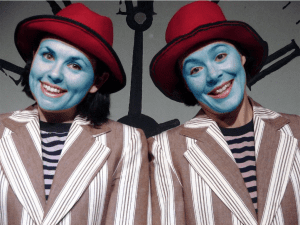 Reasonable Confusion? Who is that?
Once I was on a jury where a juror confused having a reason to doubt with a reasonable doubt. He suggested that during the few seconds the suspect was out of view of the policemen, he might have been confused with a space alien using his identity.
Was it possible?
Yes, surely possible.
Was this a reasonable supposition?
Surely not. Fortunately, I was able (as foreman) to persuade him and so the guilty person was not set free. Of course, there was a doubt much more reasonable than a space alien duplicate. Instead, what if the suspect had an unknown twin who happened to be on the street committing a crime just as his innocent brother was out walking?
The two brothers look alike, sound alike. The innocent brother, our suspect, was arrested by the officers confused between the innocent brother and the guilty.
Is this possible?
It’s not just possible, it’s Shakespearean!
The greatest writer in English history loved implausible stories just like this one. He knew like a good juryman that a reasonable person would not buy the “twin theory” without very compelling evidence. Sometimes, however, odd things do happen, like triplets separated and discovering each other later in life. As you wave across campus at your old friend, you discover “he” is an unknown twin . . .and actually that twin has an unknown triplet.
The unexpected happens.
The Improbable Happens More in Life than in Fiction?
Good Christian humanist that he is, Shakespeare knows that the cosmos is reasonable, fundamentally, but that reasonable is not always predictable, particularly when it comes to people. God Himself is a personal God, so the laws that flow from His Mind will have a personal element. Fill the cosmos with free will beings and truth is stranger than fiction as Sherlock Holmes says:
“My dear fellow,” said Sherlock Holmes as we sat on either side of the fire in his lodgings at Baker Street, “life is infinitely stranger than anything which the mind of man could invent. We would not dare to conceive the things which are really mere commonplaces of existence. If we could fly out of that window hand in hand, hover over this great city, gently remove the roofs, and peep in at the queer things which are going on, the strange coincidences, the plannings, the cross-purposes, the wonderful chains of events, working through generations, and leading to the most outrè results, it would make all fiction with its conventionalities and foreseen conclusions most stale and unprofitable.”*
So it goes. Daily we must assume the normal, since normalcy is . . . Normal. We cannot simply assume “strange coincidences” or assume “plannings” when there usually are none, yet sometimes they are there and life seems outré because we have not seen them coming. Worse, we might miss the fascination of life, the wonderful chains of events, working through generations, if we never step back and look.
And we must look, because a strange thing will happen to us all: we will play many parts over time. We may not have a twin, but we will be changed. We can even end up competing with ourselves as one actor said about his present appearance on television versus past shows.
There is a Comedy of Errors about Identity in Life
Shakespeare wakes us up in The Comedy of Errors, a play that begins with death overhanging a man, as it does all of us, and soon descends into jollification: a wonderful, improbable, chain of events. The play is not content with confusion between twins, giving us confusion between two sets of twins! There is joy in the superficial plot, improbability capped by the next unlikely happenstance, but also something profound.
The characters constantly refer to personified Time and the changes made in men by the passing of time.
Shakespeare juxtaposes a court where the law cannot vary even when men change. A lack of grace can render the law unjust in real life where the outré results make us wonder:
Am I in earth, in heaven or in hell?
Sleeping or waking? Mad or well advised?
Known unto these, and to myself disguised?**
Of course, nobody knows themselves or anyone else in the play, just as most of us do not ourselves let other people We know our names and our roles, our looks, and our family and friends may be as superficially known. When those are played with by time, our looks, roles, friends lost, then we become confused, even a bit mad:
Time is very bankrupt and owes more than he’s worth to season. Nay, he’s a thief too: have you heard men say that time comes stealing on by night and day?
We do not think we have the time to know ourselves and engage in all our business. Yet time will force us to confront who we are and what we are doing. Over time, we all come into conflict with our “twin” . . .a past self. . .and though we are changed from that, many others (including those we love) might confuse the new for the old. Once we did this, now we do some other thing. Are we different men with the same name? Time can breed confusion. Yet the resolution of the confusion, knowing who we are now, harmonizing the twin selves, is divine comedy indeed: wedding all together appropriately.
In fictional Ephesus there were two Antipholus and two Dromio. In our lives, we may play (as Shakespeare says in As You Like It) as many as seven parts! We must know ourselves so we can live in our time with integrated personhood over those seven ages and so come to the world to come in joy.
————————————
*Sir Arthur Conan Doyle, The Adventures of Sherlock Holmes, Adventure III: A Case Of Identity.
**Shakespeare, The Comedy of Errors 2.2 213ff.
Previous Post

September 9, 2019
The Holy Cross!
Next Post

September 11, 2019 The Joy of Unexpected Mercy: Life’s Comedy of Errors
Browse Our Archives
Select a Category Apologetics Art Culture Education On Books On Education Philosophy Politics Pop Culture Spiritual Reflections Uncategorized
Select a Month October 2026 September 2026 August 2026 July 2026 July 2025 June 2025 September 2024 July 2024 June 2024 December 2023 June 2023 September 2022 May 2022 April 2022 March 2022 February 2022 July 2021 June 2021 May 2021 April 2021 March 2021 February 2021 January 2021 December 2020 November 2020 October 2020 September 2020 August 2020 July 2020 June 2020 May 2020 April 2020 March 2020 February 2020 January 2020 December 2019 November 2019 October 2019 September 2019 August 2019 July 2019 June 2019 May 2019 April 2019 March 2019 February 2019 January 2019 December 2018 November 2018 October 2018 September 2018 August 2018 July 2018 June 2018 May 2018 April 2018 March 2018 February 2018 January 2018 December 2017 November 2017 October 2017 September 2017 August 2017 July 2017 June 2017 May 2017 April 2017 March 2017 February 2017 January 2017 December 2016 November 2016 October 2016 September 2016 August 2016 July 2016 June 2016 May 2016 April 2016 March 2016 February 2016 January 2016 December 2015 November 2015 October 2015 September 2015 August 2015 July 2015 June 2015 May 2015 April 2015 March 2015 February 2015 January 2015 November 2014 October 2014 September 2014 August 2014 July 2014 June 2014 May 2014 April 2014 March 2014 February 2014 January 2014 December 2013 November 2013 October 2013 September 2013 August 2013 July 2013 June 2013 May 2013 April 2013 March 2013 February 2013 January 2013 December 2012 November 2012 October 2012 September 2012 August 2012 July 2012 June 2012 May 2012
Follow Us!
TAKE THE
Religious Wisdom Quiz
What kind of animal did Jesus ride into Jerusalem?
Select your answer to see how you score.
Camel Donkey Ox Horse
Books by This Author John Mark Reynolds
Related posts from Eidos

Classical Education Must Teach Us to Make the...

Yet I Love Her: History and the Church


The Iceberg is There: Verbosity Cannot Defeat Reality
TRENDING AT PATHEOS Evangelical

The REST of Your Life: A Creative Wrestles...
This week I had a conversation with a good friend from church....

How the author of the world's best hymn...
I've been working with John Newton for a while now. This makes...

Long before this Lectio Divina, Psalm 130 - the song - started...

What About the Trees? Another Living Parable
After I finished writing the last article about falling leaves as a...

Why Classical Education Is a Conversation, Not a...
Come and Read: Joy in Classical Education When I was a little...

Cornell University has received a great deal of negative publicity and intense...
view all Evangelical blogs
Ad-Free & Subscriber Log-In Subscription Support
- About Us
- 2026 Calendar
- Videos
- Podcasts
- Library of World Religions
- Faith In Media Tracker
- Advertise With Us
- Write for Us
- Privacy Policy
- Terms of Service
- Do Not Sell My Data
- Contact Us
- Radiant Digital
- Manage Newsletter Subscriptions
- Unsubscribe From Notifications
- Sitemap
Copyright 2008-2026, Patheos. All rights reserved.
Subscription Support Ad-Free & Subscriber Log-In
Follow Patheos