
BuddhistCatholicContemplativeEvangelicalGeneral ChristianHinduJewishLatter-day SaintMuslimNew VisionsProgressive Christian
Beliefs
- Buddhist
- Catholic
- Contemplative
- Evangelical
- General Christian
- Hindu
- Jewish
- Latter-day Saint
- More Voices
- Muslim
- New Visions
- Pagan
- Progressive Christian
Topics
- Religion News
- Food and Religion
- Sports and Religion
- Religious Art
- Religious Music and Entertainment
- Religious Events
- History and Religion
- Style and Religion
- Politics and Religion
- Women in Religion
- Recreation Outdoors and Religion
- Business Finance and Religion
- Careers Workplace and Religion
- Education and Religion
- Family Parenting and Religion
- Health Fitness and Religion
- Home and Religion
- Relationships and Religion
- Technology and Religion
- Travel and Religion
Columnists
- Buddhist Columnists
- Business Finance and Religion Columnists
- Careers Workplace and Religion Columnists
- Catholic Columnists
- Contemplative Columnists
- Education and Religion Columnists
- Evangelists Columnists
- Family Parenting and Religion Columnists
- General Christian Columnists
- Health Fitness and Religion Columnists
- Hindu Columnists
- History and Religion Columnists
- Home and Religion Columnists
- Jewish Columnists
- More Voices Columnists
- Latter Day Columnists
- Muslim Columnists
- New Visions Columnists
- Nonreligious Columnists
- Pagan Columnists
- Politics and Religion Columnists
- Progressive Columnists
- Recreation Outdoors and Religion Columnists
- Relationships and Religion Columnists
- Religion News Columnists
- Religious Art Columnists
- Religious Events Columnists
- Religious Music and Entertainment Columnists
- Sports and Religion Columnists
- Style and Religion Columnists
- Technology and Religion Columnists
- Travel and Religion Columnists
- Women in Religion Columnists
Resource Library
- 2026 Calendar
- Library of World Religions
- The 100 Most Holy Places on Earth
- Patheos Answers
- Podcasts
- Videos
- Faith Leaders Database
- Anglican Episcopalian
- Bahai
- Baptist
- Buddhism
- Christianity
- Confucianism
- Eastern Orthodoxy
- Hinduism
- Holiness and Pentecostal
- ISKCON
- Islam
- Judaism
- Lutheran
- Methodist
- The Church of Jesus Christ of Latter-day Saints
- New Age
- Paganism
- Presbytarian and Reformed
- Protestantism
- Religion Behind the Scenes
- Roman Catholic
- Scientology
- Shia Islam
- Sikhism
- Sufism
- Sunni Islam
- Taoism
- Zen
- See all religions
Research Tools
 Ad-Free & Subscriber Log-In Subscription Support
Ad-Free & Subscriber Log-In Subscription Support
Follow Patheos 

- Trending:
- Forgiveness
- |
- Marriage
- |
- Consciousness
- |
- Death Penalty
- |
- Election
- |
- Halloween

- Home
- Evangelical
- Beware the Argument from What Isn’t There in Literature
Beware the Argument from What Isn’t There in Literature
Last updated on: July 30, 2019 at 12:56 pm by John Mark N. Reynolds
Beware the Argument from What Isn’t There in Literature 2019-07-30T12:56:42-04:00 John Mark N. Reynolds
Patheos Explore the world's faith through different perspectives on religion and spirituality! Patheos has the views of the prevalent religions and spiritualities of the world.
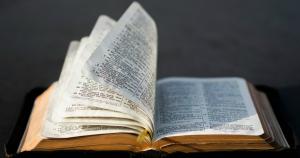 The Old Books of the Bible Come to Us Through Scholarship
Thank God for Biblical scholars, pastors who prayerfully study, and a community, the church, that checks our reading of the books of the Bible!*
We need them even when we do not know we need them. After all, nobody now living speaks Biblical languages. Even the text of the Greek New Testament sitting on my shelf is the product of the hard work of scholars putting together the best texts for me to read! When we read the Bible, there are parts that the translators have made plain to us. Sometimes the ancient language translates easily into English. With harder passages to translate, some translators give us the meaning and not just the words. Other scholars make a different translation choice and give us the actual words, but then in a footnote or commentary explain the figures of speech or other usages that are hard to translate. Good pastors teach the Bible after careful study, so that those of us without the benefit of a seminary education can learn to read carefully on our own.
Part of the role of a good church is education. In fact, if you go to a church for a few years and do not know more about how to read the books of the Bible, the time has come to find a new church! For most of church history, most of us did not have our own copy of the Bible, because books were costly and rare. As many people as could owned Bible, but the number was small. The printing press changed all of that, but when we read the Bible, we should recall that the books were often written to be read in community or read and immediately interpreted.
An untrained layman sitting alone reading a Bible has a wonderful opportunity, a great gift, but due caution is important. We have to know what we don’t know and take care in our interpretations and applications.
One Mistake I Made with an Old Book that We Sometimes Make with the Bible
Maybe my own experience with old books has made me more cautious. I know how easy it is to make mistakes, especially with a old book or set of ideas. When I started reading Plato, I was constantly aware that a book like Republic was an ancient book, written in Greek, by a world class mind, in a genre (dialogue) that was new to me. Mistakes were made.
I made them!
At one point, I wrote a paper that suggested a “clever” interpretation of the text. My patient teacher pointed out that while I had explained what the text said, much of my argument was from the “silence of the text.” Plato said quite a few things, but he did not say what I thought he should have said. This seemed significant to me, but an argument from silence is very weak. After all, even a book as complicated and rich as Republic is not dealing with every issue, every nuance of every issue, and is certainly not dealing with the kind of issues that would have occurred to a 1990’s kind of student in a philosophy department in America reading the Greek with a twentieth century “accent!”
Given his context, would his contemporary reader have expected Plato to have said what I hoped he would have said? I did not know. In this case, nobody could know. We have no access to Plato’s internal mental life and know all too little about the way people thought at his time beyond the very books I was reading.
There might be cases where Plato’s text does not do something he often does, say use a craft analogy**, that might make us wonder. There might be a major contemporary event in Athens he does not mention and we might wonder why he does not. Even in these cases, however, the text is the text and what we have. An argument from silence in the text, even in the best cases, might provide some weak support for an interpretation, but there had better be other reasons for the reading!
Why You Might Care: An Attack on the Bible by a Novice Exegete
I meet skeptics who will frame an argument based on what the Bible does not say. One persistent critic of Scripture in my social media feeds will assert that Jesus and the apostles believed something because there is no specific examples of their not believing it. After all, if they did not believe it, shouldn’t the text tells us?
Well, no. That would make for a very long book and if all the footnotes were added, this critic would suggest, then the silence on other issues would look even more “damning.”
A specific example helps illustrate the problem. This tireless interlocutor asserts that the apostles should have encountered people believed to be demon possessed that were not. There are no such stories in the Bible. If the apostles believed that one could get a “false positive” when it comes to demon possession, they would have surely mentioned it. They did not, so the apostles did not know this. Since we know (as Christians) that some people who appear demonized (in some ways) simply have medical conditions, this critic thinks the “mistake” a blow to the New Testament.
This is the kind of bad exegesis that tempted me as a youngling in Plato. Notice the Bible does not say there were not false or mistaken exorcisms on the part of the Apostles. The New Testament is intent on recording what (generally) went well and showing the apostle’s power. Sometimes, if needed for the narrative, the texts also show the apostles making big errors (especially about Jesus and the earthly Kingdom).
Why wasn’t this error mentioned ? After all, Jesus does give some specific instructions about casting out certain demons. Why not point out that not everyone is demonized?
Note: we can never be sure why something is not in a text unless there is only one possible explanation or we have powerful external evidence for the reason. Neither is the case when it comes to “false positives” and demons.
First, there is no limit to the kind of errors people can make. The text was left in a community to help avoid these kinds of mistakes. Do not practice exorcism in isolation!
Second, this particular warning is unnecessary, because not everyone, even those who are helped through direct divine intervention, is presented as demon possessed in the New Testament. The Bible presents Jesus and the apostles as healing and doing exorcisms. Disease is not simply attributed to evil spirits in the New Testament. In fact, the category “disease” is where divine healing is possible… an exorcism is not the appropriate solution. For example, some are healed of disease after the doctor has failed as in the woman with the issue of blood.
This creates two categories (at least) of trouble: demonic and disease. If you have two categories, then (of course) the diagnosis might be wrong. Even the apostles were not perfect, we certainly are not. That we might confuse a case that calls for exorcism with a disease or a medical condition with demonization is obvious.
For our purposes in dealing with why the text doesn’t contain “false positives” of demonic possession this is enough. We have at least another possible motive or the absence of what (at least one) modern reader wishes were there.
In a normal or healthy church community, all good gifts are utilized. My church routinely prays that we be healed, made free from demons, and then also sends us to the proper medical practitioner if we are not immediately and lastingly helped by prayer. Revered ancient and modern saints have been outstanding medical practitioners and also saw people both divinely healed and delivered from devils in their work. (See Saint Luke the Surgeon.) A good religious community makes use of all the helps God has given us.
Prayer is beneficial. An exorcism done decently and in order might be as well. Medical care, physical and psychological, is as it always has been, central to the work of the Church. There should be no demonization (!) ever of any of the gifts of God including medicine and psychology. Simultaneously, I have known people who have received lasting relief from troubles by both types of spiritual interventions.
I am suggesting why the particular caution might not be in the text, beyond a “mistake,” but of course I do not know. The text gives us categories for human troubles and several solutions. Why wasn’t a particular type of mistaken response given in the text? I have suggested some reasons, but note I do not know and base no theology on this “silence.”
The Church behaves as she does based on the positive witness of Scripture, the spiritual wisdom gained through our long history in community, and the tools developed as we helped produce scientific methods.
In any case, whatever the merits of the New Testament views, the argument from textual silence is not generally useful and is often foolish. We are guessing the intention of the author based on little more than what we would have said if we were the author. We are not!
The psychology of an author from ancient times is known to us only through the texts preserved and the context of the times. Basic exegetical rules are the same for any text, including Scripture. An argument from silence in the text is often just an argument from ignorance: “I would have done this, so that it was not done indicates such and such as it would in me.”
Reading old books is a skill and too often our preconceptions or desire to score points for or against a reading of the text, tempts us to put weight on the argument from silence.
Beware of this trap.
Saying nothing might be saying something, but centuries later it is hard to know what. Beware (I say to myself) making too much of what the text does not say, beyond noting it does not say it.
———————————-
*I am certainly not one.
**Plato can drive a reader crazy by comparing almost every activity to some craft such as being shepherd or a navigator. He was a crafty writer.
Previous Post

July 28, 2019
Ancient Witches XI (Guest Voice James Harrington)
Next Post

July 30, 2019 Patience at the Play (Pericles) or Joy serves the Patient
Browse Our Archives
Select a Category Apologetics Art Culture Education On Books On Education Philosophy Politics Pop Culture Spiritual Reflections Uncategorized
Select a Month October 2026 September 2026 August 2026 July 2026 July 2025 June 2025 September 2024 July 2024 June 2024 December 2023 June 2023 September 2022 May 2022 April 2022 March 2022 February 2022 July 2021 June 2021 May 2021 April 2021 March 2021 February 2021 January 2021 December 2020 November 2020 October 2020 September 2020 August 2020 July 2020 June 2020 May 2020 April 2020 March 2020 February 2020 January 2020 December 2019 November 2019 October 2019 September 2019 August 2019 July 2019 June 2019 May 2019 April 2019 March 2019 February 2019 January 2019 December 2018 November 2018 October 2018 September 2018 August 2018 July 2018 June 2018 May 2018 April 2018 March 2018 February 2018 January 2018 December 2017 November 2017 October 2017 September 2017 August 2017 July 2017 June 2017 May 2017 April 2017 March 2017 February 2017 January 2017 December 2016 November 2016 October 2016 September 2016 August 2016 July 2016 June 2016 May 2016 April 2016 March 2016 February 2016 January 2016 December 2015 November 2015 October 2015 September 2015 August 2015 July 2015 June 2015 May 2015 April 2015 March 2015 February 2015 January 2015 November 2014 October 2014 September 2014 August 2014 July 2014 June 2014 May 2014 April 2014 March 2014 February 2014 January 2014 December 2013 November 2013 October 2013 September 2013 August 2013 July 2013 June 2013 May 2013 April 2013 March 2013 February 2013 January 2013 December 2012 November 2012 October 2012 September 2012 August 2012 July 2012 June 2012 May 2012
Follow Us!
TAKE THE
Religious Wisdom Quiz
What does "Beelzebub" mean?
Select your answer to see how you score.
Lord of the Flies Accuser Evil One Prince of Darkness
Books by This Author John Mark Reynolds
Related posts from Eidos

Classical Education Must Teach Us to Make the...


The Man of All Talents: the Extraordinary Life...

TRENDING AT PATHEOS Evangelical

The REST of Your Life: A Creative Wrestles...
This week I had a conversation with a good friend from church....

How the author of the world's best hymn...
I've been working with John Newton for a while now. This makes...

Long before this Lectio Divina, Psalm 130 - the song - started...

What About the Trees? Another Living Parable
After I finished writing the last article about falling leaves as a...

Why Classical Education Is a Conversation, Not a...
Come and Read: Joy in Classical Education When I was a little...

Cornell University has received a great deal of negative publicity and intense...
view all Evangelical blogs
Ad-Free & Subscriber Log-In Subscription Support
- About Us
- 2026 Calendar
- Videos
- Podcasts
- Library of World Religions
- Faith In Media Tracker
- Advertise With Us
- Write for Us
- Privacy Policy
- Terms of Service
- Do Not Sell My Data
- Contact Us
- Radiant Digital
- Manage Newsletter Subscriptions
- Unsubscribe From Notifications
- Sitemap
Copyright 2008-2026, Patheos. All rights reserved.
Subscription Support Ad-Free & Subscriber Log-In
Follow Patheos