
BuddhistCatholicContemplativeEvangelicalGeneral ChristianHinduJewishLatter-day SaintMuslimNew VisionsProgressive Christian
Beliefs
- Buddhist
- Catholic
- Contemplative
- Evangelical
- General Christian
- Hindu
- Jewish
- Latter-day Saint
- More Voices
- Muslim
- New Visions
- Pagan
- Progressive Christian
Topics
- Religion News
- Food and Religion
- Sports and Religion
- Religious Art
- Religious Music and Entertainment
- Religious Events
- History and Religion
- Style and Religion
- Politics and Religion
- Women in Religion
- Recreation Outdoors and Religion
- Business Finance and Religion
- Careers Workplace and Religion
- Education and Religion
- Family Parenting and Religion
- Health Fitness and Religion
- Home and Religion
- Relationships and Religion
- Technology and Religion
- Travel and Religion
Columnists
- Buddhist Columnists
- Business Finance and Religion Columnists
- Careers Workplace and Religion Columnists
- Catholic Columnists
- Contemplative Columnists
- Education and Religion Columnists
- Evangelists Columnists
- Family Parenting and Religion Columnists
- General Christian Columnists
- Health Fitness and Religion Columnists
- Hindu Columnists
- History and Religion Columnists
- Home and Religion Columnists
- Jewish Columnists
- More Voices Columnists
- Latter Day Columnists
- Muslim Columnists
- New Visions Columnists
- Nonreligious Columnists
- Pagan Columnists
- Politics and Religion Columnists
- Progressive Columnists
- Recreation Outdoors and Religion Columnists
- Relationships and Religion Columnists
- Religion News Columnists
- Religious Art Columnists
- Religious Events Columnists
- Religious Music and Entertainment Columnists
- Sports and Religion Columnists
- Style and Religion Columnists
- Technology and Religion Columnists
- Travel and Religion Columnists
- Women in Religion Columnists
Resource Library
- 2026 Calendar
- Library of World Religions
- The 100 Most Holy Places on Earth
- Patheos Answers
- Podcasts
- Videos
- Faith Leaders Database
- Anglican Episcopalian
- Bahai
- Baptist
- Buddhism
- Christianity
- Confucianism
- Eastern Orthodoxy
- Hinduism
- Holiness and Pentecostal
- ISKCON
- Islam
- Judaism
- Lutheran
- Methodist
- The Church of Jesus Christ of Latter-day Saints
- New Age
- Paganism
- Presbytarian and Reformed
- Protestantism
- Religion Behind the Scenes
- Roman Catholic
- Scientology
- Shia Islam
- Sikhism
- Sufism
- Sunni Islam
- Taoism
- Zen
- See all religions
Research Tools
 Ad-Free & Subscriber Log-In Subscription Support
Ad-Free & Subscriber Log-In Subscription Support
Follow Patheos 

- Trending:
- Forgiveness
- |
- Marriage
- |
- Consciousness
- |
- Death Penalty
- |
- Election
- |
- Halloween

- Home
- Evangelical
- Ancient Witches XI (Guest Voice James Harrington)
Ancient Witches XI (Guest Voice James Harrington)
Last updated on: July 29, 2019 at 3:27 pm by John Mark N. Reynolds
Ancient Witches XI (Guest Voice James Harrington) 2019-07-29T15:27:02-04:00 John Mark N. Reynolds
Patheos Explore the world's faith through different perspectives on religion and spirituality! Patheos has the views of the prevalent religions and spiritualities of the world.
I asked for new voices and got some outstanding writers! Today we hear from the erudite James R. Harrington.
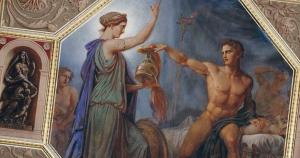 James R. Harrington earned his M.A. in Ancient History at California State University Fulleron and is a member of the Torrey Honors Institute. James has been a classical educator in a variety of settings over the past thirteen years. He lives in Houston with his wife, Sharon, and their daughter.
Harrington began with a series on shields in classical literature and now moves to witches as a theme.
On shields, Mr. Harrington responded to thoughts on his first post. Harrington wrote about the shield of Herakles, He continued to the shield of Aeneas and followed up on that post. We turned to a shield in Ovid. He concluded with Quintus and a follow up.
Now he turns to witches with a second post , a third, a fourth, a fabulous fifth, a sixth, a seventh, an eighth, a ninth, a tenth,and now eleven:
The Julio-Claudian dynasty reigned in the Hellenistic style as “Sons of God” and “Saviors,”bringing order to the chaos of the Mediterranean world. As a part of that order, the Julio-Claudians suppressed destabilizing forces such as magic and divination. During the reign of Tiberius, and particularly under his successors, Gaius Caligula and Claudius, a sect within Second Temple Judaism began challenging the official line. Leaders of The Way, such as Simon/Peter and Saul/Paul, defiantly claimed that the true “Son of God” and “Savior” was an obscure backwater preacher by the name of Jesus of Nazareth, who had been executed for political agitation. As one proof of their claim, Peter and Paul didn’t outlaw witchcraft; they declared war on it.
Accounts of powerful confrontations between Peter and Paul and ancient practitioners of magic abound in the earliest organized account of The Way, Acts. It is significant that Acts does not show Peter and Paul forbidding magic so much as annihilating it with rival displays of power. Paul strikes the magus Bar-Jesus blind when he attempts to bar Paul’s access to the Roman proconsul, Sergius Paulus.* Peter has but to threaten the infamous occult figure, Simon Magus, with eternal damnation, and he crumples.** Where Augustus seized and burnt magical texts, new converts to The Way in Ephesus voluntarily burn their magic books, sparking a riot among devotees of Diana of Ephesus.***
Who, then, are the “witches” of Acts that would eventually merge with the Roman and Germanic witch–traditions to produce the Witch of European folklore?° Acts portrays Simon Magus as a grafter trying to buy the power of the Holy Spirit with money. Bar-Jesus is described as a false prophet and client/hanger-on of a Roman proconsul. The Ephesians who confessed to practicing magic and burned their magic books are city-dwellers who converted to Christianity during Paul’s stay in the city. The two remaining figures are a group of Jewish priests called the Seven Sons of Sceva, who misuse Jesus’ name during an exorcism and are violently beaten by the possessed, and a slave girl, whose masters sue Paul for damages when he exorcises a prophetic evil spirit from her.°° In short, the “witches” of Acts are a cross-section of the citizens of the Eastern Roman Empire. Some are victimizers, and some are oppressed themselves. Either way, Peter and Paul have no need to pass an imperial statute against them; they simply call on Jesus of Nazareth and strip the “witches” of their power.
Centuries would pass between the early years of The Way that became Christianity and the great Witch Trials of the Renaissance. Figures like Saint Anthony would declare war on the Devil and make their physical invasion of the Egyptian desert a spiritual invasion of Hell. Popes and theologians would wrestle with the link between witchcraft and heresy. As we end today’s discussion, it is sufficient to note the contrast between Peter and Paul’s calm assurance in the face of the “witches” of Acts and the fearful frenzy of their spiritual descendants.
————————————————
* Acts 13:6-12
** Acts 8:9-24. For Simon Magus as an occult figure see Charles Williams, Witchcraft. Berkeley: Apocryphile Press, 2005. pp. 31-34.
***Williams, p. 19; Acts 19:18-19
°For possible reconstructions of this process see: Pam Grossman, Waking the Witch: Reflections on Women, Magic, and Power. New York: Gallery Books, 2019. pp.72-85, and Williams, pp. 13-75.
°°see Acts 19:13-17 and 16:16-19
Previous Post

July 27, 2019
God’s Prime Directive (Or Contra Colonialism)
Next Post
July 29, 2019 Beware the Argument from What Isn’t There in Literature
Browse Our Archives
Select a Category Apologetics Art Culture Education On Books On Education Philosophy Politics Pop Culture Spiritual Reflections Uncategorized
Select a Month October 2026 September 2026 August 2026 July 2026 July 2025 June 2025 September 2024 July 2024 June 2024 December 2023 June 2023 September 2022 May 2022 April 2022 March 2022 February 2022 July 2021 June 2021 May 2021 April 2021 March 2021 February 2021 January 2021 December 2020 November 2020 October 2020 September 2020 August 2020 July 2020 June 2020 May 2020 April 2020 March 2020 February 2020 January 2020 December 2019 November 2019 October 2019 September 2019 August 2019 July 2019 June 2019 May 2019 April 2019 March 2019 February 2019 January 2019 December 2018 November 2018 October 2018 September 2018 August 2018 July 2018 June 2018 May 2018 April 2018 March 2018 February 2018 January 2018 December 2017 November 2017 October 2017 September 2017 August 2017 July 2017 June 2017 May 2017 April 2017 March 2017 February 2017 January 2017 December 2016 November 2016 October 2016 September 2016 August 2016 July 2016 June 2016 May 2016 April 2016 March 2016 February 2016 January 2016 December 2015 November 2015 October 2015 September 2015 August 2015 July 2015 June 2015 May 2015 April 2015 March 2015 February 2015 January 2015 November 2014 October 2014 September 2014 August 2014 July 2014 June 2014 May 2014 April 2014 March 2014 February 2014 January 2014 December 2013 November 2013 October 2013 September 2013 August 2013 July 2013 June 2013 May 2013 April 2013 March 2013 February 2013 January 2013 December 2012 November 2012 October 2012 September 2012 August 2012 July 2012 June 2012 May 2012
Follow Us!
TAKE THE
Religious Wisdom Quiz
How many plagues did God inflict upon Egypt?
Select your answer to see how you score.
14 10 21 7
Books by This Author John Mark Reynolds
Related posts from Eidos

Classical Education Must Teach Us to Make the...

Yet I Love Her: History and the Church


The Iceberg is There: Verbosity Cannot Defeat Reality
TRENDING AT PATHEOS Evangelical

The REST of Your Life: A Creative Wrestles...
This week I had a conversation with a good friend from church....

How the author of the world's best hymn...
I've been working with John Newton for a while now. This makes...

Long before this Lectio Divina, Psalm 130 - the song - started...

What About the Trees? Another Living Parable
After I finished writing the last article about falling leaves as a...

Why Classical Education Is a Conversation, Not a...
Come and Read: Joy in Classical Education When I was a little...

Cornell University has received a great deal of negative publicity and intense...
view all Evangelical blogs
Ad-Free & Subscriber Log-In Subscription Support
- About Us
- 2026 Calendar
- Videos
- Podcasts
- Library of World Religions
- Faith In Media Tracker
- Advertise With Us
- Write for Us
- Privacy Policy
- Terms of Service
- Do Not Sell My Data
- Contact Us
- Radiant Digital
- Manage Newsletter Subscriptions
- Unsubscribe From Notifications
- Sitemap
Copyright 2008-2026, Patheos. All rights reserved.
Subscription Support Ad-Free & Subscriber Log-In
Follow Patheos