
BuddhistCatholicContemplativeEvangelicalGeneral ChristianHinduJewishLatter-day SaintMuslimNew VisionsProgressive Christian
Beliefs
- Buddhist
- Catholic
- Contemplative
- Evangelical
- General Christian
- Hindu
- Jewish
- Latter-day Saint
- More Voices
- Muslim
- New Visions
- Pagan
- Progressive Christian
Topics
- Religion News
- Food and Religion
- Sports and Religion
- Religious Art
- Religious Music and Entertainment
- Religious Events
- History and Religion
- Style and Religion
- Politics and Religion
- Women in Religion
- Recreation Outdoors and Religion
- Business Finance and Religion
- Careers Workplace and Religion
- Education and Religion
- Family Parenting and Religion
- Health Fitness and Religion
- Home and Religion
- Relationships and Religion
- Technology and Religion
- Travel and Religion
Columnists
- Buddhist Columnists
- Business Finance and Religion Columnists
- Careers Workplace and Religion Columnists
- Catholic Columnists
- Contemplative Columnists
- Education and Religion Columnists
- Evangelists Columnists
- Family Parenting and Religion Columnists
- General Christian Columnists
- Health Fitness and Religion Columnists
- Hindu Columnists
- History and Religion Columnists
- Home and Religion Columnists
- Jewish Columnists
- More Voices Columnists
- Latter Day Columnists
- Muslim Columnists
- New Visions Columnists
- Nonreligious Columnists
- Pagan Columnists
- Politics and Religion Columnists
- Progressive Columnists
- Recreation Outdoors and Religion Columnists
- Relationships and Religion Columnists
- Religion News Columnists
- Religious Art Columnists
- Religious Events Columnists
- Religious Music and Entertainment Columnists
- Sports and Religion Columnists
- Style and Religion Columnists
- Technology and Religion Columnists
- Travel and Religion Columnists
- Women in Religion Columnists
Resource Library
- 2026 Calendar
- Library of World Religions
- The 100 Most Holy Places on Earth
- Patheos Answers
- Podcasts
- Videos
- Faith Leaders Database
- Anglican Episcopalian
- Bahai
- Baptist
- Buddhism
- Christianity
- Confucianism
- Eastern Orthodoxy
- Hinduism
- Holiness and Pentecostal
- ISKCON
- Islam
- Judaism
- Lutheran
- Methodist
- The Church of Jesus Christ of Latter-day Saints
- New Age
- Paganism
- Presbytarian and Reformed
- Protestantism
- Religion Behind the Scenes
- Roman Catholic
- Scientology
- Shia Islam
- Sikhism
- Sufism
- Sunni Islam
- Taoism
- Zen
- See all religions
Research Tools
 Ad-Free & Subscriber Log-In Subscription Support
Ad-Free & Subscriber Log-In Subscription Support
Follow Patheos 

- Trending:
- Forgiveness
- |
- Marriage
- |
- Consciousness
- |
- Death Penalty
- |
- Election
- |
- Halloween

- Home
- Evangelical
- Insolence is more to be extinguished than a conflagration. . .
Insolence is more to be extinguished than a conflagration. . .
Last updated on: June 15, 2019 at 4:44 pm by John Mark N. Reynolds
Insolence is more to be extinguished than a conflagration. . . 2019-06-15T16:44:01-04:00 John Mark N. Reynolds
Patheos Explore the world's faith through different perspectives on religion and spirituality! Patheos has the views of the prevalent religions and spiritualities of the world.
248 Insolence is more to be extinguished than a conflagration.*
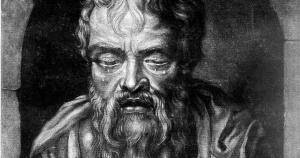 So said Heraclitus: the wisest man to live in Ephesus until Saint John moved there. Saint Basil recommends we begin our studies learning from the noble pagans, particularly in terms of virtue. Says the Saint: “Since the life to come is to be attained through virtue, chief attention must be paid to those passages in which virtue is praised. . . .”
Insolence, the Greek is “hubris” is a violent disregard of moral limits. Tell the insolent man he is wrong and he will attack. There is no dialog possible with an insolent man. Heraclitus says such a person is more dangerous that a conflagration.
Heraclitus postulated that the most important of the elements was fire. In Heraclitus’ cosmology, fire enabled constant change within the plan of the Divine Logos. Fire as an element either was the soul or the element the soul used to interact with the cosmos and being “fiery” was generally a sign of health.** After all, corpses are cold!
You can, however, have too much of a good thing. Burning up for Heraclitus is an excess of a good element: a mortal man with a spark of the divine, claiming divinity. He is insolent.
He is consumed and may consume all those around him in his reckless and violent pride.
When a human demands the knowledge that he cannot have (it is unknowable), should not have (eg. another person does not consent to our knowing), or even contain (we have limited capacity), the result is not good. We burn- having ignored the lesson of the fairy tales.
The desire to know is such a good thing generally, we forget that some things should not be known.
The easiest example of morally forbidden knowledge is knowledge that is private. Another person is entitled to his or her thoughts and to share those thoughts only with consent. One reason torture cannot be licit is that it breaks this fundamental right to consent. When we demand a person tell us what he or she does not wish to tell us, this is very morally questionable.
Spying on people can only be done with great care. The default in a private conversation is that it is private. Moral people are very hesitant to demand such “data.” Insolent bosses, managers, and politicians pry, snoop, and prod for things they have no right to know.
Countries like the United States have rightly built many safeguards against spying. Since a conversation is sharing information between two parties, it does not have the same inviolate nature as a thought (that is between a person and his God). However, the presumption of privacy in many conversations, between spouses, is very high. This is why (in general) a spouse cannot be forced to testify against a spouse. Beware the state given to an insolent desire to intrude more than a conflagration.
A desire to know what should not be known can become like a fire in our bones, distracting us from searching for goodness, truth, and beauty.
Some things are none of my business! God save me from insolence.
—————————————-
*Heraclitus, Presocratic Philosophers Kirk, Raven, Schofield (editors).
**We cannot be sure what Heraclitus meant all the time as much of his work is lost and what we have is aphoristic.
Previous Post
June 14, 2019
Hades and Dionysus are the Same
Next Post

June 16, 2019 Smooch! (On Father’s Day)
Browse Our Archives
Select a Category Apologetics Art Culture Education On Books On Education Philosophy Politics Pop Culture Spiritual Reflections Uncategorized
Select a Month October 2026 September 2026 August 2026 July 2026 July 2025 June 2025 September 2024 July 2024 June 2024 December 2023 June 2023 September 2022 May 2022 April 2022 March 2022 February 2022 July 2021 June 2021 May 2021 April 2021 March 2021 February 2021 January 2021 December 2020 November 2020 October 2020 September 2020 August 2020 July 2020 June 2020 May 2020 April 2020 March 2020 February 2020 January 2020 December 2019 November 2019 October 2019 September 2019 August 2019 July 2019 June 2019 May 2019 April 2019 March 2019 February 2019 January 2019 December 2018 November 2018 October 2018 September 2018 August 2018 July 2018 June 2018 May 2018 April 2018 March 2018 February 2018 January 2018 December 2017 November 2017 October 2017 September 2017 August 2017 July 2017 June 2017 May 2017 April 2017 March 2017 February 2017 January 2017 December 2016 November 2016 October 2016 September 2016 August 2016 July 2016 June 2016 May 2016 April 2016 March 2016 February 2016 January 2016 December 2015 November 2015 October 2015 September 2015 August 2015 July 2015 June 2015 May 2015 April 2015 March 2015 February 2015 January 2015 November 2014 October 2014 September 2014 August 2014 July 2014 June 2014 May 2014 April 2014 March 2014 February 2014 January 2014 December 2013 November 2013 October 2013 September 2013 August 2013 July 2013 June 2013 May 2013 April 2013 March 2013 February 2013 January 2013 December 2012 November 2012 October 2012 September 2012 August 2012 July 2012 June 2012 May 2012
Follow Us!
TAKE THE
Religious Wisdom Quiz
What New Testament letter addresses a runaway slave returning to his master?
Select your answer to see how you score.
Titus Colossians Philemon 2 John
Books by This Author John Mark Reynolds
Related posts from Eidos

Classical Education Must Teach Us to Make the...

Classical Education and the Art of Dying Well

Golden, Golden, Golden: My Mother's Last Lesson

TRENDING AT PATHEOS Evangelical

The REST of Your Life: A Creative Wrestles...
This week I had a conversation with a good friend from church....

How the author of the world's best hymn...
I've been working with John Newton for a while now. This makes...

Long before this Lectio Divina, Psalm 130 - the song - started...

What About the Trees? Another Living Parable
After I finished writing the last article about falling leaves as a...

Why Classical Education Is a Conversation, Not a...
Come and Read: Joy in Classical Education When I was a little...

Cornell University has received a great deal of negative publicity and intense...
view all Evangelical blogs
Ad-Free & Subscriber Log-In Subscription Support
- About Us
- 2026 Calendar
- Videos
- Podcasts
- Library of World Religions
- Faith In Media Tracker
- Advertise With Us
- Write for Us
- Privacy Policy
- Terms of Service
- Do Not Sell My Data
- Contact Us
- Radiant Digital
- Manage Newsletter Subscriptions
- Unsubscribe From Notifications
- Sitemap
Copyright 2008-2026, Patheos. All rights reserved.
Subscription Support Ad-Free & Subscriber Log-In
Follow Patheos