
BuddhistCatholicContemplativeEvangelicalGeneral ChristianHinduJewishLatter-day SaintMuslimNew VisionsProgressive Christian
Beliefs
- Buddhist
- Catholic
- Contemplative
- Evangelical
- General Christian
- Hindu
- Jewish
- Latter-day Saint
- More Voices
- Muslim
- New Visions
- Pagan
- Progressive Christian
Topics
- Religion News
- Food and Religion
- Sports and Religion
- Religious Art
- Religious Music and Entertainment
- Religious Events
- History and Religion
- Style and Religion
- Politics and Religion
- Women in Religion
- Recreation Outdoors and Religion
- Business Finance and Religion
- Careers Workplace and Religion
- Education and Religion
- Family Parenting and Religion
- Health Fitness and Religion
- Home and Religion
- Relationships and Religion
- Technology and Religion
- Travel and Religion
Columnists
- Buddhist Columnists
- Business Finance and Religion Columnists
- Careers Workplace and Religion Columnists
- Catholic Columnists
- Contemplative Columnists
- Education and Religion Columnists
- Evangelists Columnists
- Family Parenting and Religion Columnists
- General Christian Columnists
- Health Fitness and Religion Columnists
- Hindu Columnists
- History and Religion Columnists
- Home and Religion Columnists
- Jewish Columnists
- More Voices Columnists
- Latter Day Columnists
- Muslim Columnists
- New Visions Columnists
- Nonreligious Columnists
- Pagan Columnists
- Politics and Religion Columnists
- Progressive Columnists
- Recreation Outdoors and Religion Columnists
- Relationships and Religion Columnists
- Religion News Columnists
- Religious Art Columnists
- Religious Events Columnists
- Religious Music and Entertainment Columnists
- Sports and Religion Columnists
- Style and Religion Columnists
- Technology and Religion Columnists
- Travel and Religion Columnists
- Women in Religion Columnists
Resource Library
- 2026 Calendar
- Library of World Religions
- The 100 Most Holy Places on Earth
- Patheos Answers
- Podcasts
- Videos
- Faith Leaders Database
- Anglican Episcopalian
- Bahai
- Baptist
- Buddhism
- Christianity
- Confucianism
- Eastern Orthodoxy
- Hinduism
- Holiness and Pentecostal
- ISKCON
- Islam
- Judaism
- Lutheran
- Methodist
- The Church of Jesus Christ of Latter-day Saints
- New Age
- Paganism
- Presbytarian and Reformed
- Protestantism
- Religion Behind the Scenes
- Roman Catholic
- Scientology
- Shia Islam
- Sikhism
- Sufism
- Sunni Islam
- Taoism
- Zen
- See all religions
Research Tools
 Ad-Free & Subscriber Log-In Subscription Support
Ad-Free & Subscriber Log-In Subscription Support
Follow Patheos 

- Trending:
- Forgiveness
- |
- Marriage
- |
- Consciousness
- |
- Death Penalty
- |
- Election
- |
- Halloween

- Home
- Evangelical
- The Monotheistic Turn Toward Philosophy and Science: Against Polytheism and Atheism (Heraclitus)
The Monotheistic Turn Toward Philosophy and Science: Against Polytheism and Atheism (Heraclitus)
Last updated on: May 30, 2019 at 11:50 pm by John Mark N. Reynolds
The Monotheistic Turn Toward Philosophy and Science: Against Polytheism and Atheism (Heraclitus) 2019-05-30T23:50:52-04:00 John Mark N. Reynolds
Patheos Explore the world's faith through different perspectives on religion and spirituality! Patheos has the views of the prevalent religions and spiritualities of the world.
250 Those who speak with sense must rely on what is common to all, as a city must rely on its law, and with much greater reliance. For all the laws of men are nourished by one law, the divine law; for it has as much power as it wishes and is sufficient for all and is still left over.*
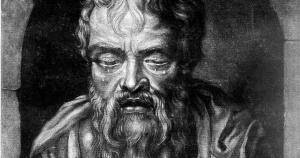 So said Heraclitus of Ephesus, one of the first philosophers in the Mediterranean world. He turned from the anti-intellectual polytheism of popular religion toward monotheism. He rejected both a world without a God and a world controlled by gods.
For Heraclitus, there was hope in a divine law, the Logos God, who could give order and meaning to all.
The monotheist turn made philosophy and science possible. This was the move of most of the Presocratic philosophers and of Socrates himself, probably Plato, and certainly Aristotle. When combined with the insights of the great monotheistic faiths (Islam, Judaism, and Christianity), much that was impossible intellectually became possible. This is uncomfortable for street materialism, so in those circles one often gets a “history” of philosophy that relies on misunderstanding two concepts: god and God.
A god is a super-being. A god can exist with no God and could exist if materialism is true. A god is like a superhero. Against all gods, there is God: omnipotent, omniscient, and omnipresent. If God does exist, there can (logically) be only one. You cannot have two all powerful beings. . . Think of the fight!
The problem of Homeric and Hesiod’s polytheism is that it found chaos at the bottom of the world. There was no real cosmos (a word for an ordered group). Instead, we had an order imposed on fundamental disorder by the gods and other minds. This order could never last and so a deep understanding was impossible.
Tell this to bright young minds and science, the study of the natural world, appears hopeless. The motivation vanishes as what seems true today will not be or might not be true tomorrow. Post-modernity is (often) merely ancient thought without the nobility of Homer. Polytheism has at least the power of cultural fecundity: the worship of super beings, gods, has produced cultures of all kinds. Atheism has been and is culturally sterile. There are no great world cultures that have been born in atheism (some horrid ones were) or been sustained by atheism.
As Plato pointed out in Laws, atheism and polytheism are alike in the inability to sustain order and liberty. The atheist might try to push meaning or order into nature or natural laws, but those laws are only experienced by the human mind. The human mind, the subjective experience, is also part of the world and so cannot be ultimately trusted. We cannot even be sure of our understanding of each other or of minds in the past.**
Against this stood the liberating idea of monotheism: there was Mind that made the cosmos. Monotheist religion stands, then and now, against superstition and chaos. Monotheism is (minimally!) the love of wisdom, of Mind.
Heraclitus was right to be skeptical about the human laws of any given city or time. The laws must always look toward the Law, the order that the Founders called the Laws of Nature and of Nature’s God. Note the continuity from Heraclitus to the framing of the American Constitution! The history of ideas is not the history of secularization, but of moving from polytheism and atheism to monotheism. The overwhelmingly obvious monotheistic consensus often will be challenged by a revival in polytheism or atheism due to regional excesses of monotheism.
Yet Heraclitus has a better solution to the evils of this time: turn to the higher law, the divine law. It is sufficient to demand life, liberty and the human flourishing.
———————————-
*Kirk, Raven, Schofield The Presocratic Philosophers
**Obviously individual polytheists and atheists can operate in historically monotheistic cultures as full and active members of those cultures. They often are better people than monotheists! Indeed, the fact that monotheism can create (and did develop) scientific and rational cultures does not mean that it will. Most often it has not. No idea is so good that people cannot mess it up, badly.

Next Post
May 31, 2019 The (Nearly) Boundless Soul (Heraclitus)
Browse Our Archives
Select a Category Apologetics Art Culture Education On Books On Education Philosophy Politics Pop Culture Spiritual Reflections Uncategorized
Select a Month October 2026 September 2026 August 2026 July 2026 July 2025 June 2025 September 2024 July 2024 June 2024 December 2023 June 2023 September 2022 May 2022 April 2022 March 2022 February 2022 July 2021 June 2021 May 2021 April 2021 March 2021 February 2021 January 2021 December 2020 November 2020 October 2020 September 2020 August 2020 July 2020 June 2020 May 2020 April 2020 March 2020 February 2020 January 2020 December 2019 November 2019 October 2019 September 2019 August 2019 July 2019 June 2019 May 2019 April 2019 March 2019 February 2019 January 2019 December 2018 November 2018 October 2018 September 2018 August 2018 July 2018 June 2018 May 2018 April 2018 March 2018 February 2018 January 2018 December 2017 November 2017 October 2017 September 2017 August 2017 July 2017 June 2017 May 2017 April 2017 March 2017 February 2017 January 2017 December 2016 November 2016 October 2016 September 2016 August 2016 July 2016 June 2016 May 2016 April 2016 March 2016 February 2016 January 2016 December 2015 November 2015 October 2015 September 2015 August 2015 July 2015 June 2015 May 2015 April 2015 March 2015 February 2015 January 2015 November 2014 October 2014 September 2014 August 2014 July 2014 June 2014 May 2014 April 2014 March 2014 February 2014 January 2014 December 2013 November 2013 October 2013 September 2013 August 2013 July 2013 June 2013 May 2013 April 2013 March 2013 February 2013 January 2013 December 2012 November 2012 October 2012 September 2012 August 2012 July 2012 June 2012 May 2012
Follow Us!
TAKE THE
Religious Wisdom Quiz
Who insulted and opposed David, then died after Abigail pleaded his case?
Select your answer to see how you score.
Joab Amasa Ahithophel Nabal
Books by This Author John Mark Reynolds
Related posts from Eidos

Classical Education Must Teach Us to Make the...

Classical Education and the Art of Dying Well

Golden, Golden, Golden: My Mother's Last Lesson

TRENDING AT PATHEOS Evangelical

The REST of Your Life: A Creative Wrestles...
This week I had a conversation with a good friend from church....

How the author of the world's best hymn...
I've been working with John Newton for a while now. This makes...

Long before this Lectio Divina, Psalm 130 - the song - started...

What About the Trees? Another Living Parable
After I finished writing the last article about falling leaves as a...

Why Classical Education Is a Conversation, Not a...
Come and Read: Joy in Classical Education When I was a little...

Cornell University has received a great deal of negative publicity and intense...
view all Evangelical blogs
Ad-Free & Subscriber Log-In Subscription Support
- About Us
- 2026 Calendar
- Videos
- Podcasts
- Library of World Religions
- Faith In Media Tracker
- Advertise With Us
- Write for Us
- Privacy Policy
- Terms of Service
- Do Not Sell My Data
- Contact Us
- Radiant Digital
- Manage Newsletter Subscriptions
- Unsubscribe From Notifications
- Sitemap
Copyright 2008-2026, Patheos. All rights reserved.
Subscription Support Ad-Free & Subscriber Log-In
Follow Patheos