
BuddhistCatholicContemplativeEvangelicalGeneral ChristianHinduJewishLatter-day SaintMuslimNew VisionsProgressive Christian
Beliefs
- Buddhist
- Catholic
- Contemplative
- Evangelical
- General Christian
- Hindu
- Jewish
- Latter-day Saint
- More Voices
- Muslim
- New Visions
- Pagan
- Progressive Christian
Topics
- Religion News
- Food and Religion
- Sports and Religion
- Religious Art
- Religious Music and Entertainment
- Religious Events
- History and Religion
- Style and Religion
- Politics and Religion
- Women in Religion
- Recreation Outdoors and Religion
- Business Finance and Religion
- Careers Workplace and Religion
- Education and Religion
- Family Parenting and Religion
- Health Fitness and Religion
- Home and Religion
- Relationships and Religion
- Technology and Religion
- Travel and Religion
Columnists
- Buddhist Columnists
- Business Finance and Religion Columnists
- Careers Workplace and Religion Columnists
- Catholic Columnists
- Contemplative Columnists
- Education and Religion Columnists
- Evangelists Columnists
- Family Parenting and Religion Columnists
- General Christian Columnists
- Health Fitness and Religion Columnists
- Hindu Columnists
- History and Religion Columnists
- Home and Religion Columnists
- Jewish Columnists
- More Voices Columnists
- Latter Day Columnists
- Muslim Columnists
- New Visions Columnists
- Nonreligious Columnists
- Pagan Columnists
- Politics and Religion Columnists
- Progressive Columnists
- Recreation Outdoors and Religion Columnists
- Relationships and Religion Columnists
- Religion News Columnists
- Religious Art Columnists
- Religious Events Columnists
- Religious Music and Entertainment Columnists
- Sports and Religion Columnists
- Style and Religion Columnists
- Technology and Religion Columnists
- Travel and Religion Columnists
- Women in Religion Columnists
Resource Library
- 2026 Calendar
- Library of World Religions
- The 100 Most Holy Places on Earth
- Patheos Answers
- Podcasts
- Videos
- Faith Leaders Database
- Anglican Episcopalian
- Bahai
- Baptist
- Buddhism
- Christianity
- Confucianism
- Eastern Orthodoxy
- Hinduism
- Holiness and Pentecostal
- ISKCON
- Islam
- Judaism
- Lutheran
- Methodist
- The Church of Jesus Christ of Latter-day Saints
- New Age
- Paganism
- Presbytarian and Reformed
- Protestantism
- Religion Behind the Scenes
- Roman Catholic
- Scientology
- Shia Islam
- Sikhism
- Sufism
- Sunni Islam
- Taoism
- Zen
- See all religions
Research Tools
 Ad-Free & Subscriber Log-In Subscription Support
Ad-Free & Subscriber Log-In Subscription Support
Follow Patheos 

- Trending:
- Forgiveness
- |
- Marriage
- |
- Consciousness
- |
- Death Penalty
- |
- Election
- |
- Halloween

- Home
- Evangelical
- The Character Is the Thing (Heraclitus)
The Character Is the Thing (Heraclitus)
Last updated on: May 24, 2019 at 12:40 am by John Mark N. Reynolds
The Character Is the Thing (Heraclitus) 2019-05-24T00:40:13-04:00 John Mark N. Reynolds
Patheos Explore the world's faith through different perspectives on religion and spirituality! Patheos has the views of the prevalent religions and spiritualities of the world.
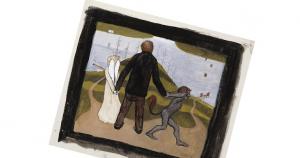 “The Devil made me do it.”
A cheeky television catchphrase from my boyhood begged indulgence, because the naughty acts could not be helped: “The Devil made me do it.”
Nonsense.
Devils exist, but if they make us do something, this is only because we gave them permission to act earlier. Devils are powerless against the Almighty, and those created in His Image need not suffer from demonic control. Like Sauron in Lord of the Rings, they can whisper and tempt, but they cannot force a soul to sin, especially at the first. We can consent, give up our wills to these intelligences, but we need not have.
A devil may make us do it now, but the fiend could have done nothing, if we had not said “yes” long before the deed. I hate some deeds I have done, but I did them: not devils, God forgive me. We long to escape responsibility by pushing off our choices to “them.”
The controlling facts need not be diabolical, they might be parents, society, culture, any thing or being that can, somehow, take the blame for our choices. Naturally, there are many forces that make bad choices more likely: poverty, lack of family, injustice in society toward us. This is real, but we dare not strip any person, even ourselves, of true humanity by pretending that free choice was not possible.
Society did not make me do it. Society may have made it more likely that I do it, tempted me to do it, lured me to do it, but I chose. That is what it is to be human. There is no mercy in shifting the blame to some other force if the shift reduces a man to a slave. We should defend our basic humanity, the power of free choice, even at the cost of owning up to our faults, our own grievous faults.
The demons cannot make us do anything, at least not anything for which we are morally responsible. If we cannot choose, then we are not guilty. If we chose, then we are guilty, even of the distant choices that flow from that first poisoned choice.
One of the first philosophers, Heraclitus, saw the world as it was: full of change, but with an enduring order- a divine Logos. He believed in God, but not in the gods: knowing that many of them were just images of our own nature. If the gods did exist, they were not fit for a philosopher’s worship. Heraclitus observed the excuse making of men: the Devil made me do it. More subtlety, he also saw that we blamed “forces” (Greek term: daimons) for our troubles.*
He put is succinctly:
247 Man’s character is his daimon.
We first make a home and then invite the relevant daimon in to dwell. Our character is our daimon.
Saint Basil or Blessed Augustine, Christians have known that the noble pagans, those before Christmas in the Greek world, knew things. We could learn from those like Heraclitus. So we did, have, and always shall.
———————————-
*The similarity between the term “demon” and “daimon” is tricky. A demon is always evil, a daimon merely a power. To help distinguish the two almost sound alike: recall that Socrates had a daimon, a spirit of the great good God, that checked him from doing evil. Nobody should want a demon!
Previous Post

May 22, 2019
God Gives a Sign (Heraclitus)
Next Post

May 24, 2019 Upstart Crow (A Review of Sorts)
Browse Our Archives
Select a Category Apologetics Art Culture Education On Books On Education Philosophy Politics Pop Culture Spiritual Reflections Uncategorized
Select a Month October 2026 September 2026 August 2026 July 2026 July 2025 June 2025 September 2024 July 2024 June 2024 December 2023 June 2023 September 2022 May 2022 April 2022 March 2022 February 2022 July 2021 June 2021 May 2021 April 2021 March 2021 February 2021 January 2021 December 2020 November 2020 October 2020 September 2020 August 2020 July 2020 June 2020 May 2020 April 2020 March 2020 February 2020 January 2020 December 2019 November 2019 October 2019 September 2019 August 2019 July 2019 June 2019 May 2019 April 2019 March 2019 February 2019 January 2019 December 2018 November 2018 October 2018 September 2018 August 2018 July 2018 June 2018 May 2018 April 2018 March 2018 February 2018 January 2018 December 2017 November 2017 October 2017 September 2017 August 2017 July 2017 June 2017 May 2017 April 2017 March 2017 February 2017 January 2017 December 2016 November 2016 October 2016 September 2016 August 2016 July 2016 June 2016 May 2016 April 2016 March 2016 February 2016 January 2016 December 2015 November 2015 October 2015 September 2015 August 2015 July 2015 June 2015 May 2015 April 2015 March 2015 February 2015 January 2015 November 2014 October 2014 September 2014 August 2014 July 2014 June 2014 May 2014 April 2014 March 2014 February 2014 January 2014 December 2013 November 2013 October 2013 September 2013 August 2013 July 2013 June 2013 May 2013 April 2013 March 2013 February 2013 January 2013 December 2012 November 2012 October 2012 September 2012 August 2012 July 2012 June 2012 May 2012
Follow Us!
TAKE THE
Religious Wisdom Quiz
What sign did God give Hezekiah to show he would be healed?
Select your answer to see how you score.
A river turned to blood The sun's shadow went backward Fire from heaven Rain in drought
Books by This Author John Mark Reynolds
Related posts from Eidos

Classical Education Must Teach Us to Make the...

Classical Education and the Art of Dying Well

Golden, Golden, Golden: My Mother's Last Lesson

TRENDING AT PATHEOS Evangelical

The REST of Your Life: A Creative Wrestles...
This week I had a conversation with a good friend from church....

How the author of the world's best hymn...
I've been working with John Newton for a while now. This makes...

Long before this Lectio Divina, Psalm 130 - the song - started...

What About the Trees? Another Living Parable
After I finished writing the last article about falling leaves as a...

Why Classical Education Is a Conversation, Not a...
Come and Read: Joy in Classical Education When I was a little...

Cornell University has received a great deal of negative publicity and intense...
view all Evangelical blogs
Ad-Free & Subscriber Log-In Subscription Support
- About Us
- 2026 Calendar
- Videos
- Podcasts
- Library of World Religions
- Faith In Media Tracker
- Advertise With Us
- Write for Us
- Privacy Policy
- Terms of Service
- Do Not Sell My Data
- Contact Us
- Radiant Digital
- Manage Newsletter Subscriptions
- Unsubscribe From Notifications
- Sitemap
Copyright 2008-2026, Patheos. All rights reserved.
Subscription Support Ad-Free & Subscriber Log-In
Follow Patheos